Key takeaways
- Goods-to-Person (G2P) systems deliver inventory to stationary workers, eliminating walking and boosting pick rates by 3-5x.
- Person-to-Goods (P2G) AMRs act as smart carts, guiding workers and transporting goods to reduce, but not eliminate, travel time.
- G2P requires a higher upfront investment and infrastructure changes but offers maximum throughput and accuracy.
- P2G offers a lower-cost entry into automation, faster deployment, and works well for lower-volume operations.
- The right choice depends on your daily order volume, SKU count, warehouse layout, and long-term growth plans.
What Is the Core Difference Between Goods-to-Person and Person-to-Goods AMRs?
For any warehouse operator evaluating fulfillment automation, the central question is how to make picking faster and more accurate. The two primary strategies using autonomous mobile robots (AMRs) are Goods-to-Person (G2P) and Person-to-Goods (P2G). Though both use robots, they represent fundamentally different approaches to the same problem.
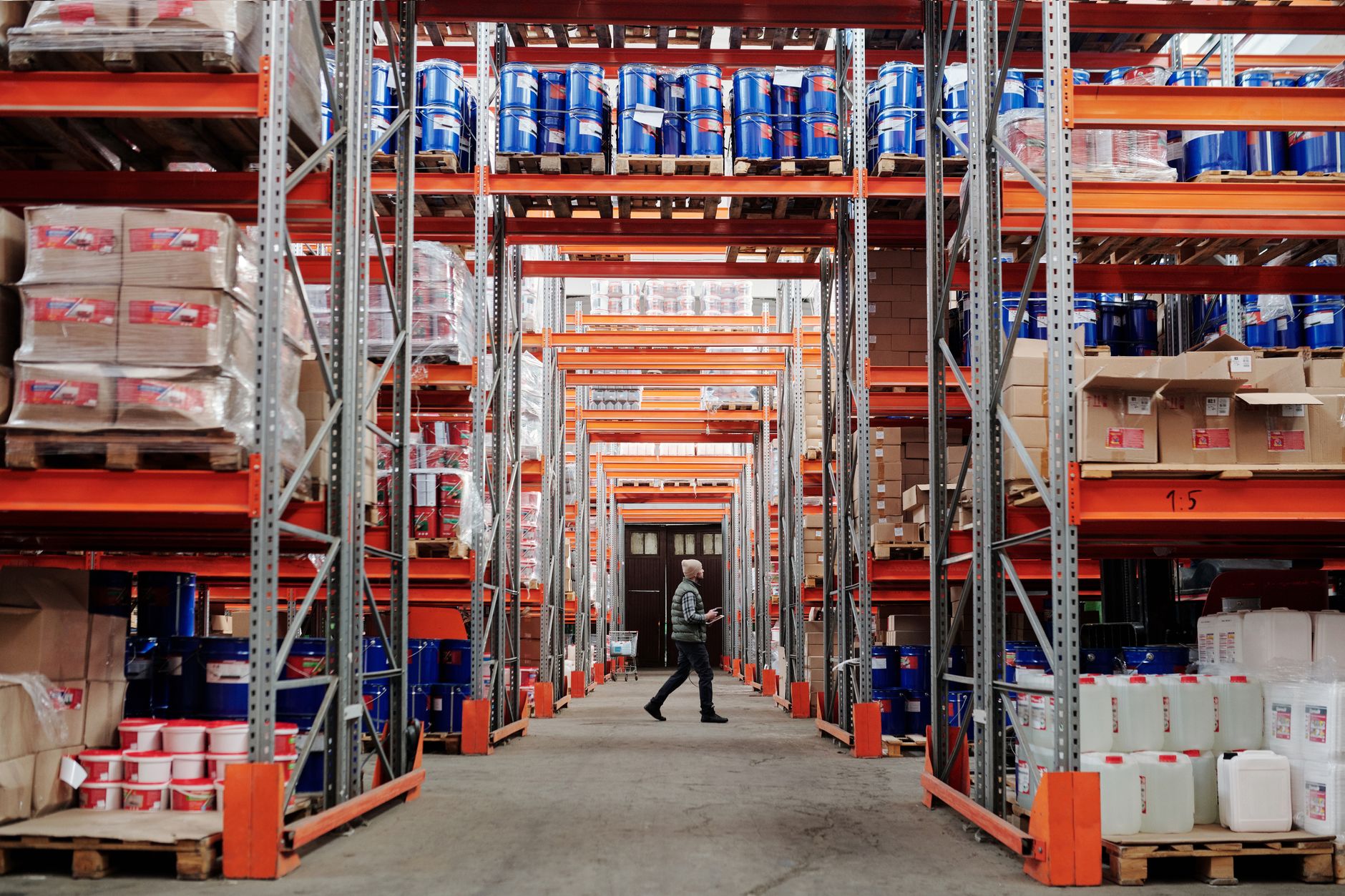
In a Goods-to-Person system, the worker stays put. AMRs retrieve entire shelves, racks, or bins of inventory from a high-density storage area and deliver them directly to a stationary picking workstation. The operator takes the required items, and the robot returns the storage unit. This method completely eliminates worker travel time, which can account for over half of a picker's shift in a manual warehouse.
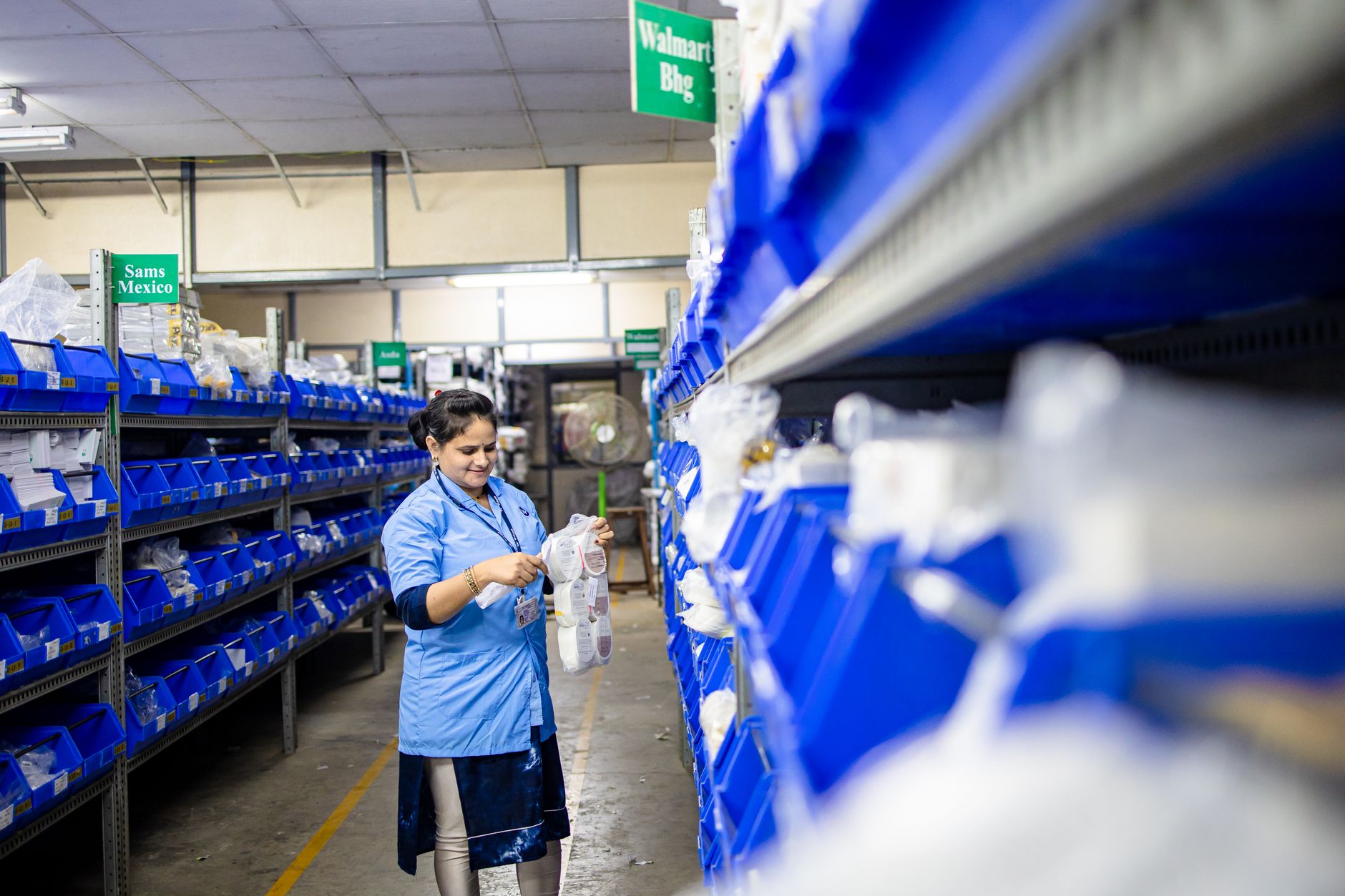
Conversely, a Person-to-Goods system keeps the worker moving, but makes their movement much more efficient. In this model, often called collaborative picking, an AMR acts as a smart cart or guide. The robot meets the picker in the aisle, directs them to the next item's location, and carries the collected orders. This drastically cuts down on unproductive walking, especially the long return trips to packing stations.
The market for these technologies is significant. Driven by the intense demands of e-commerce fulfillment, goods-to-person picking robots are a major segment of warehouse automation investments. This highlights the industry's focus on solutions that directly attack the time-consuming process of walking the warehouse floor.
How Does a Goods-to-Person (G2P) System Operate?
A G2P workflow inverts the traditional warehouse model. Instead of a person pushing a cart through aisles, a fleet of robots does the traveling. The process is orchestrated by sophisticated software that integrates with the Warehouse Management System (WMS).
When an order is received, the system identifies which storage units hold the required SKUs and assigns tasks to the nearest available robots. An AMR navigates to a designated high-density storage area, which is often inaccessible to people, retrieves a portable shelving unit or a specific tote, and brings it to a picking station.
At the station, the human operator is presented with the items. Lights and on-screen displays indicate which product to pick and how many units are needed. After the operator confirms the pick, the system directs the robot to return the shelving unit to storage and assigns another robot to bring the next required unit. This creates a continuous flow of inventory to the picker, who focuses solely on the high-value task of picking.
What Is the Workflow for Person-to-Goods (P2G) AMRs?
A Person-to-Goods AMR system augments the traditional picking process rather than completely redesigning it. Workers still travel within the warehouse aisles, but they do so with robotic assistance that makes the process faster and more directed.
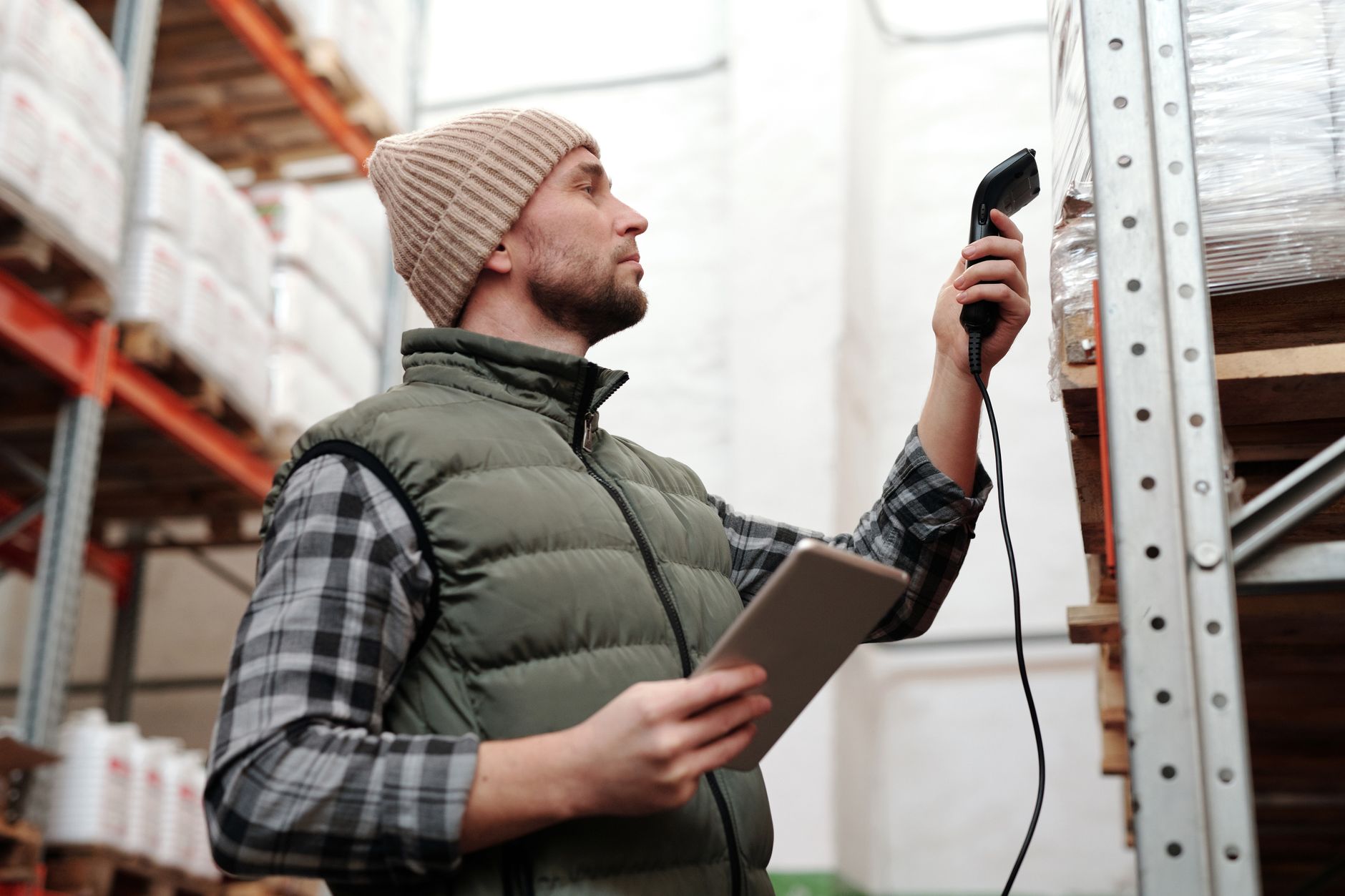
The process typically begins with a worker assigned to a specific zone. An AMR, acting as an intelligent mobile cart, is dispatched to meet the picker. The robot's onboard screen or a connected wearable device displays the next item to be picked and its precise location, guiding the worker via the most efficient path.
Once at the location, the picker scans the item and places it into a tote on the AMR. The robot then immediately directs the worker to the next pick location within the zone. As totes are filled or an order is complete, the robot autonomously travels to the packing or consolidation area, while another AMR is dispatched to meet the picker, ensuring no time is lost. This zoning strategy significantly reduces foot travel compared to a manual process where a picker might traverse the entire facility for a single order.
What Are the Performance Gains and Tradeoffs?
The choice between G2P and P2G comes down to a tradeoff between upfront investment and ultimate performance. G2P systems deliver the highest possible productivity gains. By eliminating all picker travel, operations can see throughput improvements of 2x to 5x over manual methods, with pick rates reaching 300-600 items per hour per worker. Order accuracy also sees a major boost, often reaching 99.9% or higher.
However, these gains require a substantial capital investment and more significant changes to warehouse infrastructure. G2P systems need dedicated, high-density storage areas, specialized racking built for robotic access, and ergonomic picking stations. Deployment is also a longer-term project, often taking six to eighteen months.
P2G systems, by contrast, offer a more accessible entry point to automation. The capital cost can be 70-80% lower than a full G2P system. Because these AMRs are designed to work in existing aisle environments alongside people, they require minimal infrastructure changes. Deployment is much faster, often taking just a few weeks. While the productivity gains are more modest than G2P, they are still significant, typically increasing picks per hour by 2-3x compared to manual cart picking.
Which System Aligns with Your Operational Needs?
The ideal AMR strategy depends entirely on your specific operational characteristics, including order volume, SKU variety, and facility constraints. G2P is best suited for high-volume operations, typically those processing several thousand orders per day. It excels in environments with a large number of SKUs where high storage density is critical. If your business experiences sharp seasonal peaks, the scalability of a G2P system can provide the necessary throughput without relying on large numbers of temporary staff.
P2G systems are an excellent fit for small to mid-sized operations, particularly those with daily order volumes under 5,000. They provide a clear and rapid path to improved efficiency without the extensive capital outlay and facility overhaul required by G2P. They are also highly flexible, allowing you to easily add more robots to the fleet as your business grows. For businesses in leased facilities with shorter-term commitments, the minimal infrastructure impact of P2G is a major advantage.
How Does an Integrator Help You Choose the Right AMR System?
Making the right choice between these two powerful technologies can be daunting. The specifications and performance claims can be overwhelming, and the best system for one warehouse could be a poor fit for another. This is where an experienced, vendor-neutral robot integrator becomes a critical partner.
At Service Robot Co., we don't start with a specific robot in mind. We start with your operation. Our process involves a deep analysis of your order profiles, facility layout, existing software, and business goals. Because we are OEM-neutral, our only objective is to identify and deploy the AMR strategy that delivers the best return for your business, whether it's a P2G, G2P, or even a hybrid system.
From there, our role extends through the entire lifecycle. We handle the financing, deployment, and integration with your WMS. Our nationwide network of US engineers provides the on-site training and go-live support to ensure a smooth transition. And once your fleet is operational, we are your single point of contact for all maintenance, service, and support, ensuring you achieve the uptime and performance you expect. One partner, one number to call for the entire journey.