Key takeaways
- Keep the ride-on scrubber if your hall is shaped by constant weather blow-in, cluttered queuing, and short burst cleaning between waves of passengers.
- Move toward an autonomous floor scrubber when most square footage is open, repeatable, and cleaned in stable late-night windows.
- Transit math is not airport math. Tight agency budgets, union staffing realities, and morning surge pressure change the threshold.
- The best deployments keep people on edges, spills, and exceptions while the robot handles the long, dull middle of terminal floor scrubbing.
- Service Robot Co. is most useful when an operator wants commercial cleaning robot rental, robot leasing for business, and one partner for deployment, training, service, and replacement.
What is the right choice for most transit halls?
For most bus terminals, ferry terminals, and commuter rail concourses, the answer is not ideological. Keep a manual ride-on scrubber if your floor conditions change by the hour. Move to an autonomous cleaning robot if the work is repetitive, the path is stable, and your overnight cleaning window is dependable enough for the machine to cover the same route night after night.
Transit halls usually tip toward a mixed answer. The robot handles the broad open runs through the concourse, waiting areas, and fare hall. A human crew keeps the ride-on or a smaller manual machine for storm debris, platform-edge detail, queue spill response, and any zone that changes too much during a shift.
That distinction matters because transit has its own operating pressures. According to APTA, U.S. public transit riders took 8.1 billion trips in 2025, up 6 percent from 2024. High footfall is back, but budgets remain tight. APTA also says one-half of agencies, and 71 percent of the largest agencies, expect a fiscal cliff within five fiscal years. In that environment, a robot only belongs if it reduces labor strain without creating a new babysitting problem.
Why do transit terminals evaluate this differently from airports?
Airports often have longer overnight access, more uniform public areas, and larger commercial budgets per site. Transit operators live with a rougher floor story. Rain blown through bus bays, slush walked in from station stairs, salt, leaves, grit, coffee, and newspaper trash can remake a lobby in an hour.
Public funding structure matters too. The Federal Transit Administration announced $20.6 billion in fiscal year 2026 funding for public transportation, including about $14.6 billion in formula funding. That sounds large until it is spread across states, urbanized areas, fleets, facilities, and backlog. Terminal floor care competes with vehicle reliability, safety work, accessibility upgrades, and staffing.
Then there is labor. The U.S. Bureau of Labor Statistics says the median pay for janitors and building cleaners was $17.27 an hour in May 2024, and about 351,300 openings are projected each year on average over the decade. Transit agencies feel that churn while also competing for night-shift labor. A robot as a service program can help, but only if it covers real square footage consistently enough to offset the supervision and service overhead.
When should you keep the ride-on scrubber?

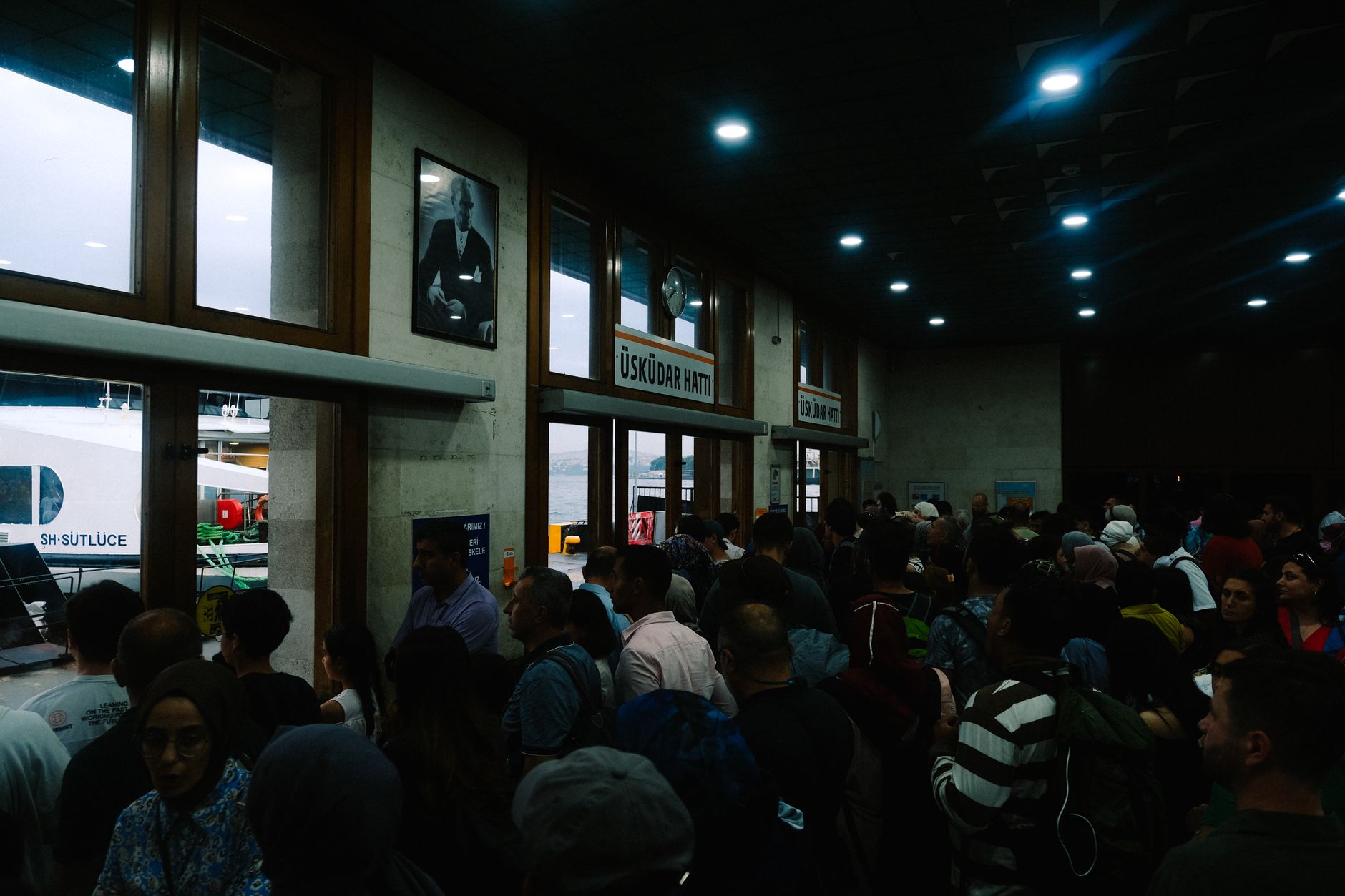
Keep the manual ride-on when the job is dominated by exceptions. If the hall has tight switchbacks, movable stanchions, pop-up security lines, heavy bench density, or frequent event reconfiguration, a skilled operator will still outwork a robot. The same applies when the surface mix changes constantly between polished lobby floor, textured entry mat, platform approaches, and narrow connector corridors.
A ride-on also wins when weather drives the mess profile. NOAA says the United States has seen 190 separate billion-dollar disasters from 2015 through 2024, costing about $1.4 trillion. You do not need a storm to hit your terminal directly for that to matter. More volatile rain, wind, and snow patterns mean more days when a concourse shifts from routine maintenance to rapid recovery.
Manual machines are also the safer choice for sudden-condition cleanup. OSHA says wet floors, spills, and clutter can lead to slips, trips, and falls, and requires floors to be kept clean and dry and passageways clear. When passengers are still moving through the hall, a supervisor may prefer an operator who can spot hazards, redirect pathing instantly, and handle partial-area cleaning without waiting on a map or route adjustment.
- Keep the ride-on if your cleaning window is under two hours and regularly interrupted by late arrivals or early departures.
- Keep it if more than a quarter of the route is blocked by movable furniture, cones, queue rails, or vending carts on a typical shift.
- Keep it if winter days routinely turn the first 30 feet inside each entrance into slush recovery work.
- Keep it if the site needs one machine to jump between broad scrubbing and highly selective spot response all night.
When does an autonomous scrubber start making sense?
A robot earns its place when the floor plan is boring in the best possible way. Long, open concourses. Predictable waiting zones. Wide circulation paths. Repeatable night routes. Few surprise obstructions after closing. Those are the conditions where an autonomous floor scrubber rental or floor scrubber monthly lease can cover large facility coverage with steady quality.
The labor case improves further when your crew spends too much time on low-judgment work. If staff are burning hours on the same broad floor runs every night, the robot can take the long center lanes while people handle edges, spills, restrooms, elevators, and first-wave prep. That is where overnight cleaning no operator has real meaning. Not no people in the building, but no person glued to the machine for the whole route.
Robots also fit sites that want a commercial cleaning robot rental before a purchase decision. A pilot lets the operator learn route reliability, recovery behavior, charging discipline, and how the machine handles fare-gate perimeters and entrance mats in live transit conditions. If the route proves stable, robot leasing for business or a robot rental monthly structure is often easier to approve than a large capital request.
What floor and traffic traits matter most in the comparison?
Start with the floor, not the brochure. Transit halls punish weak assumptions. Look at debris type, moisture load, entrance mat coverage, slope changes, tactile warning strips, and how often furniture migrates. A robot that looks excellent on a clean demo slab may struggle if every entrance throws in sand, de-icer, leaf litter, and umbrella puddles before dawn.
Traffic rhythm matters just as much. A concourse with heavy morning surge and quieter late evenings is often a good robot candidate because the machine can work during the stable hours and be parked before passenger flow spikes. A terminal with all-night churn, irregular crowd pulses, and frequent security holds may never give autonomy the calm runway it needs.
Accessibility and clear passageways cannot be an afterthought. The FTA's ADA guidance exists because stations have to remain usable for riders with disabilities at all times. That pushes many agencies toward a blended operating model. The robot handles open runs during low-traffic periods, while people manage any area where crowding, mobility devices, or temporary path changes demand more judgment.
- Best robot fit: wide straight runs, stable furniture layout, consistent night access, and documented repeatability.
- Best ride-on fit: fragmented spaces, frequent spill response, threshold slop, and highly variable congestion.
- Best mixed fit: one large hall with predictable center lanes and messy entrances, edges, and platform connectors.
How should a transit operator judge the economics honestly?
Do not compare a robot to a hypothetical fully staffed team that you rarely manage to schedule. Compare it to your real operation. That means actual absenteeism, call-offs, service contractor gaps, and how much floor care is deferred when the crew gets pulled into trash, spills, or incident response.
It also means counting the hidden cost of inconsistency. If broad floor scrubbing gets skipped three nights out of ten because the terminal had a rough shift, the floor finish degrades, slip risk rises, and morning presentation suffers. A robot that reliably covers the same route can stabilize that baseline, even if a ride-on is still needed for storm nights.
This is where Service Robot Co. can be useful for transit operators that do not want to manage multiple vendors. The company works as an OEM-neutral, vendor neutral robot integrator for U.S. businesses, then finances, deploys, integrates, trains, and services the fleet through a nationwide engineer network. For agencies weighing commercial robot rental, monthly payment programs, maintenance included, on-site dispatch, emergency robot replacement, or no upfront capital, having one partner across the full lifecycle reduces coordination drag.
What is the practical deployment model for most terminals?
For most transit sites, the winning model is not robot only. It is robot first on the repeatable square footage, with manual equipment held back for weather recovery and exceptions. That preserves the ride-on where it still earns its keep and lets the robot absorb the most fatiguing, least differentiated work.
A sensible rollout starts with one route and one shift. Map the hall, define exclusions, and test for several weeks across dry days and bad-weather days. Measure completion rate, interruptions, water recovery, and what the human crew actually did with the time the robot freed up. If those numbers hold, expand route count, not complexity.
Service Robot Co. is built for that sort of phased deployment. A transit operator can start with a commercial robot demo, try before you buy structure, service robot rental, or lease rental or sale path, then keep the same partner for go live support, fleet service, and training. In a sector where one broken unit can wipe out confidence quickly, emergency response nationwide and spare-unit planning matter more than a flashy launch.
The decision rule
Keep the ride-on scrubber if your concourse behaves like a live weather vestibule with constant exceptions. Buy time with labor, judgment, and flexibility. Move to a robot when the floor behaves like a repeatable process and your crew needs relief from the long, dull middle of terminal floor scrubbing.
If you are on the fence, that usually means the site is a mixed case. In transit, mixed cases are normal. Use the robot for the stable center, keep manual equipment for the messy perimeter, and judge success by completed nightly coverage, morning readiness, and reduced strain on the people you cannot afford to lose.