Key takeaways
- Floor robots suit dry, flat, repeatable bakery lanes, not overhead dust or washdown zones.
- Dry sweeping and compressed air work against dust control, so pick robots that vacuum or wet clean.
- Bakery housekeeping starts with dust that can be knocked loose overhead, not the floor alone.
- Map every zone into robot, preclear or crew only before you ask for a quote.
- Cleaning robots are a growing category, but the 2024 figures do not prove how your flour load will go.
Can a floor robot handle flour dust in a bakery?
Yes, for part of the floor. A floor robot can take over repeat cleaning on flat, dry or lightly wet lanes in a bakery, such as packaging aisles, dry goods corridors and open floor between production lines. It does not take over overhead dust, washdown rooms, or the work around mixers and under equipment.
The first decision is the method, not the machine. Bakery safety guidance treats dry sweeping and compressed air as habits to avoid, so the robot's job is to vacuum or wet clean flour, never to stir it back into the air. Settle that rule first, then map the rest of the floor.
Use a robot where the work repeats and the layout stays put. Keep a hand crew for anything that needs judgment, tools or a hose.
Why dry sweeping is the wrong starting point
Bakingbusiness reports that a first dust explosion is often followed by a more severe secondary explosion, when dust knocked loose from overhead pipes and structure feeds the second blast. The same article calls good housekeeping the most crucial key to reducing fires and explosions. It also warns that compressed air used to clean overhead pipes and supports during a down day can raise the risk.
A dust control vendor's guidance says to vacuum flour and prohibits dry sweeping. A Food and Drink Technology article reports that HSE guidance tells bakeries to avoid sweeping and compressed air, and to use wet cleaning or industrial vacuums instead. For a robot buyer, the filter is simple: a unit that throws flour into the air works against your housekeeping plan, however clean the floor looks afterward.
What OSHA floor rules mean for a robot schedule
A Nilfisk guide summarizing OSHA standards says that under 1910.22 workroom floors must be clean and, where possible, dry. It also says 1910.263 lists several flours as combustible agricultural dusts, and that employers need a documented housekeeping program covering cleaning frequency and methods. That guide is a vendor summary from around 2016, so check the text on osha.gov as it stands today before you write a policy around it.
A robot does not replace the program. It does produce a schedule, a route and a run log, which are the records a housekeeping program needs to show. The same summary cites grain handling rule 1910.272, with an eighth inch dust accumulation limit in priority areas. That rule covers grain operations rather than bakeries, so treat it as a benchmark, not a bakery requirement.
Where a floor robot earns its keep in a bakery
The good zones share three traits: a hard floor that is dry or lightly wet, a layout that stays stable, and traffic you can schedule around. Packaging aisles and dry goods corridors usually qualify. Open floor between production lines can qualify once the crew has cleared the large debris.
Sugar and crumb debris on dry floors suits vacuum and scrubbing robots. OrionStar's product page for its CleaniBot C5, checked as of November 2026, says bakery production areas generate flour, sugar and crumbs, and claims the robot lifts fine particulate in one pass. That is a marketing claim, and we found no independent test of it. Test it on your actual floor before you count on it.
Narrow aisle units form their own class. Tennant introduced a small format robotic scrubber for grocery retail environments, according to trade press, checked as of November 2026. Measure the real gap between racks, cases and counters before you compare footprints, because catalog widths tell you very little about your layout.
Where robots stop and a hand crew takes over
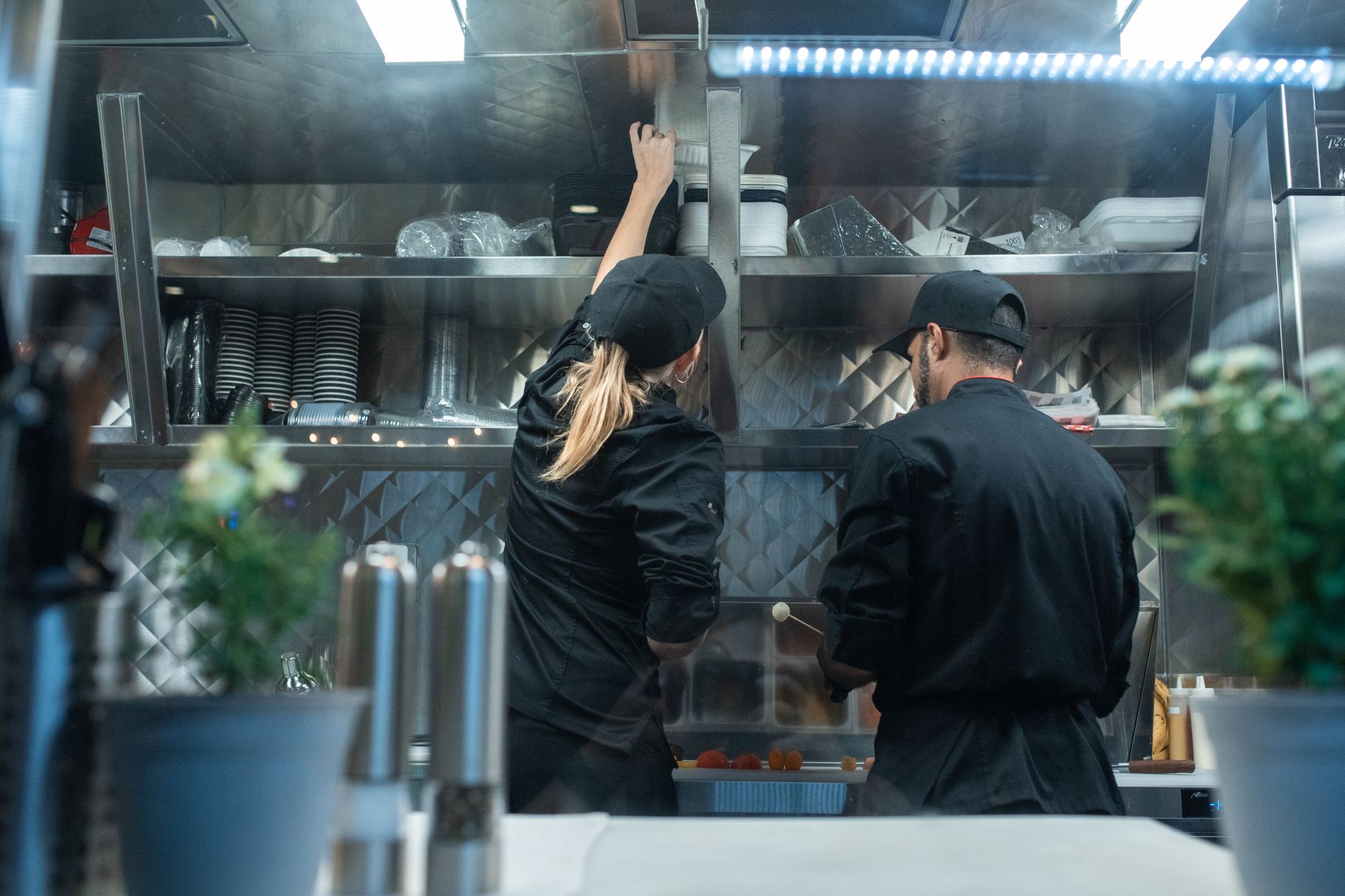
Washdown zones are the first no. Drains, slopes, hoses and standing water change what a robot can see and what it can safely do. Keep those rooms with the crew, or with a machine an operator controls, and test any robot in a washdown area on the actual floor before scheduling it.
Overhead work is not a floor robot job. Flour on pipes, beams and light fixtures needs a crew with a suitable vacuum and a written plan. The same applies to the space under and around mixers, dividers and conveyors, where people have to move equipment to reach the debris.
Bulk spills come first. Dough, oil and sugar syrup should be scraped and removed before a robot runs, because a robot pushing a spill across the floor spreads the mess. Let the robot finish the film after the crew has taken the bulk.
How to split your bakery floor before you request a quote
Walk each area with three questions. How much flour or sugar lands there each shift? Does the floor get wet at any point? Can a robot route through without a person clearing the path first? The answers sort the floor into three groups.
- Robot zone: dry or lightly wet, few obstacles, stable layout, one repeatable route.
- Preclear zone: a robot runs only after the crew scrapes bulk spills, moves carts and clears cords.
- Crew only zone: washdown rooms, overhead dust, equipment undersides and any open drain or moving machine.
What the cleaning robot market data tells a bakery
According to IFR's World Robotics 2025 service robot data, professional cleaning robots ranked third and grew 34% to more than 25,000 units sold, mainly floor cleaning. That figure is based on a sample of 294 service robot suppliers. Overall professional service robot sales rose 9% in 2024 to nearly 200,000 units, and IFR attributes part of the demand to labor shortages.
These are 2024 figures, and IFR advises against mixing data from different editions. The numbers show floor cleaning robots are a mainstream category. They do not show that a robot will handle your flour load, so they cannot replace a zone test.
How Service Robot Co. approaches a bakery floor
Service Robot Co. is a full service commercial robot integrator for US businesses, and we stay OEM neutral. Our commercial cleaning robot leasing covers the robot that fits each zone, across manufacturers, and we finance, deploy, integrate, train and service it through our nationwide US engineer network. One vendor covers the whole lifecycle, from the first site walk to the last service call.
A bakery starts with a site assessment. We quote one fixed lease payment after that assessment, on a lease term of three years, so the zone map drives the quote and not the other way around. Start with one overnight zone, review the route log together, and widen only when the zone earns it. If the assessment assigns a space to the crew, we say so before you sign anything.
Frequently asked questions
Want a robot working for you?
Tell us the job and the site. We will recommend the robot, quote the lease, and keep it serviced.
Sources
- Bakingbusiness: Pro tip, preventing dust explosions in a bakery
- Dust Arrest: Dust hazards and control in industrial baking operations
- Food and Drink Technology: HSE guidance on bakery dust
- Nilfisk: A food industry professional's basic guide to OSHA standards
- Food Logistics: Tennant introduces small format robotic scrubber for grocery retail
- OrionStar: CleaniBot C5 product page
- Business Wire: IFR World Robotics 2025 service robots release