Key takeaways
- Map the room as it looks on a busy afternoon, not only as the floor plan shows it.
- Plan around folding tables, chair clusters and machine door swings as obstacles that change.
- Storefront glass can make a robot stop for no clear reason, so test the front before launch.
- Run lint heavy corners as a fixed pass and inspect the robot after every run.
- Pick a quiet window from logged traffic, and clear the lanes before the robot starts.
How does a floor robot route through a laundromat?
A floor robot in a laundromat works from a map. It learns the walls, the rows of front loading machines and the open lanes between them, then plans passes that leave customers a clear path with their bags and baskets. The routing problem is less about cleaning speed than about how the room is used at different hours.
In short, the robot follows a mapped route through the widest open lanes, treats folding tables and chair clusters as obstacles that move, slows near machine doors and glass, and runs its lint heavy corners on a fixed pass during the quietest window. Trade groups such as the Coin Laundry Association publish an industry overview that helps operators see how a single store fits the wider sector.
Why are laundromat layouts hard for floor robots?
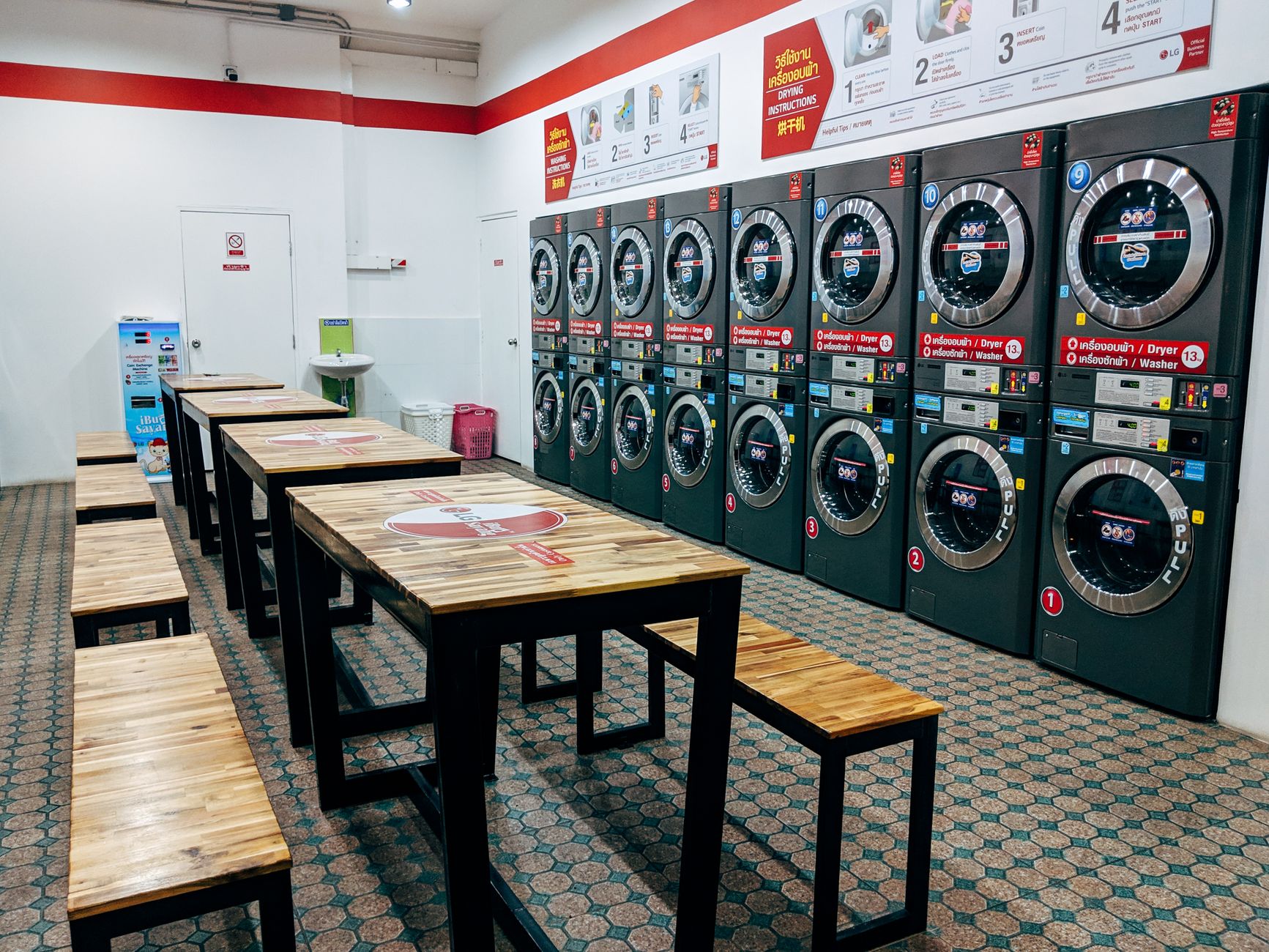
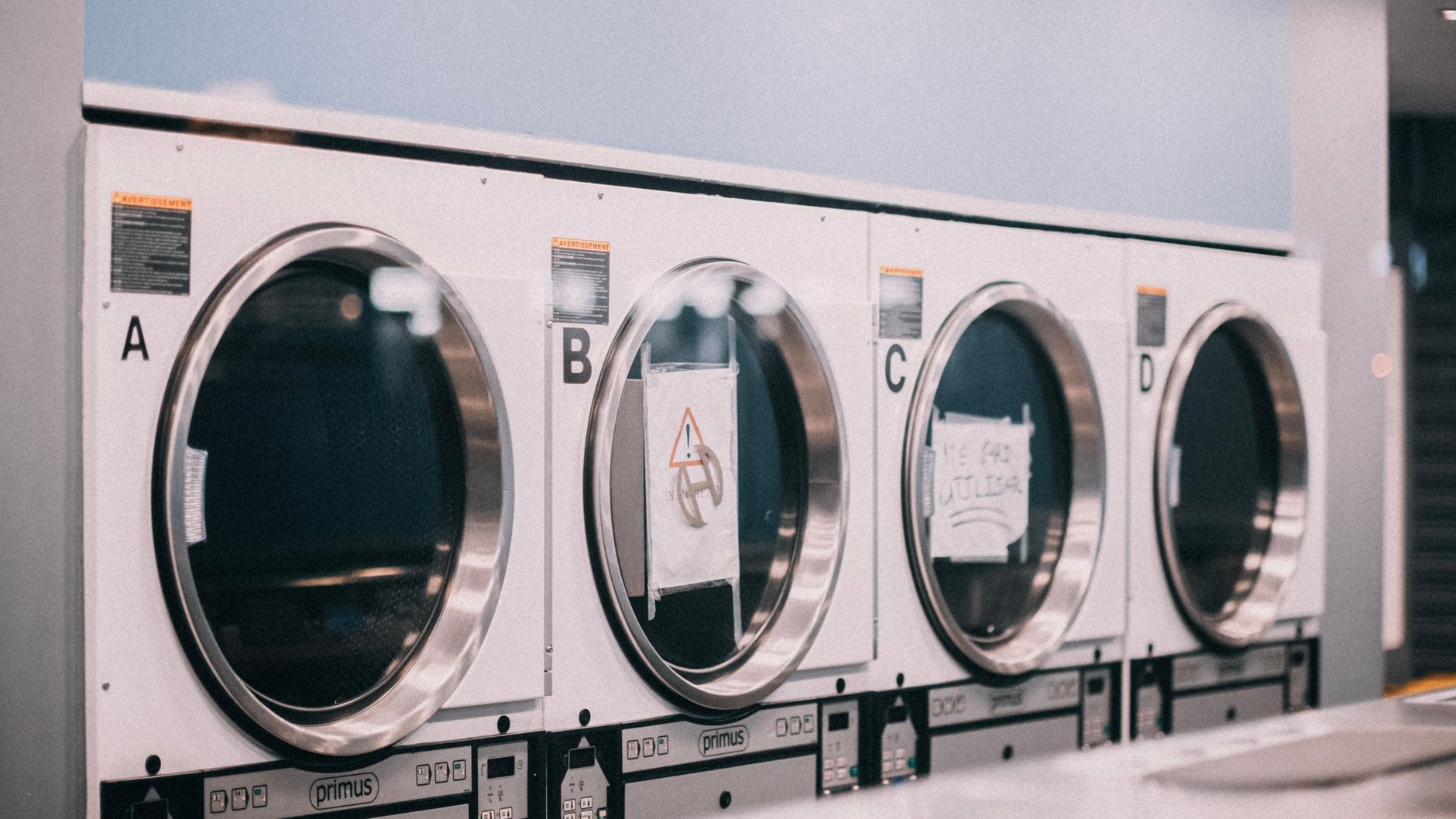
Laundromats pack a lot into a small footprint. Front loaders sit in long rows, door swings change the usable width of each aisle, folding tables stand in the middle of open floor, and the storefront is often mostly glass. Each feature changes how a robot reads the room.
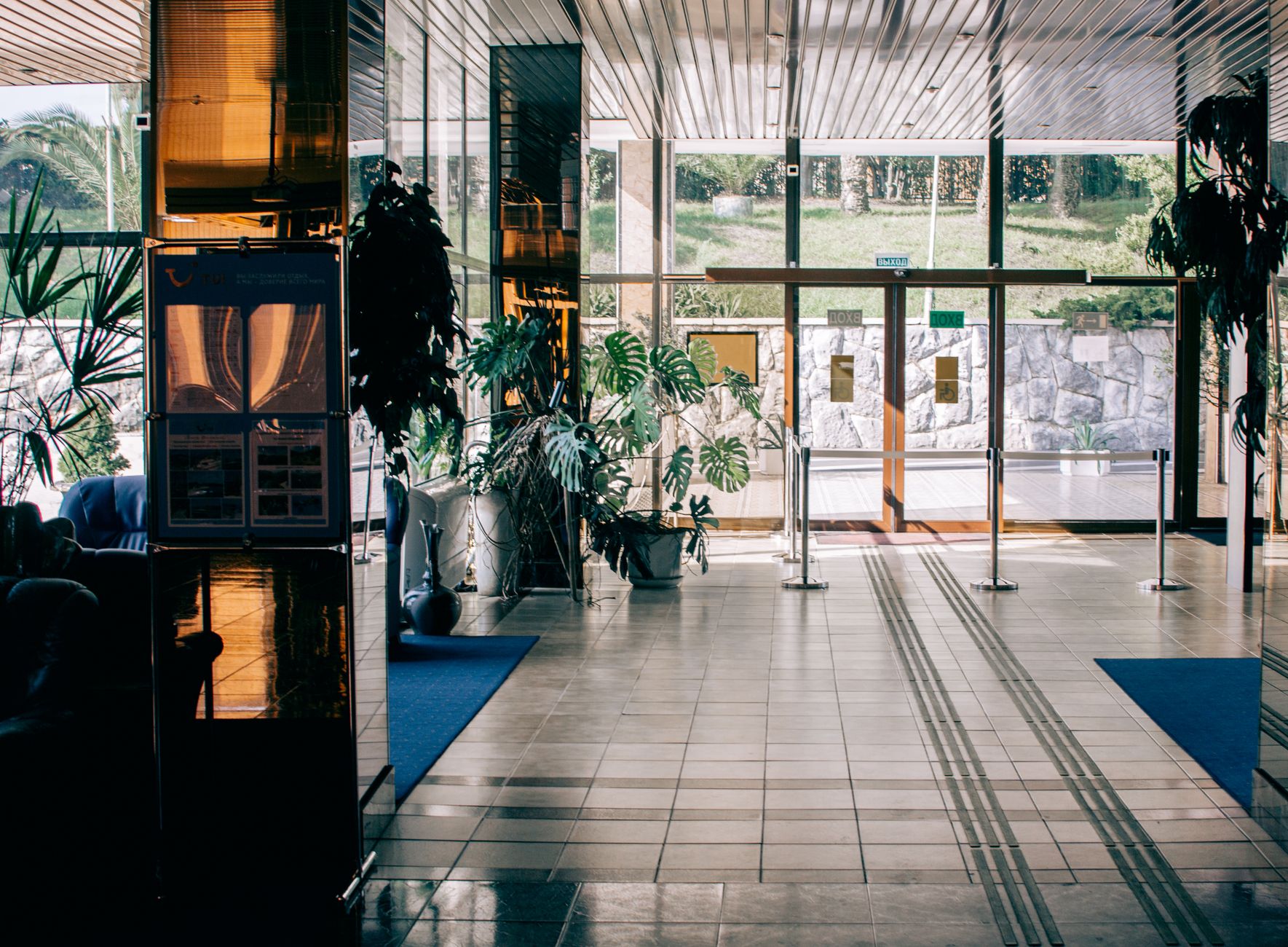
Glass is the one operators underestimate. Tennant's retail best practices guide for its autonomous robots notes that reflective glass can register as a false obstacle and cause the robot to stop. A bright storefront can therefore leave a robot idle at the front of the room even when the aisle is clear.
Lint adds a second problem. Fiber collects behind dryers and under folding counters, so those corners need a deliberate route rather than whatever path is left over once the open floor is done.
What does mapping a laundromat involve?
Mapping decides most routes. A plan drawn from a floor layout will miss the chair clusters, the cart parked beside the vending machine and the cord someone runs across an aisle. Walk the floor with the robot's sensors in mind and record what is fixed and what moves.
Sensing matters for narrow obstacles. Nexaro's commercial cleaning robot page says lidar can detect narrow obstacles such as table legs early, though that is a vendor statement and not an independent test. A patent describes a cleaning robot with lidar set in a recessed part to sense obstacles at the front and both sides, plus several cliff sensors underneath.
- Machine rows, with door swing arcs drawn in
- Folding table positions and the chair clusters that gather around them
- Glass panels and the hours when direct sun or street light reaches them
- Floor transitions such as the entry threshold and any drain cover
- Dryer exhaust corners and the lint heavy zones under counters
- Outlet locations for the charging dock
How do cliffs, thresholds and lint corners change the route?
Floor changes are among the sharpest hazards a route can meet. A Google Patents filing describes a cliff, typically a stair leading down, as a particularly problematic obstacle for these robots. Most laundromats have no stairs, but a sunken step or a raised drain edge at a doorway deserves the same caution, so the route should slow there and the cliff sensors should be tested on that exact spot.
A European patent describes a bumper that moves inward to cover a cliff sensor facing down when the bumper contacts an obstacle, which keeps the sensor from fouling. That is a design detail worth asking about when comparing units, because chairs and laundry carts are the kinds of objects bumped in a busy room.
Treat lint corners as a fixed pass. Run that route at the start of each cycle so the corners are not left for whatever charge remains, and inspect brushes and filters after every run, following the maker's maintenance instructions.
When should the robot run during quiet hours?
Schedule by traffic, not by convenience. A laundromat's busiest stretches are hard to read from the sidewalk, so log foot traffic for a week before setting a run window. Choose the window when machines are idle and customers are fewest, and make sure the route can finish before the next wave of loads arrives.
Quiet hours also need a pause rule. Set the robot to yield when a person enters its lane and to resume only after the lane is clear. Ask the maker how its obstacle logic handles a person stepping into the path, then test that pause before trusting the schedule.
What checks keep the route clear for customers?
Most route failures trace back to a few checks made before the robot starts. Walk the route, clear what the robot cannot read well, and review the log the next morning.
Keep the list short enough that whoever locks up will actually run it. Post a plain sign so staff know what the robot is doing and who to call.
- Chairs and bags pushed back from the aisle edges
- Carts, baskets and cord runs moved out of the lanes
- Glass checked for reflections and a clean front panel
- Thresholds and drains checked for debris that could trigger a stop
- Charging path clear and the outlet live
- Post run log checked for stops at the same spot twice
How does a service partner fit into a laundromat route?
Service Robot Co. is a full-service commercial robot integrator for US businesses. We stay OEM neutral, so we choose the robot that fits each room, then finance, deploy, integrate, train and service it through a nationwide US engineer network. We lease robots only, on a three year lease with one fixed payment quoted after a site assessment.
For a laundromat, that site assessment is where the map, the glass check and the quiet hour window get settled before any payment is set. A sensible start is one unit in one zone, tested for a fixed period and judged on its log before a second robot is considered.
Frequently asked questions
Want a robot working for you?
Tell us the job and the site. We will recommend the robot, quote the lease, and keep it serviced.