Key takeaways
- A supervised robot mower covers open turf on a schedule, but trimming, edging and recovery work still need people.
- Adding a crew member adds flexible capacity, yet hiring takes staff time and the labor data points to a tight market.
- RTK accuracy figures differ by source, so test positioning on your own site before trusting a boundary.
- Tree cover and buildings are the main threat to wire-free mower positioning, and a site assessment maps them.
- Run one route for several weeks with the same measures for both options before you pick.
Which option adds more usable capacity on one route?
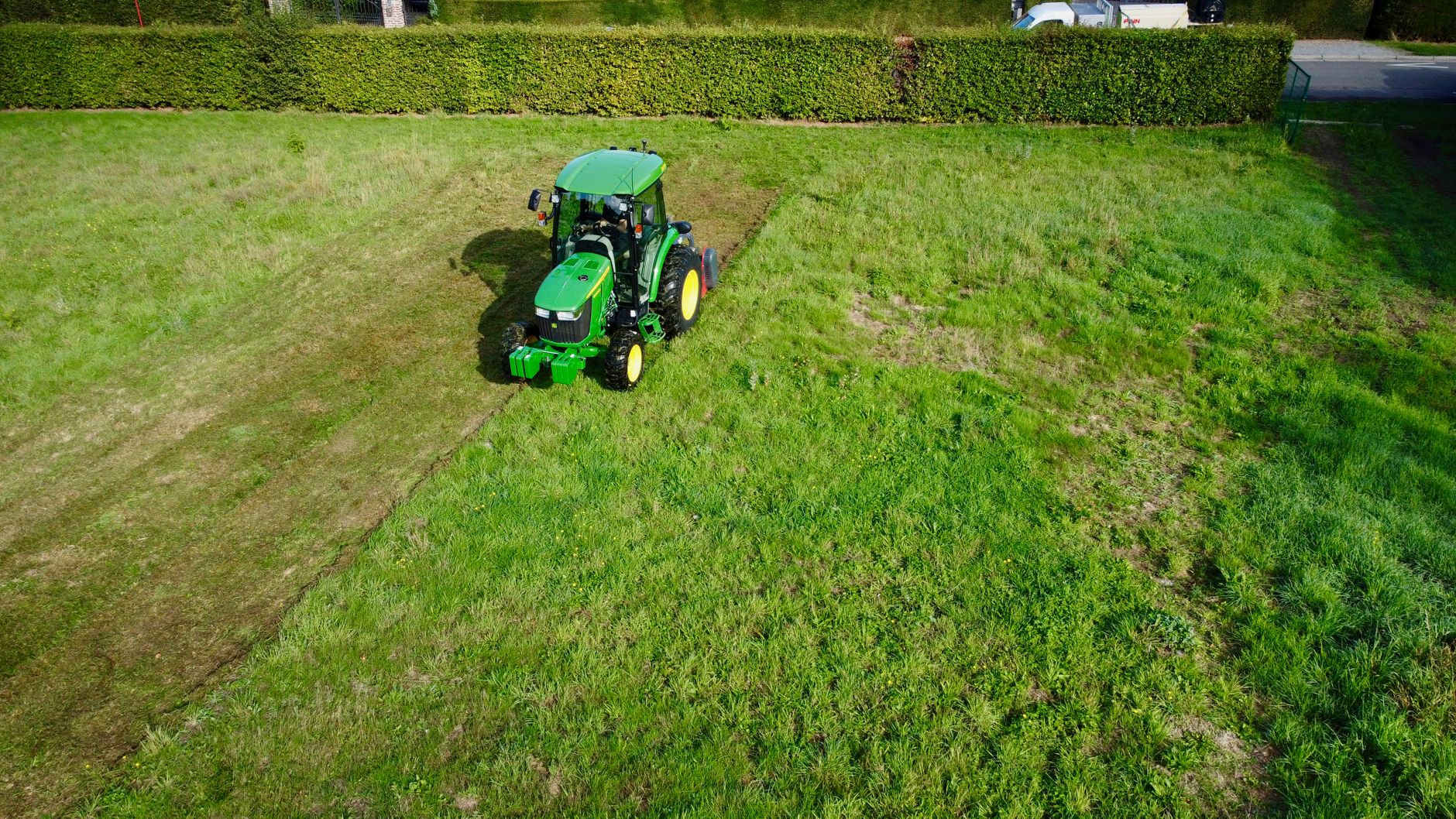
For open turf with few obstacles, a supervised robotic mower takes over the repetitive passes that a second crew member would otherwise walk behind a mower. For trimming, edging, tight corners and judgment calls, the added person still does work a robot cannot take on. On a mixed route, neither option fully replaces the other.
The useful comparison is not headcount against machine. It is what each option frees the existing crew to do, and what each one makes the crew watch. Public data on robotic mowers in commercial service is thin, so this article marks where the evidence stops rather than filling the gap with hours, weather limits or supervision rules that no source here supports.
What does each option leave the crew to do?
Adding a crew member puts another set of hands on the whole route. That person can trim around posts, edge curbs, cover for an absent teammate and recover a stuck machine. The cost is recruiting, onboarding and daily supervision, all of which land on a crew that is already stretched.
A supervised robot mower changes the crew's tasks rather than removing them. The crew still handles whatever sits outside the robot's reliable zone, and it takes on a new duty: watching the machine and its boundary.
- Trimming and edging around beds, posts, fixtures and curbs
- Clearing sticks, leaves and debris before each run
- Recovering a stalled or trapped unit and checking boundaries after storms or tree work
- Reviewing run logs and positioning alerts
- Working tight gaps and tree-covered corners the robot cannot map
How much supervision does a robotic mower need?
This research did not find a verified commercial rule on how closely a robotic mower must be supervised, so this article does not state one. Confirm the requirement in the manufacturer's documentation and with local authorities before you plan an unattended schedule around it.
The practical question is what happens when positioning degrades. Guides report that when RTK drops from fixed to float, a robot can hesitate at boundaries, wobble along its path, miss strips or leave its area. Someone has to notice those signs and act, and that time belongs in the comparison even though it never shows up as a headcount line.

Where does positioning fail, and who fixes it?
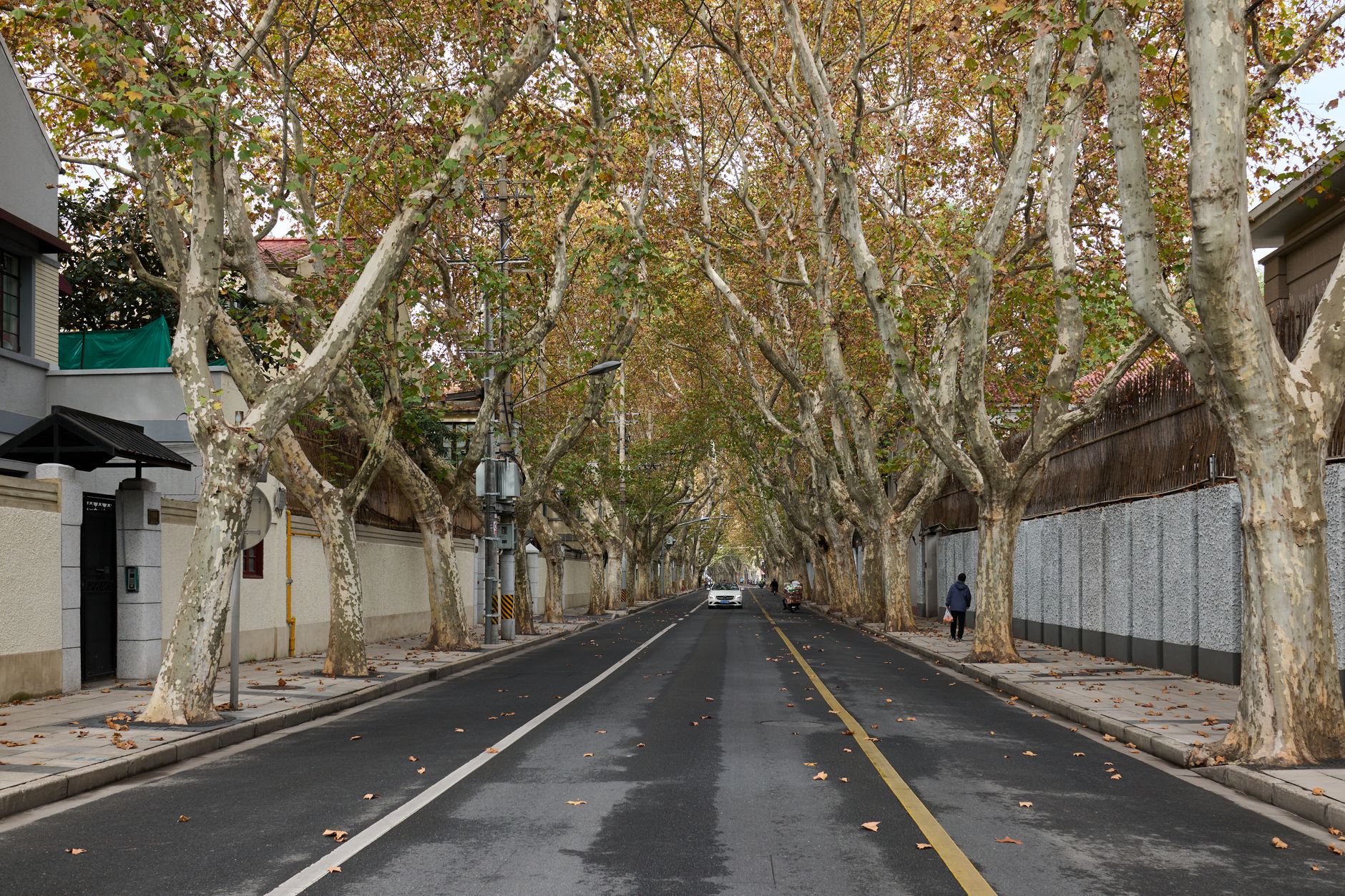
Wire-free mowers rely on RTK positioning, which can give centimeter-level accuracy so a virtual boundary replaces buried wire. Sources disagree on the figure: one guide reports about 2 to 3 cm and another 1 to 2 cm, and neither was checked against a manufacturer specification. Corrections come from an on-site base station or a manufacturer's network RTK service, reached over Wi-Fi or 4G.
Most wire-free failures trace to GNSS limits such as tree canopy, buildings and poor sky view, according to the guidance reviewed. Boundary wire stays reliable for a perimeter but is slow to install and prone to breaks. A tree-lined lot may keep a crew member working the edges where the satellite signal is weakest, and that trade is exactly what the comparison has to price.
Service Robot Co. is an OEM-neutral integrator. We choose the robot that fits your site across manufacturers, then lease, deploy, integrate, train and service it through a nationwide US engineer network. The site assessment is where sky view, tree cover and boundaries get mapped before any lease quote is built.
What do the labor figures say about hiring lead time?
Labor pressure in grounds work is well documented, but the public figures do not answer a route planner's question. GCSAA's 2024 Maintenance Budget Survey reports average labor expenditures up 17% from 2022 to 2024, as summarized in search results and not independently checked. That series covers golf course maintenance, so it is a signal for mowing crews rather than a commercial benchmark.
An older GCSAA labor survey found 63% of respondents rating the labor market bad or very bad. A 2023 LMN survey found 93% of responding landscapers stressed about hiring enough field crew, and just over one-third spent 7 to 10 hours a week reviewing applications. Aspire's 2026 Commercial Landscape Industry Report, drawn from more than 1,000 commercial landscaping owners and executives, reported a company executive saying hiring challenges center on finding quality talent, not just headcount. Goodwill Central Texas described ongoing landscaping labor shortages in April 2026, without time-to-fill figures.
None of these sources gives a verified time-to-fill for a crew role, so this article does not state one. Measure your own: record the day a posting goes live, the day a candidate starts, and the coverage lost in between. That gap is what an added crew member's lead time actually costs you.

How should weather days enter the comparison?
The research for this piece found no verified weather-day limits for robotic mowers or crews, so no weather figure appears here. Weather still shapes both options. Rain can stop a crew for the day, and a robot's positioning depends on sky view, which seasonal leaf growth and storm debris can change.
Log every day each option could not run, along with the reason. A crew day lost to rain, a robot stopped for a boundary recovery and a day spent on staffing gaps all count as lost coverage, and they belong in the same column so the comparison stays honest.
What checklist should run the comparison on a real route?
Run the comparison on one real route for several weeks before deciding. Use the same measures for both options and write them down before you look at the results.
On many routes the decision turns on tree cover and edges more than on the mower itself. Service Robot Co. starts with a free site assessment, and the lease quote follows it: one fixed quote on a 3-year lease, built from what the assessment finds on your route.
- Map the route's open turf, edges, obstacles and tree-covered areas on a site plan
- Time a full crew mowing pass with edging and trimming included
- Log each crew day lost to weather, staffing or equipment, with the reason
- Record hours spent reviewing applications and onboarding any new hire
- Count positioning alerts, stalls and boundary recoveries a robot would need
- List the tasks the crew still performs under each option
- Request a lease quote only after a free site assessment has mapped sky view and boundaries
Frequently asked questions
Want a robot working for you?
Tell us the job and the site. We will recommend the robot, quote the lease, and keep it serviced.
Sources
- GCMonline: golf course labor report
- LMN 2023 hiring trends survey
- OPE Plus: Aspire 2026 Commercial Landscape Industry Report
- Goodwill Central Texas: landscaping labor shortage
- RTK Data: wire-free robot mower RTK accuracy guide 2026
- Unmanned Systems Technology: RTK positioning accuracy in wire-free robot mowers
- Anthbot: RTK robot lawn mower complete guide
- Finding Dulcinea: best wire-free RTK GPS robotic lawnmowers