Key takeaways
- Robot mowers build stripes from repeating parallel tracks, while crews build them by steering and adjusting on the day.
- No source we checked measured stripe or height quality for robots and crews on the same lawn.
- Dull blades tear grass tips on either approach, so check sharpness before any comparison.
- A fair test holds lawn, cut height and timing fixed, then logs photos, height grids and crew time for each zone.
- Judge robots on repeatability and crews on edges, trimming and obstacles, then decide the split.
Which cut wins on stripes, height and clippings?
Neither approach wins every measure. A robot mower builds stripes by repeating parallel tracks, while a crew builds them by steering a machine it can see and adjust on the fly. On height consistency and clipping quality, the sources available do not settle the question, and most of them come from manufacturers and retailers.
For a commercial lawn, the practical answer is to judge each approach on what it does best. Judge a robot on whether its passes repeat cleanly from one visit to the next. Judge a crew on edges, trim work, and how it handles obstacles and uneven ground. Then run both on one lawn before deciding who cuts what.
How stripe pattern differs between the two
Husqvarna describes a systematic mowing mode in which the mower cuts parallel tracks to create a striped effect, and it says commercial robotic mowers may offer more pattern options. As of November 2026, that is manufacturer description, not a measured result on any lawn.
Riding mowers can stripe well too, but the result depends on operator technique and blade sharpness. As of November 2026, Eufy's lawn blog says a dull blade tears grass tips and leaves an uneven cut.
Deck width is the largest physical difference. Mowrator cites riding deck widths of 42 to 54 inches against 15 to 16 inches for robot mowers, with more powerful motors on the riding side. A narrow deck needs more passes to cover the same ground, so the pattern depends as much on the path plan and overlap as on the machine. Mowrator concludes that riding mowers look cleaner while robot mowers give a healthier lawn, which is a vendor opinion, not a tested result.

What evidence exists on height consistency?
The Wearify striping guide notes that a lower, more even cut makes straight tracks easier to see, and that very uneven height blurs the pattern. Height evenness therefore shapes how stripes read, even when the track itself is well laid out.
A Navimow retailer page cites a Kentucky study reporting more even cuts and greener grass from robot mowers. That study compared robots with rotary mowers, not riding mowers, so it does not answer the crew question directly. We did not open the study, and we found no figure we could verify.
No source we found quantified height consistency for either machine type. A crew's evenness depends on the operator, ground speed and deck setup. A robot's depends on its setup and the terrain it is given. Measure both on the test lawn rather than trusting a brochure.
Clipping quality: where both approaches can fail
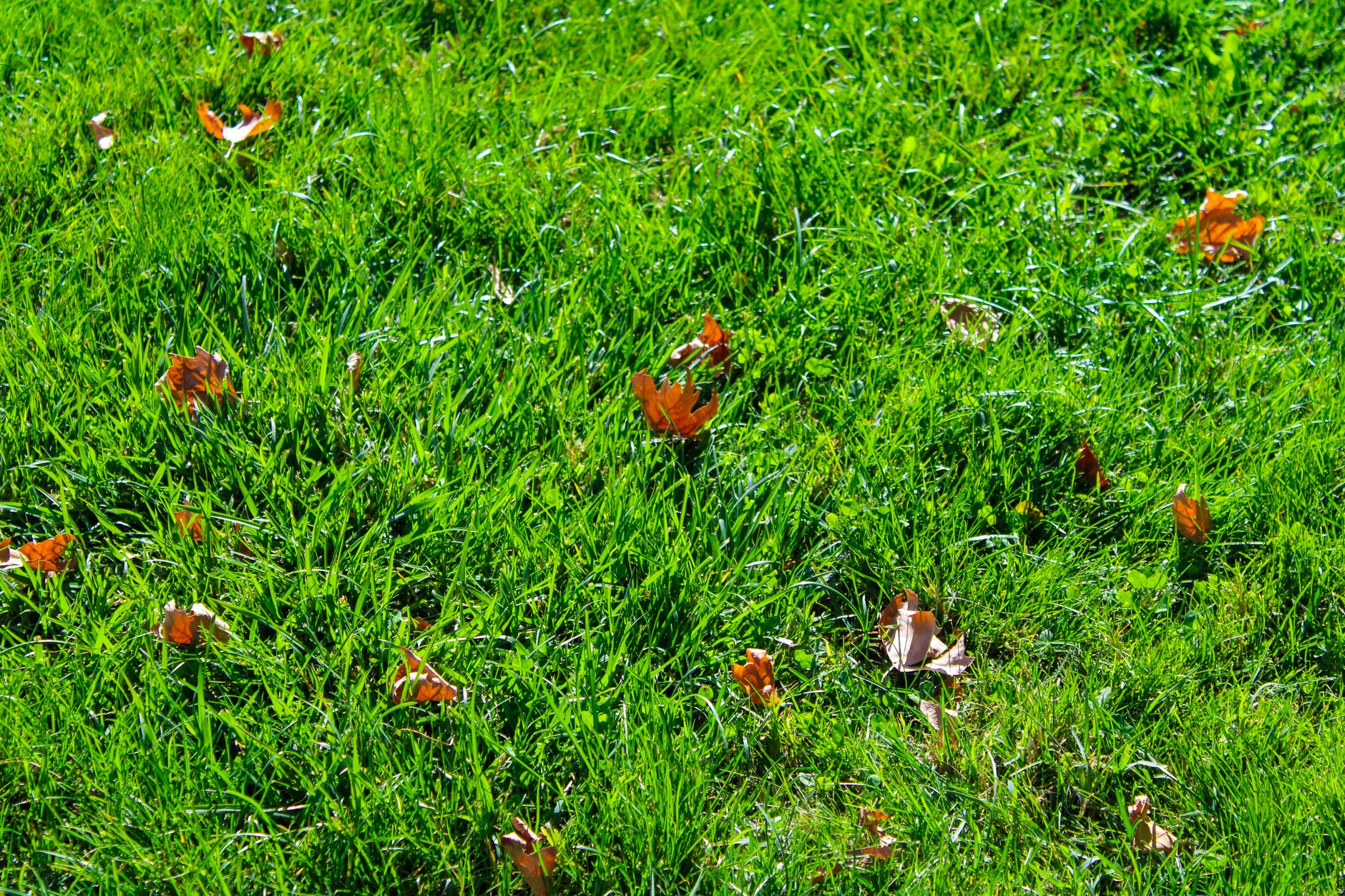
Clipping quality is where both approaches fail in ordinary ways. Dull blades tear tips on riding mowers, and a robot's cutting system faces the same blade wear. Check sharpness on both machines before any side by side run.
We found no verified clipping rate or scalping figure for either approach. Treat any claim that one leaves cleaner clippings or scalps less than the other as untested until a site records it. Log both using the same lawn, cut height and check method.
What should each approach be judged on?
A robot should be judged on repeatability. The pattern and height on the third visit should match the first, and coverage should hold across the whole schedule. One impressive pass proves very little.
A crew should be judged on the work a robot does not replace. Edges, trimming, obstacle handling and quick pattern changes for a client request all stay with people, and they take crew time whether or not a robot mows the open turf.
Autonomous mowing drew attention in golf and turf. GCMonline reported that seven autonomous mower companies exhibited at the 2025 GCSAA Conference and Trade Show, held Feb. 3 to 6. Exhibition interest shows demand, not cut quality.
How to run a side by side test on one lawn
Keep the test simple enough that a client can follow every step. The lawn is the only variable you want, so hold everything else fixed.
- Split one lawn into two zones of similar slope, shade and foot traffic, and agree the split with the client in writing.
- Set one cut height for both zones, then check it with a ruler at marked points before the run and again after it.
- Check blade sharpness on both machines on test day and record what you found.
- Run both zones on the same day, or back to back in similar weather, and note the time of day.
- Photograph each zone from one fixed spot at the same low sun angle, so the stripes read the same way in both images.
- Record a grid of height readings per zone and report the spread, not a single average.
- Inspect grass tips by hand or with a hand lens, and count the tears in a set sample area.
- Log trim, edge and obstacle time separately, including the crew time the robot still needs.

Where a lease fits into the test
Service Robot Co. is OEM neutral. We pick robots across manufacturers for a site, then lease, deploy, integrate, train and service them through a nationwide US engineer network, all from one vendor.
A lease is quoted as one fixed payment over a three year term, after a site assessment. A side by side test like this one can feed that assessment, so the quote reflects the lawn you actually have rather than a brochure claim.
Reading the results without overreaching
A result from one lawn describes that lawn. Report stripe visibility, height spread, tip tears and crew time for each zone, and avoid rolling them into a single winner.
If the robot zone holds its pattern and height across visits, and the crew zone handles edges and obstacles faster, the two are doing different jobs well. That is a split of work, not a contest with one winner.
Frequently asked questions
Want a robot working for you?
Tell us the job and the site. We will recommend the robot, quote the lease, and keep it serviced.
Sources
- Husqvarna: What is systematic mowing (checked as of November 2026)
- Eufy: How to mow stripes (checked as of November 2026)
- Mowrator: Robot vs ride-on mower comparison (checked as of November 2026)
- The Wearify: Best lawn mower for striping (checked as of November 2026)
- Navimow: Riding lawn mower vs robot lawn mower (checked as of November 2026)
- GCMonline: Autonomous mowers on display at 2025 GCSAA Conference and Trade Show