Key takeaways
- Design AMR tote loops around the filling, labeling and palletizing sequence, not around the aisle map alone.
- Size staging points from simulation data so a line change pauses one lane without starving the palletizer.
- Simulate the same demand across several fleet sizes before any live shift runs.
- Test in stages: empty loop runs, one line at reduced volume, then a full shift.
- Washdown ratings and sanitary standards belong in the route plan from the start.
How do AMR tote routes work between cannery packing lines?
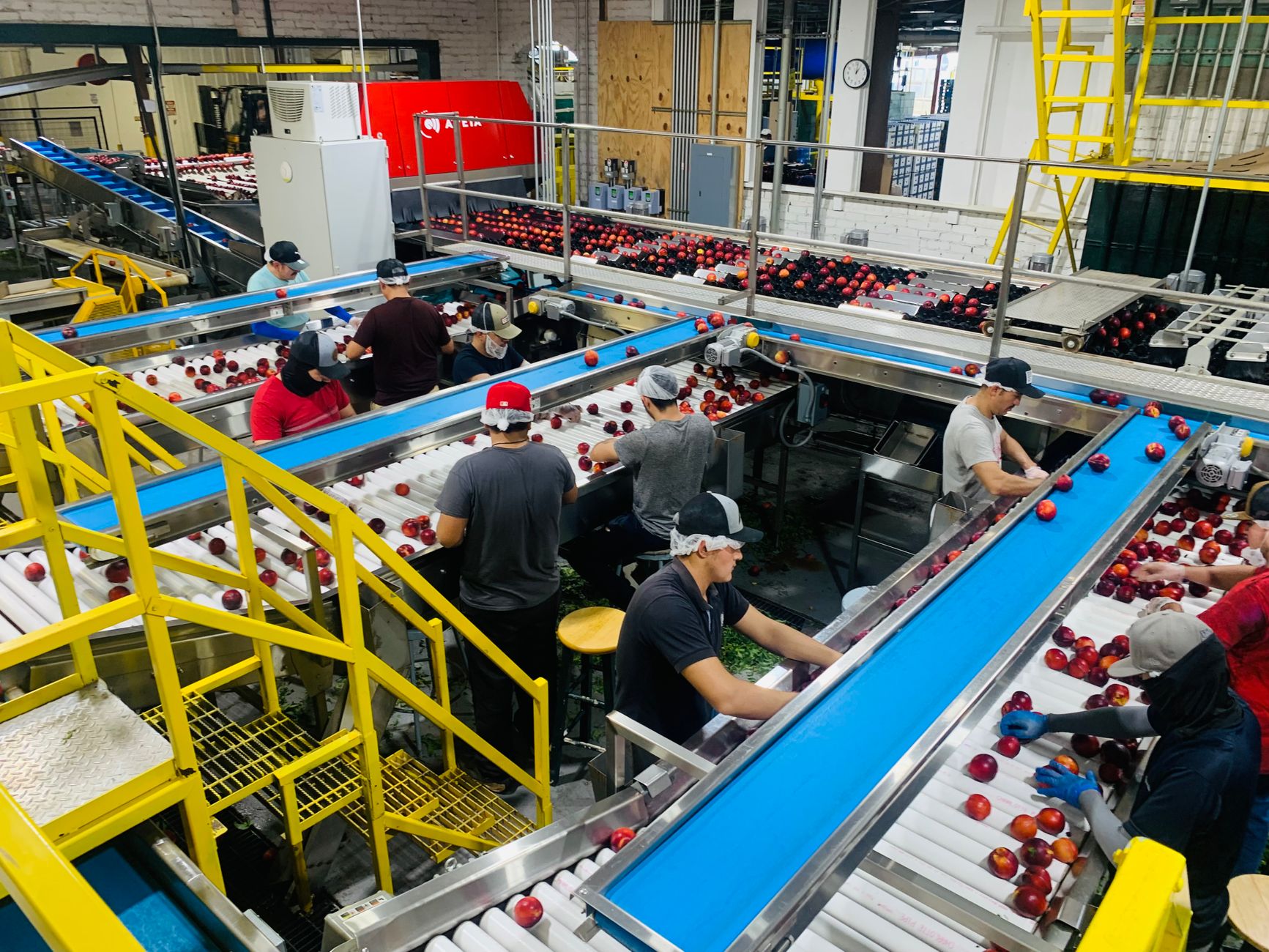
In a cannery packing area, totes move in repeated loops. Filled containers leave the filler, pass the labeler and reach palletizing, and empty totes head back upstream. An AMR fleet can carry that flow, but only when the route, the staging points and the stops at line changes are designed together.
Vendor case studies point the same way. One food maker reported that containers once stacked and carried by hand are now moved by AMR, with labor and effort reduced, although no quantities were given. Treat such claims as vendor reported. No verified throughput, payback or uptime figures for cannery tote routes turned up in this review, so the method below rests on design logic and simulation rather than benchmark numbers.
Where should the tote loops run?
Draw the flow as a set of loops, not one long line. A filler feeds a labeler, the labeler feeds a palletizer, and an empty tote return lane closes each loop. Keep empty and full totes on separate lanes, so a returning cart never blocks a full tote headed for the pallet.
ABB describes automating intralogistics between end of line and the packing area, and says that project could extend from one to two stacker AMRs (vendor reported). Mauser Packaging reported production and safety improvements at its Langley plant using OTTO AMRs, and an expansion to Oakville, Ontario, according to ProFood World coverage. That coverage was only partly visible in this review, so read it as direction, not as a specification.
Keep each loop short enough that one AMR completes a round inside the line cycle. Long return legs are where totes wait, and where an idle robot starts to look like a fleet problem.
How big should staging points be?
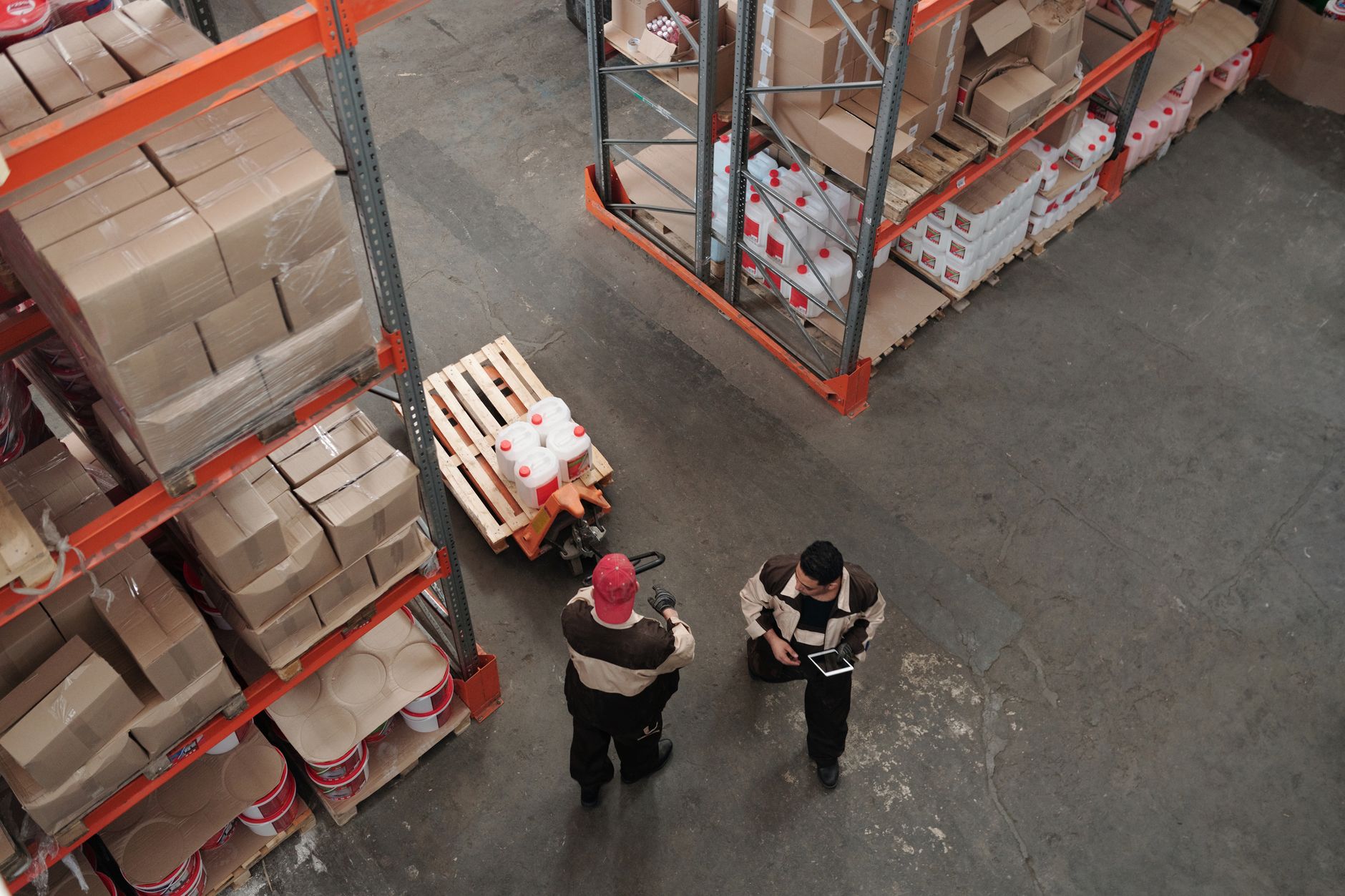
A staging point is a buffer between two stations, a place where full totes wait for the palletizer or labeled totes wait for the next AMR. Put one wherever the pace of one station meets the pace of another. Too few positions and the labeler stops; too many and totes age on the floor without moving product.
Size them from data rather than from open floor space. A Winter Simulation Conference 2021 paper describes traffic heat maps, logs of intersection blockage duration, and maximum queue length for worst case analysis. Those three outputs show where a staging point belongs and how many positions it needs.
Label each staging position by lane and by SKU. A cannery running several products can otherwise hand a palletizer totes it must sequence, and the mix up becomes a stop.
What should happen at a line change?
A line change is where most tote routes fail. When a filler switches product or a labeler changes its roll, the upstream station pauses while the downstream station runs dry. The fleet has to absorb that gap without blocking a shared lane.
Write explicit rules before go live. Park idle AMRs in bays off the main loop. Divert totes to an alternate staging point when the usual one is full. Flag any tote that stays in a lane past a set hold time, so a person can check it rather than letting it sit unnoticed.
Mixed fleets raise the stakes. A BlueBotics opinion piece from October 2026 describes simulating a seven vehicle mixed AGV fleet on a Japanese packaging project, which helped identify potential deadlocks before commissioning. The same author cautions that simulation is only as accurate as its model of the fleet manager logic, and recommends a margin for real conditions.
How do sanitation rules shape the route?
Food routes carry constraints that a warehouse route does not. A Provisioner article from 2021 notes that robotics in food ingredient manufacturing must conform to FDA and NSF standards and A3 sanitary standards, with US makers increasingly looking to EHEDG guidance. The same article warns that heavy washdown and harsh chemicals can damage robot finishes and cause condensation that could reach product. The piece is dated, so check the requirements in force with your sanitation and food safety team.
Plan the route around the wash regime. Keep AMRs out of spray paths and away from drains during cleaning, and place charging stations where condensation will not reach them. A washdown rating on the robot does not settle the plant's own sanitation program.
How do you test the route before full shifts?
Start in simulation. Visual Components advises running the same demand through several fleet sizes and comparing throughput, waiting and queues, to find the smallest fleet that meets the service level. A Simio case study with Seegrids reports that simulation exposed a congestion point at an intersection before rollout. Both are vendor sources, so borrow the method, not their figures.
Then move to the floor in stages. Run empty AMRs around the loop first to confirm paths, speed limits and charging. Next, run one line at reduced volume with a person posted at each staging point. Add the full loop only after blockage logs and queue lengths stay inside the limits you set in simulation.
Measure what the simulation predicted. Record tote dwell time at each staging point, blockage time at each intersection, maximum queue length and the number of line change holds per shift. A large gap between prediction and floor usually means the model missed the fleet manager logic, the same risk the BlueBotics author describes.
How does Service Robot Co. fit a cannery route project?
Service Robot Co. is OEM neutral, so the robot type follows the tote loop rather than one manufacturer's catalog. We start with a site assessment, map the route with your plant team, and quote one fixed lease payment on a three year lease. Deployment, integration and operator training are part of the work.
Each unit then runs under RoboCare, our service plan, backed by regional service engineers in every state we service. For a cannery, that means one party answers for the fleet, the staging design, the line change rules and the service call when a robot stops.
Frequently asked questions
Want a robot working for you?
Tell us the job and the site. We will recommend the robot, quote the lease, and keep it serviced.
Sources
- JRC food maker case study (vendor published)
- ABB food and beverage AMR industry page
- ProFood World coverage of Mauser Packaging AMRs
- Visual Components guidance on mobile robot simulation
- Simio case study with Seegrids
- BlueBotics opinion, Robotics and Automation News, October 2026
- Winter Simulation Conference 2021 paper 049
- Provisioner, robotic washdown in food handling environments (2021)