Key takeaways
- A floor robot works best on one defined zone, not the whole building.
- The next-morning run log is the record that proves what the robot actually cleaned.
- Stairs, drops and blocked aisles set the limits, so map them before the first run.
- Ask vendors in writing for step-height and drop-sensing specs, since published figures are scarce.
- Growth in cleaning robot sales is real, but sample-based totals need careful reading.
Why floor care slips first when two people run the night
On a two-person overnight shift, floor care is usually the first task to go. One person covers the phones, the dock or the security rounds, and the other handles whatever breaks first. A floor robot can take one defined zone, run it on a schedule without an operator, and leave a log the next morning that shows what it covered. It cannot take the whole building, and its limits are set by stairs, drops and blocked aisles.
The staffing backdrop is tight. According to a 2026 cleaning labor outlook from trade press, the cleaning workforce is shrinking while demand grows across healthcare, hospitality, logistics and manufacturing, and its headline theme is retention over recruitment. When people are scarce, the floors need a plan that does not depend on someone being free at 2 a.m.
Which zone should the robot take first?
Start with one zone that has a clear perimeter, a repeatable route and a charging dock within reach. A corridor with hard walls and a single entrance is easier to teach than a hall with open lanes, parked carts and a loading door that opens at random. The goal of a first zone is to prove the route, not to prove the building.
Pick the zone where the floor visibly suffers when no one gets to it. For many two-person sites that is the main traffic lane, the entry vestibule or the stretch between the dock and the break room. Write the boundary down before the robot runs, because the map is the standard the robot works from.
What the next-morning run log should show
The run log is the evidence. A useful report is not a single cleaned or not cleaned flag. It records what happened on each run and why, and it should be read the way a shift lead reads a handover note, looking for gaps as much as for successes.
A complete log answers five things. Compare it against the expectations the crew holds for that zone, since a run that finished on time but skipped a corner is a finding, not a pass. Track these weekly so a pattern shows before a complaint does.
- Start and end time of each run, with the zone and map version used
- Each pause, with its logged reason, such as an obstacle, a blocked route or low battery
- Dock returns and recharge events, showing whether the robot came back on schedule
- Any stop that needed a person to clear a route or move a cart
- Zone coverage, so a partial pass is visible rather than hidden inside a completed run
Where stairs, drops and blocked aisles stop a robot
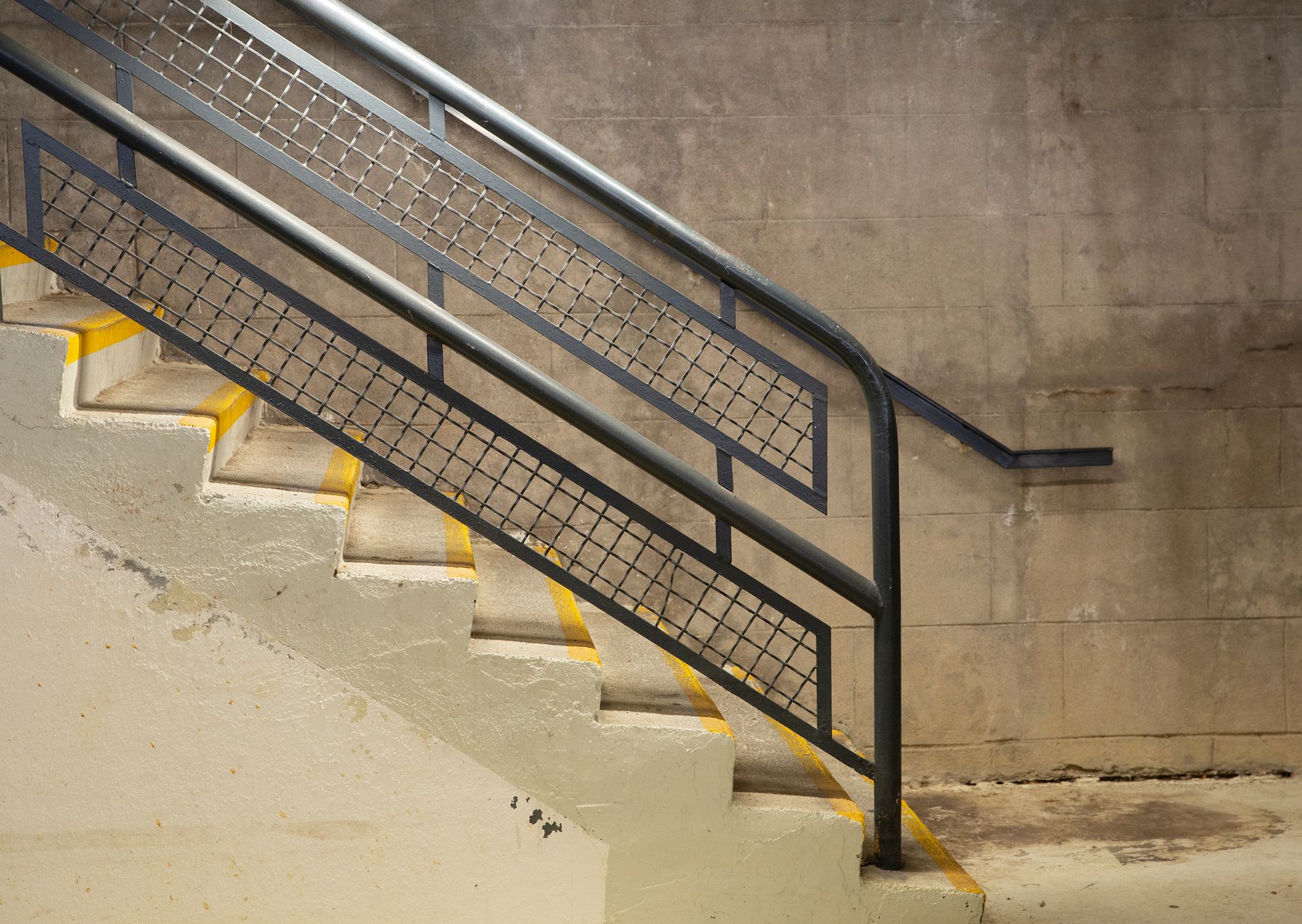
Stairs and drops are hard limits, and the operator carries part of that responsibility. Kärcher's service agreement for a robotic scrubber places on the operator the duty to manage drops, stairs, escalators, moving platforms and cliffs near the machine during autonomous operation. Sensors are not a substitute for a closed route.
Physical barriers do the rest. A SoftBank Whiz manual says a barrier should sit 20 cm to 60 cm above the floor to block entry to steps, escalators and stairs. A crew member should check that barrier before every shift, since a cart or a propped door can undo it.
Blocked aisles are the other common stop. A pallet left in a lane, a cart parked across a door or a delivery staged on the route will halt a run, and the log will record it as a pause. Put a clear-route check into the handover, and treat a repeated pause at the same spot as a layout problem, not a robot problem.
Published specifications for maximum step height, curb climb or drop-off sensing on commercial scrubbers are hard to find. Ask each vendor for those figures in writing, and do not accept a general statement that a unit is safe on stairs.
How long a scrubber runs before it needs the dock
Runtime decides whether one charge covers one zone. Nilfisk's product page for its Liberty SC50 says the scrubber cleans for 6 hours on a single charge, a figure the vendor reports itself. Treat it as a claim to test on your floor, not as a fact about your building.
Add the zone's coverage time to the dock trips, then compare that total to the hours your building stands empty. The log shows whether the robot returned to the dock on schedule, and that is the number that decides whether an overnight plan holds.
What the market numbers say and what they leave out
Demand data is moving. According to IFR figures reported in trade press, global professional service robot shipments rose 24% to almost 250,000 units in 2025, and transportation and logistics led with 117,500 units. Professional cleaning robot sales rose 34% to more than 25,000 units, per trade press summaries of the same report.
Read those totals with care. IFR's figures come from a sample of 238 producers out of 1,001 manufacturers, and they are not projected to the whole industry. IFR also advises against comparing figures across different World Robotics reports. The growth shows the category is expanding. It does not show what your floor needs.
Where Service Robot Co. fits a two-person night plan
Service Robot Co. is a full-service commercial robot integrator for US businesses. We are OEM-neutral, so we select robots across manufacturers for the zone in front of us, then finance, deploy, integrate, train and service every unit through a nationwide US engineer network. One vendor covers the lifecycle, from the first walk of the building to the questions that come up in the morning log.
We lease robots only, on a 3-year lease with one fixed lease payment quoted after a site assessment. That assessment is where stairs, drops, barriers and blocked routes get recorded before any run is scheduled, which is groundwork a two-person shift rarely has time to do.
Testing one zone before the rest of the building
Run one zone for a full week before widening the plan. Compare the log with what the morning crew found, and count pauses by cause. If the same stop repeats, fix the layout before changing the schedule.
Write the success test in advance, such as full zone coverage on most nights and no stop left unresolved when the morning crew arrives. A small test with written criteria tells you more than a demonstration run on one quiet night.
Frequently asked questions
Want a robot working for you?
Tell us the job and the site. We will recommend the robot, quote the lease, and keep it serviced.