
Key takeaways
- Yes. Hospital receiving docks and nighttime staff entrances are often a better robotic security fit than broad patrol loops because the risk is concentrated at a few chokepoints.
- These zones combine tailgating risk, loitering, after-hours deliveries, vehicle activity, and thin staffing, which makes continuous presence more useful than occasional rounds.
- A hospital security robot works best here as a sensor-rich access-control layer tied to intercoms, cameras, badges, and escalation procedures, not as a replacement for trained officers.
- The right deployment is narrow and disciplined: dock apron, service lane, and employee entrance, with clear SOPs for credentials, exceptions, ambulance priority, and handoff to human responders.
Should hospitals put security robots at loading docks and night entrances?
Yes, often they should. If a hospital is weighing a robot for generic perimeter patrol versus a tighter assignment around the receiving dock, ambulance-adjacent service lane, and nighttime staff entrance, the tighter assignment usually has the stronger operating case. Those zones concentrate the exact problems hospitals struggle to control after hours: who belongs there, who is following whom through a door, who is lingering without a task, and who needs a response before a single officer can walk across campus.
The reason is simple. A broad patrol route spreads the robot across a lot of low-consequence square footage. A dock-and-entrance post keeps it where access control, staff safety, and operational continuity intersect. At night, that is where a missed badge check can become a theft, an elopement, an assault, or an unauthorized person stepping from a service corridor into a clinical area.
This is not a claim that every hospital needs one, or that a robot can replace a security team. It is a claim about fit. When the risk lives in a few recurring chokepoints, a robotic platform with cameras, analytics, audio, intercom, and a documented escalation path can add more value there than on a scenic patrol loop through empty parking rows.
Why are these hospital zones different from a generic patrol route?
Hospital back-of-house space has its own rhythm. Deliveries arrive before dawn. Contract workers show up when fewer department managers are present. Staff use side doors to avoid the public lobby. Ambulance traffic and service traffic may run near each other. That mix is different from a standard office park patrol, and it creates a more specific security problem than simply watching for trespassers.
Published guidance reflects that difference. The International Health Facility Guidelines notes that a loading dock is a 24-hour area and says security to all external entrances will be required. The same room guidance calls out intercoms, door buzzers, and security lighting, which tells you the dock is not treated as a passive receiving bay. It is an active control point.
Hospital accreditation and safety rules point the same way. The Joint Commission says organizations must identify individuals entering their facilities and control access to and from security-sensitive areas. In practice, the receiving dock and nighttime staff doors are exactly where those rules become operational rather than theoretical.
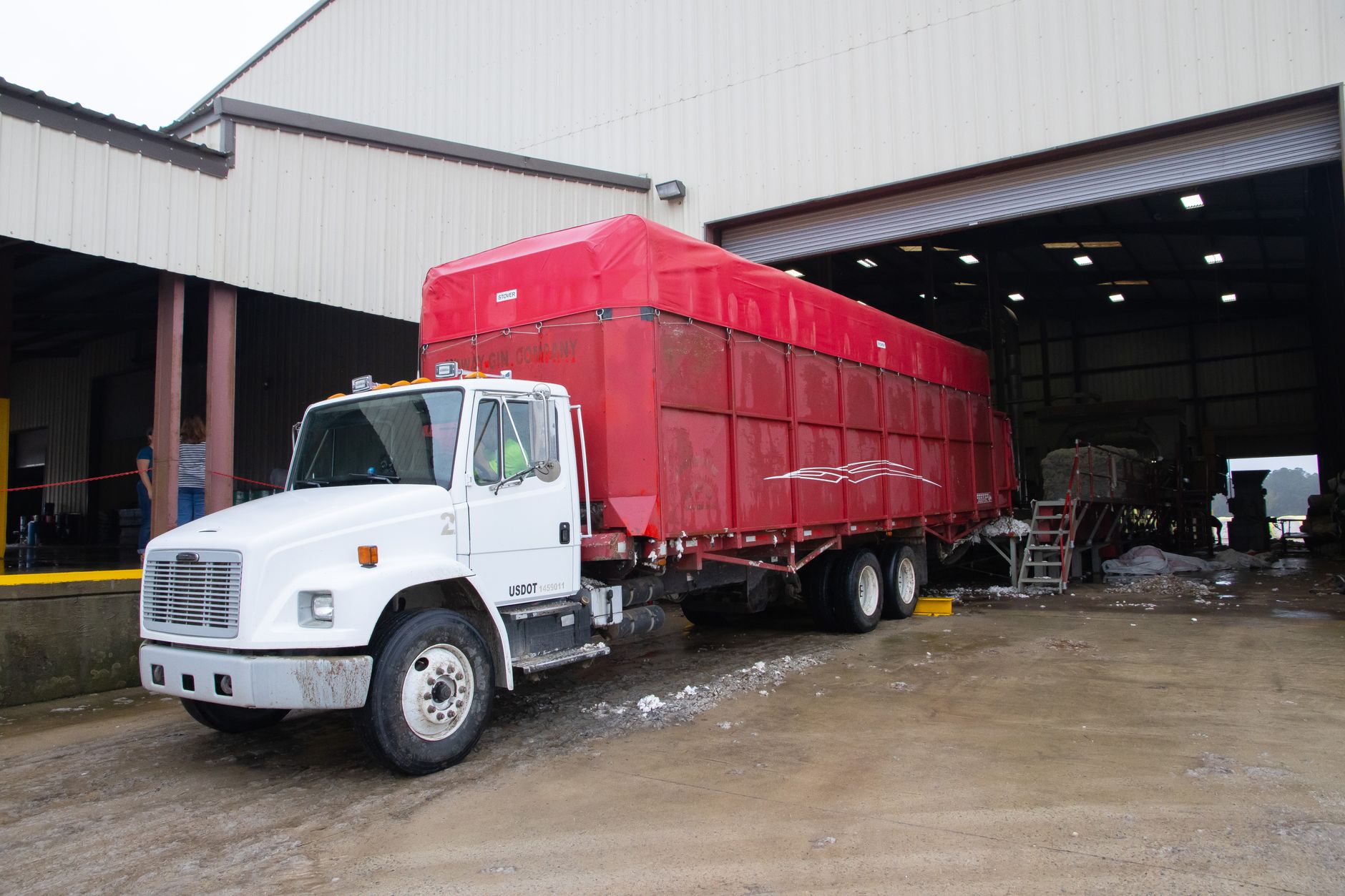
What risks stack up at the dock, service lane, and staff door?
The risk stack is unusually dense. OSHA's hospital workplace-violence guidance lists understaffing, working alone, inadequate security, unrestricted public movement, and poorly lit areas among common risk factors. Those are not abstract hazards. They map directly onto night receiving, side entrances, and service corridors that are active enough to invite misuse but quiet enough to miss it.
State healthcare violence rules get even more specific. California's healthcare workplace-violence standard requires facilities to evaluate employees working alone or in remote locations during night or early morning hours, poor illumination, lack of physical barriers, and entryways where unauthorized entrance may occur, including doors designated for staff entrance or emergency exits. That is almost a checklist for the back entrance problem hospitals already know they have.
Then there is the human factor. According to the Bureau of Labor Statistics, health care and social assistance accounted for 72.8 percent of all private-industry workplace-violence cases requiring days away, job restriction, or transfer in 2021 and 2022, with an annualized rate of 14.2 cases per 10,000 full-time workers. A robot at a night entrance does not solve workplace violence on its own, but it can reduce blind spots in exactly the locations where thin staffing and uncontrolled access make incidents harder to prevent.
What should a robot actually do in those zones?

The useful job is not generic patrolling. It is continuous verification and early escalation around a narrow geography. The robot should watch the dock apron, the staff entrance approach, and the lane segment that feeds service doors or ambulance-adjacent access points. It should record arrivals, flag dwell time, detect tailgating, open an intercom workflow, and hand incidents to humans with live video and precise location data.
That matters because hospitals have to balance security with throughput. Deliveries still need to move. Clinical staff still need quick entry. Ambulance activity still takes priority. A robot earns its keep when it shortens the time between suspicious behavior and human awareness, while preserving evidence and reducing the amount of empty walking a security officer does between checks.
The most effective task list is usually operational rather than theatrical:
- Verify that a person approaching a staff entrance presents a valid access event before the door cycle completes.
- Detect tailgating and door-prop events, then trigger audio challenge, remote review, or officer dispatch based on policy.
- Flag loitering at the dock or service lane when dwell time exceeds the site's threshold for vendors, visitors, or private vehicles.
- Maintain live visual coverage of after-hours deliveries, waste pickup, linen exchange, or pharmacy-adjacent receiving without requiring a fixed officer post.
- Provide a documented incident trail with time stamps, clips, and exception tags for security review and compliance follow-up.
Why does the nighttime staffing picture strengthen the case?
Because the operating environment gets harsher as the campus quiets down. The IAHSS Foundation's 2025 Healthcare Crime Survey, reporting 2024 responses, found that only 51.6 percent of responding facilities had a formal visitor management program. On the staffing side, the same survey says the majority of facilities rated hiring conditions for security personnel as neutral, difficult, or very difficult, and very few called recruitment easy or very easy.
That combination matters. Hospitals are being asked to maintain disciplined access control in complex facilities while the supply of qualified security staff remains tight. A dock robot does not remove the need for officers. It changes where those officers spend time. Instead of burning labor on repetitive rounds to check a side door or receiving lane, the team can respond to verified exceptions, escorts, and clinical security calls.
This is why the use case is stronger at a loading dock than on a decorative patrol route. A robot parked in the wrong mission profile just generates footage. A robot assigned to a labor-constrained chokepoint can generate decisions.
What about ambulance-adjacent service lanes?
These are sensitive because they are neither fully public nor fully closed. Vehicles stop, idle, reverse, unload, and depart. Staff, vendors, patients, and contractors may all pass nearby. In some facilities the geometry is messy, with service access close enough to emergency traffic that a side door incident can spill into a clinically critical path.
Regulators treat emergency access points as security issues, not just traffic issues. Massachusetts law now requires hospitals with emergency departments to meet standards for security and monitoring of emergency department access points and for prominent hospital doors locked at night through which a patient may try to enter. The point is broader than one state. Hospitals must preserve safe emergency access while keeping nonpublic entry points controlled and observable.
A robot belongs in the service lane only if it respects that hierarchy. It cannot obstruct an ambulance path, create uncertainty at a transfer point, or force clinicians into awkward workarounds. The assignment should keep the robot to the edge conditions: approach monitoring, side-door verification, suspicious-vehicle dwell, and rapid escalation when a person moves from service space toward a restricted clinical threshold.

How should a hospital decide if the use case is real on its campus?
Start with incident patterns, not gadget interest. Review six to twelve months of door-prop alarms, tailgating reports, thefts, trespass calls, after-hours deliveries, employee safety complaints, and camera clips from the receiving side of the campus. If the same two or three entrances keep creating work, that is the signal. A robot should be assigned to a repetitive security failure mode, not to a vague desire for more visibility.
Then test the site against physical prerequisites. The Joint Commission notes that some locked healthcare doors must remain readily unlockable and may need remote unlocking at a constantly attended location. That means the robot plan has to fit life-safety rules, door hardware behavior, and human override paths. The robot is a layer in the access-control stack, not the stack itself.
A short pilot should answer operational questions clearly:
- Does the robot reduce unchecked entries at the staff door?
- Does it cut average response time to dock and side-entrance exceptions?
- Does it create usable evidence for after-hours incidents?
- Does it stay out of the way of deliveries, waste hauls, and ambulance movement?
- Can officers and facilities staff manage alarms without nuisance fatigue?
Where Service Robot Co. fits
This is the kind of deployment where an OEM-neutral integrator matters. A hospital is not buying a generic patrol idea. It is building a narrow security workflow that has to fit doors, lighting, service-lane geometry, dispatch procedures, and life-safety constraints. Service Robot Co. starts with the operating problem, then selects the right platform across manufacturers instead of forcing a single brand into every site.
That matters over the full lifecycle. Service Robot Co. can finance the program, deploy it, connect the robot to the hospital's real operating environment, train the team, and service the unit through a nationwide U.S. engineer network. One vendor handles the whole chain, which is exactly what hospitals usually want when security, facilities, and operations all touch the same deployment.
For this use case, the right question is not which robot looks best in a demo. It is which deployment can hold a receiving dock, protect a night entrance, respect ambulance-adjacent operations, and still be serviceable six months later. That is an integration question before it is a hardware question.
The real buying lens
Security robots belong at hospital loading docks at night when the hospital's problem is concentrated access risk, not generic perimeter coverage. If the pressure points are a receiving bay, a staff entrance, and a service lane that stays active after dark, a robot can make sense there faster than it makes sense on a broad patrol loop.
The discipline is to keep the mission narrow. Measure unauthorized-entry attempts, tailgating, loitering, officer walk time, exception response time, and incident documentation quality. If those numbers move in the right direction during a pilot, the deployment has a case. If not, the hospital should change the workflow or skip the robot. Precision matters more than novelty in healthcare security.
Frequently asked questions
Sources
- BLS workplace violence 2021-2022
- CDC NIOSH on healthcare workplace violence
- OSHA hospital workplace violence eTool
- Joint Commission ID badges FAQ
- Joint Commission locking doors FAQ
- IAHSS Foundation 2025 Healthcare Crime Survey page 3
- International Health Facility Guidelines loading dock
- California healthcare workplace violence rule