Key takeaways
- Laundry transport is often a stronger first automation target than resident-facing tasks because it is repetitive, scheduled, and easier to standardize.
- The labor case is not just wages. It includes reclaimed caregiver time, fewer cart-pushing injuries, and more reliable linen flow across shifts.
- Senior living demand is rising while staffing rules are tightening, which makes support-task automation more valuable at the department level.
- A good pilot starts with a closed loop such as soiled linen pickup and clean linen return on fixed routes, not a sprawling campus-wide rollout.
- Robot as a service structures, monthly payment programs, and maintenance included support can make the first project easier to approve than a capital purchase.
The short answer for operators
Yes, many senior living communities should seriously consider robots for laundry transport, especially as a first internal logistics workflow. The reason is practical rather than flashy. Laundry routes are predictable, they consume labor every day, and they sit at arm’s length from resident-facing care. That makes them easier to map, measure, and improve than jobs that depend on constant human judgment.
At the department level, the ROI case is often stronger than people expect. You are not trying to replace caregiving. You are taking a repetitive cart run away from housekeepers, aides, and support staff so those teams can stay closer to rooms, residents, and higher-value work. In a sector where the Centers for Medicare and Medicaid Services finalized new staffing rules in April 2024, pulling labor back into direct care matters.
This does not mean every building should buy a fleet tomorrow. It means laundry is one of the cleanest early use cases for repetitive transport automation in senior living, particularly in assisted living, skilled nursing, and continuing care campuses where linen moves on fixed schedules between resident floors, soiled holding rooms, and laundry areas.
Why does laundry transport rise to the top so often?
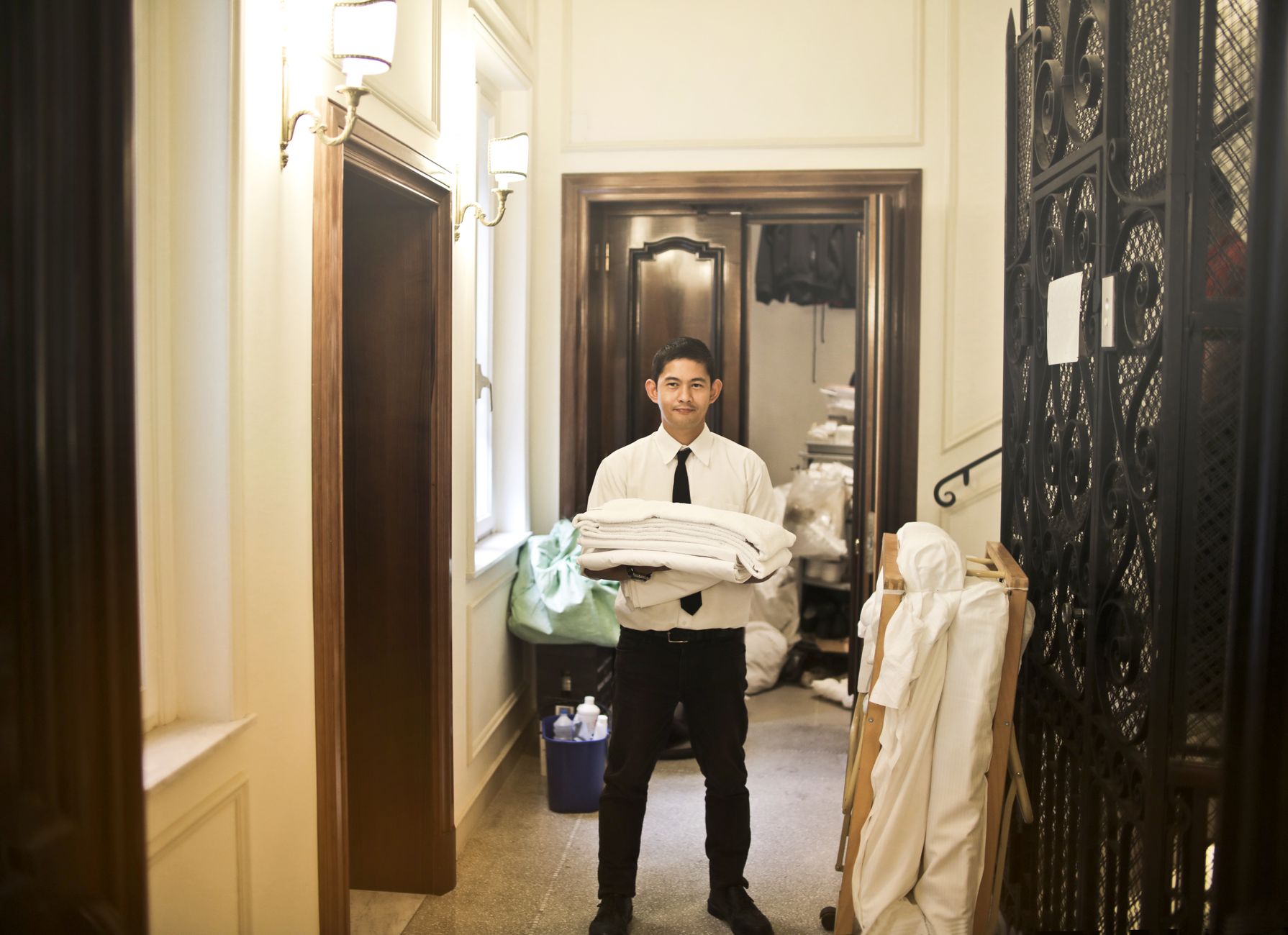
First, the workflow repeats. Bags or carts move from the same pickup points to the same destinations, often several times a day, on routes that barely change. That kind of consistency is exactly what autonomous mobile robot rental and AMR rental programs are built for. The robot does not need to interpret a family conversation or respond to a resident request. It needs to move a load from A to B, then do it again.
Second, the task is labor-draining in a very old-fashioned way. People push carts, wait on elevators, cross long corridors, dodge meal service traffic, and then do the same loop again. OSHA’s healthcare laundry guidance specifically flags excessive reaching, pushing during transport, and lifting wet, heavy laundry as causes of strains and sprains to the back and shoulders. That is not abstract risk. It is embedded in the job itself.
Third, laundry is operationally separate enough to pilot without rewriting the whole building. You can start with soiled linen pickup on a single shift, or clean linen return on a single wing, and measure cycle time, handoffs, elevator behavior, and staff acceptance before expanding.
What does the labor math look like in 2026?
The backdrop is tighter than it was a few years ago. According to the Bureau of Labor Statistics, nursing and residential care facilities employed about 3.495 million people in June 2026. According to CMS, the final long-term care staffing rule issued on April 22, 2024 applies to nearly 1.2 million residents in Medicare and Medicaid certified long-term care facilities and sets a 3.48 hours per resident day minimum for total direct nursing care, including 0.55 RN hours and 2.45 nurse aide hours.
That matters because every hour a community can return to direct care has become more valuable. Laundry transport is not direct nursing care, but it regularly pulls nursing aides, environmental services staff, and utility workers into nonclinical movement work. Even when a building staffs laundry separately, missed turns, late pickups, and overloaded shifts spill over into other departments fast.
The wage picture also explains why leaders keep revisiting internal logistics. BLS shows average hourly earnings in nursing and residential care facilities at 26.84 dollars in May 2026, with production and nonsupervisory employees at 24.62 dollars. The decision is not simply about replacing a cart push with a machine. It is about protecting scarce paid hours and shifting them toward work that actually requires a person on site.
A useful finance model counts three buckets. Bucket one is transport labor removed from daily routes. Bucket two is avoided disruption, such as caregivers leaving resident areas to chase linen. Bucket three is injury and fatigue reduction, which is harder to model but very real in laundry-heavy buildings.
What operational evidence supports the case?
Senior living is not operating in a slack market. According to NIC, senior housing occupancy in the 31 primary markets reached 89.5 percent in the first quarter of 2026, and assisted living occupancy hit 87.9 percent. NIC reported that this was the nineteenth consecutive quarter of occupancy growth. In plain terms, more communities are serving fuller buildings while trying to keep labor under control.
That fuller-building effect shows up in linen movement before it shows up almost anywhere else. More occupied units mean more bedding, towels, resident garments, and housekeeping turns. Laundry is one of the first back-of-house systems to feel the pressure because it sits downstream from resident care and upstream from room readiness.
There is also a safety case. BLS reported a 2024 total recordable injury and illness rate of 5.5 cases per 100 full-time workers for nursing and residential care facilities. For skilled nursing facilities, the rate was 6.3. Cases involving days away from work, job restriction, or transfer were 3.6 for the broader category and 4.5 for skilled nursing. Those are high numbers for any operator trying to hold the line on staffing consistency.
Not every one of those cases comes from laundry, of course. But OSHA’s nursing home ergonomics guidance and hospital laundry guidance both call out pushing heavy carts and handling linen as risk points. When a workflow is repetitive, physical, and easy to standardize, that is precisely where automation tends to earn its keep first.
Are there infection control or care-quality reasons to automate this loop carefully?
Yes, and they cut in favor of a disciplined deployment. The CDC states that soiled textiles should be bagged or otherwise contained at the point of use, handled with minimum agitation, and transported in a safe manner. The CDC also advises clear separation practices for clean and contaminated textiles during transport and storage.
That means laundry automation should start with the transport segment, not with a loose redesign of handling rules. The robot is carrying a contained cart or bin through a defined route. Staff still bag linen at the point of use according to policy. Clean and soiled flows stay distinct. The goal is a more dependable chain of custody, not a shortcut around infection prevention.
In many communities, that operational discipline is part of the ROI. A robot does not forget its route because the shift got busy. It does not decide to stack one more task onto a linen run. If the loop is designed well, transport becomes more consistent, and that consistency supports room turnover, laundry throughput, and department scheduling.
Where does ROI usually break down?
It usually breaks down when leaders automate the wrong version of the job. If the campus has erratic routes, narrow choke points, unreliable elevator access, or no agreed handoff points, the problem is not that robots do not fit senior living. The problem is that the workflow is still messy. A pilot should target the most repeatable path first, then widen from there.
It also breaks down when the business case counts only labor subtraction. Department-level ROI in senior living is broader. It includes reduced interruption, better linen availability, fewer last-minute transport scrambles, and a cleaner division between resident-facing work and internal logistics. If your team measures only headcount, you will miss the point and probably undersell the return.
A third failure mode is going too big. The best pilots are boring on purpose. One building. One or two loops. One shift window. Clear pickup and drop rules. A real baseline for trip count, time per trip, delayed deliveries, and staff minutes recovered. That is how an internal transport robot pilot earns credibility with nursing, housekeeping, and executive leadership.
Why financing structure matters as much as the robot

For many operators, the best path is not a big capital ask. A service robot rental, robot rental monthly, or robot as a service structure can fit senior living better because the project can be judged against operating savings and staffing relief instead of a one-time equipment line. If the offer includes maintenance included support, remote triage, and on-site dispatch, the risk profile gets easier for operations leaders to accept.
This is where Service Robot Co. fits naturally. Service Robot Co. is a full-service commercial robot integrator for US businesses, and that OEM-neutral stance matters in senior living because the right robot depends on hallway width, elevator behavior, payload, software controls, and service realities on your campus. The job is not to force one machine everywhere. It is to choose the robot that fits your floor, then handle robot deployment and integration, site assessment mapping, go live support, training, and service through one partner and one number.
That kind of lease rental or sale flexibility matters for communities that want no upfront capital, monthly payment programs, or a pilot before scaling. A vendor neutral robot integrator can structure a senior living robot rental around the workflow you are actually trying to fix, then support it through a nationwide US field service footprint instead of leaving operations teams to juggle multiple parties after launch.
What should a senior living pilot include?
Start with the department, not the device. Measure how many linen trips happen per day, who performs them, what time windows matter, and where delays originate. Separate clean from soiled flows. Note elevator wait time, door behavior, and storage-room congestion. Then define a pilot loop that is repetitive enough to prove value in 60 to 90 days.
A strong pilot usually keeps the scope narrow but the measurement disciplined. The question is not just can a robot drive the route. The question is how much staff time returns to higher-value work, how often the loop completes on schedule, and whether linen availability improves at the unit level.
For operators exploring commercial robot rental or robot leasing for business, this is also the right moment to insist on service terms that match healthcare reality. Maintenance included support, emergency response nationwide, and a clear fallback process matter more than a flashy demo. A linen route that quietly works every day is worth more than a dramatic proof of concept that collapses under normal building friction.
- Map fixed pickup and drop points before the pilot starts.
- Choose one clean loop and one soiled loop, with separate handling rules.
- Track baseline staff minutes per trip, trips per day, and missed-turn incidents.
- Test elevator timing during real traffic, not empty-building conditions.
- Define who owns exceptions, such as blocked corridors or urgent manual overrides.
The practical verdict
Laundry carts are one of the best first internal logistics workflows to automate in senior living. They are predictable, physically taxing, and usually detached enough from resident interaction to pilot without upsetting the care model. In a sector facing rising occupancy, persistent labor pressure, and tighter staffing expectations, that combination is unusually attractive.
The right question is not should every senior living operator automate laundry tomorrow. The right question is whether your community has enough repetitive transport volume, enough cart-pushing friction, and enough staffing pressure to justify a contained pilot. Many do. And when they do, laundry is often where the first real win shows up.
Frequently asked questions
Sources
- CMS long-term care staffing final rule fact sheet
- BLS nursing and residential care facilities industry data
- BLS 2024 injury rates by industry table
- NIC senior housing occupancy Q1 2026
- NIC occupancy press release April 23 2026
- CDC infection control laundry transport guidance
- CDC laundry and bedding guidance
- OSHA healthcare laundry musculoskeletal disorder guidance