Key takeaways
- The strongest ROI usually comes from avoiding confined-space entries, not from replacing one inspection labor hour with another.
- Inspection cadence matters. University of Minnesota Extension recommends monthly checks in cold weather and every two weeks in warm weather.
- Robots earn their keep when they collect visual, thermal, gas, and structural evidence before spoilage turns into a shutdown or salvage event.
- Human-entry economics include permits, lockout, gas testing, observers, rescue readiness, training, and production interruption.
- A full-service integrator matters because financing, deployment, training, and nationwide service shape uptime just as much as the robot itself.
Is a grain silo inspection robot worth it?
For most commercial grain operators, yes. A grain silo inspection robot makes business sense when the alternative is repeated human entry, a shutdown long enough to isolate or empty a structure just to see what is happening, or a reactive contractor callout after grain has already gone out of condition. The value is not novelty. It is earlier visibility with far less exposure.
That is important because a routine look inside a bin or silo is not operationally routine once people go in. OSHA's grain-handling standard requires an entry permit, lockout of dangerous equipment, atmospheric testing when hazards may be present, an observer outside the space, rescue equipment, and trained personnel before employees enter bins, silos, or tanks. If the objective is diagnosis rather than repair, a robot can gather the evidence without turning the inspection itself into the confined-space event.
The risk side is not theoretical. Purdue University's September 19, 2024 release of its 2023 agricultural confined-space summary reported at least 27 grain entrapments in 2023, and University of Minnesota Extension says around 80% of reported engulfments involve a person inside a bin while unloading equipment is running. In other words, the ROI case is built as much on avoided entry and avoided retrieval exposure as on labor or inspection speed.
What are you really paying for with human entry?
Most operators underestimate the true cost of sending a person in because they focus on the technician's hourly wage. The real bill includes permit preparation, lockout and verification, roof access, standby staffing, rescue readiness, communication setup, documentation, and the lost flexibility that comes from tying multiple people to one task. OSHA also requires annual training for employees and special-task training for bin entry, which means the cost persists even when entries are infrequent.
Atmospheric uncertainty adds more friction. OSHA's grain-entry rule requires oxygen testing unless there is continuous natural air movement or continuous forced-air ventilation, and it sets hard thresholds: below 19.5% oxygen, above 10% of the lower flammable limit for combustible gas or vapor, or toxic agents above allowed ceilings trigger ventilation and, in some cases, respirator requirements. Once those controls are in play, the inspection window gets narrower and the inspection itself gets more cumbersome.
Human entry is also often reactive rather than preventive. Purdue wrote on May 25, 2021 that removal of out-of-condition or spoiled grain is the single most significant activity contributing to entrapment and suffocation in grain storage and handling facilities. The same Purdue guidance says that if grain is crusted or floor outlets are plugged, operators should contact a professional grain salvage service. By the time you are there, you are no longer paying for inspection. You are paying for recovery.
How often should grain storage actually be inspected?
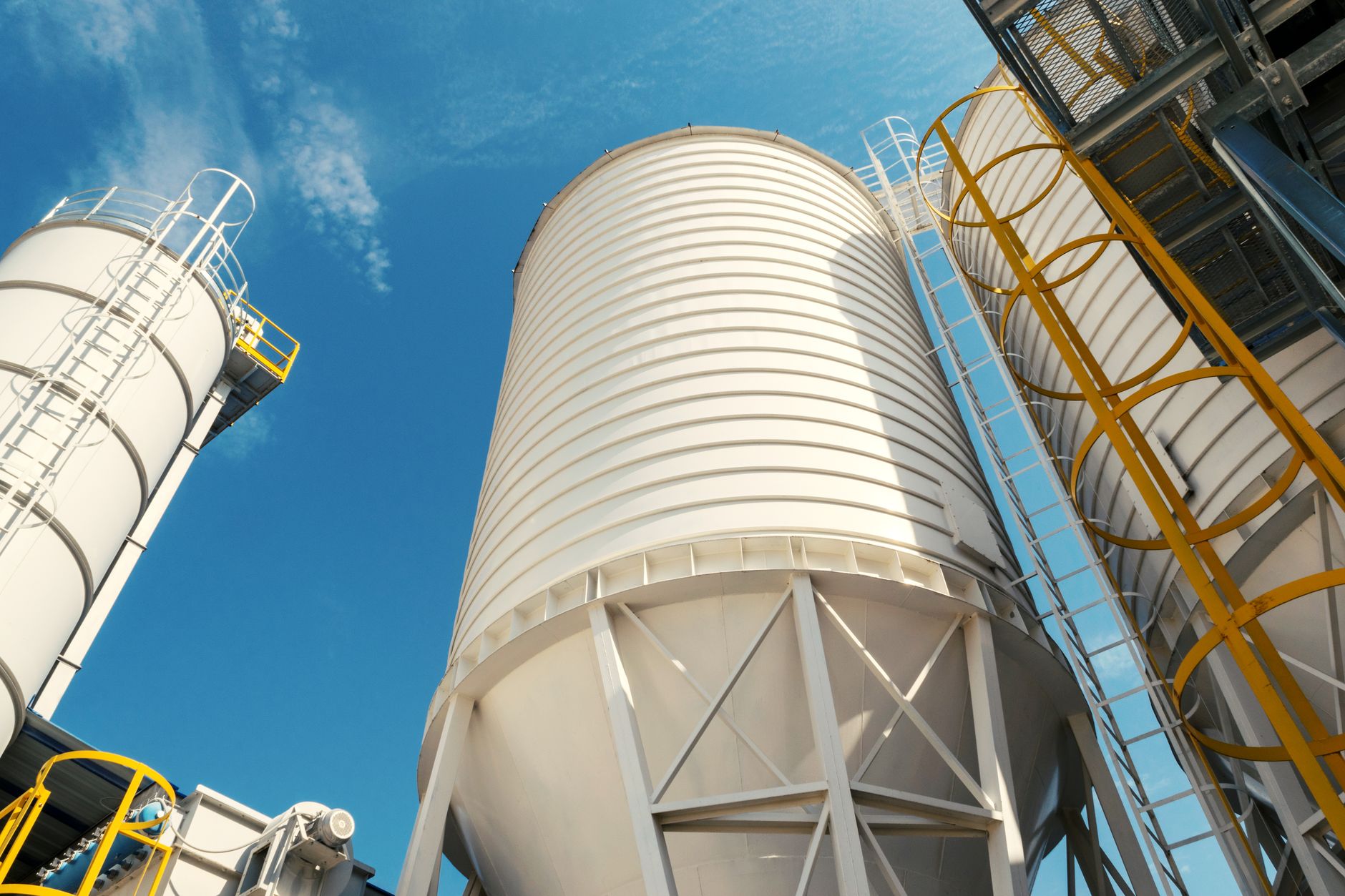
More often than many sites can comfortably manage with human entry. University of Minnesota Extension advises checking stored grain monthly during cold weather and every two weeks during warm weather. The same guidance says operators should measure and record temperatures at several locations, watch for spontaneous heating, and note musty or sour exhaust odors. That is a maintenance rhythm, not a once-a-season event.
This is where inspection economics change. If warm-weather conditions call for biweekly checks, but your practical human-entry cadence is only occasional because permits, staffing, and roof work are painful, the facility is operating with an information gap. A robot lowers the friction enough to turn inspection from an exception into a schedule.
Fixed instrumentation helps, but it is not the whole answer. University of Minnesota notes that permanently installed temperature cables make temperature checks easier, and they do. But a cable does not tell you what a camera sees on the grain surface, what a thermal image shows on a hatch or bearing line, what a gas sensor sees in a poorly ventilated void, or whether an interior wall panel has started to deform. The better operating model is fixed sensing plus mobile inspection, not one or the other.
What data should the robot collect?
The first layer is visual evidence. That includes crusting, bridging, mold, fines accumulation, condensation, insect activity, residue near unloading paths, and water-entry clues around roof penetrations or vents. A visual pass is often enough to decide whether the site is dealing with a minor conditioning issue, a mechanical issue, or a bin that should not be entered at all.
The second layer is thermal. University of Minnesota recommends watching for spontaneous heating as a sign of mold or insect activity. Purdue's March 17, 2026 grain-dust explosion summary adds another reason to care. Purdue reported seven U.S. grain dust explosions in 2025, causing 10 injuries and four fatalities, and identified smoldering grain and an overheated bearing among the probable ignition sources. Thermal inspection is not a luxury in that context. It is an early-warning instrument.
The third layer is atmospheric data. OSHA treats a space as dangerous not only when it obviously lacks oxygen but also when it has the potential for a hazardous atmosphere, engulfment, or other serious hazards. Gas sensing lets operators confirm oxygen levels, combustible conditions, and toxic exposures before a person is ever considered for entry. That shifts the sequence from enter first and discover later to measure first and decide later.
The fourth layer is structural evidence. North Dakota State University advised on June 26, 2025 that bin inspections should check alignment, indents and bends in sheets, roof-to-wall connections, anchor bolts, cracks in concrete, buckled wall sheets, door distortion, vent damage, conduit damage, and interior wall damage. A robot that documents these items with repeatable imagery gives operations and maintenance teams something much better than memory. It gives them a trend line.
Where does the ROI actually come from?
Start with inspection frequency. If your site can finally inspect on the cadence that storage conditions demand, problems are caught while they are still small. Warm spots can be cooled sooner. Surface crusting can be verified sooner. Moisture intrusion can be traced sooner. Structural drift can be documented sooner. That does not just reduce risk. It reduces the odds that a minor issue matures into a salvage problem.
Then look at avoided downtime. A robot can often be deployed during a short planned pause or during a troubleshooting window that would be too small to justify a full human-entry setup. That changes the economics of diagnosis. Instead of shutting the system down for longer than the inspection itself requires, the facility gets a fast answer and can decide whether a real outage is necessary.
Next is avoided contractor mobilization. Purdue's 2021 guidance makes the logic plain: once grain is crusted or outlets are plugged, a professional salvage crew may be the right answer. But emergency or near-emergency mobilization is the most expensive moment to learn what is going on inside a structure. Robotic inspection does not replace salvage crews. It helps you need them less often, and later.
Finally, there is retrieval risk. University of Minnesota says a full-grown adult can sink knee-deep in flowing grain in four seconds and be completely buried in 20 seconds. The same source says freeing a person buried to the waist can require force equal to body weight plus 600 pounds, while full burial can require more than 2,000 pounds of force. Those are operational numbers as much as safety numbers. They describe why even one unnecessary entry avoided can materially change the return.
That is why the payback story is rarely a single universal number. A 10-bin feed operation and a multi-structure elevator do not share the same cost base. But the formula is stable across both. More inspection frequency, less diagnosis downtime, fewer emergency cleanouts, and fewer high-risk entries generally produce the return.
When is a robot better than a shutdown, and when is it not?
A robot is usually the better first move when the facility needs evidence, not hands-on work. Suspected hot spots, uncertain crusting, post-storm structural questions, questionable airflow, unexplained odor, or a need to document internal conditions are all diagnostic problems. Diagnostic problems should start with the least disruptive and least exposed method that can answer them well.
A planned shutdown and human entry still have their place. If the work requires manual cleaning, hardware replacement, weld repair, seal replacement, or physical removal of spoiled material, human work may still be necessary after the inspection. The point is not to promise zero entry forever. The point is to make sure entry happens only when the evidence says it should.
Contractor callouts belong even farther down the ladder. They are appropriate when material is already badly out of condition, flow is lost, structural damage is beyond internal maintenance capacity, or the site lacks the rescue readiness and specialized equipment to proceed safely. Good robot programs do not eliminate that reality. They help operators reach it less often and with better information.
- Robot inspection is best for diagnosis, documentation, and recurring condition checks.
- Planned shutdown and human entry are best when physical repair or removal must happen.
- Contractor mobilization is best when the event has already escalated into salvage, major blockage, or advanced structural trouble.
Why the integrator model matters in this category
Grain inspection robots are not just a hardware purchase. Sensor selection, access method, communications, data capture, operating procedure, training, and service response all affect whether the robot becomes part of routine operations or ends up parked until the next emergency. That is why the business case should include the deployment model, not only the machine.
Service Robot Co. approaches this as a full-service commercial robot integrator for U.S. businesses. We are OEM-neutral, which means we choose the right robot across manufacturers for the storage geometry, sensing package, and inspection objective. Then we finance, deploy, integrate, train, and service every unit through a nationwide U.S. engineer network. For an operator comparing inspection robot leasing, robot leasing for business, or a leasing structure, one vendor for the whole lifecycle reduces coordination drag and service uncertainty.
That matters especially in a niche like confined-space inspection, where uptime is tied to sensor reliability and field support. Monthly payment programs can make the capital side easier, but the deeper advantage is operational. One partner, one number, one support path, and RoboCare™ service in the service model keep the inspection program running when the busy season hits.
What should buyers measure before they sign?
The cleanest ROI decisions come from measuring the current pain honestly. Count how many bins or silos need recurring internal condition checks. Measure how long a manual inspection really consumes once permits, lockout, roof access, observer time, and restart are included. Track how many times the site has needed emergency salvage, out-of-condition grain removal, or unplanned shutdown time in the last two seasons. Those are the baseline economics.
Then model the target operating state. Ask how often you would inspect if entry friction nearly disappeared. Ask which inspections truly need visual confirmation, which need thermal overlays, which need gas readings, and which need structural photo logs that maintenance can compare over time. That exercise usually shows that the robot's value is not one heroic rescue from disaster. It is a steadier stream of earlier decisions.
- Current inspection cadence versus the cadence storage conditions actually require.
- Average hours of downtime and staffing consumed by one manual entry event.
- Number of recent spoilage, crusting, blockage, or salvage incidents.
- Need for visual, thermal, gas, and structural evidence at the same site.
- Internal ability to maintain training, rescue readiness, and documentation discipline for recurring human entry.
Frequently asked questions
Sources
- OSHA Grain Handling Standard
- OSHA Permit-Required Confined Spaces
- Purdue 2023 Confined Space Summary Release
- Purdue 2025 Grain Dust Explosion Summary
- University of Minnesota Stored Grain Checks
- University of Minnesota Grain Bin Safety
- NDSU Grain Bin Structural Inspection Guidance
- Purdue Guidance on Spoiled Grain and Salvage