Key takeaways
- Model cart ROI from minutes per trip times trips per week, not from a single vendor quote.
- Corral design and visibility often change labor hours before any robot arrives.
- Runaway carts create liability noise even when the store is not automatically at fault.
- Weather and lot grade determine how many outdoor retrieval hours are truly automatable.
- Pilot one aisle zone in peak season and measure empty-corral minutes at the front door.
When does automated cart retrieval actually pay back?
Automated shopping cart retrieval pays back when it reliably pulls stranded carts off the asphalt for less than the fully loaded cost of sending people out in heat, wind, and rain. The math is boring on purpose. Count how many hours your team spends hunting carts each week, multiply by wage and burden, then add the soft costs customers feel when corrals sit empty at 5 p.m. on a Saturday.
Labor planning literature for grocery front ends often cites about 31 seconds of cart-related time per customer when carryout and self-checkout shoppers take carts to the lot, with a large share of shoppers leaving the building with a cart. At a twelve dollar hourly example rate, those seconds stack into real payroll even before you count managers chasing strays at closing.
A retailer survey summarized by a cart-corral manufacturer reported an average of 60 hours per week spent collecting carts, with a 35 percent drop after highly visible corral upgrades, translating to about 252 dollars saved per week or roughly 12,000 dollars per year in that vendor's published example. Your store will not match those figures exactly, but the shape of the curve is the lesson: visibility and return-path design move labor before robotics enter the chat.
Robots or powered cart trains earn their keep when they keep that retrieval loop running during the hours teenagers are on register, not only after close. If the device sits in the garage every time it drizzles, you are still paying the lease while labor rushes the lot at dusk.
What belongs in a parking-lot ROI spreadsheet?
Start with direct labor. Log hours for a full week by shift, including the runner who 'just quickly' grabs four carts near the garden center. Split indoor corral staging from outdoor collection. Note whether retrieval happens in continuous micro-trips or two big sweeps.
Add cart availability. Industry commentary often ties lost sales to empty corrals during peak traffic, even when finance only tracks replacement carts. CNN reporting on municipal cart roundups quoted contractors billing tens of thousands of dollars to collect thousands of abandoned carts from city streets, a reminder that carts that never return still show up on someone's budget.
Layer asset loss and fines separately from payroll. Asset-tracking vendors publish wide ranges for replacement, municipal fines, and contracted retrieval fees for urban groceries, but treat those tables as sensitivity inputs, not gospel. Your POS shrink and cart vendor invoices are the numbers that matter in your CFO's model.
Finish with supervision and maintenance. Powered retrieval still needs an operator during learning, a charger plan, and a winter storage decision. Budget training minutes the same way you budget belt replacements on a cart pusher.
- Weekly outdoor retrieval hours by daypart
- Corral empty minutes at front entrance during peak
- Cart replacements and off-site recoveries per quarter
- Vehicle-incident reports tied to loose carts
- Lease, power, and service hours for the retrieval unit
How do labor hours compare to robot-assisted collection?
Manual retrieval scales linearly with lot size. Every new row of parking adds walk time. Powered assist flattens the curve when one operator can move a train of twenty carts from a distant corral without repeated trips.
The Logile front-end example breaks the walk into segments: time to reach the lot, shuffle carts at a holding corral, and push back to the store. Saving one second per customer across a high-volume front end can equal several hours per store per week in large chains, which is why disciplined time-study beats guessing.
Robots that roam and dock carts automate the walk for defined zones. They shine on rectangular lots with predictable corral placement. They struggle when carts hide behind landscaping islands or scatter across a multi-tier garage.
Compare scenarios side by side. Manual only, manual plus better corrals, powered pusher, and robotic zone collection. Run each through the same weather rules so you do not credit the robot for sunny Tuesday mornings only.
Where do vehicle-damage claims fit?
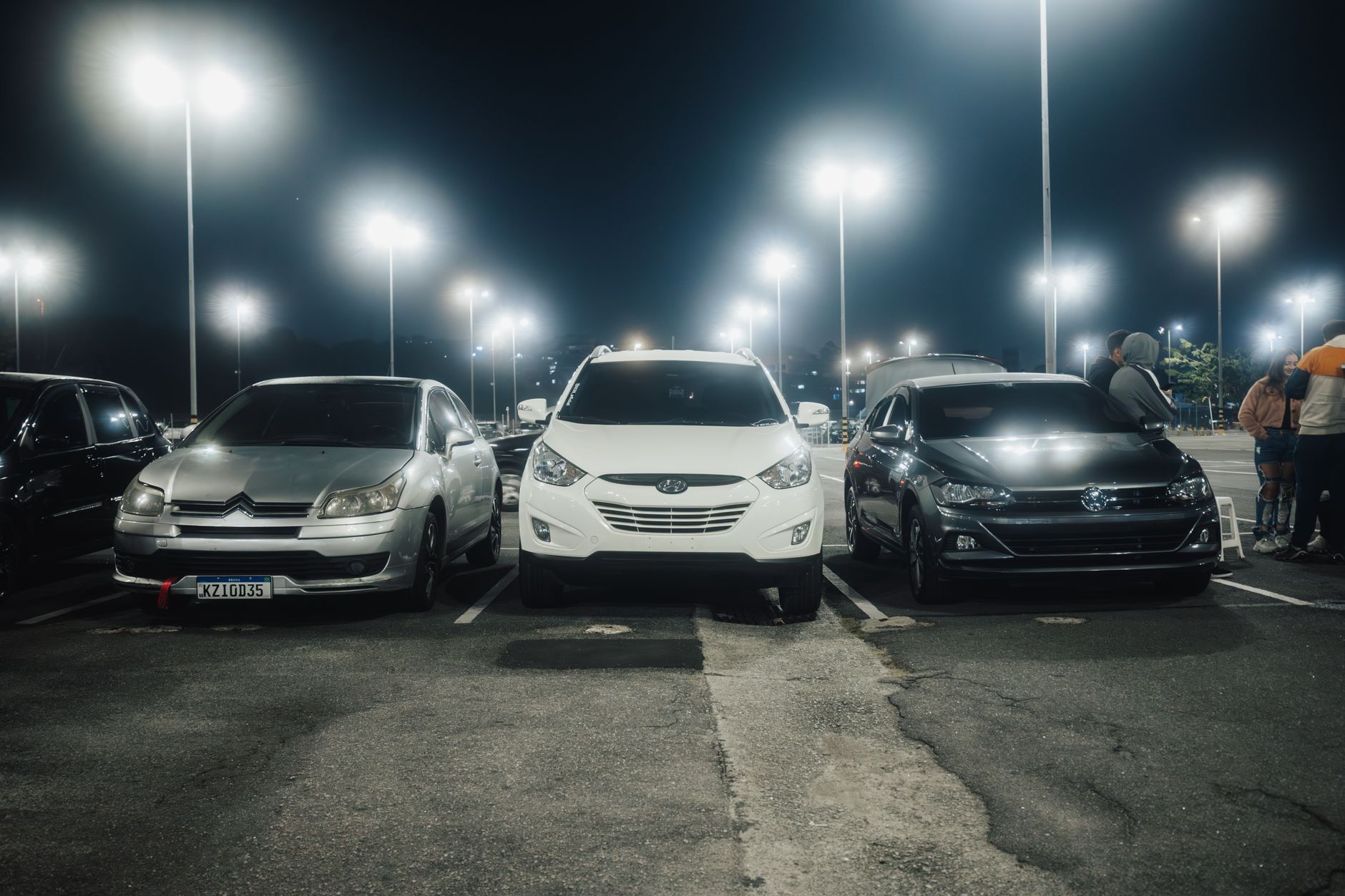
Runaway carts are a parking-lot cliché for a reason. Consumer insurance guides explain that stores are not automatically liable when a cart dents a bumper; plaintiffs still must prove negligence such as poor corral design, employee-caused rolls, or a known hazard left unaddressed.
Press coverage of a warehouse club lot described wind-driven carts striking a parked sports car with repair estimates around 1,200 to 1,250 dollars and a denied store claim, even while employees were reportedly on cart detail. Whether you agree with the outcome, the reputational cost and management time are real line items.
Automated retrieval reduces exposure by shrinking the minutes carts sit loose on grade. It does not replace wind breaks, wheel chocks on steep lots, or corral gates. AmTrust Financial's grocery parking-lot safety guidance still expects trained employees when humans operate cart equipment.
Track near-misses. Security video of a cart rolling into a lane is cheaper than defending a negligence theory after the fact.
What weather and terrain limits should you model?
Rain slickens brakes on manual trains and can void outdoor autonomy windows for camera-guided units. Snow banks shrink aisles and hide curbs. Summer heat changes battery performance and employee pacing alike.
Slope matters. Missouri case law from the 1990s involving a steep grocery lot reminds operators that grade and cart storage layout influence runaway risk. Robots need geofenced slow zones on inclines the same way human teams should.
Seasonal utilization is the hidden variable. A robot that runs ten hours a day in November may run four in January if your lease still bills twelve. Spread annual cost over productive months, not calendar months.
Indoor garages mixed with outdoor loops need separate maps. Salt and sand tracked inside can foul wheel encoders. Budget more frequent cleaning when coastal stores drag beach sand across the threshold.
How should supervision and maintenance show up in ROI?
Autonomy is not absence of management. Someone still owns the schedule, responds to stuck wheels, and decides when to pull the unit during lightning. If that person is already the overworked front-end lead, add shadow hours to the model.
Maintenance contracts should list response time for drive units, batteries, and navigation computers. A retrieval robot offline on Super Bowl weekend costs more than the repair invoice if corrals go empty.
Integration with your existing cart fleet matters. Mismatched wheel sizes or incompatible nest hooks turn a pilot into a parts drama. Service Robot Co. often stages vendor-neutral assessments to match lot geometry, cart types, and lease terms before anyone signs a multi-year deal.
Remote triage helps, but parking lots still need on-site hands for physical jams. Treat service like you treat refrigeration: uptime is merchandising.
What does a sensible pilot look like?
Pick one high-chaos zone, perhaps the side lot by the pharmacy drive-through, and run four to six weeks across a holiday and a normal week. Instrument corral fill levels hourly and count customer complaints about missing carts.
Hold labor constant on paper but rotate your best cart attendant with a trainee on robot days so you see true training load. Compare vehicle-incident reports and wind-related events against the prior year if history exists.
Finance the pilot monthly if capex is tight. Robot leasing for business with maintenance included lets you swap units if the first form factor cannot climb the grade by the loading dock.
When the data stabilizes, scale along the lot spine rather than sprinkling robots at every corral. One well-placed autonomous loop plus visible return stations often beats two half-trained machines.
How do you know it is time to buy versus hire?
Buying or leasing makes sense when retrieval hours are flat year-round, cart loss is stable, and your lot layout is not about to change for a remodel. Hiring more runners makes sense when volume spikes are short and weather stops equipment weekly.
If corral upgrades alone cut collection time by double-digit percentages in published retailer surveys, run that cheaper experiment first. Then price robotics against the remaining hours, not the original 60-hour baseline.
The ROI answer is rarely a slogan. It is a spreadsheet with honest weather downtime, a row for liability noise, and a row for customers who left because they could not find a cart. Fill those cells with your stores' numbers and the decision gets quieter.