Key takeaways
- The payoff usually comes from fewer manual inspection rounds, not from removing every restroom attendant.
- BLS puts the median janitor wage at $17.27 an hour, and March 2026 BLS compensation data implies roughly $24.71 an hour in total private sector employer cost.
- Building code ratios and event intermissions create sharp restroom demand spikes, so faster issue detection matters more than many venue budgets reflect.
- The best pilot tracks avoided rounds, faster refill response, fewer guest complaints, and cleaner post-event closeout data.
Is restroom-check automation financially worth it?
Yes, in many stadiums it is. The economics work when a robot is assigned the low judgment, high repetition part of the job: walking the route, checking whether a restroom is open, flagging paper or soap shortages, spotting visible litter or spills, and creating a time-stamped audit trail that supervisors can act on fast.
That matters because restroom uptime is not a side task during an event. It is a labor sink. According to the U.S. Bureau of Labor Statistics, the median wage for janitors and building cleaners was $17.27 an hour in May 2024. BLS also reported in March 2026 that wages and salaries made up 69.9 percent of private industry compensation costs. That implies a median cleaning wage closer to $24.71 an hour in total employer cost once benefits are included, before venue-specific overtime or night premiums.
A robot does not replace every person in that loop. It changes who walks, who verifies, and who fixes. The return comes from redeploying staff from repetitive patrols into direct service work, then proving it with response-time and stocking data instead of gut feel.
Why do restroom checks consume so much event labor?
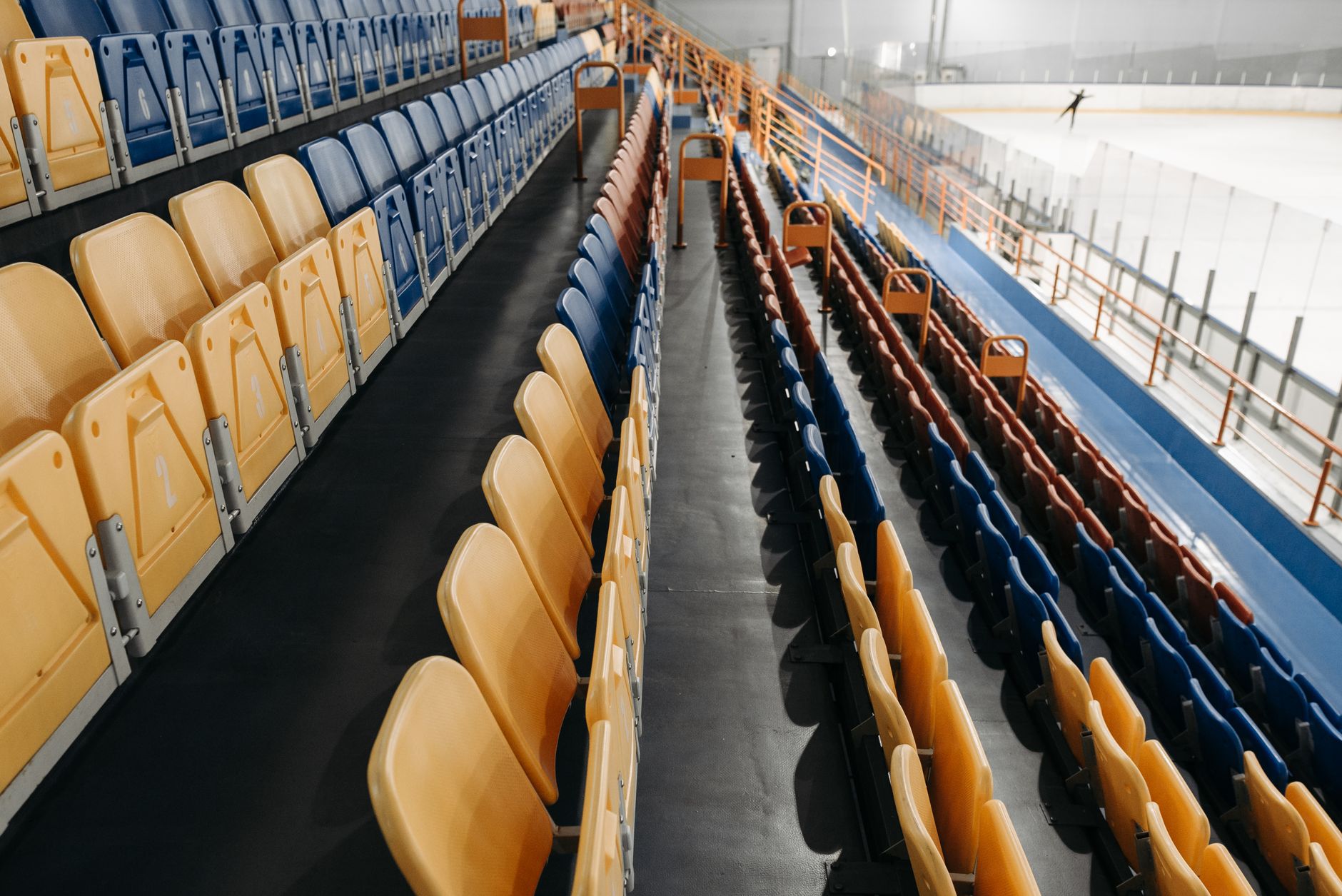
Stadium restroom work is bursty, not smooth. Fans surge at halftime, between innings, before kickoff, after a concert encore, and during weather delays. That means venues do not just need cleaning. They need repeated verification that each bank of restrooms is open, stocked, presentable, and safe right before the next wave arrives.
Code logic reflects the same reality. The International Code Council's 2024 Plumbing Code Essentials notes that a theater or stadium tends to need more female fixtures than male fixtures because attendees use restrooms during intermissions in concentrated bursts. That is a design clue for operations too. Demand arrives in pulses, so inspection latency becomes expensive.
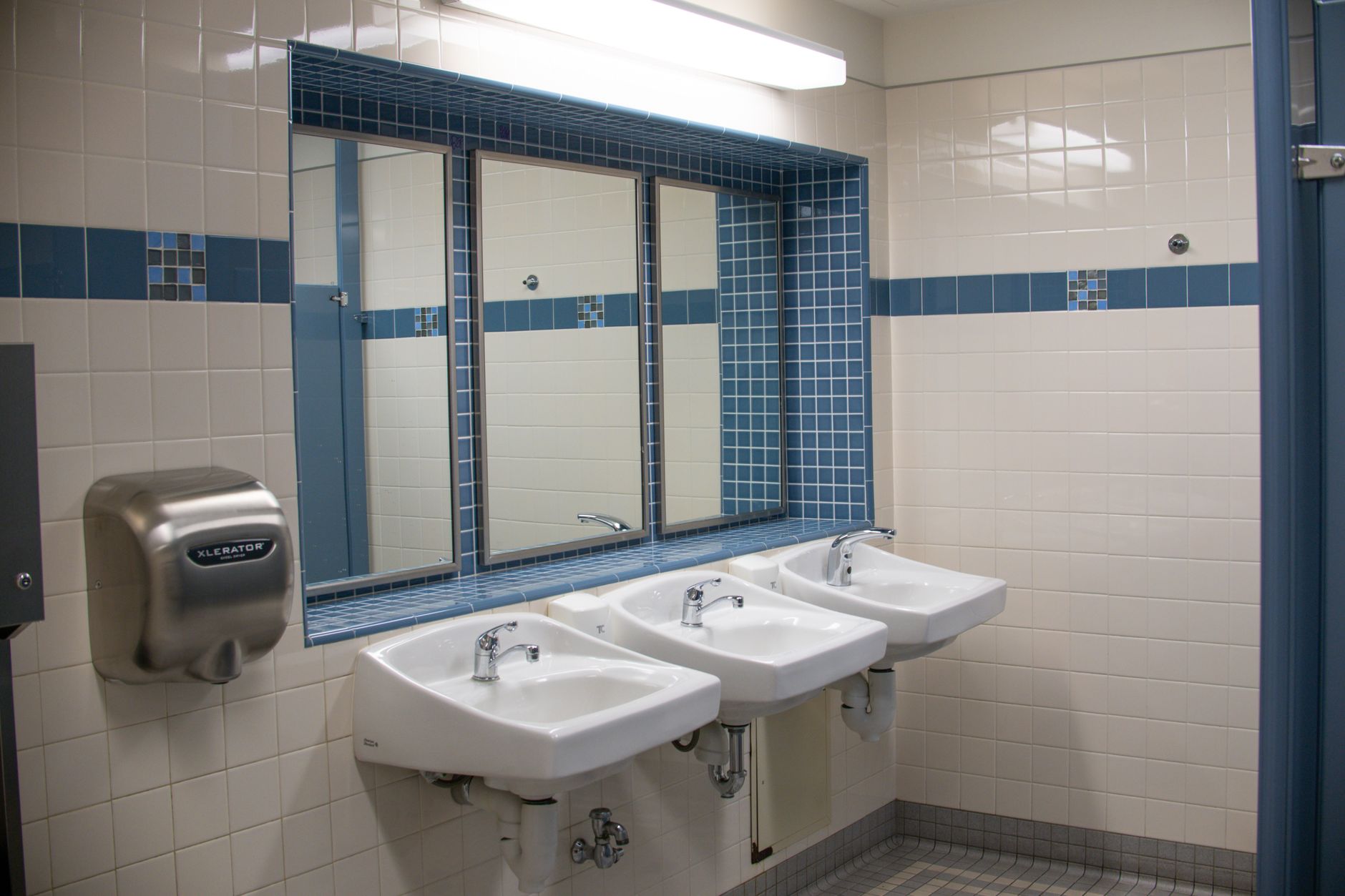
The cleaning standard itself is not relaxed just because the building is busy. The CDC says high-touch surfaces should be cleaned regularly and that high-traffic areas may need more frequent cleaning. In a stadium, that translates into repeated checks on fixtures, counters, door hardware, dispensers, and obvious floor contamination throughout the event, not just before doors open and after the crowd leaves.
What should the robot do, and what should people still own?
The right workflow is support, not theater. A patrol or inspection robot should run the route on schedule, capture images or condition signals, detect if a restroom is closed or visibly degraded, and push alerts for paper goods, soap, spills, or trash overflow. It should also log proof of patrol completion, because audit certainty is part of the return.
People should still own the judgment-heavy work. That includes cleaning contaminated surfaces, correcting guest-facing issues, restocking supplies, handling accessibility concerns, and making the call when a restroom needs temporary closure or escalation. The labor win appears when the robot becomes the scout and the staff become the responders.
That division matters because BLS projects about 351,300 openings for janitors and building cleaners each year on average over the 2024 to 2034 decade. In a labor market with that much churn, many venues are not trying to eliminate headcount. They are trying to stop spending scarce labor on repetitive walking that produces very little guest value on its own.
Where do the savings actually come from?
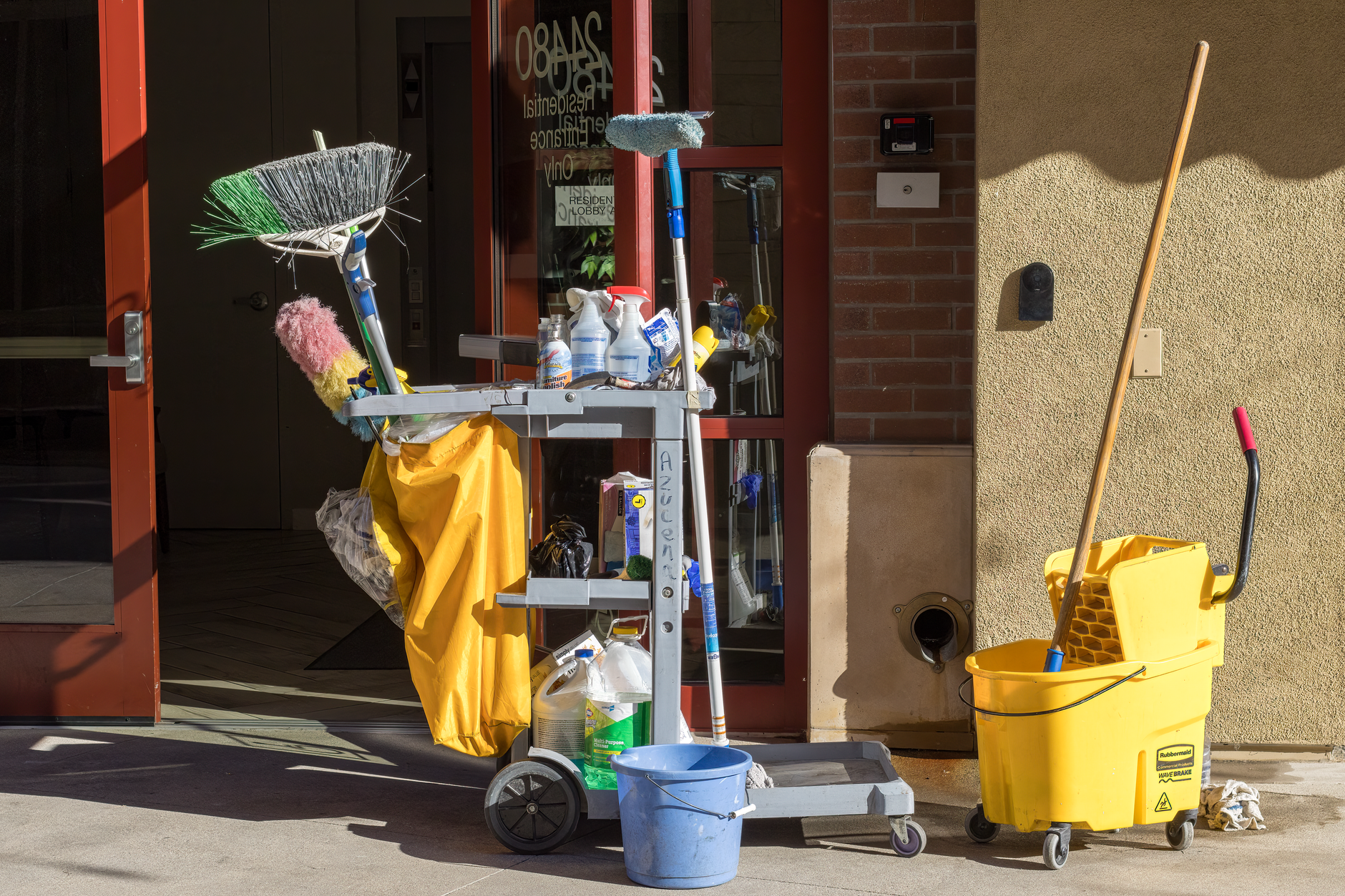
The first bucket is fewer manual rounds. In many venues, supervisors or attendants walk long concourse loops just to confirm that nothing is wrong. If the robot can perform those loops and only call people when a condition crosses a threshold, the venue reduces inspection labor without reducing service coverage.
The second bucket is faster replenishment. A restroom that runs out of paper or soap for even a short window can trigger complaints, line migration, and extra cleanup in adjacent restrooms. Catching the issue earlier protects capacity. The value is not abstract. It shows up in fewer emergency dispatches and less end-of-event recovery.
The third bucket is cleaner labor allocation. Instead of assigning workers broadly across a zone and hoping they happen to pass the right restroom at the right time, managers can dispatch by exception. That makes the same crew more productive on the most visible tasks.
The fourth bucket is documentation. Time-stamped patrol logs matter when venue leadership asks whether a problem was missed, when it was first visible, and how long it stayed unresolved. A robot-supported audit trail turns restroom operations into measurable throughput rather than anecdote.
What does a defensible ROI model look like?
Start with loaded labor, not wage rate alone. Using BLS data, a median janitorial wage of $17.27 an hour maps to roughly $24.71 an hour in private sector employer cost when the March 2026 compensation mix is applied. If your event coverage relies on nights, weekends, or overtime, your real internal number will be higher.
Next, model only the labor that automation can credibly absorb. That usually means scheduled inspection rounds, supervisor verification walks, and some post-event audit work. It usually does not mean eliminating all restroom attendants. A conservative model wins here, because inflated assumptions collapse the minute operations asks who still cleans the spill.
Then measure service deltas that have labor consequences. Track refill alerts caught before a guest complaint, average response time to a stocking issue, percent of restrooms verified on schedule, and number of manual rechecks avoided. If the robot reduces routine walking but also shortens issue resolution, the venue gets both labor efficiency and guest-experience protection from the same workflow.
Finally, separate pilot math from full-rollout math. A pilot should prove route reliability, false-alert rate, dispatch discipline, and integration with event operations. Only after that should the venue annualize avoided labor hours or compare robot leasing for business, lease rental or sale, and robot as a service structures. The order matters. Operations proof first, financing structure second.
Why is the guest experience impact larger than many managers estimate?
Restrooms are one of the few back-of-house style workflows that every guest notices immediately when they fail. Long lines are visible. Empty dispensers are visible. A closed bank of stalls pushes traffic into the next restroom and compounds the problem. When the issue is detected late, the recovery curve gets steeper with every minute.
Large-event attendance figures show the scale operators are managing. The NFL reported that the 2024 draft in Detroit drew more than 700,000 fans over three days. Major League Baseball said the 2024 season reached 71,348,366 in attendance, its highest total in seven years. In buildings that process crowds at that scale, restroom uptime is not a housekeeping detail. It is part of crowd flow.
That is why the economics should be framed as uptime and labor deployment together. A venue that only asks whether a robot replaces a headcount misses the larger point. The better question is how much avoidable friction the venue removes from a highly compressed service window.
What can derail the economics?
Bad scope is first. If the robot is asked to solve every restroom problem alone, the program will disappoint. Inspection and alerting are very different jobs from cleaning and replenishment. The workflow has to assign each task to the capability that actually fits it.
Weak escalation design is second. Alerts need a clear owner, response target, and handoff path into the existing event command structure. A robot that finds problems but feeds them into an ignored inbox is just a more expensive way to generate uncertainty.
Service coverage is third. Stadium operations are calendar-bound. If a unit goes down on an event day, the venue needs remote triage, on-site dispatch, spare-unit thinking, and technicians who understand commercial operations, not just hardware. That is one reason many operators prefer one partner one number and a vendor neutral robot integrator instead of trying to coordinate multiple parties themselves.
Why the integrator model matters in stadium operations
Stadiums rarely need a gadget. They need an operating system around the robot: site assessment mapping, route tuning, safety review, staff training, dispatch logic, service-level expectations, and financing that fits seasonal event economics. That is where the implementation either becomes dependable or turns into a science project.
Service Robot Co. approaches this as a full-service commercial robot integrator for U.S. businesses. The company is OEM-neutral, then handles finance, deployment, integration, training, and service through a nationwide U.S. engineer network. For a venue team, that means one vendor for the whole lifecycle instead of a patchwork of manufacturers, local contractors, and internal guesswork.
That model is especially relevant when a stadium wants a pilot program with a clear labor hypothesis, no long term contract pressure at the start, and a path from trial to wider rollout only if the route data and staffing results justify it.
What should a 90-day pilot prove?
A good pilot should answer operational questions, not just technical ones. Can the robot complete patrols reliably during live events. Does it spot the conditions that matter most. Do attendants respond faster when alerts are structured and time-stamped. Does leadership trust the audit trail enough to change staffing patterns.
The pilot scorecard should be narrow and hard to argue with. Measure patrol completion rate, alert accuracy, minutes from alert to closeout, stocked-on-check percentage, guest complaint volume tied to restroom conditions, and manual rounds removed from the shift plan. Those numbers tell you if the workflow saves labor without quietly shifting more burden onto supervisors.
If the data says yes, the case for expansion becomes much stronger. At that point the venue is not buying a trend. It is buying back labor hours, improving restroom uptime, and running a more disciplined event operation.
Frequently asked questions
Sources
- BLS Janitors and Building Cleaners Outlook Handbook
- BLS Employer Costs for Employee Compensation March 2026
- CDC When and How to Clean and Disinfect a Facility
- ICC 2024 Plumbing Code Essentials Chapter 4
- ICC 2024 International Plumbing Code Chapter 4
- NFL 2024 Draft Attendance Record
- MLB 2024 Attendance Press Release