Key takeaways
- A drone scouting flight only helps when its date, area, finding and crew action land in one record.
- Arkansas Extension reports that thermal and multispectral drone images can guide watering before serious turf injury.
- The FAA does not require flight logs for Part 107 pilots, but Pilot Institute strongly recommends keeping them.
- Log vendor stress-lead claims as claims until your own turf trial confirms them.
- Name the index that flagged a stress zone so a later reviewer can judge the call.
Why a scouting flight needs a written record
A drone scouting flight only helps superintendents when its findings reach a record the crew and the board can read. The minimum entry is simple: the flight date, the area surveyed, what the sensor showed, and the crew action that followed. Without that last item, the flight is an interesting picture, not a decision.
The payoff is real when the imagery feeds water and labor decisions. Arkansas Extension reports that thermal and multispectral drone images from its drought and wetting agent trials can guide golf course watering, so water goes where it is needed before serious turf injury. The same extension notes that drones survey a lot of ground quickly, which helps a superintendent direct limited labor.
The fields every flight entry needs
Start with a template that fits on one page. Each flight gets one entry, and each entry carries the same fields, so a reader can compare week to week without decoding your notes.
Keep the finding and the action in separate fields. A finding describes what the image shows, such as a dry patch near one head on a green approach. An action describes what the crew did about it, and the recheck date tells the board when the question closes.
- Flight date, start time, and the weather and turf condition noted at launch
- Pilot in command and the person who reviewed the images
- Area surveyed, named by zone or map layer rather than as the whole course
- Sensor used (thermal, multispectral or visual) and the index or view reviewed
- Findings, each with a location, a rough extent and the image it came from
- Crew action taken, the technician who took it, and the date of the recheck

Naming the area so the record can be audited
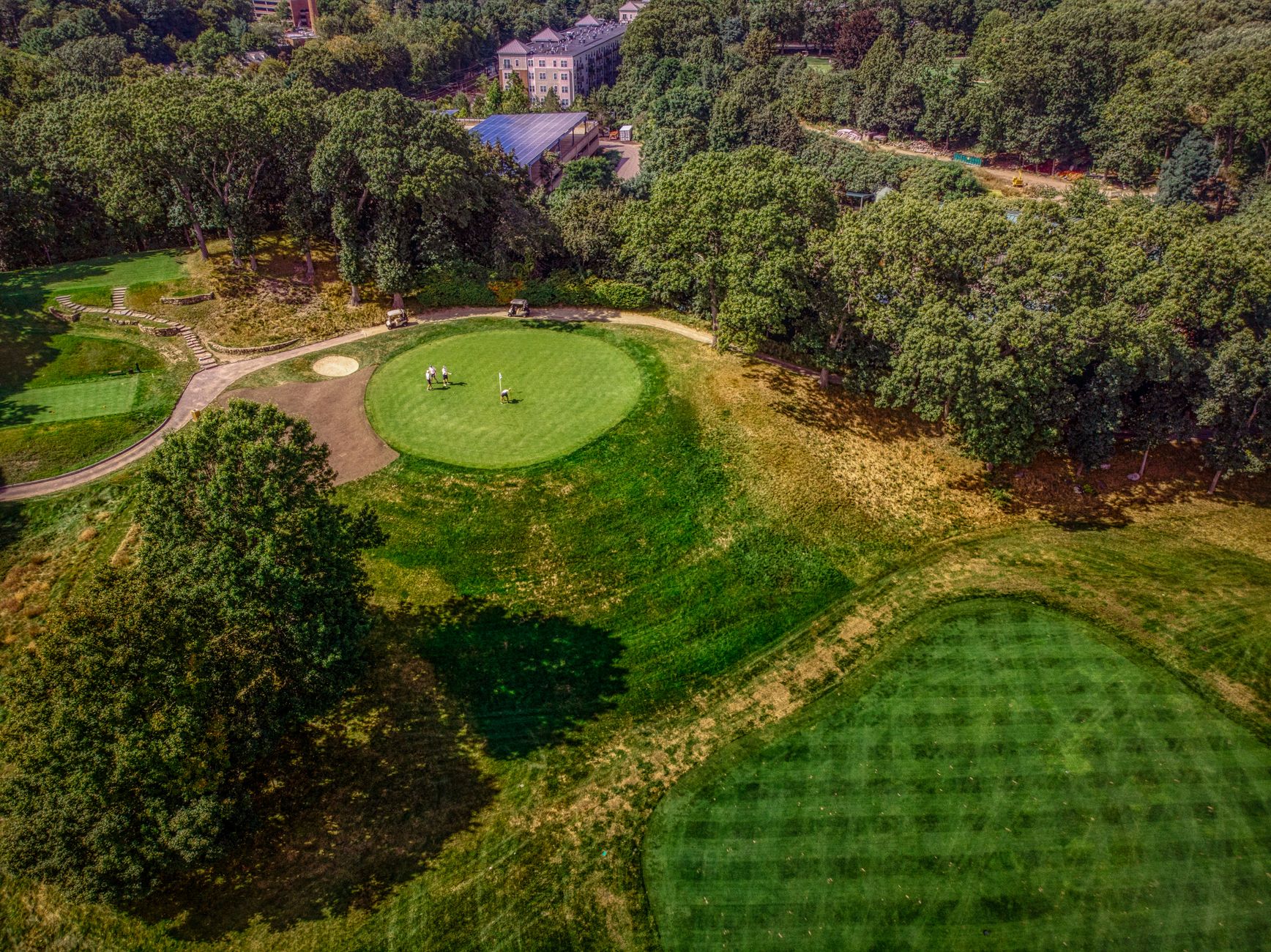
A flight logged as the back nine cannot be checked against anything. Use the same zone IDs that your irrigation controller and mowing map already use, so an image, a valve and a crew assignment all point to the same ground.
Date your base map and log its version with each flight. If the map changes after tree work or a renovation, an older flight can no longer be compared cleanly with a newer one, and the log should say so.
Coverage is part of the story too. A 2016 Kansas State turfgrass report, describing a creeping bentgrass study with six irrigation treatments, noted that small unmanned aircraft can cover a full course faster than handheld or plot methods. Record the zones actually flown, so a skipped area reads as skipped rather than clean.
What the research supports, and what it does not
A three year peer reviewed study on small unmanned aircraft reported that ultra high resolution sUAS remote sensing detected drought stress before a human observer could see it. In that work, the most sensitive indices were NIR and GreenBlue VI, which detected drought stress more than 5 days before decreases in turf quality.
Read that as a research finding about specific indices under specific conditions, not as a promise your own imagery will match. The log should name the index that flagged the stress, which lets a later reviewer judge the call.
Vendor figures need the same discipline. As of November 2026, Golf Business News reported AerialData's claim that its multispectral surveys can show stress up to two weeks before symptoms appear. We did not verify that figure, so if your board hears it, log it as a vendor claim and test it on your own turf before relying on it.
Which flight and maintenance records the FAA leaves open
The FAA leaves more open than many operators expect. Pilot Institute states the FAA does not require flight logs even for Part 107 pilots, but it strongly recommends keeping drone flight logs. A 2026 training guide from The Drone U adds that the FAA does not require a specific logbook, and that before each flight the remote pilot in command must confirm the aircraft is in a safe condition, which maintenance records can help demonstrate.
A secondary summary recommends logging components inspected or replaced and flight hours at each service. We could not confirm that against FAA text, so treat it as good practice rather than a rule. Our notes also found no clear U.S. precedent for when battery cycles or firmware versions must be logged, or how long logs must be kept.
Before you cite any requirement, read the FAA's own Part 107 rules and its advisory circular for that part. The flight log is the field record. The maintenance record is what shows the aircraft was safe to fly that day.
Turning the record into irrigation and turf decisions
A board reads a summary, and a crew reads a zone. Build a monthly rollup that counts flights, open findings and closed actions, and keep the zone detail one click away. An open finding with no recheck date is the signal to watch, because it means a question nobody has closed.
The strongest use of a scouting log is the before and after pair. When a flagged zone gets water or hand work, the next flight should show whether the stress eased. Log both flights together, so the record tests the action instead of just recording it.
Keep a note of what the drone could not see. Shade, traffic patterns and recent cultural work can all mask a finding, and an honest log says where coverage was weak. A record that admits a gap earns more trust from the crew than one that claims to see everything.
Where a robot record fits in a service plan
Service Robot Co. (servicerobotco.com) is a full service commercial robot integrator for US businesses. We are vendor neutral: we pick robots across manufacturers, then lease them through financing on a three year lease with one fixed payment quoted after a site assessment. We also deploy, integrate, train and service each unit under RoboCare, backed by regional service engineers in every state we service.
Our leases cover robots, not aircraft, so this drone program sits outside what we deliver. The habit still carries over. A service history helps only when a crew can read it, which means each visit needs a date, the work done, the parts involved and the next check.

Frequently asked questions
Want a robot working for you?
Tell us the job and the site. We will recommend the robot, quote the lease, and keep it serviced.