Key takeaways
- Clients read a lawn in seconds, through stripes, height and edges, and an uneven read invites a hard renewal conversation.
- A 2025 vendor blog reports that inconsistent service quality and weak communication are the most common reasons clients cancel.
- Even stripes depend on grass blades that bend evenly, which means consistent height and a steady mowing rhythm.
- Changing the robot's pattern between sessions keeps stripe lines from settling into one visible direction.
- A dated cut-quality record gives account managers proof they can show at renewal time.
How do clients decide if a lawn was cut well?
Most clients never measure a lawn. They look at it from the drive, the front walk or an upstairs window, and they judge three things: the stripes, the height and the edges. An uneven pattern reads as a crew stretched thin, even when every blade was cut on schedule.
That judgment carries straight into renewal. One rough week rarely ends a contract. A run of visibly uneven visits, with stripes that wander, a patch that sits taller than its neighbors and edges that look untended, tells the client the service is drifting, and the renewal talk starts from that picture.
The fix is not one heroic pass. It is a repeatable pattern, a height that holds across the property, a crew that finishes what a mower cannot, and a record that proves all three happened.
Why do uneven cuts turn into cancellations?
A 2025 vendor blog from SiteRecon, a company that sells a lawn audit tool, names inconsistent service quality, poor communication and lack of trust as the most common reasons clients cancel. The same post says clients rarely leave after one bad visit. Frustration builds from missed or inconsistent schedules and from weak communication about weather delays. Those figures are vendor-reported, and no independent churn figure turned up for this piece.
Look closely at that list. It does not say the grass was cut too short. It says the client could not predict the result and was not told why. Stripes are the visible proof of predictability. When a lawn looks different on every visit, the client reads the change as a change in attention.
What makes stripes look even, and what breaks them?
Stripes come from grass blades bent in one direction, which catch light differently from the neighboring track. One vendor blog attributes this to a weighted roller bending blades in opposite directions. Another points to deck airflow, roller or flap pressure and a consistent cutting height. Both describe the same principle: the cut must be uniform before the bending can be uniform.
Height is the quiet variable. Vendor guidance collected for this piece says stripes show best when height is consistent across the whole lawn, and that grass lying down before the cut bends at inconsistent angles, which weakens the stripe. A patch that sits taller than its neighbors breaks the pattern even when the pattern itself was right.
Grass type changes the stakes. According to a Sunseeker Elite blog, warm-season grasses can still stripe, but the effect is usually less visible because of stiffer blades and faster recovery. Know the turf before you promise a look.

How do robot passes keep the look even across a season?
A robot mower's advantage here is repeatability. It runs the same route on a set schedule, which is the condition stripes need. Husqvarna's support guidance, checked November 2026, says parallel patterns cut in consistent tracks, while checkerboard and triangle patterns change direction between sessions, making stripes less visible. The same page notes that commercial robotic mowers may offer extra pattern options.
Choose the pattern to match what the client expects, not what the crew prefers. The three common options behave differently:
- Parallel: consistent tracks that show a formal, striped look, which suits a front lawn the client wants to see from the street.
- Checkerboard: direction changes between sessions, so the stripe fades into a softer texture from one visit to the next.
- Triangle: a direction change between sessions with the same softening effect, useful when a client asks for less visible lines.
Where does crew detail still decide the look?
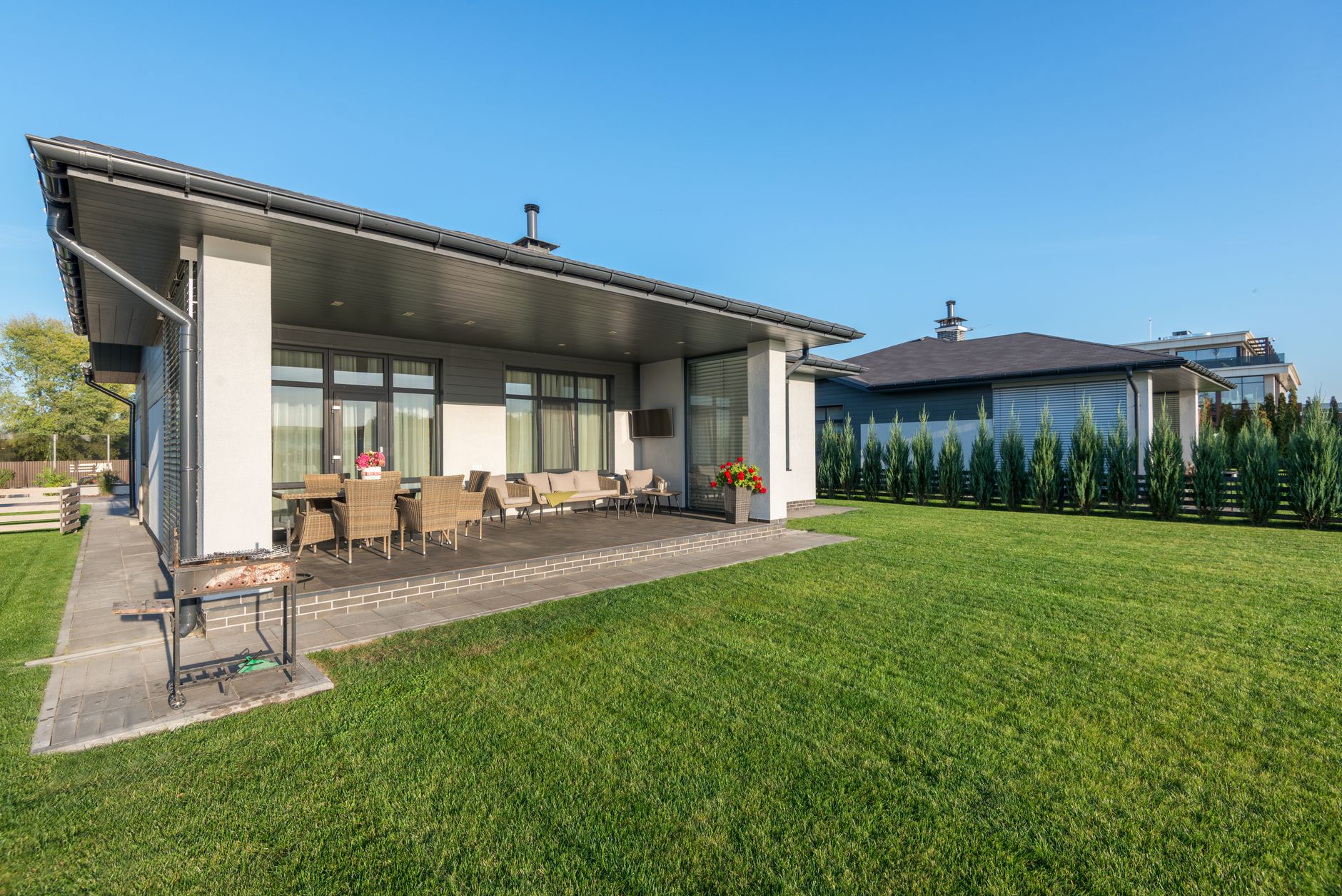
A robot covers the open turf well. It does not finish a lawn. Edges along walks, curbs and beds, transitions where the mowing zone meets a planting strip, and clippings left on hard surfaces are where a client's eye lands first. Those are the places where a crew's hands still matter.
Sequence the work so edging and trimming follow the robot pass rather than competing with it. Build a short walk-through into every visit. The crew lead checks stripe direction against the pattern on record, reads height at a few points across the property and clears clippings from walks before leaving. It takes minutes, and it turns an invisible routine into something a manager can describe.
How should cut quality be documented so account managers have proof?
Proof is a record, not a memory. For each property, log the date, the pattern used, the cutting height for each zone, the result of the crew walk-through and any edge or clipping work finished after the robot pass. Take photos from the same spot on every visit, so the sequence can be compared side by side.
Customer surveys can feed the same conversation. According to Lawn & Landscape, Lawn America uses its Net Promoter Score survey to drive operations rather than only gauge satisfaction, ties survey data to employee bonuses and to fixing operational issues, and says acting on the data can improve retention. Those points are company-reported, and the article gives no retention figure.
Turf Magazine advises that a short survey sent to key clients may work better than a long one. A short survey is easier for a busy client to finish, and its answers give the account manager something specific to act on.
What should an account manager bring to a renewal meeting?
Bring three things: the photo sequence for the property, a summary of the run log showing pattern and height compliance, and the client's answers to a short survey. A strategy-industry page recommends Kano-style questions, which ask how a client would feel if a service were provided or not, to rank which service attributes matter most. Use that ranking to choose which proof leads.
Lead with what the client already values. A client who prizes a formal frontage needs stripe evidence first. A client with a large open field may care more about even height across the property and no surprises when the schedule shifts.
Do not promise a look the grass cannot hold. A record that shows a dip, explains the cause and documents the correction builds more trust than a folder of perfect weeks.

Where Service Robot Co. fits in a consistent cut program
Service Robot Co. offers commercial robot leasing through financing on a 3-year lease, with one fixed lease payment quoted after a site assessment. We pick the right robots across manufacturers for the property, deploy and integrate them, train the crew leads who supervise them, and service every unit under RoboCare, our service plan, with maintenance included and regional service engineers in every state we serve. One vendor for the lifecycle, not six.
That structure bears on renewals. When a unit misses a pass, a regional engineer can dispatch on site, and the crew lead has one number to call. The same team that handles the robot also keeps the service records, so the proof an account manager shows comes from one source.
Frequently asked questions
Want a robot working for you?
Tell us the job and the site. We will recommend the robot, quote the lease, and keep it serviced.
Sources
- SiteRecon blog: how to improve customer retention in your lawn care business
- Lawn & Landscape: customer surveys benefits
- Turf Magazine: landscape client satisfaction surveys
- Husqvarna support: what is systematic mowing
- Eufy blog: robot lawn mower stripes (UK)
- Sunseeker Elite blog: how to mow stripes (US)
- Strategy for Industry: Kano model for landscape care and maintenance