Key takeaways
- A robot usually wins in shipping vestibules and other repeatable dock-adjacent zones with dependable cleaning windows.
- A staffed walk-behind usually wins on dock aprons and staging lanes that stay crowded, dirty, and constantly interrupted.
- The decision turns on open-floor percentage, interruption rate, and who will recover debris and wet spots between runs.
- Dock cleaning is also a safety question. OSHA flags wet surfaces, clutter, and dock edges as real hazards in warehouse environments.
What is the better choice in most loading docks?
For most loading-dock operations, the honest answer is mixed. A robot scrubber is usually the stronger fit for shipping vestibules, long interior approach lanes, and other dock-adjacent areas where traffic drops into predictable windows. A staffed walk-behind machine is usually the better fit right on the dock apron and in trailer staging lanes where movement stops and starts all shift, pallet debris appears without warning, and somebody has to make judgment calls every few minutes.
If you clean a dock area during a stable overnight window and at least a large share of the route stays open long enough to complete a full pass, the robot case gets stronger fast. If the floor is constantly pinched by forklifts, staged pallets, outbound carts, open trailer doors, and ad hoc spill response, manual scrubbing still has the edge. The machine is not the main variable. The operating pattern is.
That is why brochure specs tend to mislead buyers in this part of a facility. Loading docks punish idealized assumptions. The right question is not how many square feet a machine can scrub on paper. It is how much of your intended route is actually available, for how long, and who covers the messy exceptions that break a planned run.
Why are dock zones harder than the rest of a warehouse?
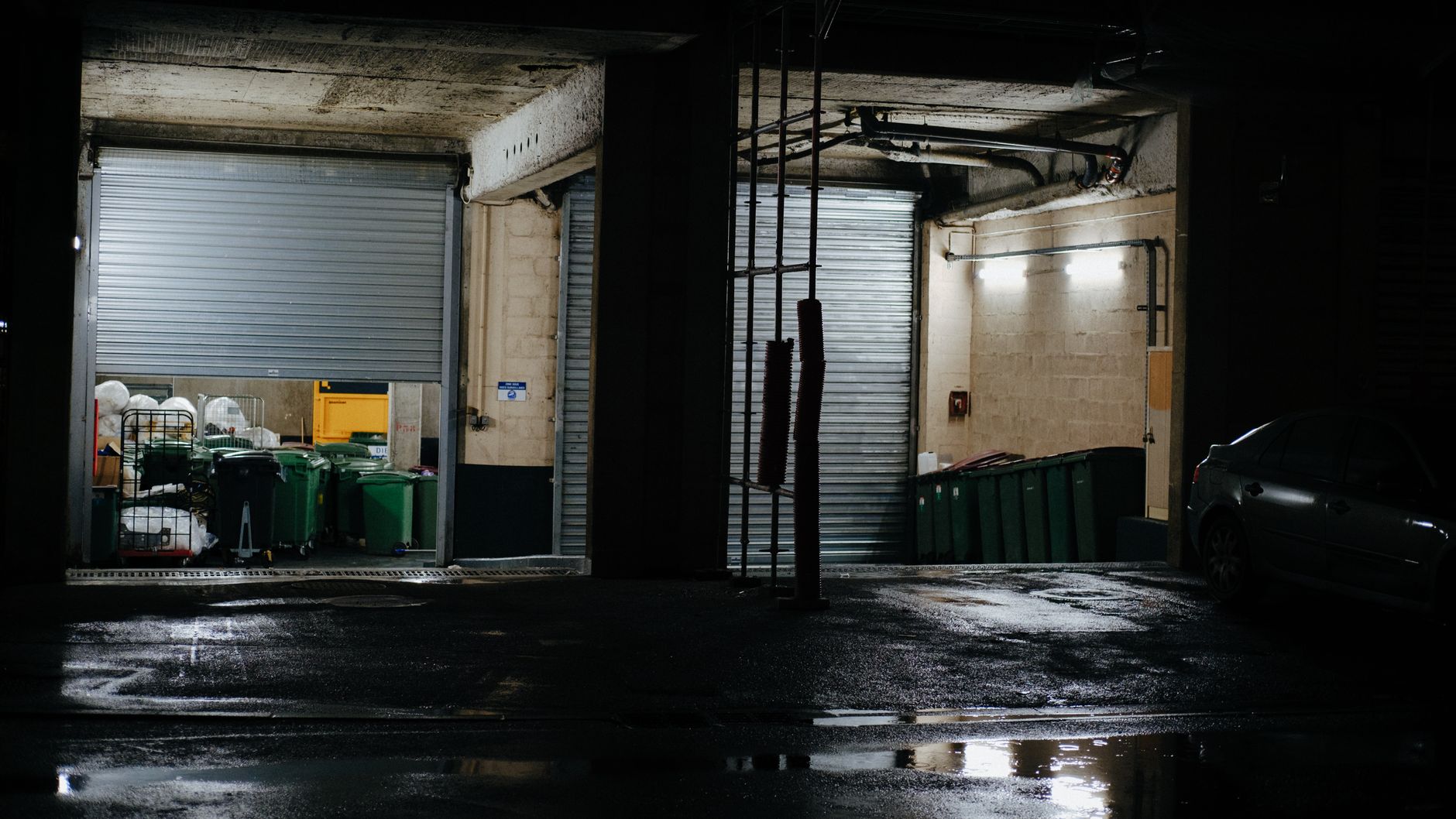
Dock environments stack several problems on top of each other. OSHA notes that loading docks bring edge exposure, pedestrian traffic, and slipping hazards from wet or icy conditions, and it specifically calls for working surfaces to be kept clear and clean. In the warehouse guidance, OSHA also points to clutter, spills, and open edges as slip, trip, and fall risks, and requires fall protection at unprotected sides or edges 4 feet or more above a lower level in many cases.
That matters because floor-care decisions in this zone are inseparable from safety. According to NIOSH, 211,640 private-industry workers suffered severe fall injuries requiring days away from work in 2020, and both building cleaning and maintenance and transportation and material moving are among the higher-risk groups it highlights. Another NIOSH summary notes that 50 percent of same-level falls led to more than 10 days away from work.
In practice, dock floors are rarely dealing with soil alone. They are dealing with shrink wrap tails, busted pallet chips, grime dragged in from trailer thresholds, condensation, rain blow-in, and the residue from rushed spot cleanups. A scrubber can wash. It cannot make traffic disappear, and it cannot decide on its own that a lane full of fresh debris needs pre-sweeping before a safe run makes sense.
When does a staffed walk-behind machine win?
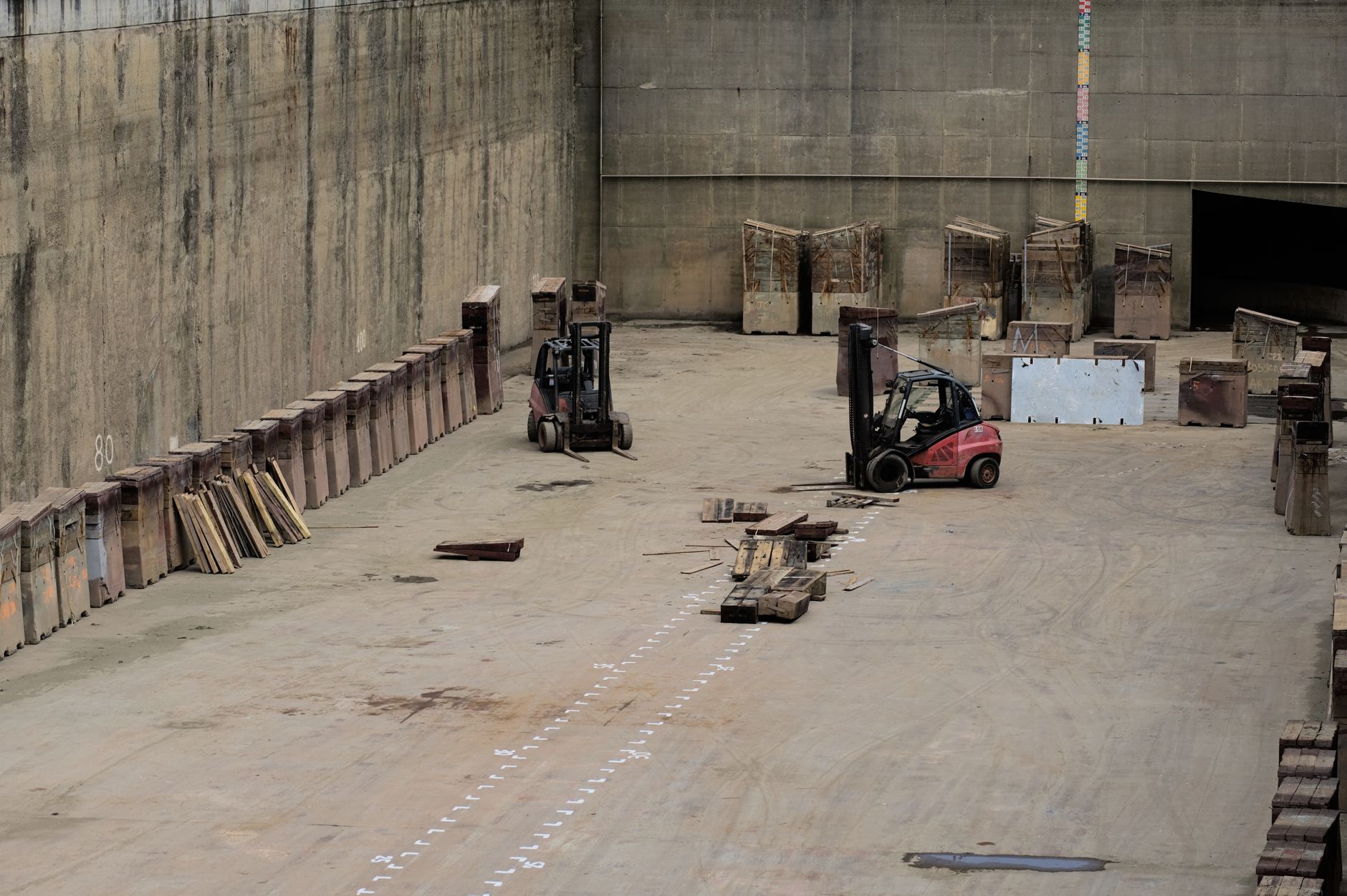
A staffed walk-behind machine wins when conditions change faster than a route can hold. That is common on active dock aprons during receiving peaks, in staging lanes that become temporary storage, and in mixed-use back-of-house corridors where carts, pallet jacks, and forklift crossings keep shifting the path.
Manual operation also wins when dry debris is the real bottleneck. Shrink wrap, labels, corner boards, broken pallet fragments, and loose banding can turn an otherwise routine scrub into a stop-and-clear loop. If an operator is already needed to police debris, move obstructions, hit wet spots on demand, and coordinate with dock staff, the value of autonomy shrinks.
There is a labor argument for manual scrubbing here too. A walk-behind lets one trained worker switch instantly between scrubbing, edge work, touch-up, and emergency response. In a zone where interruptions are the norm, that flexibility can outweigh the consistency advantage of a robot. Manual also remains the better choice when your dock never truly closes and you cannot defend a recurring cleaning window.
- Best fit: dock aprons with live trailer turns
- Best fit: staging lanes used as overflow space
- Best fit: vestibules that double as cross-traffic shortcuts during peaks
- Best fit: any area that routinely needs debris pickup before scrubbing
When does a robot scrubber pull ahead?
A robot pulls ahead when the route is repeatable and the crew can protect a real operating window. Shipping vestibules are often the cleanest example. They may still see bursts of traffic, but the geometry is usually more stable, the floor is flatter, and the work can be sequenced around shift changes, trailer lulls, or overnight resets.
The economics improve further when the robot takes over the broad, boring square footage and leaves exceptions to people. That means long interior lanes, predictable holding areas, and dock-adjacent concrete where a full route can run with limited interruptions. A robot is not replacing all dock cleaning. It is taking the most repetitive portion off the labor plan so staff can cover detail work, trash, corners, thresholds, and rapid response.
Labor conditions make that tradeoff easier to understand. The U.S. Bureau of Labor Statistics says janitors and cleaners had about 351,300 openings projected each year on average from 2024 through 2034. It also reports a May 2025 mean hourly wage of $18.64 for janitors and cleaners, except maids and housekeeping cleaners. That wage is not a loaded labor rate, but it is a reminder that repetitive floor time still consumes real staffing capacity before benefits, turnover, supervision, and night coverage are added.
- Best fit: shipping vestibules with stable overnight access
- Best fit: long interior approach lanes to the docks
- Best fit: repeatable concrete routes with low clutter and few parked pallets
- Best fit: sites that can assign people to debris pickup and exception handling while the robot handles the main pass
How much open floor do you really need?
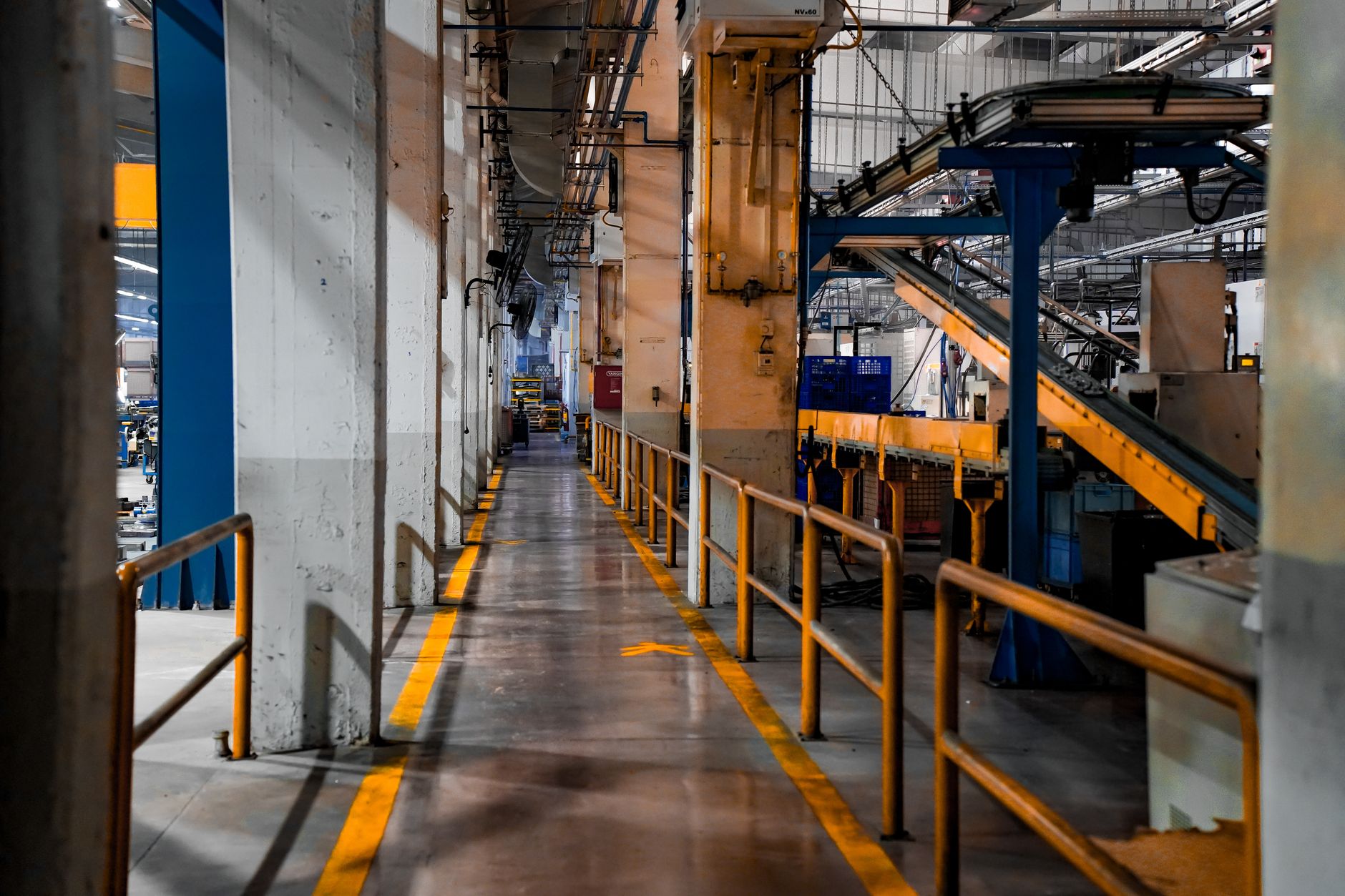
Open-floor percentage is the quiet variable that decides this purchase more often than tank size or battery life. If the route spends much of the shift blocked by live traffic or temporary staging, the robot spends too much time waiting, rerouting, or getting pulled off schedule. A staffed walk-behind tolerates that chaos better because the operator can improvise in seconds.
A practical rule is to map the exact area you want cleaned and then mark what portion is truly available during your intended cleaning window, not what is theoretically empty at some point in the day. If most of the route can stay clear long enough for a full uninterrupted pass, autonomy starts to make sense. If the available floor collapses every few minutes, manual still fits better.
Do not evaluate only square footage. Evaluate continuity. Ten thousand square feet split into constantly blocked fragments is a poor robot route. A smaller but continuous vestibule loop may be the better autonomous candidate.
- Measure route availability by time window, not by building drawings
- Separate broad scrub zones from exception zones like thresholds and corners
- Track interruption frequency for one representative week before choosing equipment
- Treat debris recovery as a separate labor task, because scrubbing does not eliminate it
How should labor coverage change the decision?
Dock cleaning is often purchased as if the choice were labor or no labor. It is usually labor shape versus labor shape. A robot shifts labor away from repetitive coverage and toward setup, recovery, inspection, debris pickup, and spill response. A walk-behind keeps one person tied directly to the machine for the full cleaning cycle.
That distinction matters in warehousing because the surrounding labor market is still large and fluid. BLS reports about 1.8 million projected openings each year, on average, across transportation and material moving occupations from 2024 to 2034. It also showed roughly 1.616 million production and nonsupervisory employees in warehousing and storage in May 2025. In operations of that scale, coverage gaps and reassignment pressure are not abstract problems. They are daily scheduling problems.
If you are short on dependable overnight labor, a robot can be a strong way to protect baseline floor care in the areas that hold a route well. If your issue is not staffing volume but dock volatility, then autonomy alone will not rescue the process. You may still need manual coverage in the hottest zones and use automation only where the route can breathe.
- Choose manual when you need one person making constant situational calls
- Choose robot when your scarce labor should be redeployed to detail and exception work
- Choose mixed deployment when part of the dock is stable and part is chaotic
What does a mixed dock strategy look like?
In many facilities, the best answer is not robot versus walk-behind. It is robot plus walk-behind, with each assigned to the kind of work it handles best. The robot owns the repeatable loop in shipping vestibules and interior dock approaches. A staffed machine or utility crew owns the apron edge, staging spillover, threshold buildup, and any lane that turns into temporary storage by noon.
This is where an OEM-neutral integrator matters. Service Robot Co. does not start with one machine and try to force-fit the building around it. We start with the route logic. For U.S. operators, that means choosing the right robots across manufacturers, then financing, deploying, integrating, training, and servicing every unit through one nationwide engineer network. One vendor handles the lifecycle instead of handing your team a machine and a service phone tree.
For loading docks specifically, that neutrality is useful because the answer is often uncomfortable for sellers. Some sites need a robot in the vestibules and a staffed walk-behind on the apron. Some need a pilot before a fleet decision. Some need no robot at all until traffic windows and floor discipline improve. The right recommendation has to survive the real floor, not just the sales demo.
- Robot route: shipping vestibules and stable interior lanes
- Manual route: apron edges, trailer thresholds, and cluttered staging pockets
- Shared task: debris policing and wet-spot response between scheduled scrubs
How should you test the choice before committing?
Run the comparison as an operations trial, not as a beauty contest. Measure how many minutes per shift the intended route is truly open, how often debris forces intervention, how often wet spots appear outside the cleaning window, and how much manual recovery remains after the main scrub is done. The cleaner floor is not automatically the cheaper process if it depends on constant babysitting.
Your pilot scorecard should also include safety friction. Count blocked aisles, near-conflicts with traffic, and how often a machine must pause near active dock edges or crossing points. OSHA's own guidance on docks and warehousing makes it clear that clean, unobstructed walking-working surfaces are part of safe operation, not a cosmetic extra.
Service Robot Co. usually advises buyers to pilot the exact route family they intend to automate, not a cherry-picked corridor. If the robot only looks good in the one quiet lane nobody struggles with, it is the wrong test. A proper trial should show where autonomy holds, where manual still wins, and how the two can be scheduled together.
- Track route completion rate, not just attempted runs
- Log every human intervention and why it happened
- Separate debris stops from traffic stops and spill stops
- Compare labor redeployment, not just machine runtime