Key takeaways
- A national rollout succeeds when operating standards are portable from store to store, not when one pilot store looks good for a week.
- Service coverage matters as much as cleaning performance because a chain cannot tolerate hundreds of sites waiting on scattered repair support.
- Change management is operational work, not soft work. Training, ownership, and escalation paths decide whether robots stay in daily use.
- Convenience retail is large, labor-tight, and safety-sensitive, which makes repeatable overnight floor care attractive at chain scale.
- Retailers should buy or rent a deployment model, not just a machine. The winning plan includes financing, mapping, training, maintenance, and replacement coverage.
What does a 1,200-store rollout actually prove?
It proves that scaled robot cleaning is no longer a pilot-only exercise. A June 2, 2026 case study published through PR Newswire by a robotics manufacturer described a national convenience-store deployment of autonomous floor cleaning robots across more than 1,200 locations, installed over 2024 and 2025. That is not a lab test. It is chain execution.
The lesson for retailers is blunt. Once a program reaches four digits, the hard part is no longer the scrub deck, the battery, or the navigation demo. The hard part is repeating a working operating model across hundreds of different stores, managers, floor conditions, staffing patterns, and service events without letting performance drift.
That is why scaled adoption lives or dies on standardization, service coverage, and change management. If those three pieces are weak, even a strong pilot can stall at store 12, let alone store 1,200. If those three pieces are solid, a retailer can turn floor care from a local experiment into a chainwide operating standard.
Why does this matter so much in convenience retail?
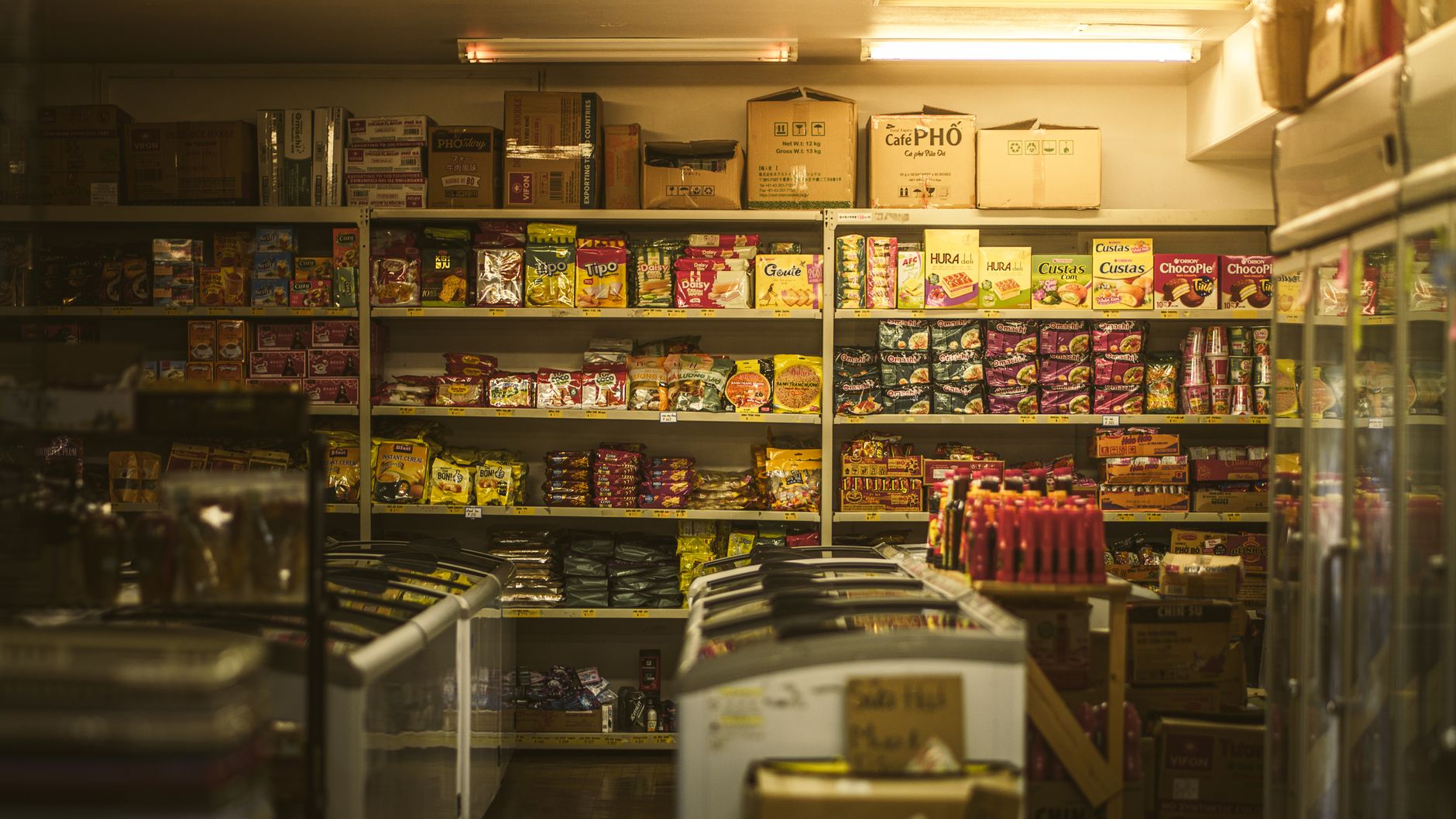
Convenience is a serious scale business. According to NACS, the United States had 151,975 convenience stores as of December 31, 2025. NACS also reports that 22.2% of those stores sit in chains with 501 or more locations. In other words, this is an industry where a single operating decision can affect hundreds or thousands of sites.
It is also a labor-tight environment. NACS says about 2.7 million people work in convenience stores nationwide, and its 2025 talent dashboard found annual full-time sales-associate turnover above 108%, with more than 27% leaving in their first 30 days. When turnover runs that high, any task that depends on perfect local habit formation will wobble.
Cleaning sits right in that pressure zone. Floors must be cleaned every day, stores often operate late or around the clock, and the task competes with stocking, foodservice, customer service, and safety work. In that context, overnight cleaning no operator and retail floor cleaning robot programs become less about novelty and more about operational relief.
Standardization beats heroic local work
Chains often misread a successful pilot. A pilot can work because one store manager is unusually engaged, one facilities lead is unusually patient, or one floor happens to be easy. None of that scales. What scales is a playbook that survives ordinary conditions.
The 1,200-store example matters because it implies repeatability across many sites. For a retailer, that means store selection criteria, mapping standards, cleaning schedules, charging rules, refill procedures, signage, escalation paths, and acceptance checks all need to be defined before the rollout gets big. A robot that works only with local improvisation is not fleet-ready.
Standardization also protects brand consistency. If one region runs nightly and another skips runs for three days after a minor error, the chain is not really automated. It is fragmented. The goal is not to have robots in stores. The goal is to have the same floor-care outcome in Denver, Tampa, Phoenix, and suburban Ohio.
A practical rollout standard usually includes a short list of non-negotiables that every site follows.
- A clear site-readiness checklist for floor type, aisle width, charging location, and after-hours access
- One approved cleaning cadence by store archetype, such as small urban box, suburban fuel site, or high-volume travel stop
- A fixed launch package for store teams, including job aids, contacts, and what to do when a run fails
- A pass-fail go-live review so each site enters the fleet at the same operating baseline
Service coverage is the real fleet infrastructure
This is where many retailer plans get thin. A chain does not buy uptime with a spec sheet. It buys uptime with field service, remote triage, spare-parts flow, and a disciplined response model. One robot down at one pilot site is an annoyance. Fifty robots down across five states is a program-level problem.
That matters because cleaning cannot simply disappear when a machine needs attention. Store teams still own the floor condition, and they will quickly lose faith in automation if the fallback becomes constant manual rescue. A scaled fleet needs commercial robot repair service, remote triage, on-site dispatch, and emergency response nationwide as built-in operating muscle, not as an afterthought.
This is one reason many chains prefer one partner one number. They do not want a store manager sorting out who owns financing, who owns software, who owns training, and who owns a failed wheel motor at 11:30 p.m. They want a single escalation path and a service model with maintenance included, loaner units where justified, and emergency robot replacement when uptime is critical.
For Service Robot Co., this is the core distinction between a simple equipment sale and full lifecycle delivery. As a vendor neutral robot integrator, the company can match the robot that fits your floor, then handle robot deployment and integration, training, financing, and nationwide service through one operational lane. For chains evaluating commercial cleaning robot rental, robot rental monthly, or lease rental or sale structures, that matters more at 400 stores than it does at four.
Change management is not a side task
Retailers sometimes treat change management as the soft wrapper around a technical deployment. In practice, it is the deployment. The robot may be autonomous, but the operating system around it is human. Someone has to stage the site, confirm the schedule, keep the dock accessible, respond to alerts, and decide what counts as a genuine exception.
High turnover makes this even more important. If more than one in four full-time associates may leave within 30 days, according to NACS, the rollout cannot depend on tribal knowledge. Training has to be short, repeatable, and designed for constant staff refresh. The best programs define local ownership without making the robot feel like one more fragile gadget that staff must babysit.
The strongest chains do three things well. First, they explain why the robot is being introduced, usually to stabilize routine floor care and free people for higher-value work. Second, they narrow the store team’s role to a few concrete actions. Third, they give the field a fast path for help, so uncertainty does not turn into non-use.
This is also where language matters. If associates hear staffing replacement robot, they may resist. If they hear that overnight floor care is being standardized so managers stop chasing missed scrubs and wet-floor complaints, the program lands on operational reality instead of fear.

Safety and labor economics both push in the same direction

Retail floor care is repetitive, time-sensitive work performed in spaces where a miss is visible fast. According to the U.S. Bureau of Labor Statistics, the United States had 2,447,700 janitors and building cleaners in 2024, with 351,300 openings projected each year on average from 2024 to 2034. BLS also reports a median hourly wage of $17.27 for the occupation in May 2024. That is a large labor pool, but it is also a role with constant replacement demand.
There is also a safety angle. CDC and NIOSH warn that employees in wholesale and retail establishments suffer high rates of slip, trip, and fall injuries. For retailers, that means floor care is not just a cosmetic task. It sits inside store safety, claim prevention, and customer experience.
None of this means robots replace every cleaning task. They do not. It means the repetitive, schedule-driven portion of floor scrubbing is a good candidate for automation because it must happen reliably, even when labor is stretched. A night shift autonomous scrubber that completes the same route on the same cadence can reduce variability, and variability is what large chains spend years trying to squeeze out of operations.
How should a chain plan the rollout beyond the pilot?
The cleanest path is phased deployment with hard gates between phases. A retailer should validate store archetypes first, then prove support coverage by region, then expand in waves that its service organization can actually absorb. Moving too fast hides problems until the fleet is large enough to make them painful.
This is where financing structure can either help or complicate the program. A robot as a service model, commercial cleaning robot rental, or other monthly payment programs can make sense when the chain wants no upfront capital, easier fleet refreshes, and maintenance included. Outright purchase may fit other operators. The point is not that one commercial model always wins. The point is that the commercial model should match the operational model.
Service Robot Co. is built for that middle layer retailers often underestimate. The company acts as a full-service commercial robot integrator for U.S. businesses, staying OEM-neutral and handling site assessment mapping, deployment, training, integration, financing, and ongoing service. For chains that want try before you buy, a robot pilot program, robot leasing for business, or a month to month robot lease with no long term contract, that structure can reduce rollout friction because the field is not juggling multiple vendors.
A serious chain-scale plan usually answers five questions before store 50, not after store 500.
- Which store archetypes are approved and which are excluded until later
- What uptime target triggers spare unit coverage or loaner units
- Who owns remote triage and what the response clock is after an alert
- How store teams are retrained as turnover resets local knowledge
- What data proves adoption is real, such as completed runs, exception rates, and service incident frequency
What should retailers copy from this kind of rollout and what should they ignore?
Copy the discipline, not the headline. The impressive number is 1,200 stores, but the deeper lesson is that the operator and its partners apparently treated robot cleaning as a chain program, not a gadget purchase. That means phased execution, repeatable training, and sustained support over two calendar years.
Ignore the temptation to overfocus on one machine’s feature sheet. In multi-site retail, the best hard floor robot cleaner on paper can still fail commercially if the chain lacks service geography, governance, or staff adoption. A slightly less flashy machine inside a tighter operating model often wins the long game.
Retail leaders should also resist assuming their pilot economics will hold automatically at scale. Fleet deployments create new disciplines: battery management, consumables forecasting, map version control, exception handling, and field-service routing. Those are not reasons to avoid automation. They are reasons to treat automation like an operating system rollout.
The 1,200-store case shows that national scale is possible. It also shows what scale demands in return: standard rules, broad service reach, and patient change management. Retailers that learn that lesson early will move faster than those still shopping by brochure.
Frequently asked questions
Sources
Service Robot Co. is not affiliated with, sponsored by, or endorsed by the companies mentioned in this article.