
Key takeaways
- BayCare’s April 21, 2026 pilot is a workflow study first, not a live autonomous patient-moving program.
- The best early fit is support around transport work, including routing, staging, dispatch, and repetitive low-variance moves.
- The weak fit is any move that depends on clinical judgment, hands-on transfer skill, or fast adaptation in unstable conditions.
- In a 599-bed hospital with 28,501 discharges and 94,012 ER visits in 2025, even small transport delays can echo across imaging, procedures, and bed flow.
- A credible robot pilot in acute care lives or dies on dispatch logic, elevator behavior, handoffs, and uptime, not on a hallway demo.
What does BayCare’s new pilot actually signal?
It signals a more serious question than the headlines suggest. On April 21, 2026, BayCare announced a phased pilot at Morton Plant Hospital in Clearwater to evaluate robotics in hospital transport workflows. BayCare said the current phase is focused on workflows, transport patterns, and operational opportunities, and that no patients are being transported during this phase. That matters. The hospital is studying the plumbing of transport before asking a machine to touch the hardest part of the job.
That is the right order. Patient transport inside an acute care hospital is not a single task. It is a chain of dispatches, wait states, elevator trips, corridor congestion, identity checks, clinical handoffs, equipment dependencies, and last-foot positioning. BayCare’s pilot is best read as an effort to separate the structured parts of that chain from the parts that still demand human judgment and physical assistance. For hospital operators, that is the useful lesson. Start with the repeatable workload, not the science-project fantasy.
- BayCare announced the pilot on April 21, 2026.
- The site is Morton Plant Hospital in Clearwater, Florida.
- BayCare described the effort as phased.
- The current phase does not include patient transport.
- Later phases may evaluate robotic stretcher movement inside the hospital.
Why is transport worth studying at a place like Morton Plant?
Because scale turns small delays into operational drag. According to BayCare, Morton Plant is a 599-bed hospital. BayCare’s 2025 hospital statistics list 28,501 discharges, 94,012 emergency visits, 14,342 outpatient surgeries, and 3,477,236 lab tests. In a facility that busy, transport is not a side job. It is part of how imaging slots are kept, how procedural areas stay fed, how beds turn over, and how staff avoid wasting minutes in motion instead of care.
The pressure is not just clinical. According to the American Hospital Association, about 60 percent of hospital expenses went to workforce spending in 2025, and total hospital expenses rose 7.5 percent that year. Joint Commission has also elevated both patient flow and staffing planning in its newer National Performance Goals. Read together, those signals say the same thing. Hospitals need cleaner throughput, but they cannot casually add labor to chase it. That is exactly why transport support keeps drawing attention.
Where can autonomous transport support realistically fit first?
The early fit is around transport work, not at the center of bedside care. In practice that means dispatchable, repetitive, low-variance moves on routes the hospital can standardize. Think pre-positioning transport assets, moving an empty stretcher or wheelchair to the next pickup zone, shadowing a human-led transport with equipment, or handling tightly defined corridor legs after the clinical requirements have already been satisfied. The common feature is structure. The route is known, the payload is predictable, and the exception rate is low enough that the automation is helping instead of constantly asking for rescue.
This is where a well-run robot pilot program can earn its keep. The question is not whether a machine can drive down a hallway. The question is whether it can join the hospital’s dispatch rhythm without creating more friction than it removes. A hospital delivery robot rental or autonomous mobile robot rental only makes sense when the workflow has enough repeatability to support reliable dispatch rules, route permissions, charging windows, and escalation paths. The transport team still owns the care event. The machine, if it fits, owns a narrow and highly repeatable slice of the travel burden.
- Route segments with stable traffic patterns
- Scheduled or semi-scheduled moves with low clinical complexity
- Empty-asset repositioning between pickup and drop-off zones
- Equipment accompaniment on long routine corridors
- Support tasks where a failed mission is inconvenient, not dangerous

Where does it not fit, at least not yet?

It does not fit the parts of transport that are really patient handling, rapid reassessment, or high-stakes coordination. A machine is a poor substitute when a patient is unstable, confused, combative, bariatric, attached to multiple lines, on oxygen, on telemetry, or moving into a space where the receiving team needs a nuanced handoff. It is also the wrong tool for the last few feet that often define the whole move: bed-to-table alignment, line management, skin protection, reassurance, repositioning, and the small adjustments that experienced transporters and nurses make almost without thinking.
It also struggles where the environment is unstable. Emergency department surges, hallway boarding, last-minute room changes, blocked elevators, family clusters, environmental services activity, and off-schedule procedure pulls all create exceptions. Acute care runs on exceptions. That is why BayCare’s current phase matters so much. If the underlying workflow is chaotic, a robot does not clean it up by itself. It just turns hidden variability into visible failure logs.
What should hospitals measure instead of chasing a flashy demo?
The most honest metric is not novelty. It is burden removed from the right staff without adding risk or delay. Joint Commission now explicitly ties patient flow to patient safety, and its staffing goal stresses adequate qualified staffing and evaluation of innovative care models. A hospital that wants a defensible pilot should therefore measure transport support as an operations program, not a publicity event. That means baseline data first, narrow use cases second, and expansion only after the exception profile is understood.
The scorecard should be blunt. How many missions were accepted automatically. How many were aborted. How often did the robot wait on elevators. How often did staff intervene. How many minutes of escort or porter time were actually returned. Which units gained usable capacity and which saw no benefit. A good pilot discovers where automation stops being worth the trouble. That answer is just as valuable as a success story because it keeps a health system from scaling the wrong workflow.
- Dispatch-to-arrival time
- Completed missions as a share of assigned missions
- Staff intervention rate per 100 missions
- Elevator delay and route-block exception rate
- Minutes returned to transporters, nurses, or aides
- Impact on imaging, procedures, and bed turnover timing
How does worker safety change the analysis?
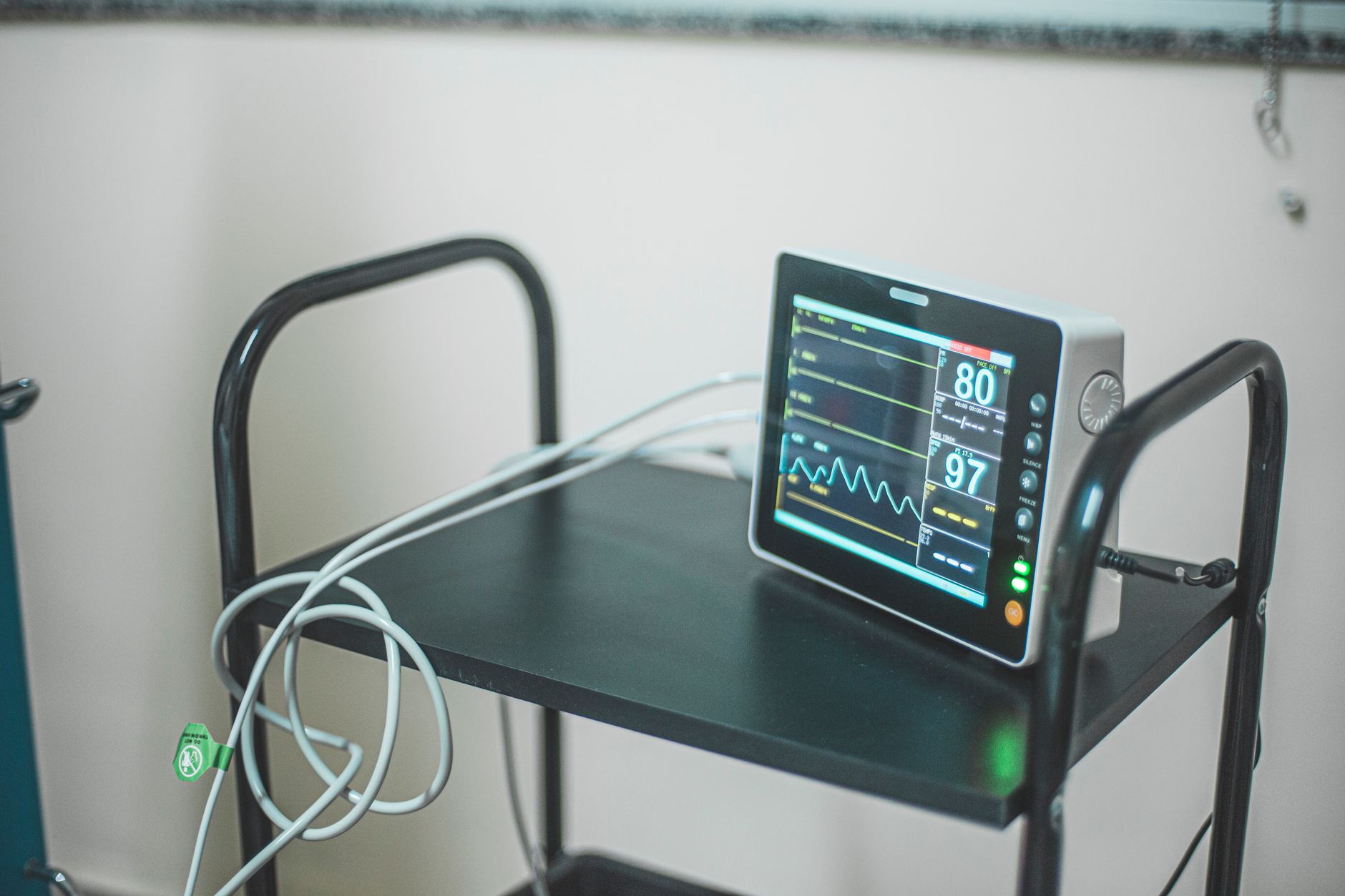
It should make hospitals more selective, not less. The Bureau of Labor Statistics reported a 2024 incidence rate of 4.9 nonfatal occupational injuries and illnesses per 100 full-time workers in hospitals. OSHA also notes that more than 50 percent of injuries and illnesses reported among nursing assistants in 2020 were musculoskeletal disorders. Those numbers do not prove that autonomous transport will solve the problem. They do show why reducing unnecessary pushing, pulling, and repetitive movement is a legitimate operations goal.
The trap is assuming every transport-related strain issue can be solved by automating the patient move itself. Often the better first move is to automate or reduce the nonclinical miles around the patient move. If a hospital can cut empty back-and-forth runs, reposition gear intelligently, and shorten the manual search-and-fetch loop, it may lower physical burden without forcing automation into the riskiest moments. That is a more mature reading of safety. Use machines to subtract avoidable travel before you ask them to take over clinically loaded transfers.
What would a sensible rollout look like from here?
A sensible rollout stays phased, exactly as BayCare has framed this one. First map the corridors, service elevators, waiting zones, and choke points. Then constrain the use case to a few routes with predictable traffic and clear ownership. Only after the dispatch layer, exception handling, and handoff points are stable should a hospital consider expanding scope. Even then, the expansion should move one notch at a time. More hours, more routes, more units, more payload conditions. Not one giant leap to full autonomy claims.
This is also where a full-service, vendor neutral robot integrator earns a real role. Service Robot Co. works as one partner across robot financing for small business and enterprise buyers, deployment, integration, training, and service through a nationwide U.S. engineer network. In hospital terms, that matters because a robot pilot program is rarely defeated by hardware alone. It is defeated by dispatch gaps, bad site mapping, weak change management, and slow service response. One partner, one number, and maintenance included is not marketing fluff in a 24-hour operation. It is operational risk control.
What should hospital leaders take from BayCare’s move right now?
Take the discipline, not the hype. BayCare is testing transport support in a live hospital, but it is not pretending that every patient move is ready for autonomy. That restraint is the headline. The health system is studying transport patterns before asking robotics to do more. In a field where vendors often sell a future-state video before proving a present-state workflow, that is the mature move.
For the rest of the market, the message is simple. Acute care transport support has real promise where the work is repetitive, measurable, and operationally bounded. It does not belong everywhere. Hospitals that win with this category will be the ones that break transport into parts, automate the low-variance miles first, and keep humans in charge of the moments where care, safety, and judgment are inseparable. That is how autonomous support becomes useful instead of ornamental.
Where Service Robot Co. fits in this conversation
Most hospitals do not need a grand robotics strategy first. They need a narrower question answered well. Which transport-adjacent workflow is structured enough for automation, what deployment model fits the budget, and how will the site be supported after go-live. That is where Service Robot Co. approaches the market differently. As an OEM-neutral commercial robot integrator, it can match the workflow to the right platform instead of forcing the site to fit a single manufacturer’s product line.
For operators evaluating hospital delivery robot rental, robot leasing for business, lease rental or sale, or a try before you buy model, the practical value is lifecycle coverage. Finance, deploy, integrate, train, and service every unit through one nationwide network. In a hospital, that lifecycle view matters more than the demo. The robot that fits your floor, your elevators, your staffing model, and your support expectations is the one that has a chance to stay deployed.
Frequently asked questions
Sources
Service Robot Co. is not affiliated with, sponsored by, or endorsed by the companies mentioned in this article.