
Key takeaways
- BayCare’s April 21, 2026 announcement matters because the current phase is not moving patients. It is studying workflows first.
- Patient transport is a high-friction hospital task because it touches staffing, safety, handoffs, elevators, imaging schedules, and physical strain all at once.
- The best early hospital robot pilots start with lower-risk internal logistics, then earn trust before they take on patient-adjacent movement.
- A phased robot pilot program works best when operators define route rules, escalation paths, and clinical stop conditions before expansion.
- Hospitals do not just need a machine. They need robot deployment and integration, staff training, service coverage, and one accountable partner.
What should hospital operators read in BayCare’s pilot right now?
The main signal is caution, not spectacle. On April 21, 2026, BayCare said its pilot at Morton Plant Hospital would begin by evaluating workflows, transport patterns, and operational opportunities, and that no patients would be transported during the current phase. That is the important line. It shows a health system treating autonomy as an operations design exercise first and a transport tool second.
For hospital operators, that matters more than the headline image of a robot in the corridor. A patient-transport concept only becomes viable after a hospital understands route density, elevator logic, hallway congestion, handoff responsibility, and clinical exceptions. BayCare is effectively saying that the hard part is not motion. It is fit.
That approach is sensible in a 599-bed hospital that sees more than 50,000 patients annually, according to BayCare’s Morton Plant Hospital profile. At that scale, even a narrow internal transport workflow can touch many departments and many failure modes in a single day.
Why is patient transport a harder workflow than it looks?
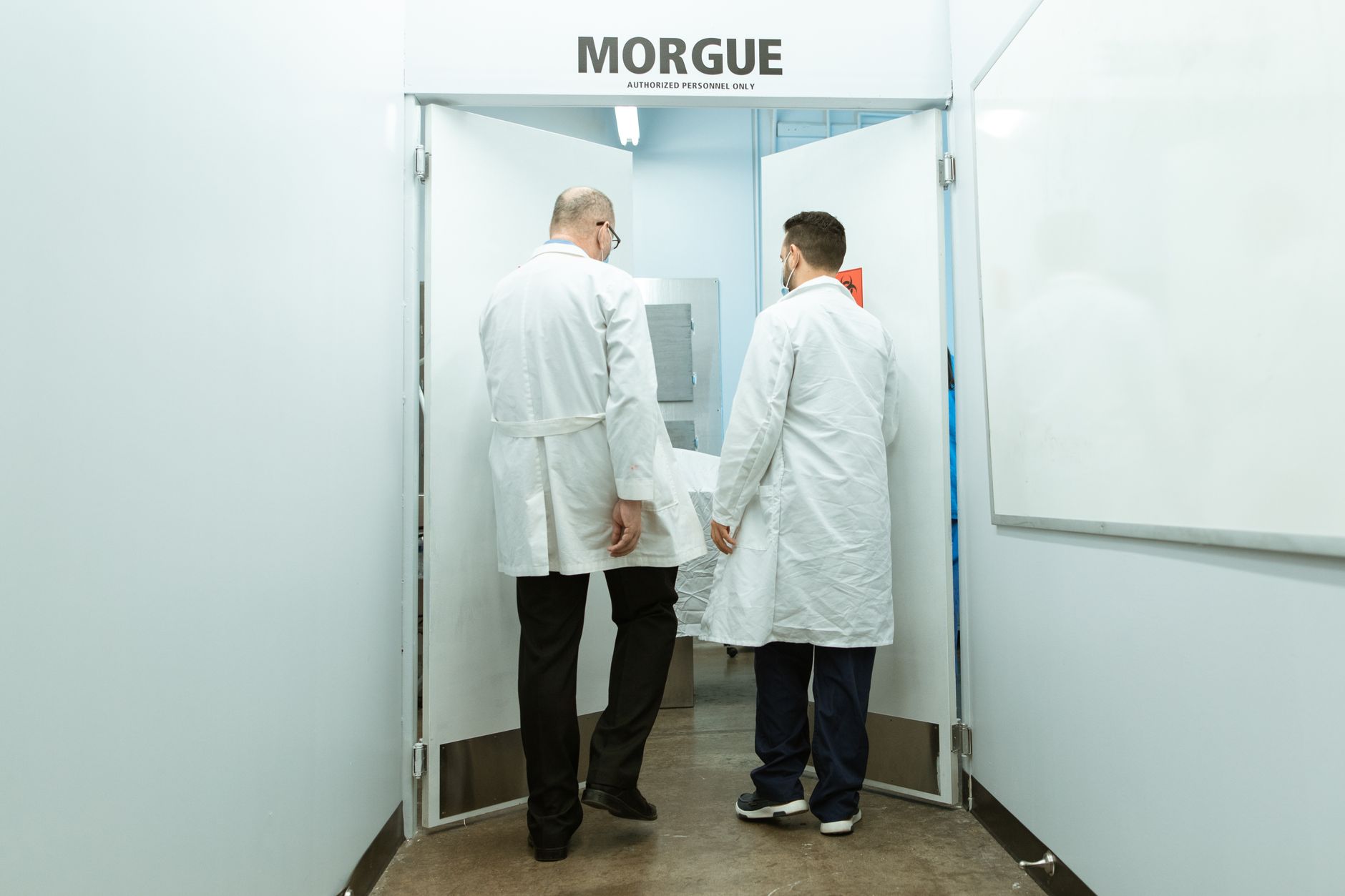
In hospitals, transport is never just travel from point A to point B. A patient move may require timing around imaging slots, nurse availability, oxygen, lines, monitoring, infection-control rules, bed status, and destination readiness. Every trip is an operational chain with multiple owners.
That is why intrahospital transport has long been treated as a patient-safety issue. The Agency for Healthcare Research and Quality has highlighted transport handoff risk, and one hospital case it cited involved more than 12,000 monthly transports. When the volume is that high, small coordination defects become systemic friction.
The labor dimension is just as important. The Bureau of Labor Statistics says orderlies held about 54,000 jobs in 2024 and that 83 percent worked in hospitals. It also notes that nursing assistants and orderlies have among the highest injury and illness rates of any occupation. OSHA adds that more than 50 percent of injuries and illnesses reported in 2020 among nursing assistants were musculoskeletal disorders. A workflow built around pushing, pulling, lifting, and repositioning people is never trivial.
What does a workflow-first pilot usually test before any patient ride?
A serious hospital pilot starts by mapping the transport network. Which routes repeat every hour. Which units generate the most calls. Where do elevators create queueing. Which doors, thresholds, and pinch points interrupt movement. BayCare’s language around workflow evaluation strongly suggests that this front-end mapping is the real first deliverable.
Operators should expect the early phase to focus on repeatability, not heroics. The best candidates are predictable corridors, controlled timing windows, and trips where the destination can accept a handoff cleanly. That is why many hospitals first see traction in hospital delivery robot rental style use cases such as medication transport, meal tray transport, supply runs, document transport, and other repetitive transport automation before patient-adjacent movement expands.
The practical question is not Can the robot move. It is Which move is worth automating first. In most facilities, the strongest answer is the task with stable routes, measurable delay cost, and minimal clinical ambiguity.
How should safety review change when the payload is a person?

Patient transport raises the bar because the payload is not just valuable. It is clinically vulnerable. A hospital can tolerate a delayed linen run or a rerouted supply cart in ways it cannot tolerate a failed stretcher transfer, a blocked egress path, or a confused handoff during a patient move.
That means the safety review has to widen beyond robot navigation. It should include patient selection criteria, who can authorize a trip, what monitoring must travel with the patient, how an override works, how staff stop the system, what happens when an elevator fails to respond, and how downtime affects clinical flow. CDC guidance on safe patient handling and mobility reinforces the basic point that manual patient movement already carries injury risk, but replacing part of that burden with automation does not remove the need for a formal prevention program.
The operational lesson from BayCare’s current phase is disciplined restraint. Do not begin with the hardest workflow. Build the governance first, prove the route behavior, document the edge cases, and only then decide if patient movement belongs in scope.
Why this pilot matters beyond one Florida hospital
BayCare is not a tiny sandbox. According to the American Hospital Association, the United States has 6,100 hospitals and 907,216 staffed beds. When a sizable health system publicly frames automation as phased workflow study rather than immediate clinical deployment, other operators notice. It becomes a template for how to ask the question correctly.
The broader backdrop is workforce strain. The American Hospital Association’s 2026 workforce scan says hospitals entered 2026 under intensifying pressure from rising demand, labor strain, and financial constraints. In that environment, physical support workflows attract attention because they sit close to patient care without being patient care itself. They are operationally consequential, expensive to staff poorly, and often chronically uneven across shifts.
That is the real signal. Hospital robotics is maturing from isolated demos into workflow triage. Leaders are looking for tasks that are common, exhausting, measurable, and governable. Patient transport experimentation sits at the frontier because it is valuable, but it also exposes every weakness in planning.
Which hospital workflows are most likely to move first?
If BayCare’s pilot follows the pattern many operators will recognize, the near-term winners are adjacent workflows that offer simpler risk control. Think internal deliveries, non-patient cart movement, after-hours supply circulation, and other closed-loop routes that can be measured with dispatch logs and route adherence data.
Those workflows let a hospital build confidence in mapping, traffic etiquette, charging routines, elevator integration, and staff escalation without taking on the full clinical complexity of a patient ride. They also make it easier to define service-level expectations around uptime, remote triage, and emergency response nationwide if a unit fails during a shift.
This is where a full-service commercial robot integrator earns its place. Service Robot Co. is OEM-neutral, which matters in hospitals because the right robot depends on route width, payload, software constraints, and building infrastructure, not on brand loyalty. We can assess where a hospital delivery robot rental model, a medication transport robot, or another autonomous mobile robot rental program makes operational sense, then finance, deploy, integrate, train, and service the fleet through one nationwide partner.
What should an operator demand from a phased adoption plan?
The first requirement is a narrow success definition. A pilot should specify route families, hours of operation, dispatch rules, intervention thresholds, and the exact metric that decides advancement. Vague goals like improving efficiency are too soft to govern a clinical environment.
The second requirement is service realism. Hospitals run all day, every day. If autonomy becomes part of transport, maintenance included cannot mean a distant help desk and a shrug. It means remote triage, on-site dispatch, clear downtime procedures, and backup robot program options when uptime matters.
The third requirement is organizational fit. Pilots fail when they are treated as gadgets instead of operating systems. Environmental services, facilities, nursing leadership, transport, IT, and safety all need defined ownership. Phased deployment with no shutdown is possible, but only when responsibility is explicit from day one.
- Map routes by frequency, congestion, and elevator dependency before you choose hardware.
- Separate patient-adjacent workflows from pure logistics so safety review matches actual risk.
- Write handoff rules and manual override procedures before the first live route.
- Track interventions, delays, route completion, and downtime, not just successful trips.
- Decide in advance what evidence is required to expand from logistics to patient transport.
Where Service Robot Co. fits if a hospital wants to act on this signal
Hospitals rarely need just a machine, and they almost never need five vendors pointing at each other when something breaks. They need one partner for site assessment mapping, robot deployment and integration, staff training, go-live support, financing options such as robot leasing for business or monthly payment programs, and field service after launch.
That is the practical value of working with Service Robot Co. We are a vendor neutral robot integrator for US businesses, including healthcare environments that need phased adoption rather than a flashy one-off. We select the right platform across manufacturers, then handle lease rental or sale, training, integration, and nationwide service so the hospital has one partner, one number, and one accountable lifecycle owner.
For operators watching BayCare’s pilot, the actionable takeaway is simple. Treat patient transport as a late-stage proof point. Start with the workflow map, pick the right lower-risk routes, and build the operating discipline that makes expansion defensible.
Frequently asked questions
Sources
- BayCare pilot announcement, April 21, 2026
- Morton Plant Hospital profile
- Becker's coverage of BayCare pilot
- AHA Fast Facts on U.S. Hospitals, 2026
- AHA 2026 Health Care Workforce Scan
- BLS Nursing Assistants and Orderlies outlook
- OSHA Safe Patient Handling
- AHRQ PSNet on hospital patient transport handoff risk
Service Robot Co. is not affiliated with, sponsored by, or endorsed by the companies mentioned in this article.