Key takeaways
- Kaufland is testing autonomous scrubbers in six German stores with both pre-open and daytime floor runs, per its 17 October 2025 release.
- Daytime pilots stress sensor behavior, battery range, and customer perception on roughly 4,400 square meters of sales floor.
- An upcoming Heilbronn overnight pilot needs burglar-alarm integration and a motion-triggered roll door so the unit can dock without staff.
- US chains that already own scrubbers still fail when utilization stays low; managed programs have reported sharp utilization gains in weeks.
- A store director should prove one mapped loop, alarm handoffs, and freshwater swaps before calling a multi-store rollout.
What did Kaufland announce in October 2025?
On 17 October 2025, Kaufland said it had begun testing autonomous cleaning robots in six German supermarkets. The Neckarsulm-based retailer named stores in Nürtingen, Hechingen, Heidelberg-Rohrbach, Eberbach, and Köln-Merheim, and said it expects to run the machines both before opening and during trading hours through the end of the year.
Tino Mehrlein, Kaufland's lead for smart-store topics in international sales, framed the robots as support for staff on routine floor work, not a replacement for every cleaning task. That wording matters for US operators who need buy-in from overnight crews and department managers before a scrubber shares an aisle with shoppers.
The release also described a separate overnight-only pilot planned for the Heilbronn Olgastraße store, where the robot must cooperate with the burglar alarm and reach its dock through a warehouse roll door without someone holding a button.
Why is Kaufland mixing small, two-story, and center-format stores?
Kaufland picked locations that mirror its wider estate. Eberbach represents smaller footprints, Nürtingen and Hechingen add stairs and split levels, and Heidelberg-Rohrbach stands in for large center-style sales floors.
That spread forces the same scrubber platform to prove mapping, elevator or ramp transitions, and route density across layouts that US grocers also run in one chain. A pilot that only works on a flat suburban box tells a director little about a urban two-level store or a hypermarket wing.
Kaufland said it is watching cleaning quality, battery runtime, and automatic freshwater exchange because large floors add travel distance between docks. US stores with wide produce loops and long front-end aprons see the same constraint even when square footage differs.
What changes when a scrubber runs while customers shop?
Kaufland runs early-morning passes before doors open and daytime passes while the store trades. The company said daytime work is deliberately harder: foot traffic changes soil load, narrows aisles, and cuts effective battery range.
Sensors must stop or reroute around carts, pallets, and promo stacks without spooking shoppers. Kaufland also wants to learn whether visible robots change how customers judge cleanliness, which is a brand question as much as an engineering one.
US grocers that tried robots only after close sometimes discover that soil tracked in at noon undoes overnight work. A short daytime loop on the highest-traffic gondola ends can justify the social cost of a visible machine if it keeps front-end impressions crisp through peak hours.
What must work for an overnight-only grocery pilot?
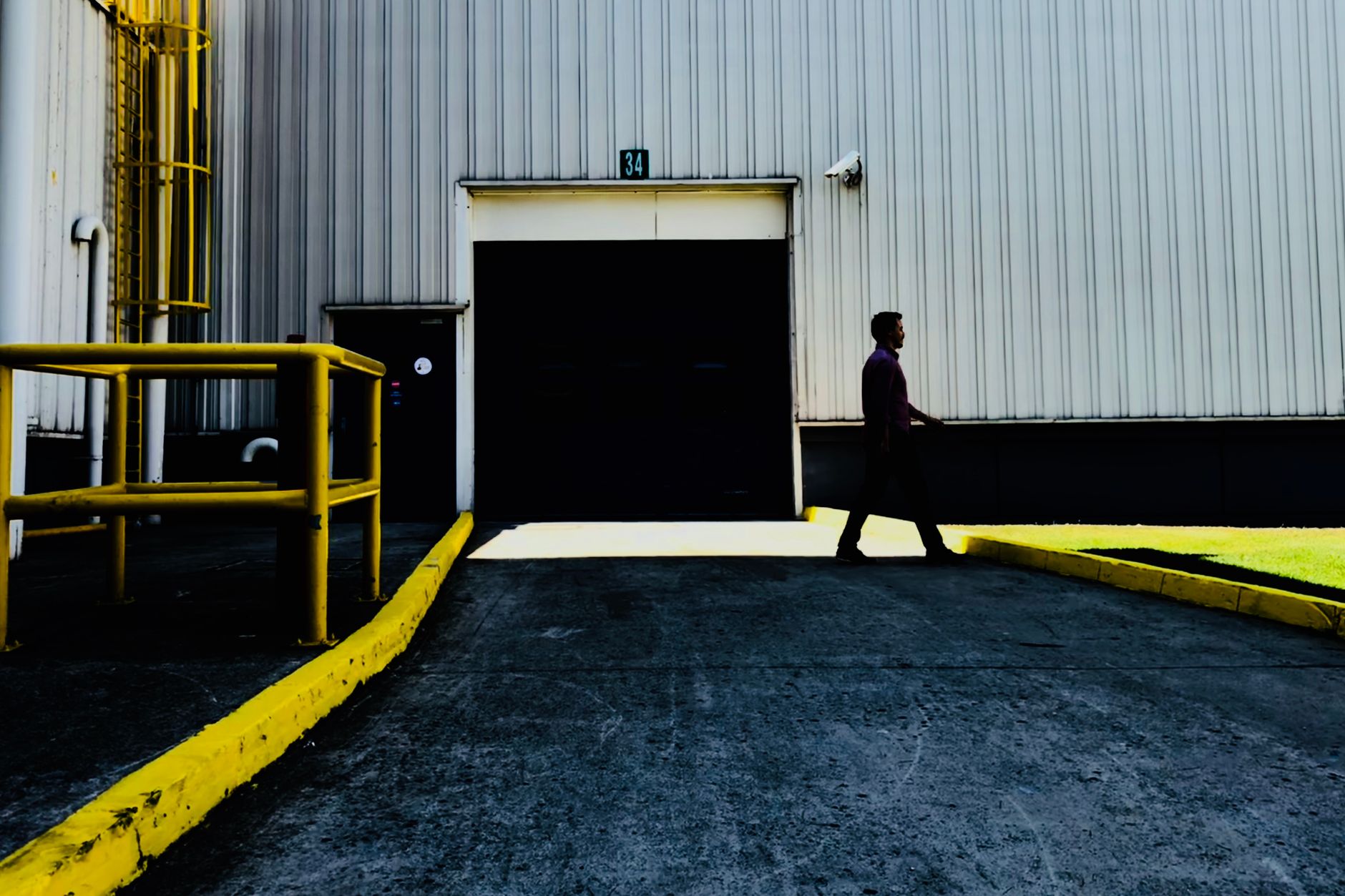
Kaufland's Heilbronn plan keeps the scrubber off the sales floor during open hours but adds building controls work. The robot must talk to the intrusion alarm so motion does not trigger a false dispatch, according to the October 2025 announcement.
The warehouse roll door will switch from a manual push button to a motion sensor so the unit can return to its dock without an employee meeting it at the threshold. That is the kind of detail US loss-prevention and facilities teams must sign off before the first unsupervised night.
Overnight-only runs can cover more square meters per charge when aisles stay clear, yet they hide integration gaps until alarm, door, and dock permissions are documented. Treat those interfaces as part of the scope, not as last-week electrician tickets.
Do US grocers face the same utilization trap?
Buying scrubbers is not the same as running them every shift they can cover. A October 2025 case write-up from facility services firm KBS described a national US grocery chain that saw robotic utilization rise 49 percent within nine weeks after specialists redesigned routes, trained store teams, and aligned vendor scopes.
The same account said the chain later expanded a managed robotics program from dozens of stores to hundreds after utilization proved out. The lesson for a US director reading Kaufland's German tests is that hardware pilots without operating playbooks stall even when the machine specs look fine on paper.
Map who owns water fill, debris pickup, and fault resets at 5 a.m. If those tasks sit in a gray zone between contracted janitorial and store maintenance, utilization charts will lie.
Which metrics should a store director track in the first 90 days?
Kaufland named cleaning result, battery endurance, freshwater auto-change, and customer reaction. Translate that into a simple scorecard: percent of scheduled runs completed, square meters covered per shift, fault stops per week, and time the sales floor stayed wet or cordoned.
Add alarm and door events for overnight pilots. One false alarm or one locked roll door can erase a month's trust with security and union partners.
Compare soil-heavy zones before and after with walk audits, not gut feel. Produce, entrance mats, and seasonal stacks are the usual gaps where a robot route looks complete on a map but misses the dirt shoppers notice first.
Where does a full-service integrator fit a grocery pilot?
Service Robot Co. stays vendor neutral on autonomous scrubbers, then handles financing, mapping, staff training, and ongoing service through a nationwide engineer network. That matches what Kaufland is really testing: not a gadget in one aisle, but a repeatable operating model across formats.
A free site assessment is the right moment to walk alarm inputs, dock placement, and freshwater locations with loss prevention, facilities, and the overnight lead on the same tour. Integrators that only drop off hardware leave the Heilbronn roll-door problem on the store manager's desk.
If daytime and overnight modes both matter, phase them. Prove alarm and door handoffs on one overnight loop before you ask shoppers to share an aisle with a scrubber at noon.
What should US leaders copy, and what should they localize?
Copy the discipline of testing multiple store archetypes and both open-hour and closed-hour modes. Copy the explicit focus on freshwater logistics and battery range on large sales floors, which Kaufland pegged near 4,400 square meters on average in its release.
Localize alarm codes, union rules, OSHA walking-surface expectations, and the way US customers react to machines near checkout. German shopper norms and US club-store traffic patterns will not match one to one.
Kaufland also opened a robotics startup challenge on its Innovation Hub in parallel with the scrubber tests, signaling that store automation will keep arriving in waves. US chains should plan integration capacity, not a single hero pilot that stalls the next category.
Frequently asked questions
Sources
Service Robot Co. is not affiliated with, sponsored by, or endorsed by the companies mentioned in this article.