Key takeaways
- The 2026 warehouse labor problem is defined by high turnover and instability, not just a shortage of applicants.
- Constant employee churn directly harms productivity, safety, and your bottom line through hidden costs.
- Autonomous Mobile Robots (AMRs) and cobots provide operational consistency that a volatile labor market cannot.
- Investing in automation now is a direct response to labor instability, creating a more predictable and resilient operation.
- Flexible acquisition models like leasing or RaaS make starting an automation journey more accessible than ever.
Why the Warehouse Labor Conversation Is Changing in 2026
In 2026, the phrase 'warehouse labor shortage' is misleading. The U.S. warehousing and storage industry employs around 1.85 million people, according to the U.S. Bureau of Labor Statistics. The challenge for operators is not an empty applicant pool. It is the persistent instability caused by high turnover and absenteeism that creates deep operational fractures.
A warehouse can be technically fully staffed yet still suffer from a severe labor capacity problem. The core issue is a revolving door of workers, particularly in critical roles. With average annual turnover for warehouse workers sitting around 36%, and some facilities experiencing first-year turnover rates of 40-60%, the state of labor is constant churn.
This instability is the real threat to your operational goals. It is a problem that more hiring alone cannot fix. The most effective countermeasure is introducing a layer of operational consistency with automation. By deploying Autonomous Mobile Robots (AMRs) and collaborative robots (cobots) for repetitive tasks, you reduce dependency on the most volatile segments of the labor market and build a foundation for predictable performance.
What Does Labor Instability Actually Cost?
High turnover is not just a human resources metric. It is a direct and repeating operational cost, much of which remains hidden from the balance sheet. When an employee leaves, the visible costs include recruitment and advertising. But the invisible costs are where the real damage occurs.
Workforce instability drives operating costs 15-25% above industry averages, according to a report from SPS Commerce. Each time a worker is replaced, operations absorb the expense of reduced throughput while the new hire gets up to speed. This period of lower productivity is compounded by higher error rates, which can lead to incorrect orders, damaged goods, and dissatisfied customers.
Furthermore, constant churn puts immense pressure on your experienced staff. They are often tasked with training new hires, a process that takes them away from their primary duties, while also covering the gaps left by unfilled roles. This cycle leads to burnout, which in turn fuels even more turnover, creating a costly spiral of inefficiency and strained morale.
How AMRs and Cobots Create a More Stable Operation
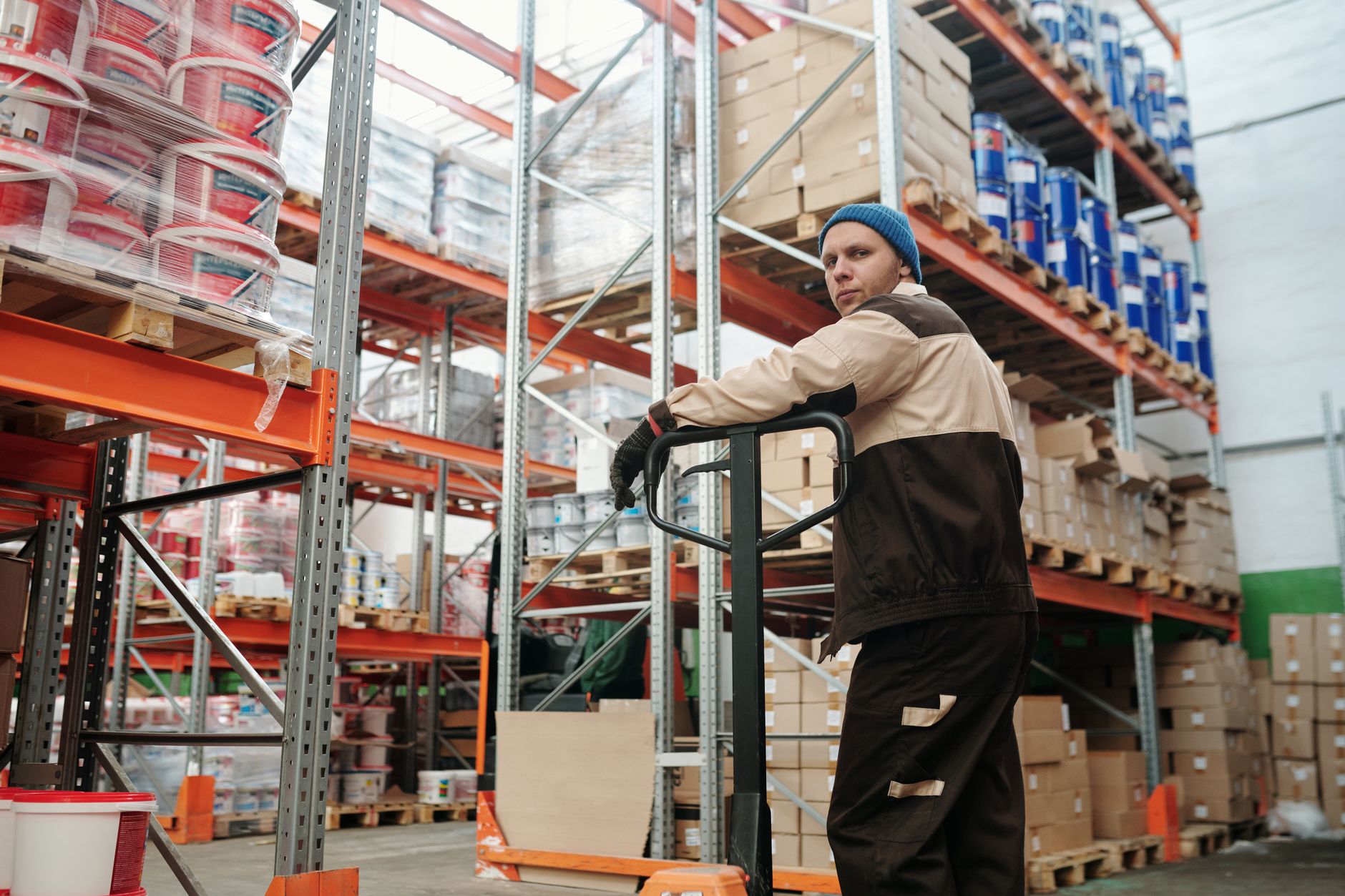
Automation directly addresses the volatility that human labor introduces into warehouse workflows. AMRs and cobots are designed to perform the exact kind of repetitive, physically demanding tasks that often lead to high turnover. They provide a baseline of performance that does not fluctuate from shift to shift.
Consider material handling. An AMR pallet mover or cart pulling robot executes its tasks with unwavering consistency, day or night. This predictable flow of goods prevents the kinds of bottlenecks that occur when a facility is understaffed. According to Business Research Insights, manufacturing facilities that integrate AMRs have seen productivity rise by as much as 36%.
Collaborative robots, or cobots, bring the same stability to tasks like palletizing, machine tending, and packing. By taking over these strenuous motions, they reduce the risk of ergonomic injuries for human workers and minimize errors. This allows you to reassign your experienced employees to more complex, value-added work like quality control and problem-solving, roles where their skills are most needed.
Why Your Automation Timeline Should Start Now
Given the persistent nature of labor instability, waiting to invest in automation means accepting ongoing operational disruptions and hidden costs. The market for warehouse robotics is expanding rapidly because operators recognize the need for a more resilient model. The global AMR market is projected to reach $6.17 billion in 2026, a clear signal of widespread adoption.
Starting the process now allows for a measured, strategic approach. A phased deployment can introduce automation into specific areas of your facility without requiring a full operational shutdown. You can begin with a robot pilot program to address your most significant pain point, whether that is repetitive transport automation or end-of-line automation.
Delaying also means falling behind competitors who are already building more efficient and reliable operations. As more warehouses automate, the competition for the remaining pool of stable, experienced labor will only intensify. Acting now is a strategic move to secure your facility's long-term productivity and capacity.
How a Vendor-Neutral Integrator De-risks Your Investment
Embarking on an automation journey can feel complex. The robotics market is vast, and choosing the right equipment for your specific needs is critical. This is where the role of a full-service, OEM-neutral robot integrator becomes essential. Instead of being tied to a single manufacturer, a neutral partner like Service Robot Co. assesses your unique operational challenges first.
Our process begins with a free site assessment to understand your workflows, facility layout, and business goals. Because we are not locked into one brand, we can select the best-fit AMRs or cobots from across the industry. We design the right solution for your problem, rather than fitting your problem to a predetermined product. This vendor-neutral approach ensures the technology serves your operation, not the other way around.
Service Robot Co. functions as a single partner for the entire lifecycle of your automation fleet. We handle the financing, deployment, integration with your existing systems, and staff training. Through our nationwide network of engineers, we also provide all ongoing maintenance and service. This one-partner, one-number approach eliminates the complexity of managing multiple vendors and gives you a single point of accountability for guaranteeing uptime and performance.
Are Robots a Better Financial Choice Than Unfilled Shifts?
The financial calculation for automation extends far beyond a simple comparison of a robot's monthly payment to a worker's hourly wage. The true ROI emerges when you factor in the steep costs of labor instability. An unfilled shift is not a zero-cost event; it is a catalyst for overtime pay, lost productivity, and potential service failures.
Consider the cost to replace a single warehouse associate, which can range from $3,000 to $5,000 or more once recruiting, training, and lost efficiency are accounted for. For a facility with a 36% turnover rate, these costs become a significant and continuous drain on the operating budget.
Modern acquisition models make the financial case even more compelling. Robot as a Service (RaaS) and leasing programs from Service Robot Co. allow you to deploy a robotic workforce with no large upfront capital expenditure. A predictable monthly payment can provide a material handling robot or an autonomous floor scrubber that delivers consistent output without the associated costs of recruitment, training, and churn. This transforms a volatile operational expense into a predictable investment in stability.