Key takeaways
- Put eight questions to any vendor in writing: data, privacy, software security, safety, alerts, support, continuity and how the pilot will be scored.
- CISA and the FBI published a guide for software buyers in August 2024 that points to a software bill of materials, a vulnerability disclosure policy and a roadmap for removing classes of vulnerability.
- The main industrial mobile robot safety standard focuses on spaces where the public does not have unrestricted access, so a campus needs a vendor to explain how it manages people on foot.
- Makers handle alerts and support differently. Some route alerts to your team, some to their own specialists, and one offers a year of premium service with part replacement.
- Vendor continuity is a fair question. Cobalt Robotics changed hands in 2024, and Knightscope's filing for the quarter ended June 30, 2026 carries a going concern note.
What should I ask a vendor before deploying a security robot on a campus?
Ask eight things in writing: what the robot records, if plate and face matching can be turned off, how its software is secured, how it behaves around people, who watches alerts, how it is supported, what happens if the vendor changes, and how the pilot is scored. Service Robot Co. helps you ask them.
Put every question in writing and ask for written answers. Vendors differ in what they publish, and a verbal assurance on a sales call will not help you after an incident. Each section below names a published source, so you can see why the question matters.
The checklist after this section is the short version. Print it, bring it to your first vendor meeting, and compare answers side by side. A vendor that answers plainly and in writing is telling you something, and so is one that does not.
What will the robot record, and where does the data go?
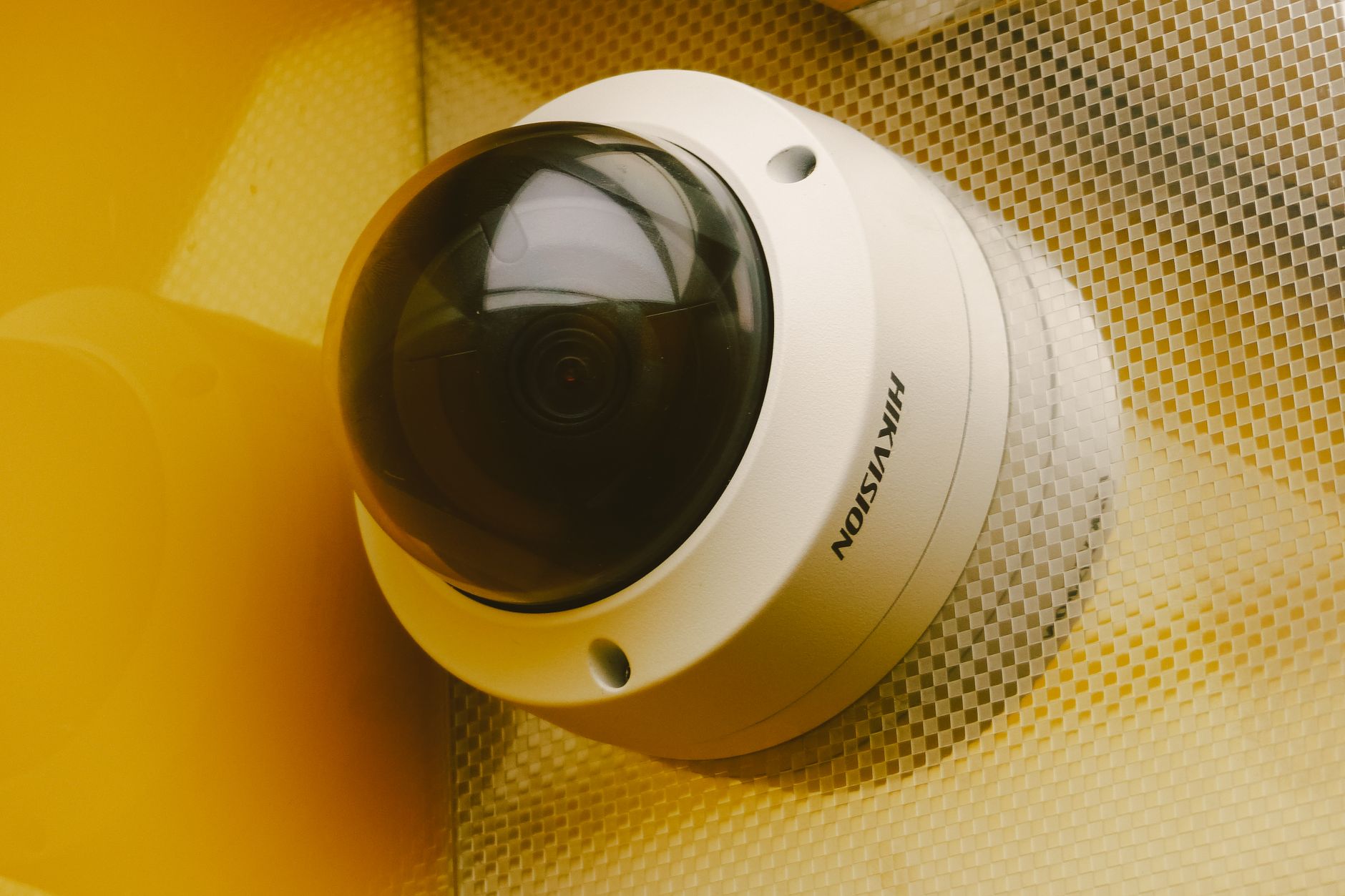
Start with the camera, because a campus is full of people who did not choose to be filmed. Ask what the robot records, how long it keeps video, who can view it, if it can be shared outside your institution and how deletion works. For reference, Knightscope states in its brochure that 30 days of raw video storage is included with the K5.
License plate reading deserves a separate question. The Electronic Frontier Foundation said in a November 2025 one-pager that plate readers turn plates into searchable vehicle location data and gather it in centralized databases that can be searched over time. You may decide the trade is worth it for a parking lot. Decide it on purpose, and ask if the feature can be switched off on your campus.
Face matching is a further step. The Security Industry Association's 2020 policy principles for facial recognition, as reported by FMLink, call for transparency, human oversight and review, privacy by design and data security. Ask if the robot can match faces at all, and if so, if it can be disabled and what your written policy says. GIT SECURITY reported in 2020 that thermal cameras are not a tool for identifying individuals, which is one reason some sites prefer them at night.
How is the robot's software secured?
A patrol robot is a camera and a network device that moves. The Cybersecurity and Infrastructure Security Agency and the FBI released a Secure by Demand guide for software buyers on August 6, 2024. CISA says it is usable by any customer during procurement discussions with resellers or service providers. It points buyers to a software bill of materials listing third party components, to roadmaps that show how a maker plans to eliminate classes of vulnerability, and to a publicly available vulnerability disclosure policy.
The National Institute of Standards and Technology adds a device view. NISTIR 8259A, published in May 2020, defines a core baseline of cybersecurity capabilities for connected devices and describes itself as a starting point for organizations that manufacture, integrate or acquire them. You do not need to read the whole document. Ask the vendor how its robot lines up with it.
Then ask the practical questions in plain words. How often are updates issued, and who installs them? How do logins and remote access work? What does the robot do if its network drops? What is the process when a researcher reports a flaw? Keep the answers in your file.
What safety standards apply on a campus?
Ask how the robot behaves around people on foot, because that is the hard part of a campus. ANSI/RIA R15.08-1-2020 is the main US safety standard for industrial mobile robots. Plant Engineering reported in 2020 that it focuses on industrial settings, mainly spaces where the general public does not have unrestricted access, with public safety in places like retail left for future work. A campus is the other kind of space.
That does not make the standard irrelevant. It means a vendor has to explain, not just point to a certificate, how its robot handles pedestrians, cyclists, wheelchair users and crowds. Knightscope says in its 2025 post that the K5 pauses when someone approaches, plays a preset message and routes around the person. Ask for the speed limits, the stop distances and the incident history in writing.
Add a policy question. In October 2022, Boston Dynamics and five other robot makers signed an open letter pledging not to weaponize their advanced mobility general purpose robots and to review customers' intended applications where possible, according to Robotics 24/7. Ask every vendor for its written position on weaponization and on how it reviews how a robot will be used.

Who watches the alerts, and who services the robot?
Alert handling is where vendors differ most. Knightscope lists real time alerts with continuous recording on the K5 and structured escalation from autonomy to human command, and its brochure offers monitoring to customers who do not have their own. Cobalt AI says non-critical events are auto-cleared and that confirmed threats go to its robot specialists at a command center, who verify the alert and coordinate the response. Boston Dynamics describes Spot rounds that operators drive or program from a tablet or its Orbit browser software.
Support differs too. Boston Dynamics lists Spot Care on its public safety datasheet as one year of premium service and support, with part replacement and quick repair turnaround. Compare that with what any other vendor offers in writing. Ask who comes to the site, how fast, what is covered when weather or vandalism damages a unit, and what happens to your coverage while a robot is being repaired.
Ask about response times in minutes and hours, not in adjectives. A line such as 24/7 support is only useful with a number beside it.
What happens if the vendor changes hands?
Robots stay on a campus for years, so ask about continuity. SecurityInfoWatch reported on June 4, 2024 that Cobalt Robotics had been acquired by Dean Drako, renamed Cobalt AI and was moving toward a hybrid model of robots and fixed cameras, with its chief executive staying on. A change like that is normal in this field. It is also a reason to ask what happens to a roadmap and a support contract afterward.
Public filings give another view. Knightscope's Form 10-Q for the quarter ended June 30, 2026 states in its liquidity note that certain factors raise substantial doubt about the company's ability to continue as a going concern for twelve months from the date of the report, and that it depends on additional fundraising. That is the company's own disclosure and not a prediction, and many public companies carry similar notes. Asking about continuity is not an accusation. It is due diligence.
Ask every vendor for audited financials or references, who can service the robot if the maker cannot, how spare parts are secured, and what happens to your data and your units if ownership changes. A single integrator that picks across manufacturers, deploys and services every unit gives you one party to hold to those answers, which is the model we run.
How should a pilot test the answers?
Make the pilot produce your own proof. A SecurityInfoWatch report from 2017 quoted an industry executive saying the main barrier to robot adoption was the lack of case studies, performance metrics and data. That was nine years ago, and the point still holds. Vendor numbers are claims until your campus has its own.
Pick measures before day one. Count alerts raised, alerts a person had to act on, routes completed, hours docked or down, complaints from students and staff, and misses compared with the guard log. Run the pilot across your busiest hour and your worst weather, and have someone test the data promises, such as retention and deletion, while it runs.
End with a written decision. Keep the route, change it, or decide a fixed camera or a guard shift fits better. We will say so too, because the right answer for some sites is not a robot.
Want help picking the right robot? Talk to us
Book a free site assessment with Service Robot Co. Bring this checklist, and we will walk your campus, answer it for the robots that fit, and tell you where the gaps are. We pick the machine for your site, lease it on a 3-year lease with a $1 buyout at the end, deploy it, train your people and service it.
Every robot we place comes with 24/7 support with 10-minute specialist triage, regional service engineers in every state we service, three check visits a year and a 12-month warranty.
Frequently asked questions
Want a robot working for you?
Tell us the job and the site. We will recommend the robot, quote the lease, and keep it serviced.
Sources
- Knightscope: K1H and K5 brochure (PDF)
- Knightscope: Built for the Real World, How the K5 Robot Handles Weather, People, and Parking Lots (April 2025)
- Knightscope: Autonomous Security Force overview
- SEC: Knightscope Form 10-Q for the quarter ended June 30, 2026
- Electronic Frontier Foundation: Automatic License Plate Readers one-pager (November 2025)
- FMLink: SIA policy principles for ethical facial recognition (2020)
- GIT SECURITY: Status Report on Thermal Cameras (2020)
- CISA: Secure by Demand Guide announcement (August 2024)
- NIST: NISTIR 8259A, IoT Device Cybersecurity Capability Core Baseline
- Plant Engineering: New industrial mobile robot safety standard, R15.08 (2020)
- Robotics 24/7: Major robotics vendors sign letter denouncing weaponizing general-purpose robots (2022)
- Cobalt AI: Cobalt Security Robot
- Boston Dynamics: Spot Defense and Public Safety Kit datasheet (PDF)
- SecurityInfoWatch: ESX exclusive, Zooming in on Dean Drako's acquisition of Cobalt Robotics (June 2024)
- SecurityInfoWatch: Are security robots ready for prime time? (2017)