Key takeaways
- Fixed cameras should be the base layer. A patrol robot is a gap-filler, not a substitute for video, access control, or officers.
- The strongest use case is exterior and common-area coverage where campuses control buildings well but still miss grounds, parking, and long walking routes.
- A robot earns its keep when it turns passive video into active patrol, documented exceptions, and faster checks of doors, gates, and after-hours activity.
- If the campus cannot define patrol routes, escalation rules, and who acts on alerts, adding a robot usually adds footage, not control.
The short answer
Most school campuses should start with fixed cameras, controlled access, and clear human post orders. Those systems are the spine of campus security because they hold entrances, record events, and support investigations. A patrol robot is the right next layer only when the campus has recurring blind ground between those systems: long exterior paths, parking lots, athletic edges, residence hall approaches, and repetitive rounds that consume staff time without using much judgment.
The tradeoff is simple. Fixed cameras are excellent at watching a known field of view. A wheeled patrol robot is useful when the problem is not just seeing, but moving. It can revisit a door, verify a gate, sweep a route after dismissal, check a parking perimeter at 2 a.m., and document what it found in sequence. If the campus needs another static viewpoint, buy another camera. If the campus needs a repeatable physical patrol, a mobile platform can add something genuinely new.
That distinction matters because U.S. schools already have a lot of security hardware. According to the National Center for Education Statistics, 92.6 percent of public schools used security cameras in 2021 to 2022, and 97.1 percent controlled access to school buildings during school hours. But only 61.1 percent controlled access to school grounds. That gap is exactly where a wheeled patrol program can make sense. It does not replace the fixed system. It covers the neglected terrain between the doors and the fence line.
Where fixed cameras still win cleanly
Fixed cameras remain the better answer for entrances, vestibules, reception areas, main corridors, cash handling points, and any place where the camera must never be absent. They are cheaper to keep on scene, easier to standardize, and far better for evidentiary continuity. When a principal, dean, or public safety director asks, Who was at this doorway at 3:17 p.m. on Tuesday, the right answer is a camera that was always there.
They also pair naturally with access control. A card reader, intercom, locked door, and fixed camera form a coherent checkpoint. A robot does not. Mobile patrol is poor at serving as the primary layer for high-frequency traffic because a robot can only be in one place at one time. That is why the right comparison is not robot versus camera in the abstract. It is robot versus one more camera, or robot versus one more routine patrol hour, in a very specific zone.
On K to 12 campuses, this is more than preference. NCES reports that 96.8 percent of public schools required visitors to sign or check in and wear badges in 2021 to 2022. That tells you where the security architecture is already mature. The front door is usually not the weak point. The weak point is often the rest of the map.
What does a wheeled patrol robot add that fixed video cannot?
A wheeled patrol robot adds three things fixed video cannot deliver well: route coverage, repeatable physical verification, and presence that changes by time and need. On a school campus, that can mean checking that a side gate stayed latched after athletics, confirming that an exterior door is not propped after an evening event, or revisiting a residence hall approach after an access alarm instead of waiting for the next human round.
The key word is repeatable. Human rounds are adaptable, but they also drift. One officer takes the long way. Another shortcuts the loop during bad weather. A robot can be tasked to run the same path at the same intervals, with the same sensor posture, and create a timestamped record of what it observed. That makes it useful for routine assurance work, especially after hours when campuses are open enough to be traversable but quiet enough that anomalies stand out.
It also changes how a central operator uses video. Instead of waiting for something to happen on one of many static screens, the operator can dispatch or schedule a mobile asset toward a known concern area. That is a different operating concept from simply accumulating more footage from more poles.
- Large parking lots and drop-off loops that are quiet overnight but cumbersome to walk every hour
- Residence hall perimeters and pedestrian paths where lighting is uneven and incidents cluster at transition times
- Athletic edges, service roads, and maintenance yards that are too spread out for dense fixed coverage
- After-hours verification of doors, gates, and common-area conditions after events or weekend use
Why campuses are a special case
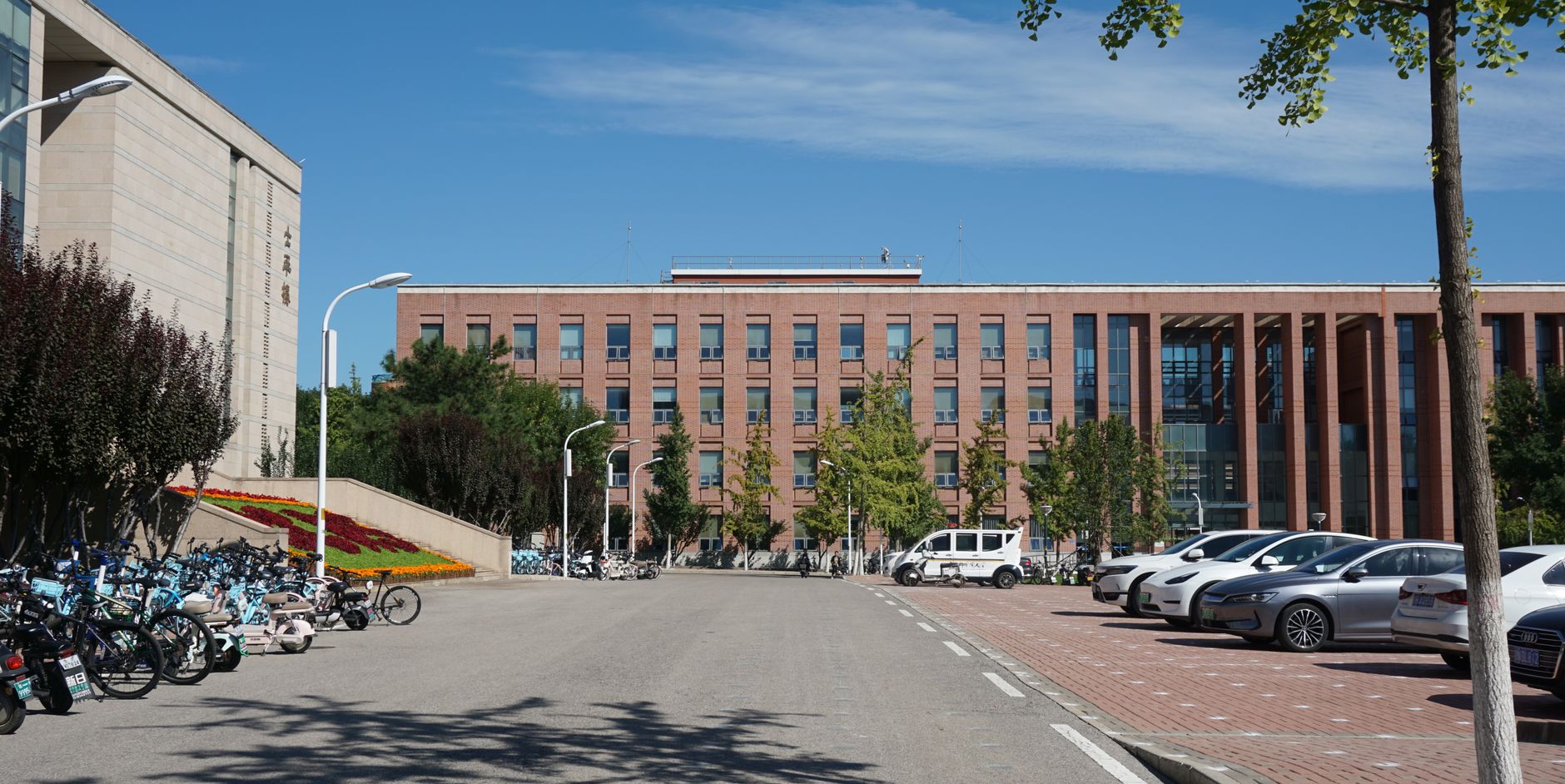
School and university campuses are neither a single building nor a truly open public district. They are patchworks of controlled and semi-controlled zones. A K to 12 campus may lock the building well during class hours yet leave wide outdoor circulation paths, portable classrooms, playfields, and pickup lanes exposed to constant change. A college campus adds another layer: academic buildings, residence halls, parking, public sidewalks, student activity zones, and late-night foot traffic that shifts by hour and by semester.
That geography matters because higher education security reporting does not stop at the building line. The U.S. Department of Education notes that campus safety obligations under the Clery framework reach on-campus property, qualifying noncampus property, and certain public property adjacent to campus. In practice, that means the security conversation often includes edges, connectors, and approaches that fixed interior video was never built to own.
Staffing realities reinforce the point. The Bureau of Justice Statistics reported in November 2024 that nearly 1,300 campus law enforcement agencies employed about 17,600 full-time sworn officers and 25,000 full-time civilians at four-year institutions serving at least 1,000 full-time students in the 2021 to 2022 academic year. That sounds large until you spread it across entire campuses, shifts, events, parking, student services, and paperwork. A robot is not a replacement for sworn presence. It is a way to stop spending sworn or civilian time on the least discriminating loops.
When a robot is the wrong answer
A mobile patrol robot is the wrong buy when the campus has not fixed basic camera placement, lighting, access control discipline, or response ownership. If doors are routinely propped, intercoms fail, and camera retention is inconsistent, adding mobility usually multiplies noise. The campus gets more observations but not more control.
It is also the wrong answer for dense supervision of a single hot spot. If one stairwell, one lobby, or one loading bay is the problem, a fixed camera with proper analytics, lighting, and policy will usually outperform a route-based robot. The robot leaves. The stairwell does not.
Crowd conditions matter too. Passing periods, football exits, and move-in weekends are not ideal moments for a patrol machine to prove its value. The best deployments focus on predictable patrol windows and predictable routes. Schools should be suspicious of any pitch that assumes the same mobile pattern works equally well at 7:45 a.m., 3:10 p.m., and 1:30 a.m.
A practical decision test for K to 12 and higher ed
The easiest way to choose is to map the campus by security task, not by gadget. Start with four questions. What locations must be watched continuously? What locations only need periodic verification? Which routes are boring but necessary? Which alerts actually require someone to travel before the campus can decide what to do next?
If the answer is continuous watch, fixed video usually wins. If the answer is periodic verification across distance, a patrol robot may fit. If the answer is repetitive movement after hours, the case gets stronger. If the answer is incident response in tight indoor spaces full of students, human staff still carry the day.
For K to 12 schools, the strongest candidates are exterior loops after dismissal, weekend patrols, and checks of doors, gates, and detached buildings. For universities, the strongest candidates are parking perimeters, residence hall approaches, event reset patrols, and long connector routes between facilities. In both cases, the operating concept should say exactly what the robot patrols, when it patrols, what counts as an exception, who reviews the exception, and how the campus responds.
The integration question matters more than the robot
The hard part is rarely the vehicle. The hard part is fitting a mobile patrol layer into campus operations without creating yet another console and yet another vendor relationship. Schools need alert routing, video retention rules, charging plans, service coverage, staff training, and a playbook for weather, closures, events, and false positives.
That is where an OEM-neutral integrator matters. Service Robot Co. helps U.S. organizations choose the right robot across manufacturers, then finance, deploy, integrate, train, and service the fleet through a nationwide engineer network. For a campus considering a security patrol robot rental, robot leasing for business, or a robot as a service model with no upfront capital, that means one operating partner across selection and field support instead of a pile of disconnected promises.
The useful buying question is not, Which robot is coolest. It is, Who will own uptime, map changes, staff handoff, and support when a campus route changes two weeks before homecoming. Schools do not need another gadget. They need an operating layer that stays coherent after the ribbon cutting.
What a good pilot looks like
A school pilot should be narrow, boring, and measurable. Pick one route family, one alert family, and one time window. For example: exterior door and gate verification on a defined evening loop, or overnight patrol of two parking zones and one residence hall approach. Avoid pilots that try to prove everything at once. They usually prove nothing clearly.
Measure labor displacement carefully. The goal is not to claim that a robot replaces an officer. The goal is to see whether it reduces low-value walking, improves documentation of routine checks, shortens time to visual verification, or extends coverage on campus edges that are currently visited too rarely. Those are defensible outcomes. Grand claims about replacing public safety staff are not.
This is also the right stage to test commercial terms. Some campuses prefer a security patrol robot rental or a monthly program because it aligns with budget cycles and reduces risk during evaluation. That can be sensible if maintenance included, service response, and training obligations are explicit from day one.
The real choice is not mobile versus fixed
The real choice is between layers that duplicate each other and layers that complement each other. A campus that already has good cameras on the right doors gains little from a robot that keeps driving past the same door for show. A campus that has strong interior control but weak exterior assurance can gain something meaningful from a mobile patrol loop that turns dead space into managed space.
So the answer is not that wheeled patrol is better than fixed cameras. It is that each handles a different security job. Use fixed systems to hold chokepoints and preserve evidence. Use human staff where judgment, contact, and intervention matter. Add a mobile robot when the gap is route discipline across distance, especially after hours and on the outer skin of the campus.
That is the architecture tradeoff schools should care about. Not more hardware pointed at the same blind spots. Better coverage assigned to the right job.