Key takeaways
- A hospital delivery robot usually wins on one narrow, repetitive loop before it wins across a whole campus.
- The break-even hinges on three variables: route frequency, elevator delay, and the cost of pulling clinical staff off patient care.
- Runner labor alone can understate the case, because missed-care risk rises when transport work steals bedside time.
- Multi-floor delivery robot projects work best when doors, elevators, handoff points, and dispatch rules are specified early.
- Hospital delivery robot rental and robot as a service models can make sense when leaders want no upfront capital and maintenance included.
So when does the robot actually win?
A hospital delivery robot beats a runner when the work is boring in the most operationally useful way. The route is fixed, the payload is predictable, the handoff rules are simple, and the run happens often enough that labor is consumed in small, relentless slices all day. Think corridor to elevator, elevator to med room, or pharmacy to unit, repeated without drama.
The break-even rarely comes from replacing every ad hoc trip in a hospital. It usually comes from one disciplined loop where route frequency is high, elevator behavior is tolerable, and the hospital is currently spending valuable human time on work that does not require clinical judgment. If the robot can hold that loop without frequent exceptions, the business case tightens fast.
That is why the best hospital delivery robot rental projects start narrow. A medication transport robot, meal tray transport route, or document transport robot can outperform a manual runner long before a hospital is ready for wider repetitive transport automation.
- Best-fit loop: repeated corridor to elevator to unit handoff
- Weak-fit loop: irregular, judgment-heavy trips with frequent exceptions
- Decision rule: prove one lane first, then expand
What costs belong in the break-even model?
Most hospitals start with wage comparison. That is necessary, but incomplete. According to the U.S. Bureau of Labor Statistics, the May 2025 mean hourly wage was 19.55 dollars for orderlies and 48.76 dollars for registered nurses. BLS also reported in March 2026 that benefits accounted for 30.1 percent of compensation for private industry workers and 38.5 percent for state and local government workers. A runner is not just an hourly rate. It is loaded labor.
The basic comparison is simple: loaded labor per trip versus robot cost per productive trip. But the real model has four buckets. Labor for the person doing the run. Slack time created by elevator waits and handoff delays. Opportunity cost when licensed staff get pulled into transport. And exception handling when a trip fails and a human still has to intervene.
A hospital delivery robot rental or autonomous mobile robot rental should therefore be judged against the current state, not an idealized staffing chart. If nurses or techs are quietly covering transport when the runner is busy, the hospital is already paying a hidden premium.
- Direct labor cost for the current runner or transporter
- Benefit load on top of wages
- Nonproductive time inside the route, especially elevator waiting
- Opportunity cost when nurses, techs, or unit staff absorb overflow trips
- Exception cost for failed handoffs, locked doors, or payload mismatches
Why does route frequency matter more than distance?
Frequency is what compounds labor burn. A long run done twice a day is often less attractive than a short run done every 20 minutes. The robot wins when it keeps moving through a stable queue of similar work. That is why a multi-floor delivery robot can make more financial sense on a modest distance with constant demand than on a longer but sporadic path.
The break-even test is not how far the route is. It is how many completed trips a route produces per shift, how often a human must wait to start the next one, and how much of the day the work is predictable enough to schedule. In practice, hospitals should measure dispatches per hour, average cycle time, peak-hour spikes, and the share of trips that truly require human judgment.
This is also where route design beats wishful thinking. A delivery robot for elevators does not need a glamorous map. It needs a dependable queue. If your corridor-to-elevator lane produces steady, repetitive traffic, you have the raw material for a viable AMR rental case.

How much does elevator time change the math?
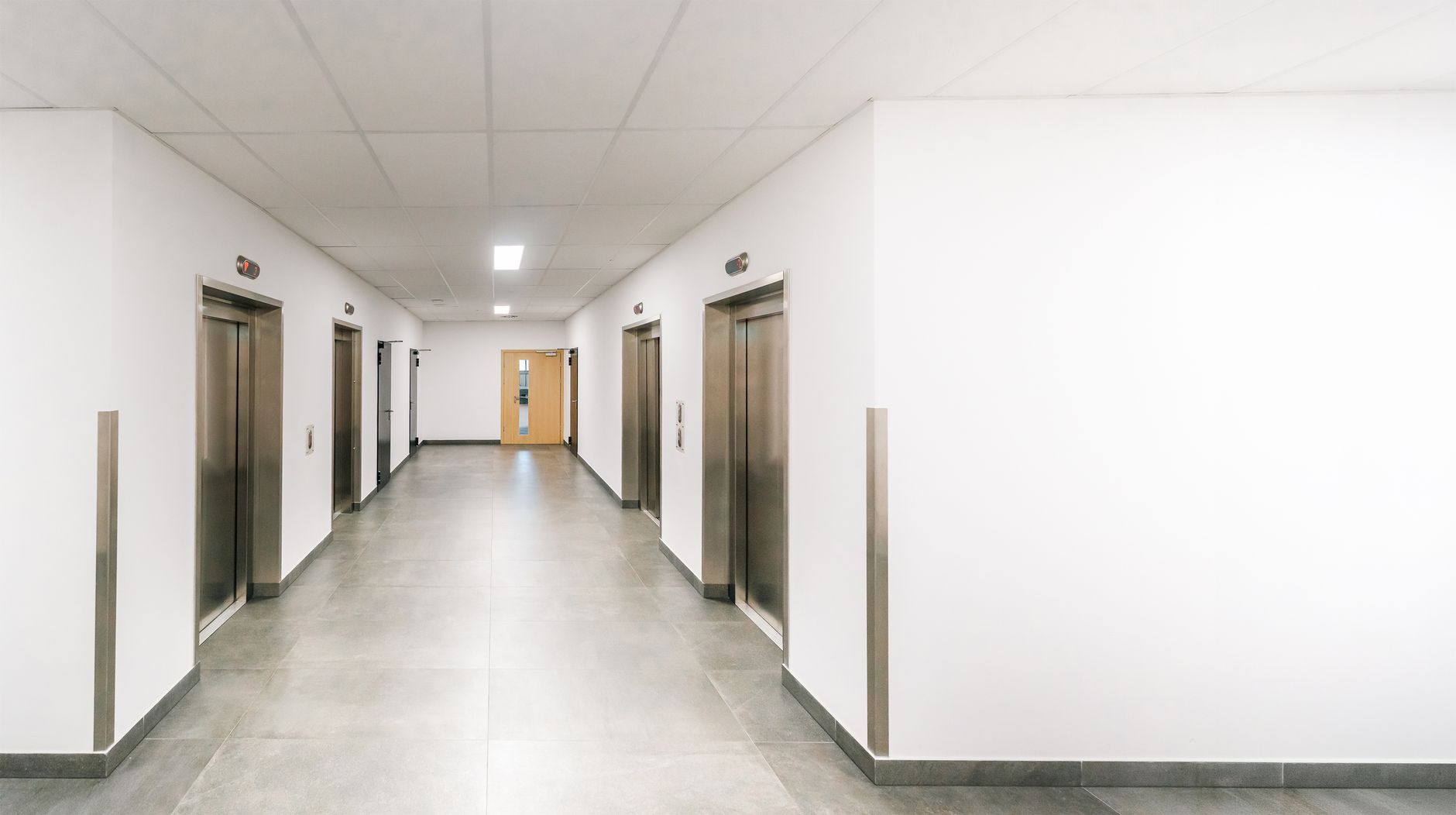
Elevator time is the swing factor that operators underestimate. A robot can handle a fixed corridor beautifully and still lose its edge if it spends too much of the cycle waiting for vertical movement, then idling again for access or handoff. That does not kill the project, but it changes how many trips one unit can absorb.
The practical question is not just whether elevators are integrated. It is how variable the wait is by hour, floor pair, and call priority. Break-even improves when the route uses one or two repeatable floor patterns, low-friction badge or access rules, and receiving areas that are ready when the robot arrives.
If elevator drag is severe, the robot may still pencil out, but often only on a route where the manual alternative is consuming higher-value labor. That is why the same machine can look mediocre in a hospital-wide pitch and excellent on a single medication or specimen-adjacent corridor workflow. Narrow the lane, then measure the queue again.
What is the missed-care opportunity cost?
This is the part many spreadsheets ignore. According to AHRQ's PSNet primer on missed nursing care, missed care is linked to medication errors, patient falls, infections, pressure ulcers, mortality, and patient satisfaction. The article's point is blunt: time pressure and competing demands are a patient-safety problem, not just a scheduling problem.
That matters because transport work often spills onto licensed staff when the day gets messy. A 2025 observational study of intrahospital transfers at a 718-bed hospital found that each transfer required a mean of 77 minutes of staff time, and 53 minutes of that was nursing time. That study examined patient transfers, not routine robot runs, but it shows how quickly movement work can consume bedside attention once equipment, handoffs, and coordination enter the picture.
So the right question is not just, can a runner do this cheaper than a robot. It is, what else stops happening when the runner queue spills over to nurses, techs, or unit coordinators. In a labor market where the American Hospital Association reported that more than 138,000 nurses left the workforce between 2022 and 2024, preserving clinical time is part of the business case.

What does a sensible hospital scorecard look like?
Use a route-by-route scorecard before you shop hardware. High-scoring lanes have repeatable payloads, limited need for human judgment, dependable pickup and drop windows, and floors that do not create constant elevator contention. Low-scoring lanes are exception-heavy, highly urgent, or physically awkward at either endpoint.
The scorecard should force one operational truth to the surface: some routes are labor replacement plays, while others are capacity protection plays. The first compares the robot against a runner. The second compares it against the cost of distracting clinical staff from care, discharge prep, medication workflows, or patient throughput.
Service Robot Co. approaches this as a vendor neutral robot integrator, not a one-brand sales script. That matters in hospitals because the right platform depends on payload, elevator environment, infection-control expectations, traffic patterns, and service coverage. One route may justify hospital delivery robot rental under a robot as a service monthly subscription. Another may justify lease rental or sale. The math should pick the model, not the brochure.
- Trips per shift and per peak hour
- Average cycle time, including wait states
- Elevator variability by route and hour
- Share of trips now handled by licensed staff during overflow
- Exception rate: locked doors, failed handoffs, blocked corridors, wrong payload prep
- Service expectations: uptime, remote triage, on-site dispatch, spare-unit coverage
Where does Service Robot Co. fit in?
Hospitals usually do not need another vendor handoff. They need one partner that can evaluate the lane, choose the right platform, finance it, integrate elevators and building access, train staff, and keep the unit running after go-live. That is the practical appeal of Service Robot Co. as a full-service commercial robot integrator for U.S. businesses.
Because the company is OEM-neutral, the conversation starts with the workflow instead of a predetermined machine. For operators comparing robot leasing for business, commercial robot rental, or a try-before-you-buy pilot, that keeps the break-even analysis honest. The route either carries the economics or it does not. If it does, Service Robot Co. can finance, deploy, integrate, train, and service the fleet through a nationwide U.S. engineer network, with one vendor for the whole lifecycle.
Start with the narrow lane that already hurts
Hospitals get into trouble when they buy for promise instead of friction. The strongest pilot is usually not the flashiest one. It is the route staff complain about because it is constant, interruptive, and thankless. That is the lane where a service robot rental, AMR rental, or hospital delivery robot rental can prove itself quickly.
Start with one corridor-to-elevator workflow. Count the trips. Measure the waits. Record who actually covers overflow when the runner is tied up. Then compare that current state against loaded labor, not bare wage, and include the missed-care penalty of pulling clinical staff into transport. If the route is dense enough and the elevator cycle is not chaotic, the robot can beat the runner on economics before it ever becomes a hospital-wide story.
That is the real lesson. In hospitals, the best automation case is rarely vague efficiency. It is a very specific loop that is repeated so often that the old manual habit has become expensive.
Frequently asked questions
Sources
- BLS Occupational Employment and Wages 2025
- BLS Industry-Specific Wage Estimates 2025
- BLS Employer Costs for Employee Compensation March 2026
- BLS Benefit Share Table March 2026
- AHRQ PSNet Missed Nursing Care Primer
- PMC Study on Intrahospital Transfer Staffing Demands
- AHA Costs of Caring 2026
- AHA 2026 Environmental Scan Workforce Signals