Key takeaways
- Decide on logged hours, repair cost and downtime together, not on calendar age.
- Published hour ranges vary widely, so your own machine records should set the line.
- A repair approaching half the original price of a new unit is a strong replacement signal.
- Pilot a robot on open turf the riding mower already covers before you commit to a replacement.
When is a commercial riding mower due for replacement?
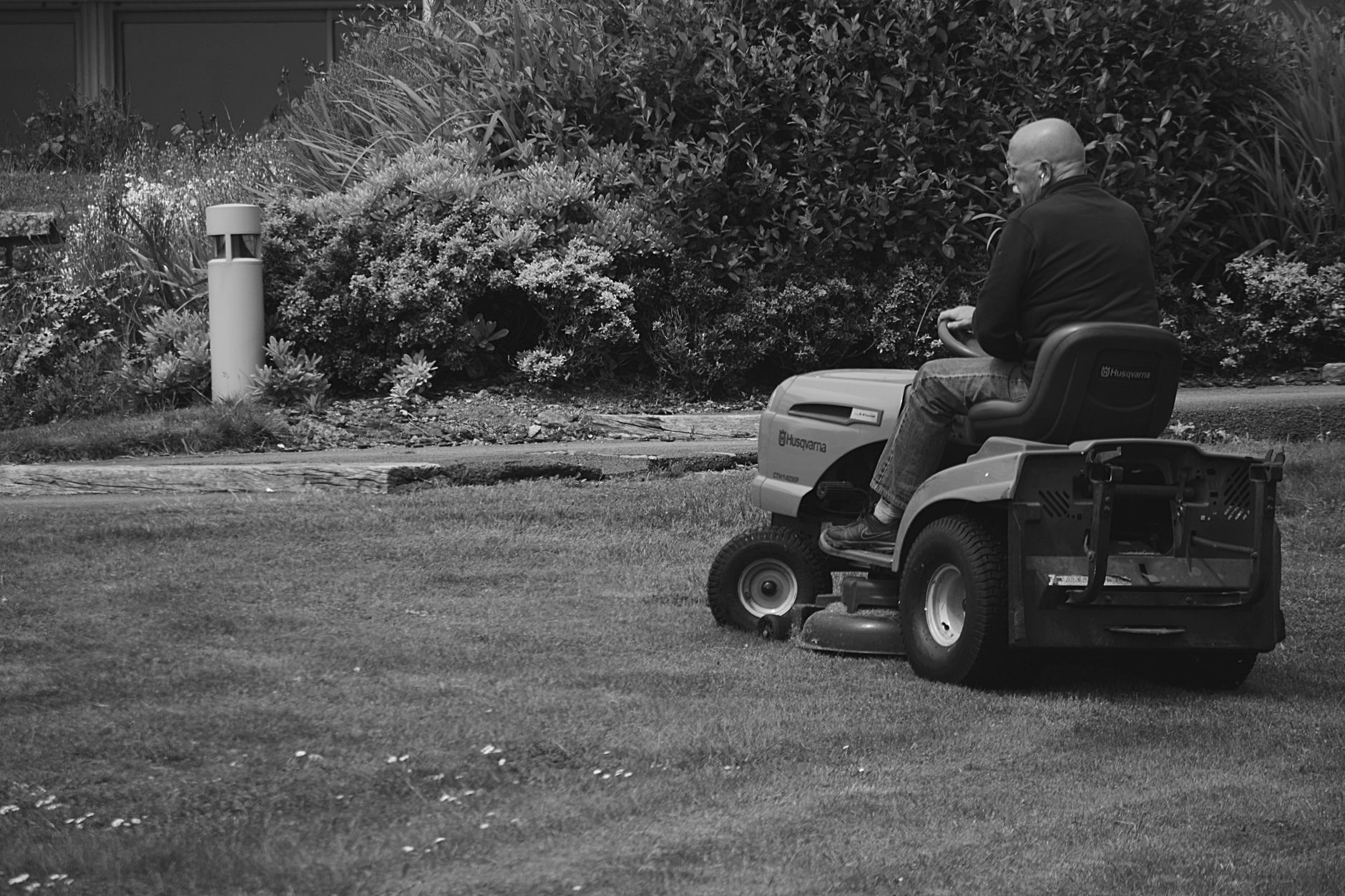
A commercial riding mower is due for replacement when its hours, its repair bills and its seasonal workload point the same direction. Published estimates put typical commercial machine life at roughly 1,200 to 2,500 hours, and the sources disagree on where a given model lands. Treat those figures as a starting line, then read your own records against them.
The sharper test is money. A 1975 trade publication states a widely used rule of thumb: replace when cumulative repairs approach half the original price. A landscape industry article offers a similar check, repairing only when the work brings the machine back to like new condition for under half the cost of a new unit.
Set the review point before the season starts, not after the first breakdown. Hours and repairs settle the timing, while the open turf the riding mower covers settles whether a robotic unit is worth testing alongside it.
What do published hour ranges actually tell a fleet manager?
The sources differ because brands, duty cycles and maintenance differ. A dealer blog gives 1,200 to 1,500 hours for lower end machines and 2,000 to 2,500 hours for John Deere commercial mowers. A facilities article puts the general range at 1,500 to 2,000 hours, while Turf Magazine says most commercial zero turn mowers last 2,000 to 3,000 hours with proper maintenance.
Those are trade estimates, not standards, and the forum reports in the same search results are anecdotal. A machine run hard and serviced late tends toward the low end of whatever range applies to it. Your hour meter reading tells you more than any published table.
Which fleet records should you pull before deciding?

Three records do most of the work: hours, repairs and seasonal use. Pull them per unit rather than per crew, so the comparison holds up when machines differ in age and model. Keep the set short enough that one person can review it in a single sitting.
Hour meters drift when machines idle with the engine running, so a simple log of start and stop times gives a cleaner number than the meter alone. Match each repair invoice to the hour reading on that date, so the repair total can be read against the machine's working life.
- Hour meter reading, plus hours logged in peak months versus shoulder months
- Repair invoices summed per unit over the last two seasons
- Days out of service, including the wait for parts and the wait for a technician
- Routes the unit covered that another mower or crew member had to pick up
- Faults that recur on the same system, such as drive or deck, even when each repair was small
How should repair history and warranty timing change the call?
Repair totals show whether a machine still earns its place. A unit that keeps returning to the shop for the same system is telling you something a single large invoice does not. Compare the running total with the half of original price test and note the date that line was crossed.
Warranty timing is the other lever. An advisor quoted in a facilities article recommends planning replacement inside the manufacturer's warranty period, so a repair on a unit nearing the end of coverage is a reason to decide early. The same article makes the point from the contractor side that downtime can outweigh the cost of replacing the machine on schedule.
A one page timeline works well: the date of each repair, the cumulative total, the hour reading on that date and whether the unit was still covered. Laid out this way, the replacement decision is visible to the people who approve the budget.
Does seasonal use shift the replacement date?
It can move the date by a full season. A northern operation packs its hours into a short window and then sits idle, so the hour meter climbs slowly and the machine ages mostly in calendar time. A Sun Belt operation may mow through most of the year, so the same model reaches its hour range sooner and repair work can overlap with peak mowing.
Compare hours per year against the low and high ends of the published range, not against a single target. A fleet that reaches 1,200 hours in its third season is on a different curve than one that gets there in its sixth, even when the machines are identical.

Is robotic mowing ready to test on open turf?
Market projections point toward more testing, not less. A Persistence Market Research release from April 2026 projects the global robotic lawn mower market at about US$7.5 billion in 2026, with an 11.4 percent compound annual growth rate. Those are the publisher's estimates, so read them as a sign of direction rather than a number to budget against.
Labor is the reason contractors cite most often. An industry executive quoted in a trade piece says contractors who were hesitant last year now see robotic mowers as a possible source of supplemental labor. The NALP blog adds a caution that results depend heavily on how a robot is implemented, so the pilot design matters more than any headline figure.
A workable test chooses open turf the riding mower already covers, logs hours and passes for both machines on identical acreage, and judges the robot on uptime and edge quality as well as speed.
Where does a robot pilot fit inside the replacement plan?
Service Robot Co. is a vendor neutral integrator, so the first step is a site assessment that maps the open turf, the slopes and the obstacles, then recommends a robot type that fits that ground. Customers take on a robot through lease financing on a three year lease, with one fixed lease payment quoted after the site assessment. Starting with one leased unit lets a fleet manager test the open turf before deciding anything about the riding mower.
Once a unit is in service, RoboCare, our service plan, covers on-site dispatch and remote triage, backed by regional service engineers in the states we serve. For a fleet manager weighing downtime, that matters as much as the lease terms, because the question is how quickly a unit returns to the route when something goes wrong.
Frequently asked questions
Want a robot working for you?
Tell us the job and the site. We will recommend the robot, quote the lease, and keep it serviced.
Sources
- Koenig Equipment blog: how long do lawn mowers last
- Facilities Management article on groundsmanagement equipment
- Turf Magazine: zero-turn mower lifetime hours
- 1975 trade publication on repair versus replace (MSU archive)
- Landscape Architect: when to replace lawn care equipment
- Persistence Market Research release on robotic lawn mowers (April 2026)
- Total Landscape Care: how perceptions are changing about robotic lawn mowers
- NALP blog post, May 15, 2026