Key takeaways
- Transportation and logistics became the largest professional service robot category in 2024, according to the IFR.
- The strongest robot demand is clustering around repetitive internal moves such as carts, totes, pallets, linen, meals, supplies, and documents.
- Robot as a service and other monthly payment programs help sites start sooner because they reduce upfront commitment and shift risk toward uptime.
- The first workflows to automate are usually fixed, frequent, indoor routes with clear handoff points and measurable labor drag.
Transport robots are leading because the work is simple, constant, and expensive to leave manual
Transport robots now sit at the center of professional service robotics because they attack one of the most common forms of wasted labor inside commercial buildings and industrial sites: the nonstop movement of goods from one point to another. That work is repetitive, time-bound, physically wearing, and usually invisible until managers measure how many paid hours disappear into it every day.
The market data now reflects that shift clearly. According to the International Federation of Robotics, professional service robot sales reached almost 200,000 units in 2024, up 9 percent year over year. Transportation and logistics led the field with 102,900 units sold, which means more than half of all professional service robots sold last year were built to move goods rather than greet guests, clean floors, or patrol property.
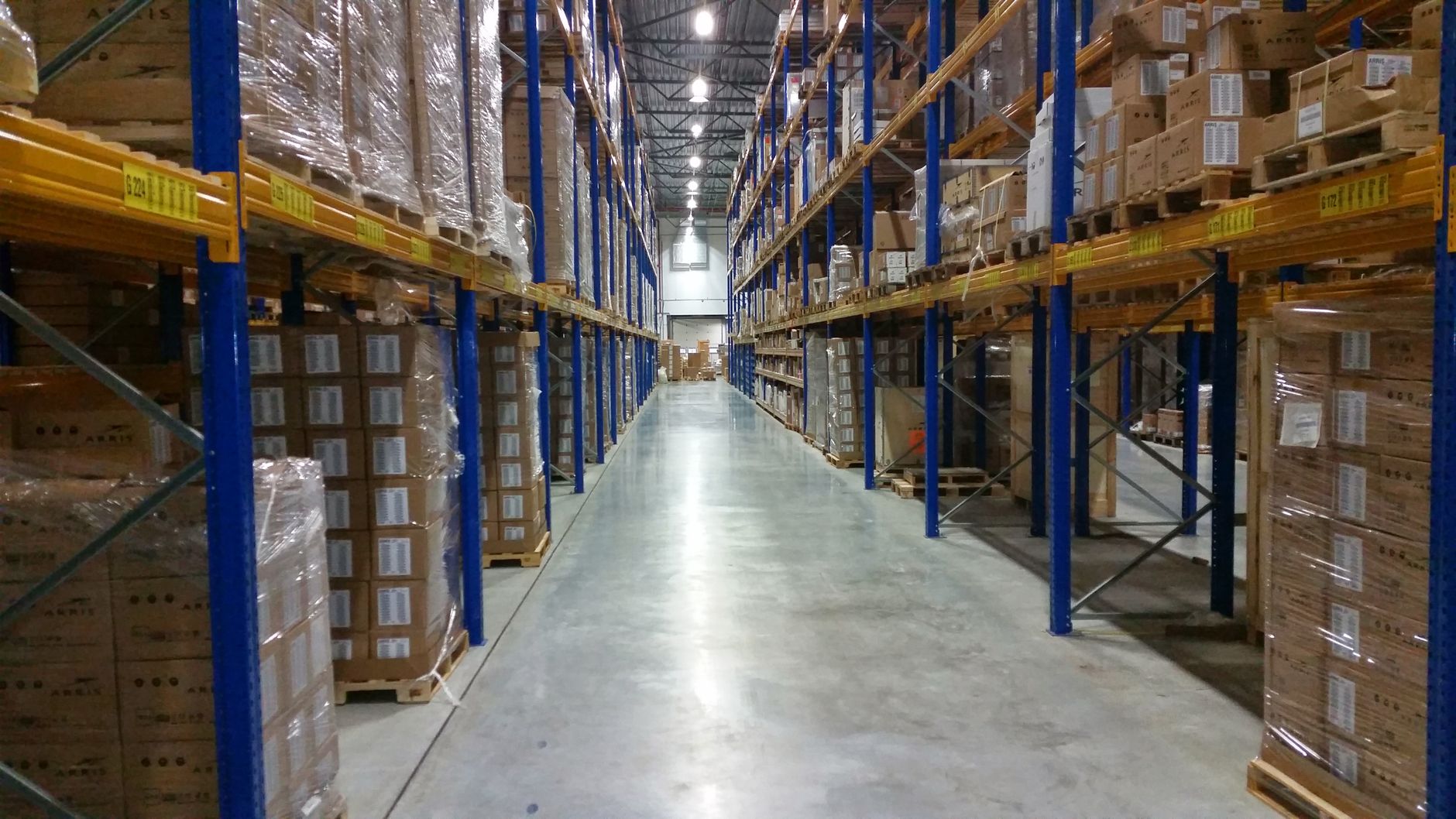
That matters because transport work shows up almost everywhere. Warehouses move pallets, cartons, and replenishment stock. Hospitals move meals, linen, medications, waste, and specimens. Offices move mail, supplies, and records. Hotels move amenities, food, and housekeeping stock. Once buyers start looking at the day through that lens, repetitive transport automation becomes one of the easiest operational cases to see and one of the easiest to stage.
What changed in the 2025 market data
The IFR's World Robotics 2025 service robots release did not just say the market grew. It showed where the center of gravity moved. Transportation and logistics posted 102,900 units in 2024, up 14 percent. Hospitality stayed in second place with more than 42,000 units sold, but that category fell 11 percent. Professional cleaning rose strongly to more than 25,000 units, up 34 percent, yet it still remained well behind internal transport by unit volume.
The same release also explained why deployments are getting easier to start. The IFR said the global robot as a service fleet grew 31 percent in 2024, and within transportation and logistics specifically, RaaS growth reached 42 percent. In plain terms, buyers are not only choosing transport robots more often. They are increasingly choosing commercial robot rental, robot rental monthly, and other subscription structures to get those deployments moving faster.
This is not a small side trend. It is a market signal that buyers want automation with less delay, less procurement drag, and less exposure if a workflow needs tuning after launch. That preference naturally favors transport robots because they usually enter the site on a narrow mission, can be measured quickly, and do not require the customer to redesign the entire operation before seeing value.
Which tasks are actually driving adoption
The winning tasks are not glamorous. They are the internal loops that happen every hour and pull people away from higher-value work. A warehouse robot rental program often starts with cart pulls, pallet moves, line-side replenishment, or finished-goods transfer between fixed stations. A hospital delivery robot rental program typically starts with meal tray transport, medication transport, sterile supply runs, linen, trash, or specimen moves. In offices and hotels, the first wins are usually mail delivery, document transport, supply runs, and amenity delivery.
These workflows share the same DNA. They happen indoors. They repeat on a known route. The payload is bounded. The handoff points are clear. The task is useful, but it does not need judgment every minute. That is exactly the kind of work autonomous mobile robot rental and tug robot rental programs are built to absorb.
The broader labor picture supports the logic. The U.S. Bureau of Labor Statistics reported 13,677,150 workers in transportation and material moving occupations in May 2025. Its Occupational Outlook Handbook projects about 1.8 million openings each year, on average, from 2024 through 2034 for that occupational group. In other words, the labor pool supporting internal movement is huge, busy, and constantly churning. That is fertile ground for automation.
- Point to point pallet transport between receiving, staging, and outbound lanes
- Cart pulling between production cells, kitting areas, and storage
- Meal, linen, medication, and specimen delivery inside hospitals
- Mail, records, and office supply runs across multi-floor buildings
- Amenity and back-of-house stock movement in hotels and large venues
Why subscription models help robots get approved sooner
Transport robots fit robot as a service unusually well because the deployment question is often operational, not philosophical. The buyer is usually not asking whether internal movement matters. They know it does. The real question is how to start without a large capital decision, a long approval cycle, or a brittle single-vendor commitment.
That is where raas monthly subscription models, robot leasing for business, and month to month robot lease structures change the buying path. The IFR explicitly linked the rise of RaaS to companies wanting automation without a heavy upfront investment. A monthly structure also lets the operator compare the robot against a known pain point such as overnight cart runs, shortage-prone supply routes, or a night shift autonomous scrubber crew that is hard to staff consistently.
For many sites, that makes commercial robot rental easier to test than a traditional ownership model. It can act as a robot pilot program, a try before you buy path, or simply the permanent operating model. The practical advantage is not only accounting. It is speed. Buyers can validate route fit, charging patterns, elevator behavior, handoff discipline, and service expectations before committing to a larger amr fleet deployment.
Which facility workflows are most likely to automate first
The first workflows to automate are the ones with disciplined repetition and low ambiguity. A facility does not need science fiction to justify a robot. It needs a route map, a payload, a schedule, and a pain point. That is why early wins tend to cluster around internal logistics loops rather than broad, highly variable guest-facing work.
In warehouses and production sites, the first targets are usually repetitive pallet transport automation, line feeding, empty-cart return, and end-of-line movement to staging. In healthcare, early candidates are non-clinical internal deliveries that consume steps but do not require bedside judgment. In offices, airports, campuses, and hotels, the first wins are back-of-house moves rather than the most public-facing ones.
The injury and labor data help explain this sequencing. BLS reported a 4.4 rate of nonfatal workplace injury and illness cases per 100 full-time workers in transportation and warehousing in 2024, compared with 3.4 in health care and social assistance. Transport tasks are not just common. They are physically taxing enough that operations teams have a strong reason to remove some of the miles, pushes, lifts, and repeat trips from daily work.
- Warehouse and distribution center loops with fixed pickup and drop zones
- Hospital support routes for meals, meds, linen, and supplies
- Manufacturing replenishment between stockroom, kitting, and line-side points
- Office and campus mail delivery on predictable schedules
- Hotel back-of-house amenity and housekeeping stock movement
Why the economics now favor internal movement automation
Demand pressure is still building around the facilities that move goods fastest. The U.S. Census Bureau reported that first-quarter 2026 retail e-commerce sales reached 16.9 percent of total retail sales in the United States. That does not mean every e-commerce dollar needs a robot, but it does mean more fulfillment activity is being routed through warehouses, backrooms, and internal replenishment systems that live or die on movement discipline.
At the same time, labor is not getting simpler to source. BLS also noted that wages and salaries for transportation and warehousing workers rose 7.1 percent over the 12 months ending December 2023, the largest increase for that industry since the series began in 2001. When labor costs rise, turnover stays high, and volumes remain volatile, internal movement becomes one of the first places operators look for relief.
That does not make every site ready on day one. The route still needs enough repetition, enough volume, and enough operational stability. But once those ingredients are present, a warehouse robot rental or material handling robot rental program can be easier to justify than broader automation because the task is measurable in trips, touches, delays, and labor hours rather than vague productivity promises.
What this means for buyers evaluating a robot program now

The practical takeaway is not that every facility should rush out to buy the same machine. It is that transport is now the most credible entry point for many organizations considering service robot rental, lease rental or sale options, or robot leasing vs buying. The best first project is usually the one with a narrow lane, visible friction, and a manager who can own the workflow every day.
This is also where an OEM-neutral approach matters. Service Robot Co. works as a vendor neutral robot integrator for U.S. businesses, selecting the robot that fits the route, payload, floor conditions, software environment, and support needs rather than forcing a single catalog onto every site. For buyers, that reduces the risk of matching the facility to the wrong machine instead of matching the machine to the facility.
Because the company handles financing, deployment, integration, training, and service through a nationwide U.S. engineer network, the operational question becomes simpler: which internal moves should leave the human walking path first? For many sites in 2026, that answer is no longer abstract. It is transport. And the market data now says the rest of the industry sees it too.
Where transport growth goes from here
Transport robots are unlikely to win every service robot category by revenue, visibility, or novelty. But they now lead on something more important: repeated, cross-industry usefulness. A robot that moves goods inside a building can earn its place in healthcare, warehousing, manufacturing, hospitality, higher education, and large office environments without needing the customer to believe in a futuristic story first.
That is why transport and logistics have become the center of gravity in professional service robotics. The work is everywhere. The routes can be staged. The metrics are legible. And the financing model is getting friendlier. When commercial robot rental, no upfront capital structures, and maintenance included service plans meet a workflow that already burns hours every day, deployment tends to start sooner.
For operators planning their first move, the smartest question is not which robot looks most impressive. It is which transport loop is stable enough, frequent enough, and painful enough to automate first. In this market, the clearest path usually wins.
Frequently asked questions
Sources
- IFR service robots 2025 release
- IFR World Robotics 2025 report page
- IFR service robots report overview
- BLS transportation and material moving outlook
- BLS May 2025 occupation employment table
- BLS transportation and warehousing compensation spotlight
- BLS nonfatal injury and illness rates by industry
- U.S. Census quarterly e-commerce sales