Key takeaways
- Transportation and warehousing is projected by BLS to add 198,800 jobs from 2024 to 2034, so the labor question is not going away.
- BLS also projects warehousing and storage itself to grow only 1.4 percent, a sign that automation is already changing headcount needs inside the four walls.
- Warehouse labor is still expensive, physically demanding, and hard to stabilize at scale, with BLS showing average hourly earnings in warehousing and storage at $26.85 in June 2026.
- The winners are not replacing people wholesale. They are automating repetitive transport, pallet movement, and floor care while redeploying staff into higher judgment work.
Why is warehouse automation still urgent if hiring has cooled?
Because the labor market has normalized only in the most superficial sense. The panic hiring of the post pandemic years has eased in some regions, but the structural pressure inside logistics has not. According to the U.S. Bureau of Labor Statistics, transportation and warehousing is projected to add 198,800 jobs from 2024 to 2034, making it one of the larger job gain stories in the economy.
At the same time, BLS says warehousing firms are increasingly implementing automation tools such as warehouse management systems, automated guided vehicles, robots, and AI based systems. That matters because BLS does not treat automation as a distant possibility. It already builds it into the forecast, and still expects broad logistics hiring pressure to continue.
That is the real answer. Warehouse automation is rising because demand is still climbing, labor is still costly and volatile, and the work itself is still full of repetitive moves that machines handle well. Automation is not a reaction to a temporary shortage anymore. It is an operating model shift.
What exactly do the latest BLS projections say?
The headline number gets attention, and it should. In its January 2026 overview of 2024 to 2034 employment projections, BLS says transportation and warehousing should grow from 6.6545 million jobs to 6.8533 million, a gain of 198,800 jobs.
But the more revealing number sits deeper in the same release. BLS projects warehousing and storage to rise from 1.8491 million jobs to 1.8751 million over the decade. That is a gain of 26,000 jobs, or 1.4 percent. In other words, the sector keeps growing, but direct warehouse labor demand grows more slowly than the broader logistics complex because productivity tools are absorbing part of the work.
BLS is explicit about the mechanism. It says productivity gains from automation are expected to limit labor demand and lead to slower than average employment growth in warehousing and storage. So if a warehouse operator is waiting for labor pressure to disappear on its own, the federal data points the other way. Demand keeps rising, and automation becomes part of how firms keep up.
If headcount growth slows, where is the pressure coming from?
From the rest of the supply chain around the warehouse, and from the complexity inside it. BLS projects employment of logisticians to grow 17 percent from 2024 to 2034, adding 40,300 jobs, with about 26,400 openings each year on average. Planning, coordination, slotting, routing, exception handling, and multi node inventory control are all getting more demanding, not less.
BLS also notes that stockers and order fillers alone account for about 40 percent of the projected 579,900 job gains in the transportation and material moving occupational group. That tells you two things at once. First, the flow of goods is still expanding. Second, the highest pressure remains concentrated in repetitive, turnover prone tasks that are difficult to staff consistently.
A cooler hiring market does not solve those frictions. It only changes their shape. Instead of desperate recruiting at any cost, operators now face a steadier problem: how to fill, retain, train, and protect labor in jobs that remain physically taxing and operationally unforgiving.
Why do warehouses still feel labor tight on the floor?
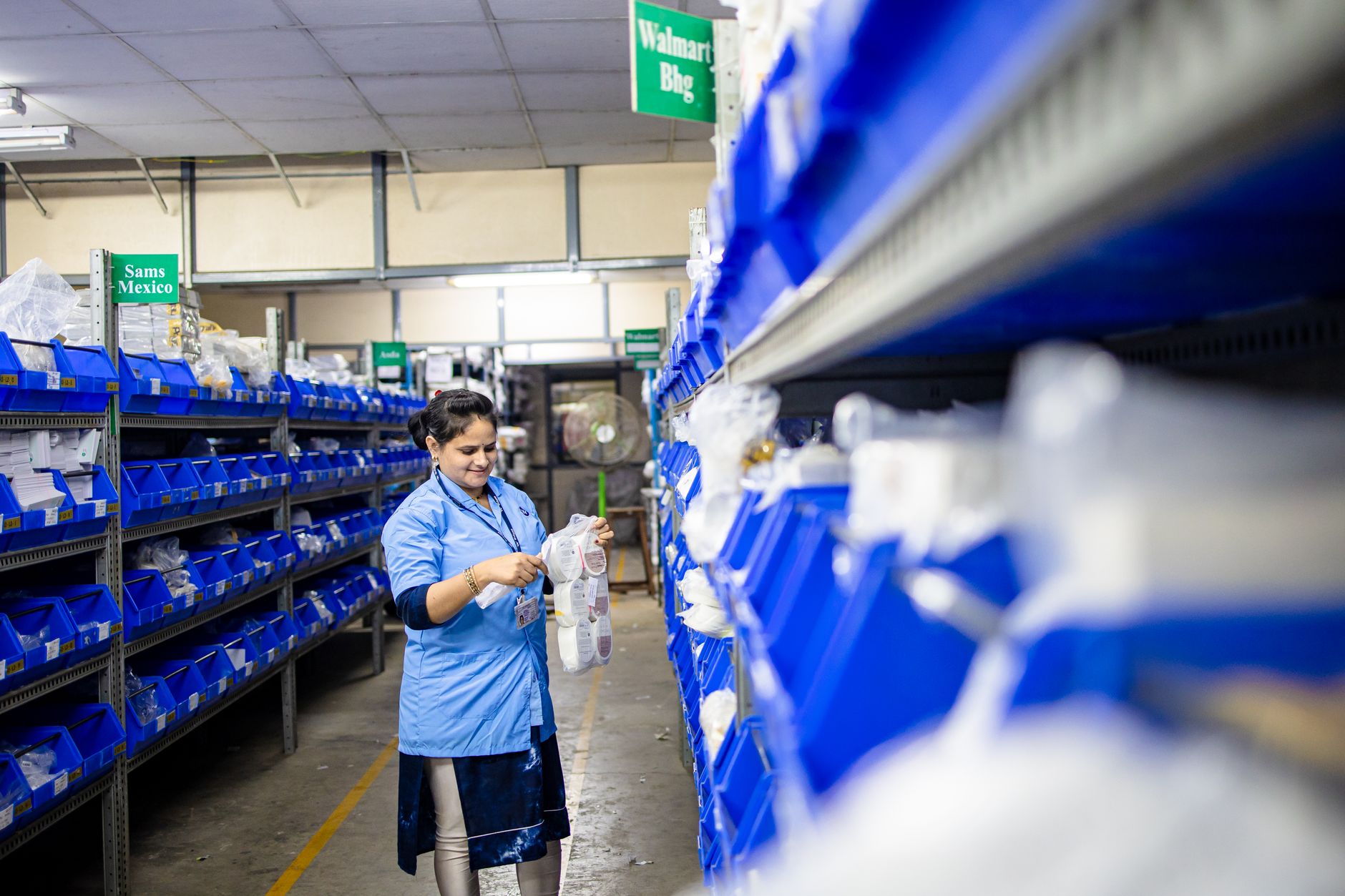
Because normalized does not mean easy. BLS data for warehousing and storage shows average hourly earnings reached $26.85 in June 2026, and the Job Openings and Labor Turnover Survey showed 335,000 job openings in transportation, warehousing, and utilities in May 2026, with a 4.7 percent openings rate. That is not a picture of abundant slack.
The work is also demanding. BLS reports a 2024 total recordable injury and illness rate of 4.8 cases per 100 full time workers in warehousing and storage, compared with 2.3 across private industry overall. When a job category is both physically taxing and relatively expensive, operators do not need a national hiring frenzy to justify automation. The economics are already staring them in the face.
Then there is churn. Warehouses do not suffer only from open requisitions. They suffer from absenteeism, retraining cycles, uneven shift coverage, and missed throughput when one weak link backs up a whole process. That is why repetitive transport automation, warehouse robot rental, and robot leasing for business keep moving from pilot conversations into live operations.
How is e-commerce still feeding the automation case?
Demand density keeps building. The U.S. Census Bureau reported first quarter 2026 retail e commerce sales of $326.7 billion, up 9.8 percent from first quarter 2025. E commerce accounted for 16.9 percent of total retail sales in the quarter. More digital orders mean more picks, more touches, more replenishment decisions, and more pressure on dock to stock timing.
That mix matters because e commerce does not simply add volume. It adds variability. More order lines, more split shipments, more returns, and tighter service windows all push warehouses toward flexible automation rather than static labor planning. A building that was manageable with manual transport five years ago may now be full of low value walking, cart pulling, and pallet repositioning that drains paid labor without improving service.
This is where automation earns its keep. Not by chasing futuristic optics, but by absorbing the repeatable movement that expands alongside online demand. Even a modest rise in digital sales can amplify floor congestion and travel time inside a distribution center.
Which jobs are changing first inside the building?

Usually not the jobs people assume. The first wave is less about replacing judgment and more about removing wasted motion. Internal pallet movement, line feeding, zone to zone transport, empty cart returns, and overnight floor care are all strong candidates because the rules are stable and the value of consistency is high.
That lines up with the BLS view. The agency expects demand for logistics and material moving work to continue, but it also expects automation to cap labor growth in warehousing itself. The implication is practical. Human work shifts toward supervision, exception handling, quality checks, dock coordination, and higher consequence tasks. Machines take a larger share of the predictable laps.
For many operators, this is also the least disruptive path. An autonomous mobile robot rental program or a floor scrubber for warehouses can reduce travel and fatigue without forcing a full rebuild of rack layouts, WMS logic, or labor planning. It is a targeted way to buy capacity.
What does a practical automation path look like for a mid sized operator?
It usually starts with the dullest bottleneck, not the flashiest machine. A facility may begin with material handling robot rental for repetitive transport, or with an industrial floor scrubbing robot that handles large facility coverage overnight cleaning with no operator. The point is to choose a workflow with measurable drag, clear safety rules, and enough repetition to justify the change.
From there, the real advantage is execution discipline. Service Robot Co. approaches this as a vendor neutral robot integrator for warehouses, which matters because the right answer depends on aisle widths, floor conditions, payloads, traffic patterns, software environment, and staffing goals. One site may need a warehouse robot rental model to move quickly. Another may prefer lease rental or sale, monthly payment programs, or a phased deployment with no shutdown.
For operators that do not want five vendors and five support numbers, the appeal is simple. Service Robot Co. acts as one partner for the whole lifecycle: site assessment mapping, finance options, robot deployment and integration, go live support, staff training, and commercial robot repair service through a nationwide U.S. engineer network. That is often the difference between a pilot that looks good on paper and an automation program that survives quarter end reality.
What should leaders watch before they commit?
Start with task economics, not broad promises. Measure paid travel time, touches per pallet move, labor spent on non value walking, missed picks tied to congestion, and the cost of cleaning or transport work that pulls people away from higher priority jobs. If the baseline is vague, the automation decision will be vague too.
Then check operating fit. Floor conditions, traffic intersections, Wi Fi reliability, charging strategy, software handoffs, and service response matter more than brochure claims. In warehousing, uptime is strategy. A robot that works in a demo but stalls in a mixed traffic aisle has not solved anything.
Finally, think in portfolio terms. The best automation plan is often a layered one: some tasks are ideal for robot as a service and monthly programs, some justify ownership, and some should stay manual. Labor will remain central in warehousing for a long time. The point is to spend that labor where humans matter most.