a community hospital campus in southern Minnesota
Hospital Floor Scrubbers Lift Cleaning Productivity 50% on One Campus
How a southern Minnesota hospital used two autonomous scrubbers to close a floor-tech gap, run long daily cycles, and raise floor-care throughput when hiring stalled.
- 50%
- Productivity gain
- 2 units
- Robotic scrubbers
- 8-10 hrs
- Daily runtime
- 2x
- Sq ft per hour
Based on a documented real-world deployment. Figures are from public reporting; the organization is not named.
A full floor-tech seat stayed empty
Environmental services leaders at a community hospital campus in southern Minnesota needed every hard floor cleaned at least once per day across a spread-out building. Floor technicians also carried work in other departments, so shifts felt rushed even on normal days.
A floor-tech role sat open for six to eight months without a hire. For several years the team had effectively been one full-time floor position short while patient traffic and hygiene expectations held steady.
- Daily pressure to finish all floors while staff covered overlapping duties
- Long vacancy on a specialized floor-care role
- Limited bandwidth to add manual passes without overtime
Two autonomous scrubbers on long daily cycles
Hospital leaders partnered with the robot supplier to add two compact autonomous scrubbers and named an on-site automation champion to run day-to-day checks. Units were scheduled for eight to ten hours of operation so corridors and clinical wings could be scrubbed while humans focused on detail work.
Training stayed practical: start checks, route confirmation, and handoffs when staff needed to close an area for care. The robots handled repeat passes on open hard floors while the team kept restrooms, touch points, and specialty tasks in human hands.
- Select two autonomous scrubbers sized for hospital aisles
- Assign a site champion for daily starts and route oversight
- Run long daytime cycles while staff cover non-floor tasks
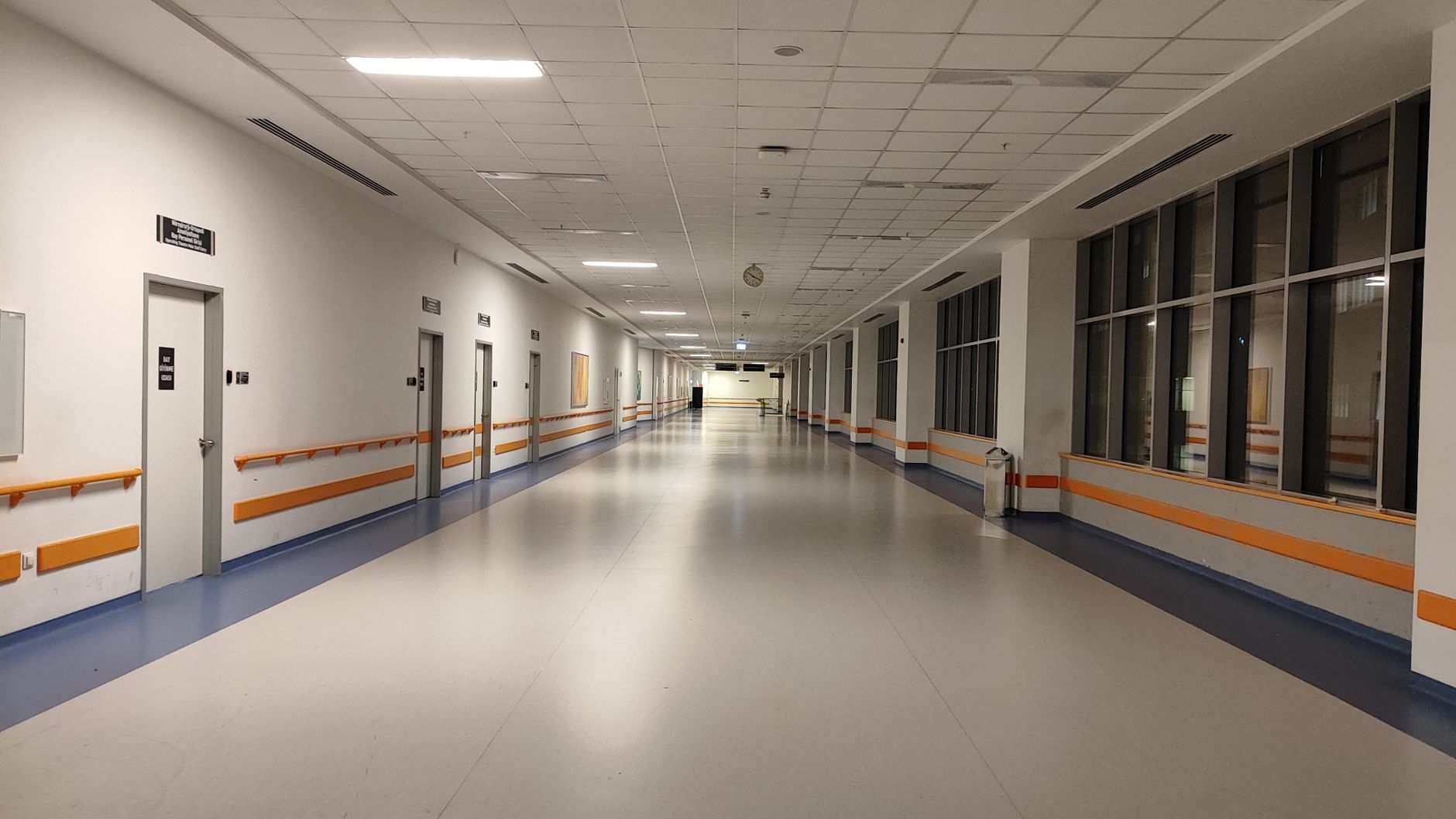
Measured gains in throughput and morale
Leaders reported cleaning productivity up about fifty percent across the campus after the robots joined the roster. Supervisors could rebalance schedules and backfill other departments because the scrubbers carried the long straight floor miles.
The automation champion noted effective coverage approaching double the common housekeeping benchmark of about fifteen hundred square feet per hour for manual floor care, with more total square footage finished each day. Staff described less scramble to hit every zone before visitors and patients peaked.
What operators can take from this pattern
This campus story is a documented example, not a Service Robot Co. project. It still shows how an OEM-neutral integrator can help when the problem is coverage, not curiosity: match scrubber size to corridor width, finance or buy once routes are mapped, and keep service on calendar so uptime does not depend on one in-house expert.
Hospitals that cannot fill a floor-tech role do not have to lower the floor standard. Long autonomous cycles plus a named champion let environmental services hold the line while recruiters keep searching.