
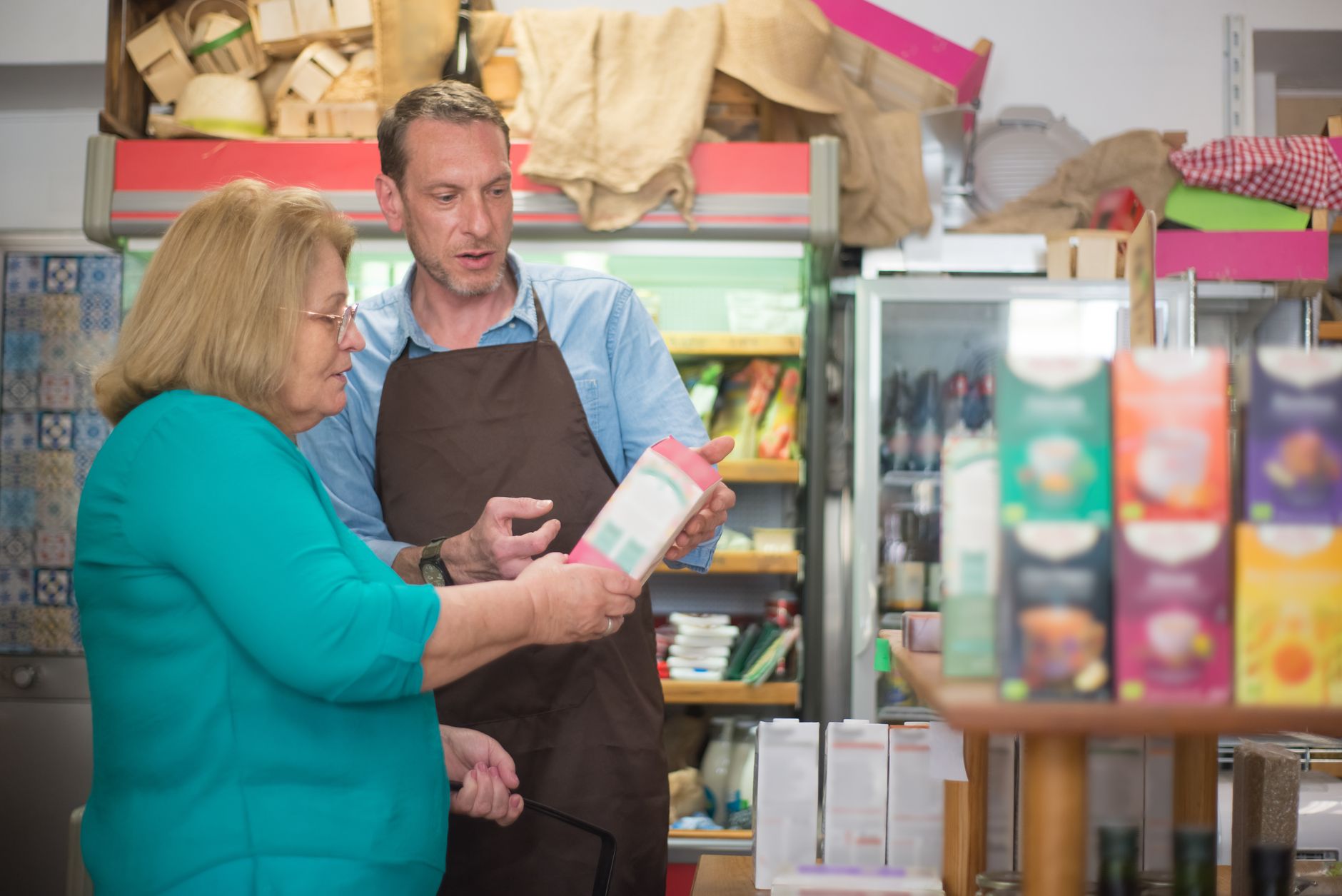
a bedding retailer's sales floor during a 12-day field experiment
A Bedding Retailer's Floor Robot Drew More Stoppers but Fewer Buyers
A 12-day field test on a bedding retailer's sales floor found a robot with a fixture lifted stopping to 2.48%, yet fewer of those stoppers bought.
Deployment at a glance
- 2.48%
- Passersby who stopped, robot plus fixture (baseline 0.73%)
- 11.56%
- Stoppers who bought at baseline, with no robot present
- 2.62%
- Stoppers who bought with robot plus fixture
- 12 days
- Live store test across three alternating floor conditions
Based on a documented real-world deployment. Figures are from public reporting; the organization is not named.

A quiet majority on a bedding floor
Most people who pass a bedding store never slow down. On a sales floor in Japan, that quiet majority is the first hurdle, and every later step, from a clerk's approach to a completed sale, depends on someone stopping in the first place.
Staff time is finite. Clerks greet, guide and assist shoppers, and each of those steps costs labor. A robot that draws attention at the doorway has to move people forward, not only turn heads.
A useful answer had to come from measurement in a working store. That meant following the full path from passerby to purchase, not reading a headcount alone or trusting first impressions of a lively machine.
- Stopping: passersby who slowed or stopped in front of the robot
- Downstream steps: clerk approach, store entry and assisted experience
- Purchase: whether a stopper went on to buy
Three floor conditions, alternated over 12 days
The store rotated three floor conditions across the same 12 days: a baseline with no robot, a robot operating alone, and a robot working alongside a fixture. Alternating the conditions let each floor be compared on equal footing.
The robot was a conversational service robot that engaged passersby. Researchers annotated video of the floor to trace every passerby through the funnel, then interviewed six staff afterward, one manager and five clerks.
The interviews captured what counts and cannot be seen on video. Clerks described how the robot changed their own rhythm on the floor.
- Baseline floor with no robot
- Robot operating alone
- Robot operating alongside a fixture
- Video annotation of every passerby through to purchase
- Post-test interviews with one manager and five clerks
More stoppers, fewer buyers per stopper
The robot did its job at the doorway. Stopping per passerby climbed from 0.73% on the baseline floor to 1.50% with the robot alone and 2.48% with the robot and fixture together. The fixture amplified the effect.
Further down the funnel, the picture reversed. Purchases per stopper fell from 11.56% at baseline to 5.49% with the robot alone and 2.62% with the robot and fixture. Across the three conditions that drop was statistically significant (chi-square value of 19.67 on two degrees of freedom, p under .001), and the contrast between baseline and robot plus fixture stood out most clearly.
Per passerby, purchases barely moved. They were 0.084% at baseline, 0.082% with the robot alone and 0.065% with the robot and fixture, a difference that was not statistically significant. More people stopped, yet the extra stops did not produce a measurable rise in sales per passerby.
The researchers attribute much of the drop to staff behavior. Clerks avoided interrupting conversations already under way between the robot and a shopper, and they found the timing hard to read because of conversational latency. Clerk-led steps per stopper, from approach through store entry and assisted experience to purchase, declined, a pattern the researchers call a paradoxical demand-side effect.
Children and families responded most strongly. Staff saw the robot as a visual anchor, and child-centered attraction often satisfied curiosity at the doorway without bringing anyone inside.
Measure the handoff, not just the crowd

A stopping rate is an early signal, and this test shows its limits. A customer-engagement robot can draw people toward a display while the human part of the sale stalls, so retailers should follow the path from passerby to purchase before they scale a deployment.
Service Robot Co. is a full-service, OEM-neutral commercial robot integrator for US businesses. We select the right robot across manufacturers, then finance, deploy, integrate, train and service every unit through a nationwide US engineer network. Our robots reach a business on a 3-year lease, with one fixed payment quoted after a site assessment.
That assessment is where handoff rules, floor placement and staff training get settled. Clerks need a routine they trust, and a rule written on a whiteboard rarely beats a team that reads the room well. Businesses weighing robot leasing for business can start there.
Frequently asked questions
Want a robot working for you?
Tell us the job and the site. We will recommend the robot, quote the lease, and keep it serviced.