
a mining operation washing heavy equipment at a fixed wash bay
A Mining Operation's Robotic Wash Bay: About 80% of Water Reused
A mining operation's robotic vehicle washer reuses about 80% of its wash water and cleans heavy equipment in under two hours. See how the wash bay works.
Deployment at a glance
- About 80%
- of wash water reused at the bay
- Under 2 hrs
- washing time per truck with the robotic washer
- 4.5 to 1.7
- hours per truck, manual baseline to robotic washing
- 36,793
- cubic meters of water saved each year
Based on a documented real-world deployment. Figures are from public reporting; the organization is not named.
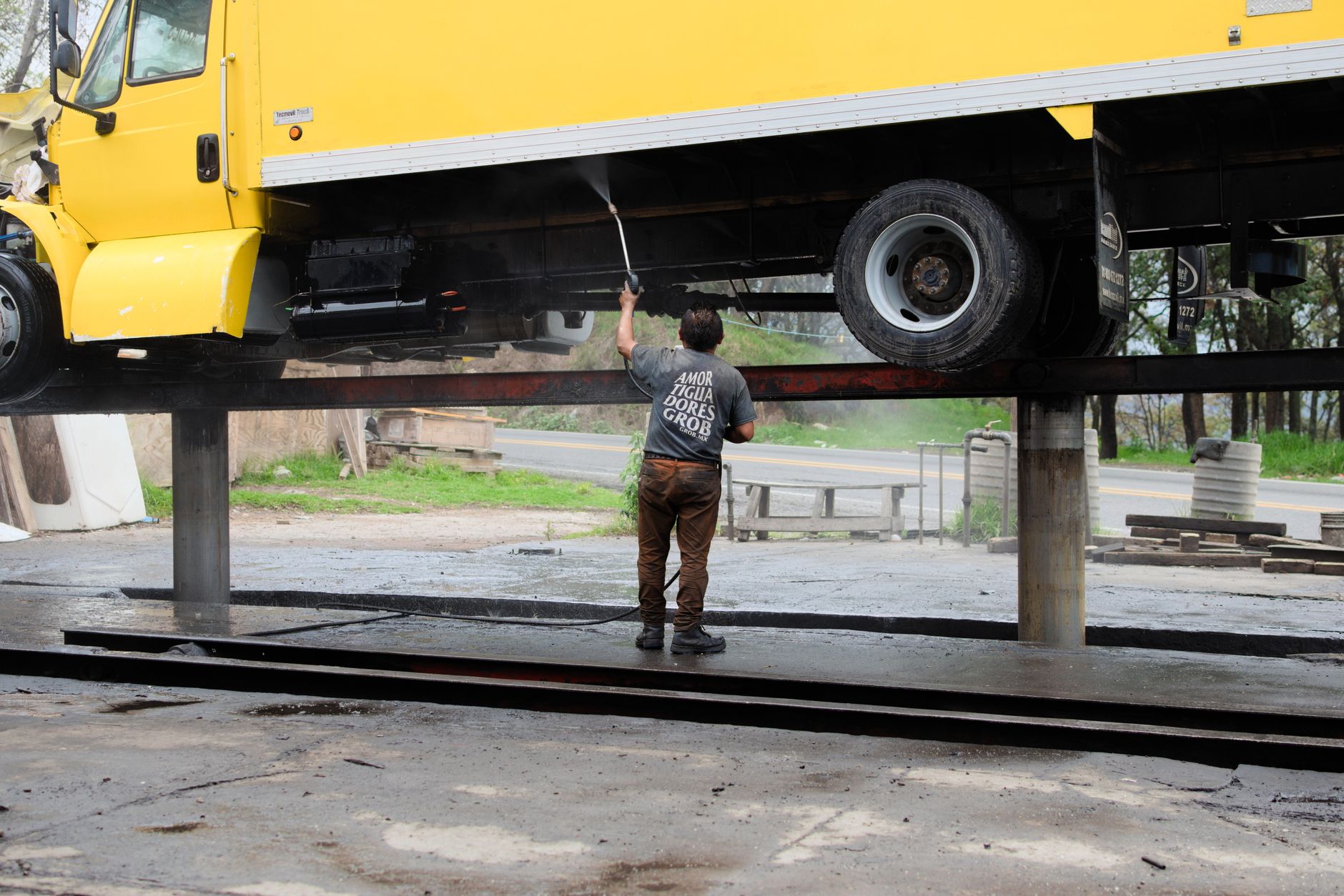
Heavy equipment, one fixed bay and water to account for
Heavy equipment comes back from the workings carrying a lot of material, and it has to be clean before inspection or maintenance can begin. At this operation that job was handled at a fixed wash bay by a manual crew. The manual process took four employees about 4.5 hours per truck, which tied up a sizable share of the crew's day.
Water was the other pressure. Every vehicle washed at the bay uses water, so the operation had to think about how much it drew and what happened to the wash water afterward. For a site that treats water stewardship as part of its operating case, that question sits beside throughput rather than behind it.
- Four employees on the manual wash process
- About 4.5 hours per truck before the robot
- Wash water to account for on every vehicle washed
Keeping the wash at one fixed bay and moving it to a robot
The operation kept the wash at its existing fixed bay and put a robotic vehicle washer in place of the manual crew. A fixed station keeps the robot working in a known space, and every truck passes through the same station.
Water handling was set up so that most of the wash water came back into use. That reuse, about 80%, is the figure the study leads with, and it is what turns a washing line into a water stewardship result.
- Keep the fixed wash bay as the single station for heavy equipment
- Replace the four employee manual process with the robotic washer
- Capture and reuse wash water across the bay's washes
Water and washing time against the manual baseline
Washing time dropped from about 4.5 hours per truck to about 1.7 hours per truck, and the robotic washer completes a wash in under two hours. Across a fleet that cycles through one bay, that gap adds up quickly and returns crew time to other work.
About 80% of the wash water is reused, and the study reports annual water savings of 36,793 cubic meters. For a site under pressure to show water stewardship as well as output, those are the numbers that carry the most weight.
The project's own economic evaluation put the internal return at 18%, with payback around five years. Those figures depend on the local fleet, water handling and bay layout, so read them as one site's result rather than a forecast for another bay.
What a fixed wash bay asks of a robot partner
Service Robot Co. is an OEM neutral commercial robot integrator for US businesses. We select the right robot across manufacturers, arrange commercial robot leasing through financing, deploy and integrate it, train the crew and service it through a nationwide US engineer network. One partner, one number, for the whole lifecycle.
For a fixed wash bay, the work starts with a site assessment. We map the bay, the water handling, the vehicle path and the crew's current routine, then quote a three year lease after that assessment. Robot lease options for a site like this should be judged on the site itself, not on a brochure.
Once the washer is running, go live support and on site dispatch keep it working. The study is one operation's result. Our job is to find out what your own bay can do, and to say so plainly before any lease is agreed.
Frequently asked questions
Want a robot working for you?
Tell us the job and the site. We will recommend the robot, quote the lease, and keep it serviced.