
a large family-dining restaurant chain in Japan where servers spent most of each shift on delivery and bussing
How a Restaurant Chain Lifted Plate Runs to 300 per Shift With Delivery Robots
Chain restaurant case study: robot-assisted shifts reached about 300 plates per person-day versus 200 manually, with delivery time rising from 50% to 80% of the shift.
- 300
- Robot plates
- 200
- Manual plates
- 80%
- Robot run time
- $629.95
- Table savings
Based on a documented real-world deployment. Figures are from public reporting; the organization is not named.

Plate runs ate the shift
In a large family-dining chain, servers spent about half of each eight-hour shift on delivery and return trips before automation. That left less time for guest-facing work during peak covers across hundreds of similar dining rooms.
Leadership needed a way to raise plate throughput without adding another runner on every shift. They also wanted comparison charts finance could read when evaluating robot cost per table against rising wage pressure.
- Manual running averaged about two hundred plates per person-day.
- Delivery and bussing consumed about fifty percent of shift time.
- Chain-wide rollout required a repeatable operating model.
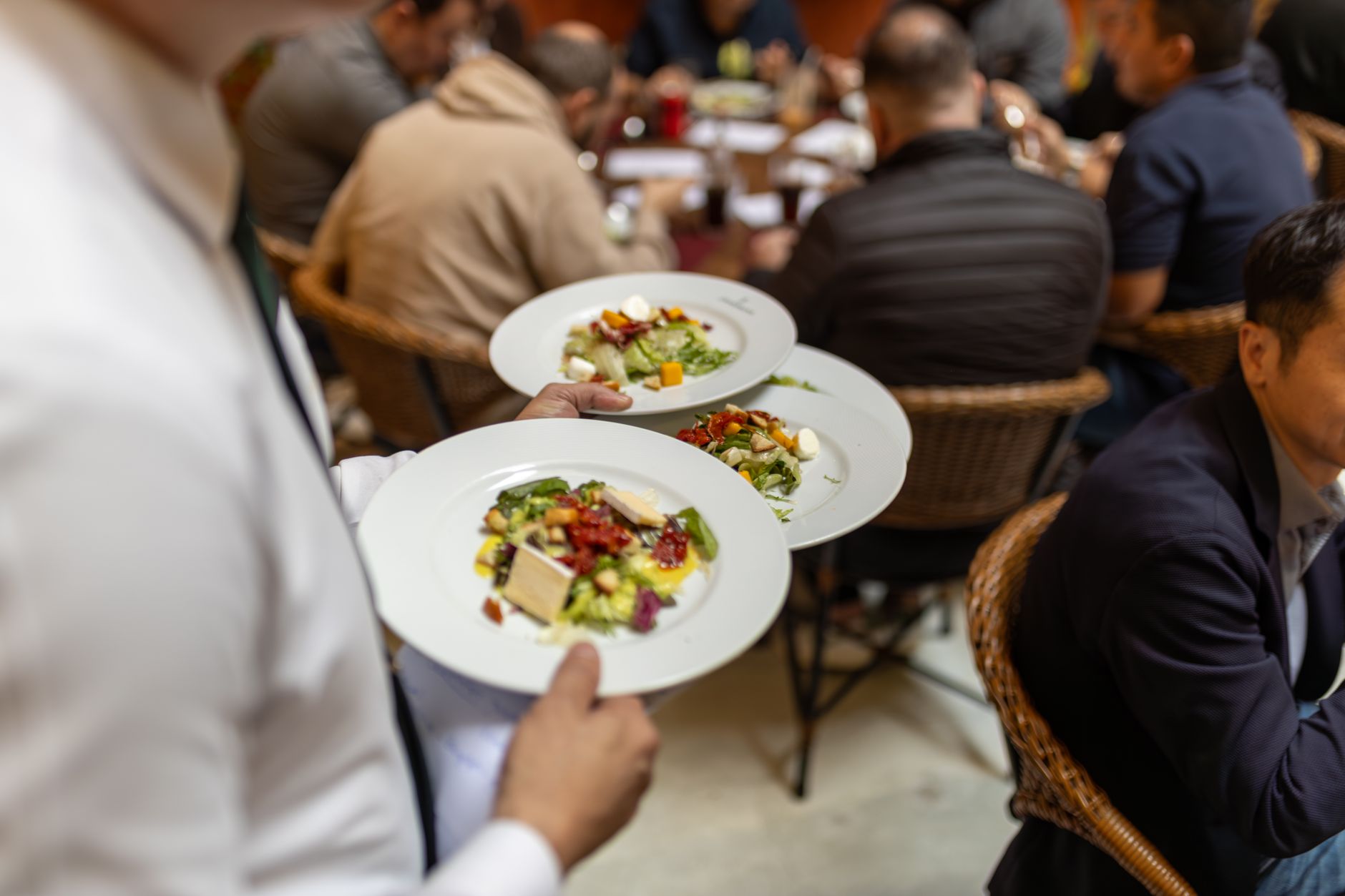
Robot-assisted running at chain scale
The operator introduced delivery robots so runners could stay in motion on mapped paths while hosts handled table service. Brand and staffing models kept robots visible to guests without replacing the hospitality role entirely.
Shift leads compared manual versus robot charts weekly so each dining room could see when plate counts climbed without adding headcount. That discipline mattered because the chain runs many locations with similar floor plans but different peak curves.
- Delivery robots deployed on mapped dining-room loops.
- Eight-hour shift comparisons tracked plate counts per person-day.
- Finance reviewed per-table monthly cost lines against wage assumptions.
- Peak locations piloted before wider chain communication rolled out.
Reported plates and shift-time mix
Published comparison materials show robot-assisted shifts reaching about three hundred plates per person-day versus about two hundred under the manual model. The same charts report delivery and return work rising from about fifty percent of shift time to about eighty percent when robots keep runners moving on loops.
A cost comparison in the source cites roughly 629.95 dollars saved per table-month in the documented scenario, using the manual wage and robot lease assumptions shown in the tables. Treat every figure as reported case math, not a guarantee for every US dining room.
What US operators can borrow
This is a documented Japan chain deployment, not a Service Robot Co. customer story. It still shows how plate-per-shift metrics and shift-time mix change when robots own loops in a repeatable floor plan.
Service Robot Co. helps US restaurant groups compare runner counts, financing paths, and phased rollouts across similar dining rooms. We select OEM-neutral hardware, deploy and train on your aisles, and keep units running through RoboCare after routes are live.