
a technical textile manufacturer operating knitted-fabric production in Spain
How a Textile Mill Relieved 15.6% of Heavy Yarn Loading Work With a Mobile Cobot
CETRIKO’s IFR-documented TIAGo Pro pilot scanned creels, replenished 6 kg yarn cones, cut setup time 45%, and won 100% operator acceptance in live trials.
- 15.6%
- Workload relief
- 100%
- Operator acceptance
- 85%
- Grasp success
- 45%
- Faster setup
Based on a documented real-world deployment. Figures are from public reporting; the organization is not named.
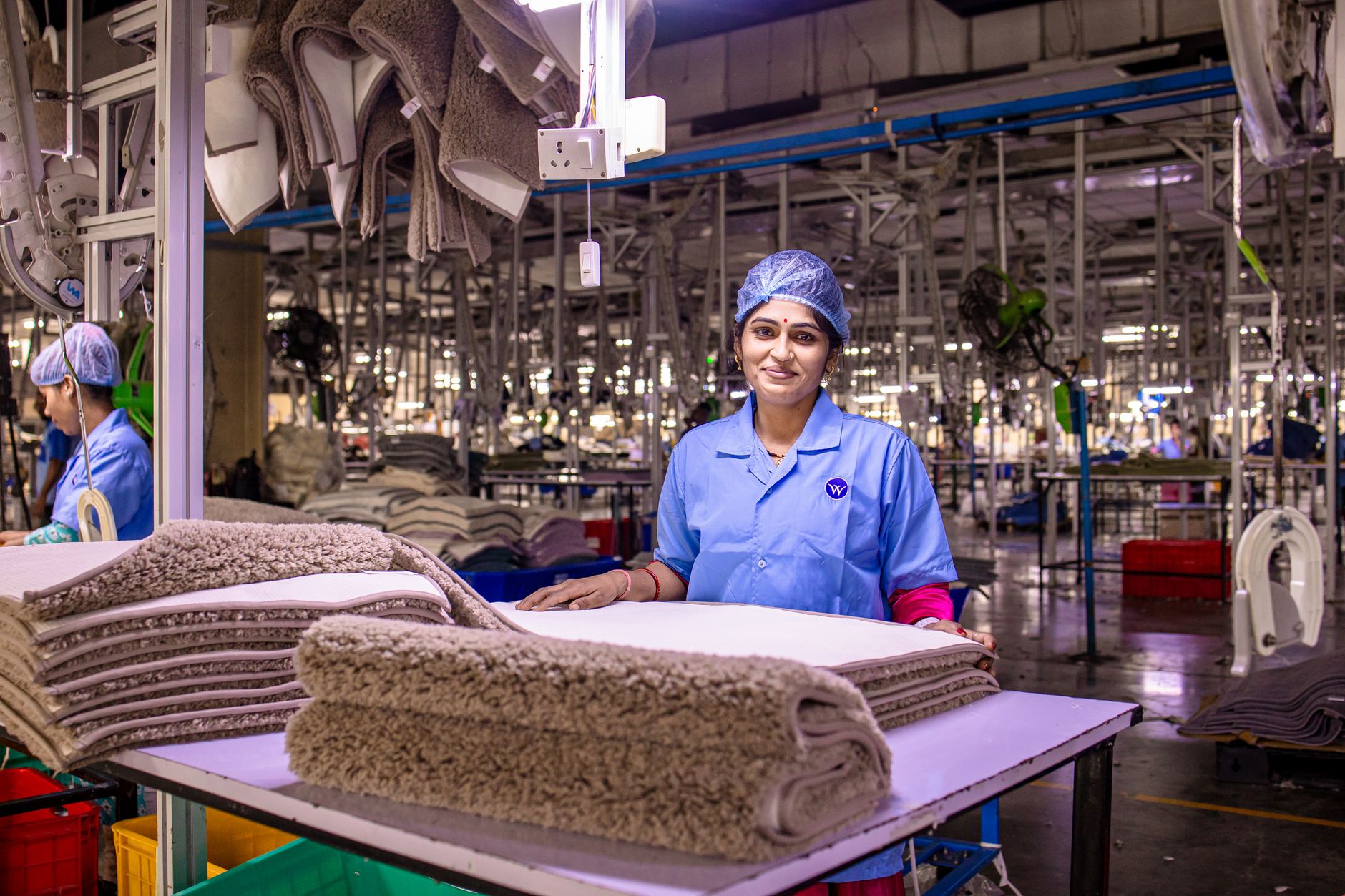
Heavy creel loading wore down skilled operators
This technical textile producer supplies knitted fabrics to automotive, healthcare, and home furnishing customers from two production sites employing on the order of two hundred people.
Loading and unloading yarn cones weighing up to six kilograms into vertical creels reaching two metres high happened hundreds of times per day. The work ran in a noisy, dusty environment with narrow corridors and occasionally slippery floors, creating injury risk and fatigue.
- Lift heavy cones into tall, narrow creel slots
- Keep production flowing in dusty, variable lighting
- Reduce repetitive strain without fencing off people
- Prove value in live production, not a lab only
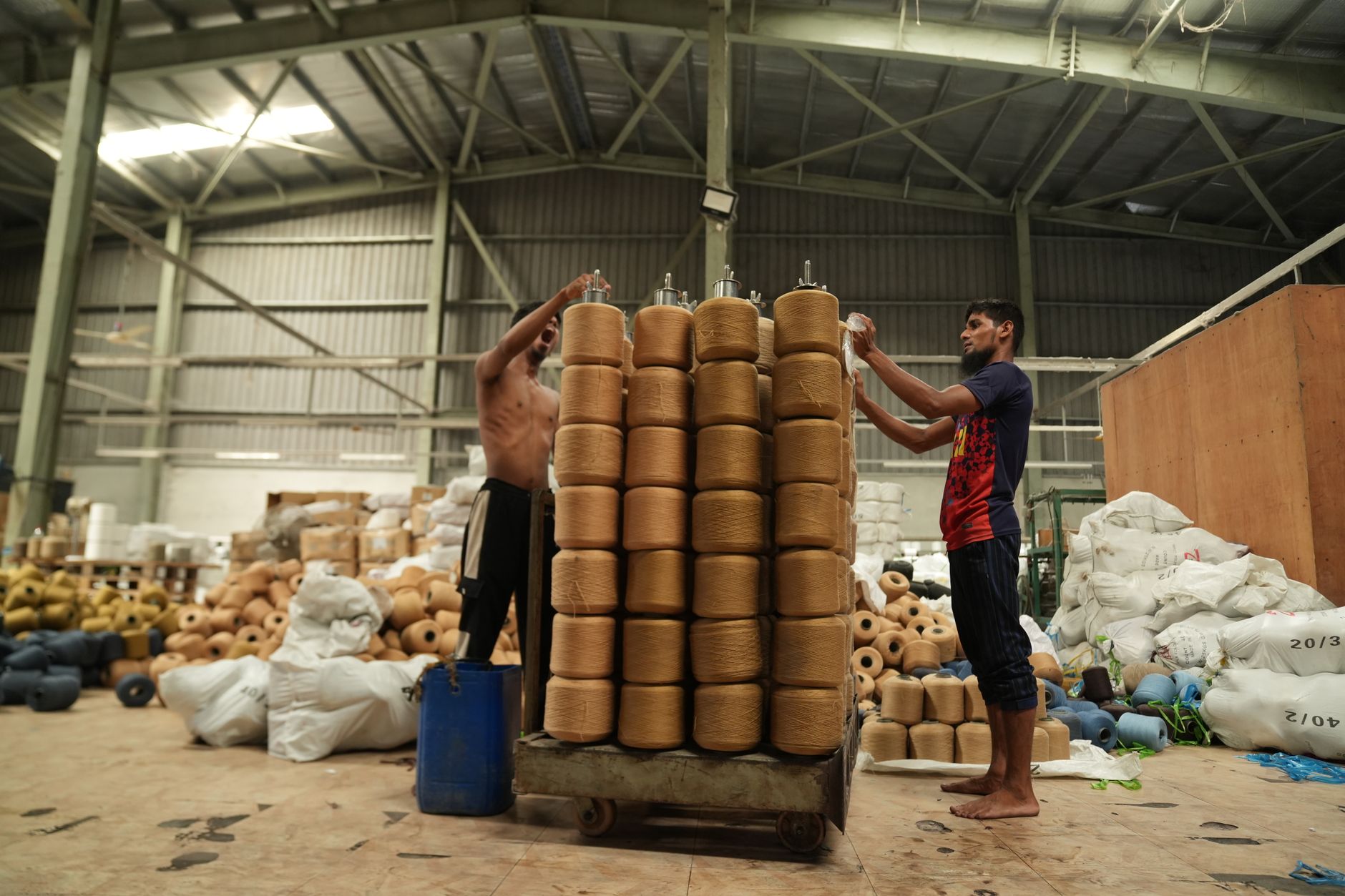
Mobile dual-arm cobot beside creel lines
PAL Robotics deployed its TIAGo Pro mobile manipulator at the site as part of the EU Horizon Europe JARVIS CO-HAND validation pilot. The platform combines an omnidirectional base, dual arms, a lifting torso, and a custom adaptive gripper.
A camera-based perception system scanned creels for empty slots despite variable lighting and dust. The robot picked fresh cones from a supply rack operators prepared and inserted them using force-sensitive control so it could feel its way into narrow vertical openings.
Status cues used an industrial tablet and LED signals instead of voice alerts because machine noise made audio unreliable. Torque sensing and omnidirectional obstacle detection supported immediate reaction to human contact on the floor.
- Train vision on factory imagery for empty creel slots
- Use force-sensitive insertion for narrow vertical targets
- Keep people beside the cell with contact-aware safety
- Start tasks with simplified sequencing versus manual re-teach
- Run structured trials under engineer and operator supervision
Documented trial metrics in live production
Within the controlled CO-HAND trials in the live production environment, all seven operators in the user study said they would use the robot daily, reported as one hundred percent acceptance.
The robot managed thirty of the facility's one hundred ninety-two creel columns autonomously, credited with fifteen point six percent workload relief by removing that share of repetitive heavy lifting and high reaching.
Published figures also cite forty-five percent reduction in setup time through single-button task initiation and automated sequencing versus manually re-teaching coordinates, plus an eighty-five percent grasping success rate for physical extraction and placement.
The IFR account rates the system at Technology Readiness Level seven: validated in real production but still short of unattended full-scale commercial operation across every creel column.

What U.S. floors can take from the pattern
This is a documented EU-funded validation program analyzed by Service Robot Co., not a claimed client win. The transferable idea is mobile manipulation for repetitive, force-sensitive material handling where fixed cells cannot reach varied stations.
Service Robot Co. maps similar intralogistics and light manufacturing needs, then finances, deploys, trains, and services OEM-neutral mobile and collaborative platforms under RoboCare nationwide. A free site assessment checks whether creel-like loading, rack replenishment, or other high-reach tasks fit your layout and safety rules.