
an 18-hole golf club in Essex, England
How a UK Golf Club Cut Fairway Mowing Costs 70% With Six Robots
An 18-hole golf club in Essex deployed six autonomous fairway mowers and reported about 70% lower real-world mowing costs while raising weekly fairway cuts.
- 70%
- Mowing cost down
- 6
- Autonomous units
- 4x/wk
- Fairway cuts
- 18
- Hole layout
Based on a documented real-world deployment. Figures are from public reporting; the organization is not named.

Fairway seat time capped presentation work
The club needed to keep all 18 fairways and first-cut rough at member standards without growing the ride-on fleet every season. Traditional fairway mowing tied skilled staff to long loops while bunkers, approaches, and detail mowing waited.
Leadership wanted more weekly fairway passes without hiding machinery in front of play or adding another driver on every shift. Greens, tees, and bunkers still required crew attention the robots would not take over.
- Fairway labor competed with course-improvement projects
- One to two weekly fairway cuts limited turf quality goals
- Staff time on mowers limited hand work golfers notice
Trial first, then a six-unit fairway fleet
The team ran a two-week autonomous fairway trial, then expanded to six units mapped across fairways and rough. Programming covered bunkers, trees, and water hazards with holds so units could run with minimal supervision.
Public reporting says fairway mowing moved from about one to two passes per week to roughly four weekly cuts once robots owned the width work. Crew leads monitored routes through a mobile app while charging stations were placed around the property.
- Pilot fairway routes before full rollout
- Add units until fairways and rough are covered
- Program no-go zones around hazards
- Shift staff from seat time to detail tasks
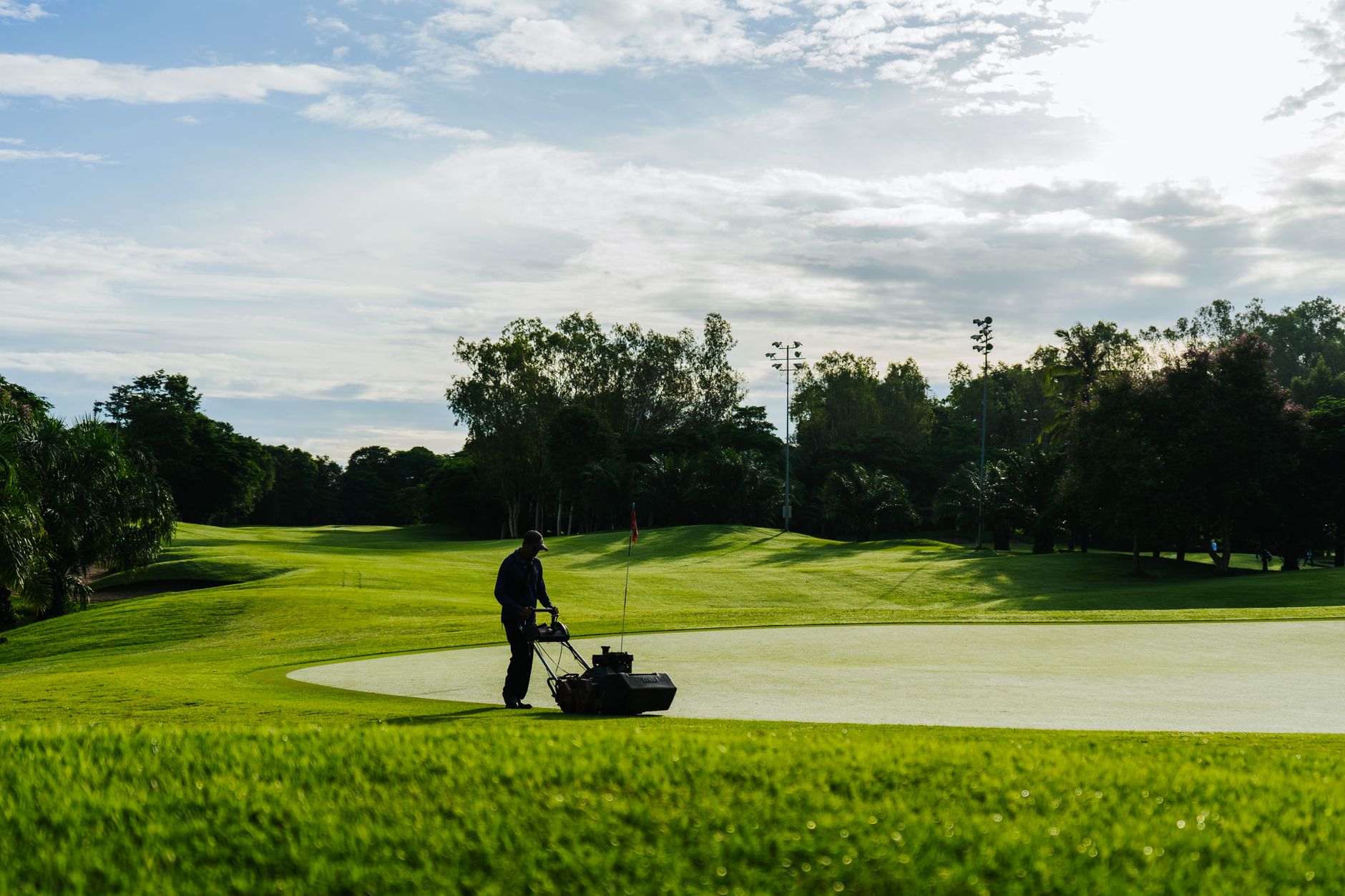
Lower mowing costs and more fairway passes

Management told the published case study that real-world mowing costs were about 70% lower than when the club relied on traditional fairway equipment. That figure reflects fuel, labor, and maintenance differences they tracked after go-live.
Grounds staff were reassigned from fairway and rough loops to course improvement work. Industry coverage of the same deployment also notes the club reaching about four fairway cuts per week without adding drivers.
What U.S. superintendents can take from this pattern
This Essex club did not automate to chase novelty. They bought back fairway seat hours and weekly cut frequency while holding down operating cost. The lesson for U.S. courses is similar: map fairways and rough first, keep greens and tees manual, and measure labor and fuel before and after.
Service Robot Co. is not claiming this deployment. We help U.S. courses evaluate vendor-neutral autonomous fairway options, structure buy or lease financing, map routes around tee times, and support fleets under RoboCare™ after a free site assessment.