
The short answer
The question of autonomous forklift vs forklift operator at a plumbing supply warehouse comes down to repetition and coverage. A robot fits when pallet moves between receiving, racking and the dock repeat on fixed routes and night or thin shifts are hard to staff. A forklift operator fits better when moves are irregular, loads vary a lot, or the layout changes often, and the strongest setup for most sites pairs a robot on repeat routes with fewer people.
Key takeaways
- A robot fits repeat pallet routes between receiving, racking and the dock, not unplanned yard or mixed-load work.
- A forklift operator still handles exceptions, judgment calls and irregular loads that a fixed route cannot.
- Labor data points to hiring and training strain, so a robot can cover thin shifts without replacing the team.
- Public figures for plumbing supply warehouses are scarce, so measure your own move counts before deciding.
- Start with one leased unit on the busiest route, and expand only if your logs support it.
Autonomous forklift vs forklift operator: which makes sense at a plumbing supply warehouse?
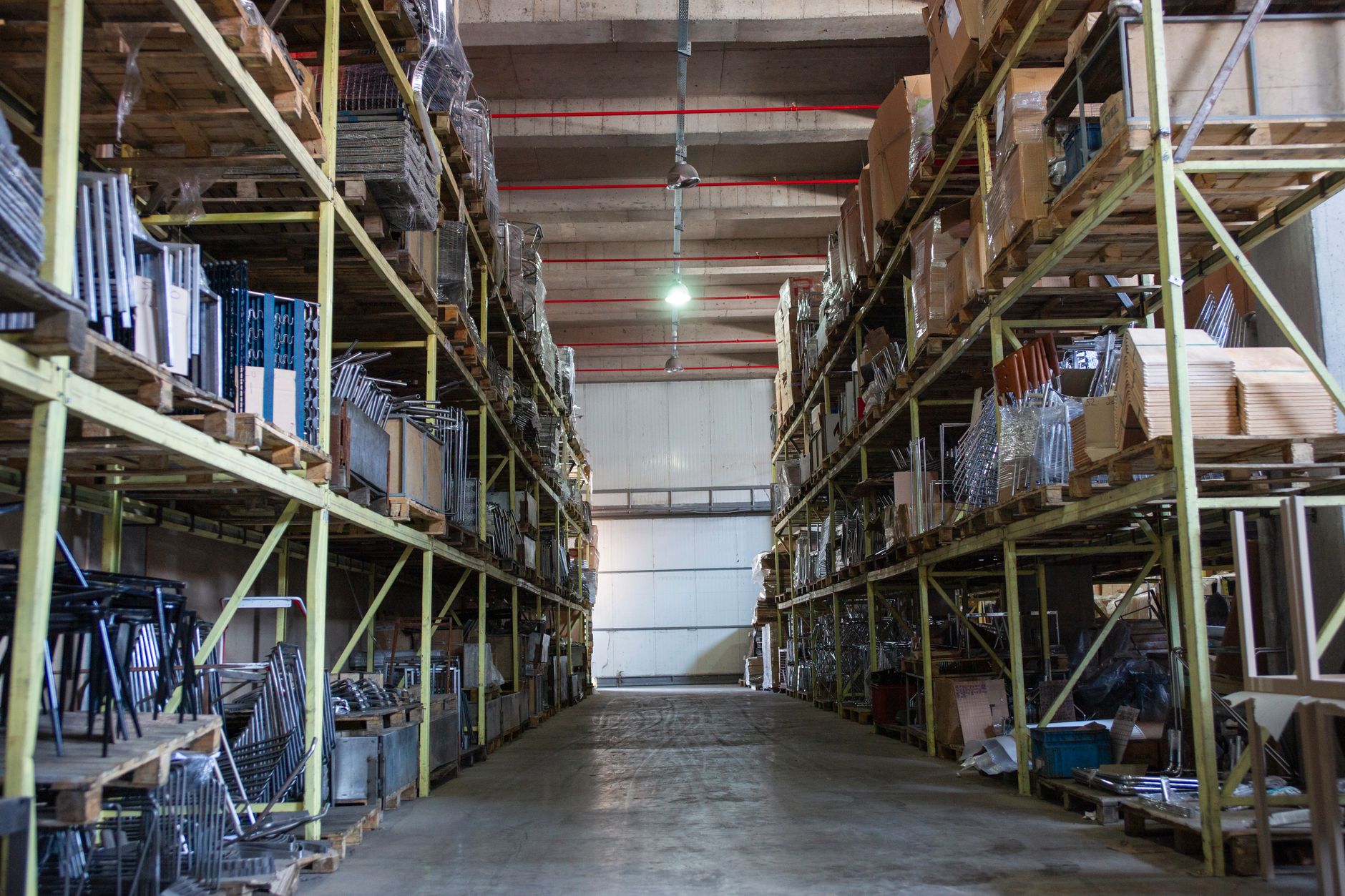
The question of autonomous forklift vs forklift operator at a plumbing supply warehouse comes down to repetition and coverage. A robot fits when pallet moves between receiving, racking and the dock repeat on fixed routes and night or thin shifts are hard to staff. A forklift operator fits better when moves are irregular, loads vary a lot, or the layout changes often.
An industry research report counts 2,475 businesses in the US plumbing and heating supplies wholesaling industry for 2026, though its definitions may not match federal counts. We did not find published staffing, move count or incident figures specific to plumbing supply warehouses, so the figures on this page come from broader warehouse, material moving and forklift sources. Check them against your own logs.
The strongest setup for most sites is a robot running the repeat routes alongside fewer people, not a building with no people. Read the rest of this page as a way to measure your routes before you decide, not as a verdict on the category.
What does a forklift operator actually do in a plumbing supply shift?
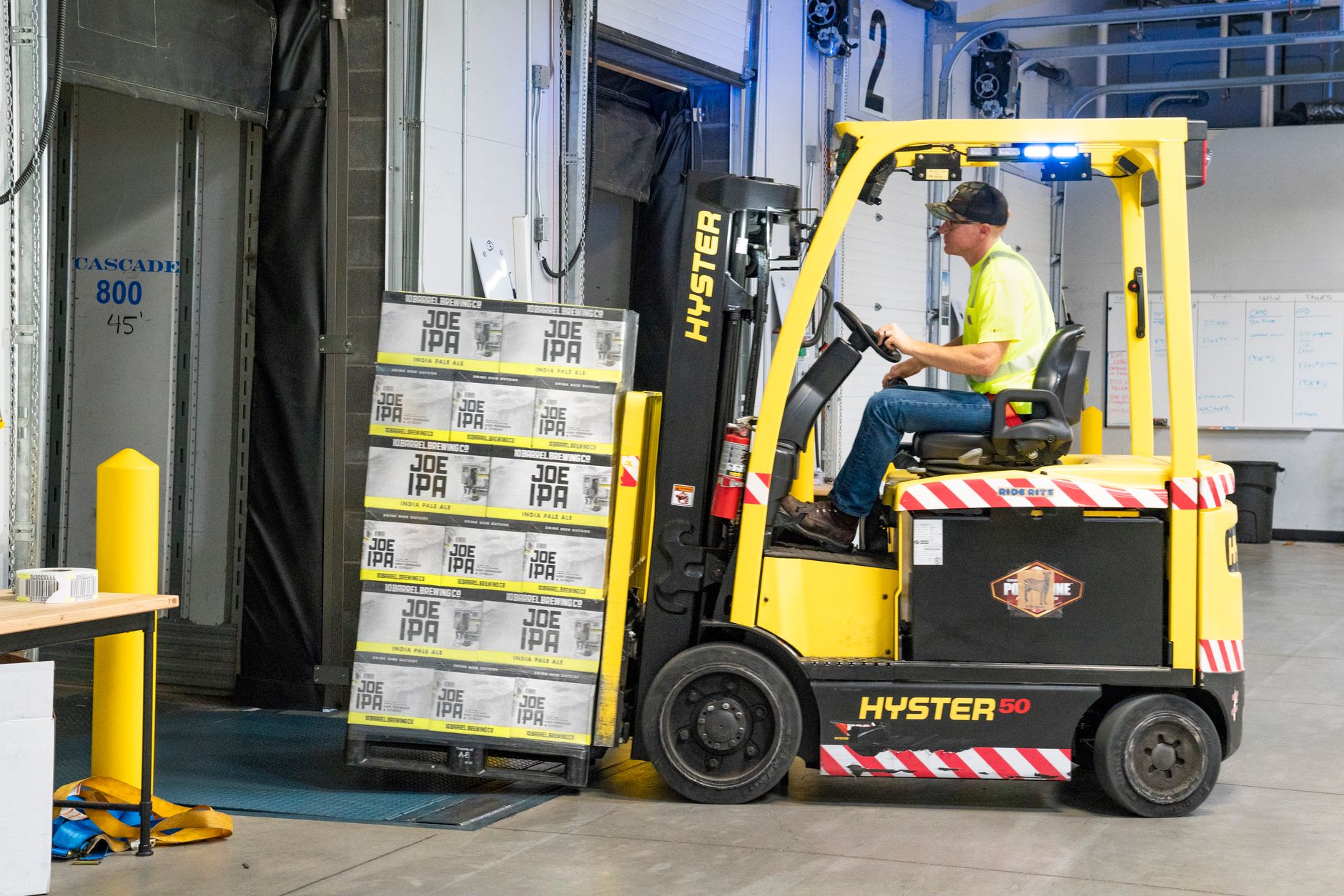
A forklift operator at a plumbing supply warehouse usually covers several jobs, not one. Receiving means taking palletized loads off inbound trucks, checking them against paperwork and moving them to staging or racking. Putaway and replenishment move stock from the dock to pick faces. Outbound work brings pallets to the dock for loading.
Much of the time goes to travel between the same few points: dock, staging, racking and back. The operator also handles interruptions, such as a pallet that will not fit its slot, an early trailer, or a load that has to be moved out of a driver's way. Those interruptions are what make the job hard to script.
Labor data for the broader role is steady rather than growing. The Bureau of Labor Statistics put material moving machine operators at about 867,700 jobs in 2024, and industrial truck and tractor operators at 792,500 of them. Its projection for 2024 to 2034 is about 1% growth, slower than average, with about 83,200 openings a year, mostly replacement demand. In practice, most hiring is about filling people who leave, not adding positions.
Which parts of pallet work can a robot take over?
A robot is best at the parts of the job that repeat exactly: the same pickup point, the same drop point, the same route and the same kind of load. Standard palletized moves between receiving, racking and the dock are the clearest case. Repeat replenishment and outbound staging to a fixed dock lane come close behind.
Judgment stays with people. Reading a damaged label, deciding where an odd-sized pallet belongs, clearing a jam in a live aisle and handling a load that does not match its paperwork all need someone on site. Mixed trailers unloaded in random order also weaken the case for a fixed route, because the robot's value comes from repetition.
The comparison below is meant to be fair. The person wins on flexibility and judgment, and the robot wins on steady repetition across hours when staffing is thin.
- Repeat pallet moves on fixed routes
Autonomous Forklift
Runs the same route on every cycle and holds pace through a long shift.
Forklift Operator
Works steadily, but pace drops over long shifts and breaks are needed.
- Night and thin-shift coverage
Autonomous Forklift
Works through queued moves when no operator is on the floor, within mapped routes.
Forklift Operator
Must be scheduled and available, and open night shifts often need overtime or cover.
- Handling exceptions
Autonomous Forklift
Stops or flags a blocked path or a suspect load, then waits for help.
Forklift Operator
Decides on the spot where an odd pallet goes, clears jams and adapts to a changed plan.
- Mixed or damaged loads
Autonomous Forklift
Weak fit when loads are not standard and labeled as expected.
Forklift Operator
Strong fit. Reads damaged labels, checks paperwork and makes the call.
- Layout changes
Autonomous Forklift
Needs a remapping step before a moved aisle or rack location is used.
Forklift Operator
Adapts the same day after a short briefing from a supervisor.
- Hiring risk
Autonomous Forklift
Routes keep running without filling every open shift.
Forklift Operator
Exposed to turnover and hard-to-fill roles, which the labor data on this page shows are common.
What does a robot shift look like at a plumbing supply site?
A typical day for an autonomous forklift is planned around inbound and outbound windows rather than the clock. Staff load a queue of pallet moves from the warehouse system, the robot runs the routes, and it returns to charge or a staging point between jobs. A person sets priorities and handles the exceptions the robot flags.
The timeline below is one example of an overnight schedule. Your times will depend on when trucks arrive, when the dock closes, how many moves are queued, and how the building is zoned. Treat it as a way to see where people still step in, not as a promise of hours.
What do the hours and labor numbers say about forklift staffing?
Turnover data for warehouse work points to a hiring problem more than a cost one. A 2025 staffing marketplace survey of warehouse labor, which is vendor-reported, found 50% of respondents said staffing was easier in 2025, up from 38% the year before. The same survey named forklift operators among the hardest roles to fill. Survey respondents are not a random sample, so read the trend as direction, not as a measurement.
Most facilities in the same survey reported worker turnover below 10%, while a notable share reported 20% or higher. That spread tells you that your own turnover, and especially your night shift, matters more than an industry average.
Training adds to the strain. The Bureau of Labor Statistics Occupational Requirements Survey, using 2025 data, found on-the-job training required for 94.5% of transportation and material moving workers, and prior work experience required for 21.6%. A new operator takes time to reach full speed, and every replacement resets that clock.
Equipment turnover is a separate number. A May 2024 trade magazine article quotes forklift suppliers putting annual fleet turnover at 35%, 45% or higher. That measures how often fleets are replaced, not how often operators leave, so do not mix the two in your planning.
We did not find published hour figures for how long a pallet move takes at a plumbing supply warehouse, or for night coverage gaps in that setting. The hours table below therefore describes the work without hour numbers. Measure your own move counts and shift hours before deciding.
How does a team work with an autonomous forklift?
The workable model is a robot plus fewer staff, never zero staff. The robot takes the repeat routes, and people handle receiving exceptions, damaged loads, replenishment decisions and anything that needs a judgment call. Fewer people on a shift means the remaining staff spend more time on the work that needs them.
We offer commercial robot leasing through financing for this kind of site. We assess the building first, select the robot that fits the floor and routes, lease it, deploy and integrate it, train the staff, and service it nationwide. The fixed robot lease payment is quoted after a free site assessment, so the number reflects your site rather than a generic plan.
Adoption is common enough that a plumbing supply warehouse is not an outlier. The 2025 Annual Industry Report from the material handling trade association, as covered in trade media, surveyed over 700 supply chain and manufacturing leaders and found 41% of supply chain organizations had adopted robotics and automation, with another 42% planning to within five years. Adoption rates are context, not a case for your site.
What can an autonomous forklift not do?
An autonomous forklift is limited by the layout it can read and the loads it can handle without help. Blocked aisles, floor changes, a pallet placed off its route and a load that catches a fork all need a person to clear or correct. Expect exceptions every shift and plan staff time for them, rather than assuming the robot will manage alone.
Safety needs precision here. OSHA's powered industrial truck standard is among its most-cited, and a safety consultant roundup citing an OSHA estimate reports about 35,000 serious and 62,000 non-serious forklift injuries a year, across about 1.5 million workers operating over 855,900 powered industrial trucks. These are secondary figures and the source gives no date, so treat them as context. Fewer forklift trips near people can help, but the robot still needs pedestrian controls, training and site rules.
It also cannot replace judgment on a damaged load, a mislabeled pallet or a truck whose manifest does not match the load. It can move the pallet once a person has decided where it goes.
How much does it cost to lease, and how do you judge payback?
Cost questions are easiest to answer once the site is measured. The number that matters is the value of the moves the robot takes off a shift, set against the lease, service and the staffing you still need for exceptions. The lease is quoted after a free site assessment, so you can compare it with your overtime and open-shift costs for the same routes.
Payback depends on move count, route repeatability and how often shifts go unfilled. A site with long, steady routes and frequent open night shifts has a stronger case than a site with mixed loads and daytime-only work.
A cautious approach is to start with one leased unit on the busiest route, measure results over several weeks of real shifts, and expand only if the numbers hold. Be skeptical of any payback figure not built from your own logs. The research behind this page did not find plumbing supply payback data, so no general figure should stand in for your own moves.
How do you get started with an autonomous forklift?
Start with the moves. Pull a month of receiving, putaway and outbound logs, count pallet moves by route and by hour, and note which shifts go unfilled. That list shows which routes repeat enough to automate and which still need a person.
Then walk the floor with someone who knows the racking, dock doors and aisle rules. An integrator should compare options and pick the robot for your site, not the one it happens to offer. We handle the site assessment, mapping and go live support, and staff training is part of deployment. Ask for a pilot on one route before committing across the building.
Last, set the staffing rules before go live. Decide who handles exceptions on each shift, how a robot fault gets reported, and what happens when the robot is out for service. That way the team is not improvising on the first bad night.
Frequently asked questions
Want an autonomous forklift at your plumbing supply warehouse?
Tell us about your site. We will recommend the robot, quote the lease, and keep it serviced.
Sources
- Bureau of Labor Statistics, Occupational Outlook Handbook, material moving machine operators
- Bureau of Labor Statistics, Occupational Requirements Survey factsheet, transportation and material moving occupations
- Safety consultant roundup, powered industrial truck statistics
- 2025 State of Warehouse Labor Report, staffing marketplace survey
- Trade magazine article on forklift operator retention, May 2024
- Trade media coverage of the 2025 Annual Industry Report from the material handling trade association
- Industry research report, plumbing and heating supplies wholesaling, 2026