
The short answer
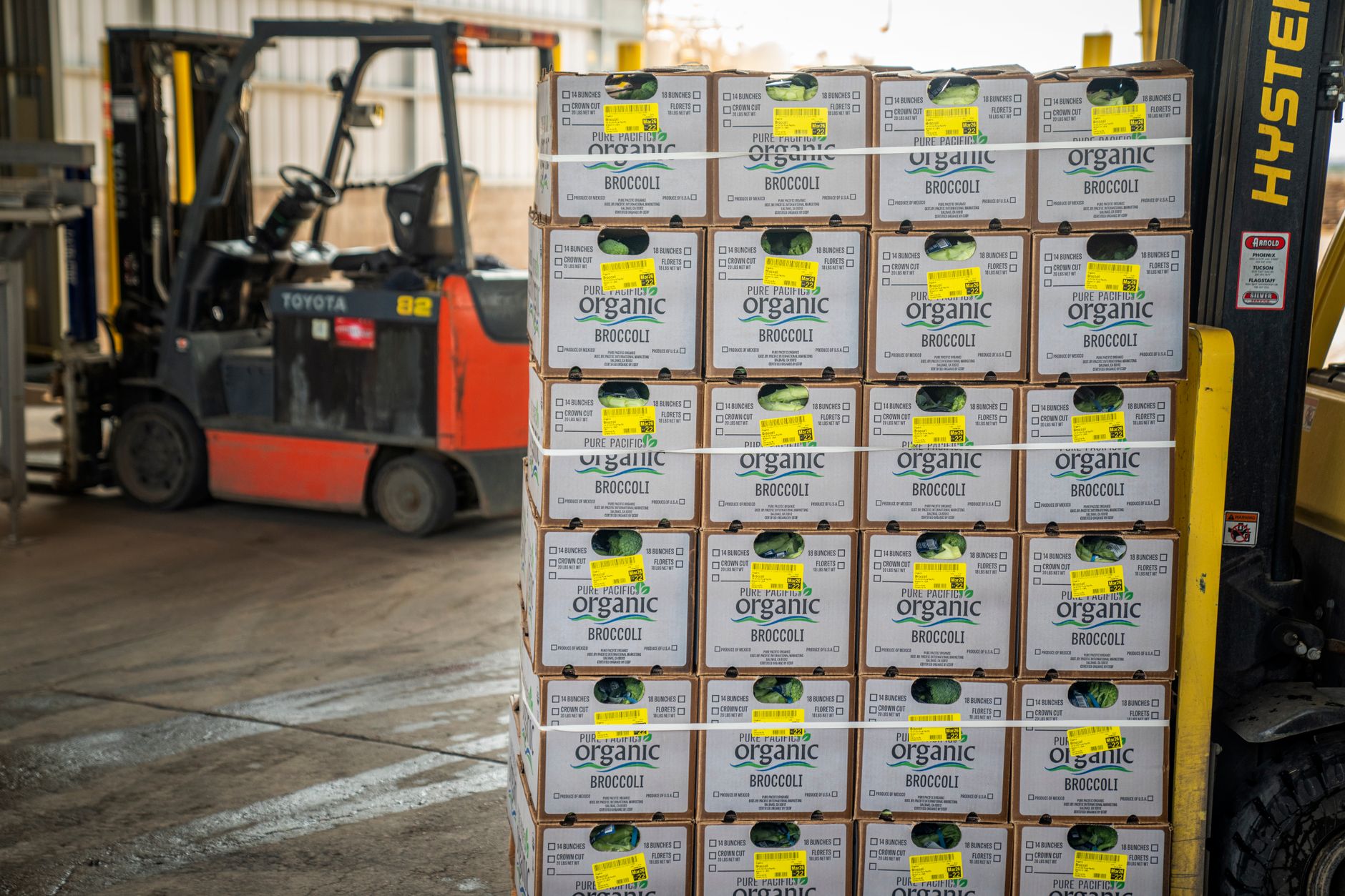
An autonomous forklift vs forklift operator choice favors the robot at a produce distribution center when early-morning cold-chain loads are repeatable dock-to-staging moves on a fixed route and staffing gaps keep those moves from happening on time. It is a poor fit when the work is mostly mixed trailers, damaged or irregular pallets, yard moves, or frequent layout changes. For most produce sites the practical answer is a robot plus fewer staff, with operators kept for exceptions and judgment calls.
Key takeaways
- The robot takes repeatable dock-to-staging pallet moves on a fixed route, while operators keep exceptions and judgment calls.
- Early-morning cold-chain loads are where a missing operator delays the staging lane and the outbound truck behind it.
- Pedestrian separation is the first safety question on a produce dock, so route design matters as much as headcount.
- Measure the early window for several weeks before deciding how much of it a robot should cover.
- The working model is a robot plus fewer staff, never zero staff.
Autonomous forklift vs forklift operator: which makes sense for a produce distribution center?
The robot makes sense for the repeatable part of the early work, and a person stays for everything that changes from one morning to the next. A produce distribution center receives trailers during the night and early morning, and the loads are time sensitive. So the real question is not whether a robot can move a pallet. It is whether enough of the early window follows a route the robot can run every day.
The robot tends to make sense when the site runs a steady stream of dock-to-staging moves, the layout changes slowly, pallet types do not vary much, and there is a real staffing gap in the early window. It tends not to make sense when the dock handles mixed freight, pallets arrive damaged or unlabeled, much of the work happens outdoors, or pallets go to many short and irregular destinations.
In most produce operations the honest answer is a robot plus fewer staff. Zero staff is not a workable plan for cold-chain loading, because someone still has to handle exceptions, clear blockages, and make the calls a robot cannot make.
What does a forklift operator actually do in an early-morning produce shift?
Most of the operator's early shift is not a straight run between two points. It is a series of short decisions. Which trailer door is open, which pallet is ready in the staging lane, whether a stack is stable enough to move, and whether a load belongs in the cold zone or an ambient lane. Operators also reposition pallets, keep pedestrian paths clear at the dock, and flag anything that looks wrong before it reaches the outbound truck.
Early produce loads run on tight windows. Pickers and outbound drivers often wait on the staging lane, so one missing operator delays the lane and the trailer behind it. The operator also absorbs what does not fit the standard, such as a pallet with a shifted load, a pallet that has to be restacked, or a stack that must be broken down after a damaged case is found.
The labor pool is large and not growing quickly. According to the Bureau of Labor Statistics data summarized by a secondary occupational site, about 805,770 people were employed as industrial truck and tractor operators in May 2024. The projection for 2024 to 2034 is about 1.1% growth, with about 76,400 openings a year. A site that depends on a few experienced operators for the early window carries that exposure directly.
- Repeatable dock-to-staging moves
Autonomous Forklift
Runs the same mapped route at the same pace each time.
Forklift Operator
Makes the same move well, but pace varies with the crew on hand.
- Early-window coverage
Autonomous Forklift
Runs on the schedule it is given and does not depend on who calls in sick.
Forklift Operator
Depends on who shows up, and on overtime and sick days.
- Exceptions and damaged pallets
Autonomous Forklift
Stops and waits for a person to decide.
Forklift Operator
Wins. Can judge a shifted load, a damaged case or a mislabeled pallet.
- Pedestrian and blockage response
Autonomous Forklift
Stops until the path clears.
Forklift Operator
Wins. Can talk to a driver, move a pallet and explain the delay.
- Cold zone and cooler entries
Autonomous Forklift
Only where the site assessment has approved the zone.
Forklift Operator
Wins. Can work any zone the site allows.
- Yard and trailer work outside
Autonomous Forklift
Outside the mapped floor, so out of scope.
Forklift Operator
Wins. Handles yard moves and trailer spotting.
- Holiday peaks and night coverage
Autonomous Forklift
Holds the same schedule every day once the route is set.
Forklift Operator
Harder to fill on short notice, which is where the staffing gap comes from.
- Cost to add capacity
Autonomous Forklift
Fixed lease payment set in a quote after a site assessment.
Forklift Operator
Depends on hiring, training and overtime, which vary by site.
Which parts of the early-morning load can an autonomous forklift take?
An autonomous forklift can take the repeatable middle of the load. It moves a standard pallet from a dock position to a staging lane on a mapped route, returns empty pallets to a marked position, and runs the same lane pattern each morning. The move is the one an operator makes, but the robot runs it the same way every time and does not slow down when the crew is short.
The robot does well with work that has a clear start and end, a predictable pallet, and a route that stays put for weeks at a time. The list below sets out the work that usually fits.
The fit depends on the layout. A dock with a clear apron, marked lanes and predictable pallet heights gives the robot a clean path. A crowded apron, where pedestrians cross in front of trailers, or a staging area reorganized each week removes the predictability the robot relies on. That is a route problem first and a labor problem second.
- Standard pallets moved from dock positions to staging lanes on a fixed route
- Returning empty pallets to a marked return position
- Moves between staging lanes that stay on the mapped floor
- Recurring runs at set times tied to the outbound schedule
How many hours and people does early-morning produce loading take?
The sources checked for this page do not publish produce-specific figures on night shift staffing, overtime, turnover or sick days. Treat any hour estimate for your dock as something to measure, not something to copy from a general warehouse number. The useful measure is how many repeatable moves must happen before the first outbound truck leaves, and how often the team falls short of that count.
General warehouse labor data points the same direction. A staffing vendor survey of 600 fulfillment center managers, mostly e-commerce operations and not cold storage, found that 52% ranked finding reliable, quality labor as their top challenge, according to trade news coverage of that survey. The same survey reported that 38% of managers said staffing was easier in 2024, against 50% who said it was easier in 2025.
The labor math is about coverage rather than averages. If the early load needs a fixed number of moves in a fixed window, the question is whether the team can staff that window every day, including sick days and the weeks when shifts go unfilled. A robot does not remove the need for people. It carries part of the fixed load, so the remaining staff are not spread across the whole dock.
How do injury and incident rates change the decision?
The Bureau of Labor Statistics counted 1,391 fatalities in the transportation and material moving group in 2024, down 7.5% from 1,495 in 2023. That group's fatality rate was 12.5 per 100,000 FTEs, down from 13.6. Industrial truck operators are counted in that group, so the figure is directly relevant to a dock.
Across all occupations, the same census counted 5,070 fatal work injuries in 2024, down 4.0% from 5,283 in 2023. Transportation incidents made up 38.2% of all occupational fatalities that year, a reminder that vehicle movement is a major part of workplace risk.
Older OSHA estimates, as summarized by a forklift safety site, put forklift-related deaths at about 85 a year and count about 34,900 serious and 61,800 non-serious injuries. A forklift safety summary of OSHA data reports 78 work-related forklift deaths and 7,290 nonfatal injuries with days away from work in 2020. These are older figures, so read them as context rather than a current rate.
An OSHA Region I directive states that BLS data identifies pedestrians struck by the vehicle as the leading fatal event for lift trucks. For a produce dock, that makes pedestrian separation the first design question. Robot routes help only when lanes, crossings and stop behavior are designed around the people who walk the dock every morning.
How does a produce team work with an autonomous forklift?
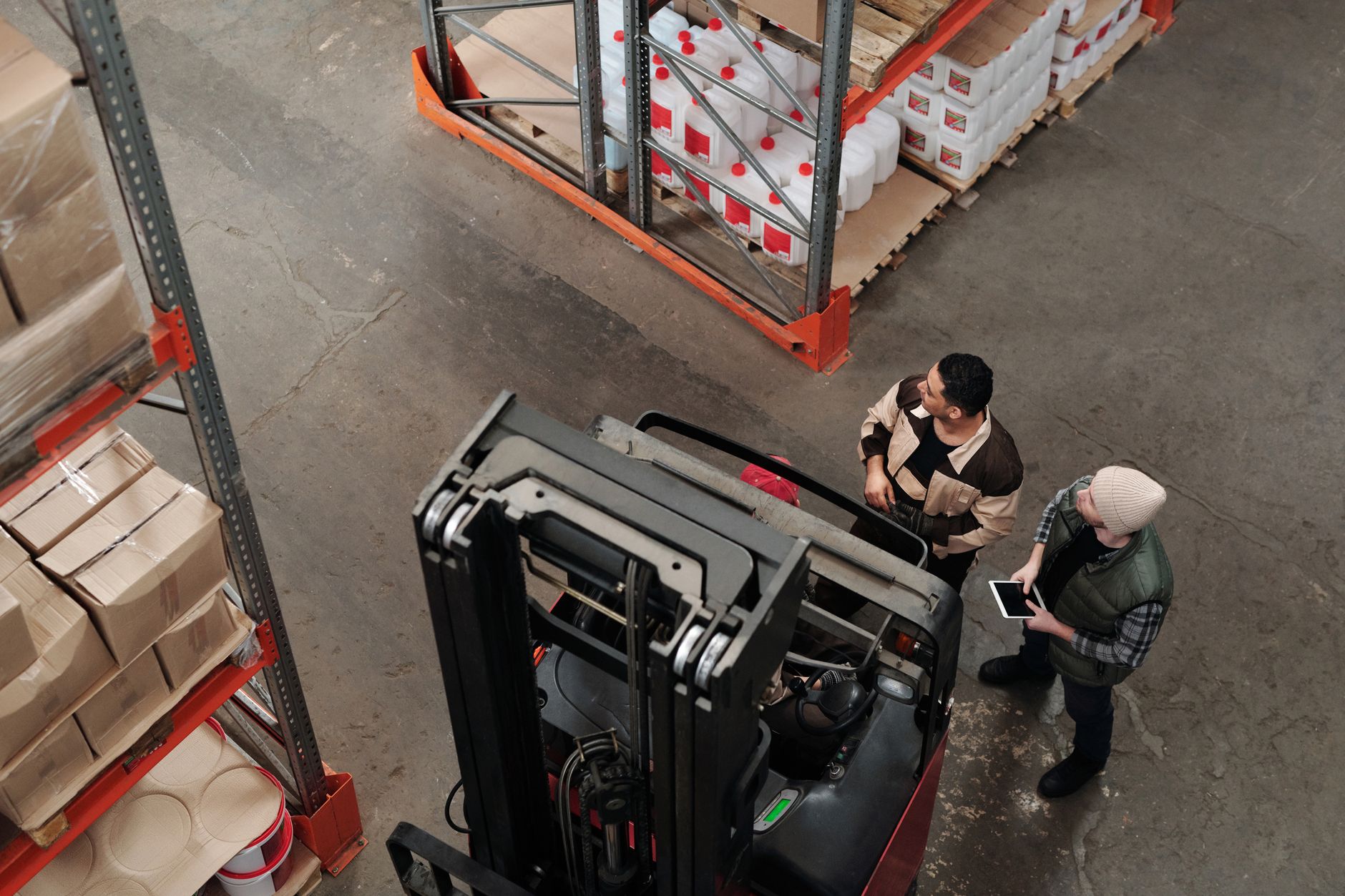
The team is a robot plus fewer staff, and the change is in who does what. The robot takes the repeatable pallet moves on the mapped route. Operators move to exceptions, staging decisions, trailer work, and any cold zone the site has approved for them. The early window stays staffed, just with a different mix of people and equipment.
Staffing changes should come from attrition or reassignment, not from cutting the early shift to zero. In the first weeks, a lead operator and a floor coordinator watch the route, clear blockages, and check the first deliveries against the staging board. Once the route runs cleanly, the coordinator's attention shifts to the exceptions the robot cannot handle.
Training is the part teams most often underestimate. Staff need to know how the robot stops, how to clear it safely, which lanes close while it runs, and who to call when something looks wrong. The people who handled the early load usually know the dock better than anyone, and their input on the route is often what makes the first month work.
What can an autonomous forklift not do in a produce distribution center?
The robot cannot make the judgment calls that keep an early produce load moving. It does not decide that a stack looks unsafe, that a load has shifted in transit, or that a case is damaged and must come off before it reaches staging. Those calls stay with a person, and a robot that waits for one is working as designed.
It is also a poor fit for work that changes every morning. Unloading loose or mixed freight, handling pallets with the wrong height or missing labels, and any task at the dock face where the route is not fixed belong to operators. The robot does its best work on the route it was mapped for, and it does not reason about problems outside that route.
Work outside the mapped floor is outside the job. Yard moves, trailer spotting and anything that leaves the building are out of scope. A robot also depends on the floor it runs on. Spills, debris or a pallet left in the lane stop the route until a person clears it, and the route does not resume until that happens.
What about the cost to lease an autonomous forklift, and does it pay back?
Cost is a fair question, and the honest answer depends on the site. We do not put a number on a page like this, because the lease depends on the route, the number of units, the floor and the service plan. Robots are leased through financing, and the fixed lease payment is set in a quote that follows a free site assessment.
A payback case is built on hours the robot actually covers. Run the autonomous forklift vs forklift operator comparison on hours covered rather than headcount. Count the repeatable moves on the early route, the staffing gaps covered by overtime or temporary help, and the cost of late staging to outbound trucks. Measure those over several weeks at your own dock, then compare them with the quote. A case built on averages from other sites tends to disappoint.
Adoption is still early for warehouses as a whole. A warehouse landlord research summary, as published secondhand, puts full automation at about 3 to 5% of warehouses and reports that nearly 10% of new leases signed incorporate automation. Most sites have not automated fully, which gives a produce operation room to start with one route rather than the whole building.
How do we get started with an autonomous forklift at a produce site?
Start with a site assessment rather than a robot. We map the dock, the staging lanes and the cold zone entries, record the pallet types and the early load window, and identify the route a robot would run. That tells us whether one unit fits the work, or whether the site is better served by keeping operators on the early window for now.
Pilot one route first. A single early route with clear start and end points lets the team learn the stop behavior, the lane closures and the exception handling before the robot covers more of the building. Plan for spare unit coverage on that route, so one fault does not stop the early load.
We pick the right robot for the site, lease it through financing, deploy and integrate it, train the staff and service it nationwide. One partner and one number means the dock team does not chase several vendors when a unit needs attention, and the route plan stays with the people who run the site.
Frequently asked questions
Want an autonomous forklift at your produce distribution center?
Tell us about your site. We will recommend the robot, quote the lease, and keep it serviced.
Sources
- Vantage Insights, NAICS 424480 (citing Census County Business Patterns 2023)
- MetaIntro, forklift driver pay and employment (citing BLS OEWS)
- Supply Chain 247, Instawork warehouse labor shortages report
- BLS Census of Fatal Occupational Injuries, 2024
- SafetyNow, powered industrial trucks and forklift statistics
- Forklift Action, OSHA forklift accident insights
- Prologis, warehouse automation research summary
- OSHA Region I directive on powered industrial truck inspections