
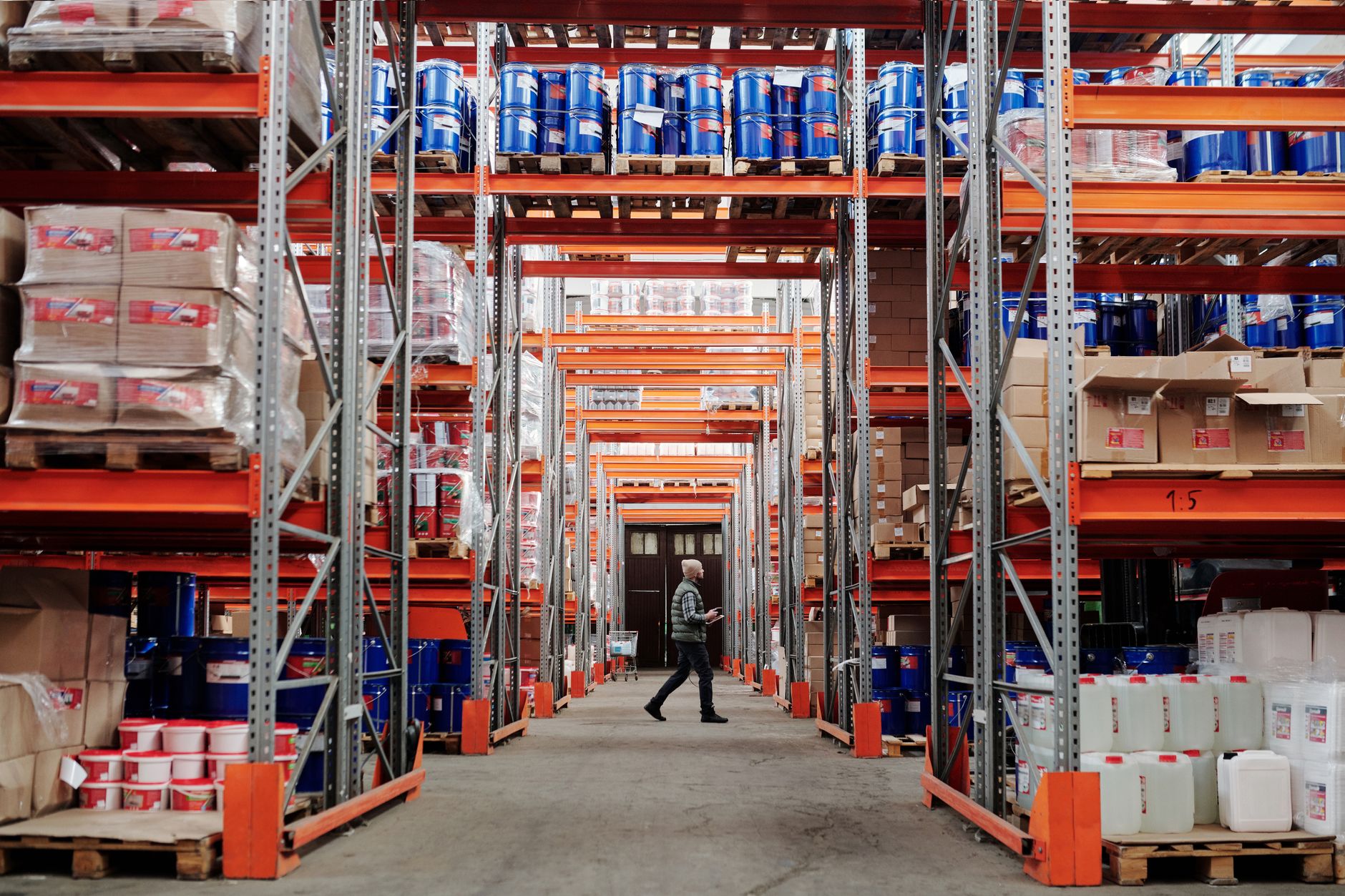
The short answer
An autonomous mobile robot makes sense at a tire manufacturing plant when carts and pallets of components travel the same aisles from storage to the same stations on every shift, so the route can be fixed and checked. A material mover made of people and manual equipment still makes sense for short, irregular runs, loads that need a person to inspect or hand-place them, and areas where the layout changes often. Choosing between an autonomous mobile robot vs material mover comes down to how repeatable the route is and whether the plant can keep components arriving at each station before the line slows.
Key takeaways
- A robot fits repeat carts and pallets on fixed routes, not one-off lifts or loads that need hands on them.
- Tire plant material flow runs from storage to tire building, curing and quality control, and that flow repeats every shift.
- Published data gives plant-level workforce and turnover figures, but not overtime or sick-day rates, so measure your own hours.
- A robot plus fewer staff is the working model, and a plant never runs with zero staff.
- Start with a free site assessment and a one-route pilot, then compare the lease quote against your own hours.
Autonomous mobile robot vs material mover: which makes sense for a tire plant?
The robot earns its place on the trips that repeat. In a tire plant, those trips carry components from storage to building and curing stations, and the same aisles get used on most shifts. A material mover still earns its place on the trips that do not repeat, such as a one-off lift, a rush order, or a job that needs a person to check the goods on the way.
The category is large enough that the question comes up often. A commercial research profile reports 58,253 workers in US tire manufacturing in 2025, with 0.4% growth that year, and gives 60,854 as its 2026 figure. A NAICS listing site counts 481 establishments and 57,520 employees under the broader code 32621, although its definitions differ from the research profile.
The US Tire Manufacturers Association says its 11 member companies run 55 tire-related manufacturing facilities in 16 states. The route, not the region, decides the answer for any one building, so the count of facilities mainly tells you how many plants will face the same routing question.
A robot makes the most sense when the route from storage to a station is the same on most shifts, the plant runs more than one shift, and a late component stops the line rather than slowing it down. It makes less sense when the floor changes often, when most moves are one-off lifts, or when the loads need hands on them before they reach the station.
What does a material mover actually do during a shift?
A material mover at a tire plant takes components from a storage location, loads them onto a cart or pallet, moves them along an aisle, and drops them at a station. Then the mover walks back with an empty cart, checks for the next call, and repeats. Much of the shift goes to walking and waiting between calls, so the route and the call timing matter as much as the lift itself.
The clearest published case shows how heavy the manual version can be. Before automation, staff moved tires by crane and trolley, and a loaded trolley with two tires weighed up to 250 kg (551.1 lb.), according to a tire maker's press release dated November 18, 2025. The same release says workers now focus on machine operation and quality control, which is the division of labor a plant should plan for.
That case comes from a retreading plant in Germany, not a US tire factory, and the release reports its own results. Treat it as a picture of the material flow, not a benchmark for your plant's layout or hours. Only a site assessment can show what a building like yours would need.
Median hourly wage, Laborers and Freight, Stock, and Material Movers, Hand
$4,380
Monthly cost of one full-time worker, at the median wage plus payroll costs (an estimate, not a quote).
- Route repeatability
Autonomous Mobile Robot
Follows the same mapped path on every trip
Material Mover
Adapts when an aisle is blocked, but can drift from the route over time
- Night coverage
Autonomous Mobile Robot
Keeps running through the night if the floor and charging are planned
Material Mover
Needs night staffing, handoffs, and overtime planning
- Heavy or awkward loads
Autonomous Mobile Robot
Carries loads that sit on its deck and fit its rated capacity
Material Mover
Handles odd shapes, crane work, and hand placement
- Reacting to surprises
Autonomous Mobile Robot
Stops, waits, or reroutes if the map allows
Material Mover
Clears a jam, moves a damaged pallet, or takes a rush order
- Adding a new route
Autonomous Mobile Robot
Needs mapping, integration, and testing first
Material Mover
Learns a new route during a shift or two
- Checking the goods
Autonomous Mobile Robot
Moves material but does not inspect it
Material Mover
Catches defects while handling parts
Which components can a robot carry, and which can't it handle?
The robot suits the flow described in that deployment: material moving between a tire-building machine, curing presses, intermediate storage and quality control, along fixed routes. According to the same press release, seven robots run these routes at up to 2 m/s, a speed the company reported itself. The steady part of the flow is the part a fleet can take.
Robots handle carts and pallets that sit on a standard load surface and fit within the rated capacity of the unit. Good candidates include the following.
- Carts of components moving from storage to a fixed feed point on a repeat route
- Empty carts returning to a staging area after each delivery
- Intermediate storage moves between two fixed stations
- Pallets moving between storage and a quality control checkpoint on a mapped path
How many hours and people does material movement take at a tire plant?
Published data does not give a clean count of the hours a tire plant spends moving components. We did not verify figures for shift patterns, overtime, sick days, or staffing per shift for this job, so this page does not estimate them. The plant's own time study or labor records will give a better count than any industry average, and that count should drive the decision.
What we did verify is the turnover picture for manufacturing overall. According to a secondary summary of BLS JOLTS data, the manufacturing quits rate for 2025 was 1.4% a month, down from 2.4% in 2021, while the all-industry quits rate for 2025 was 2.0% a month. A lower quits rate means fewer open slots to refill across a year, but it does not show how many people are on a given shift or how often they are pulled off the line.
The government wage data on this page gives the local wage for this job. Pair it with the plant's own hours to size the labor cost of moves, rather than relying on a national average. The official BLS industry turnover table is the source to cite in an internal review, since the summary above is secondary.
The workforce pool also varies by state. According to a Data USA profile of tire manufacturing, the three states with the largest tire manufacturing workforce in 2024 were South Carolina (14.5k), North Carolina (6.85k) and Tennessee (6.82k). A plant recruiting in those states can read its local pool against the job's shift needs.
How does a team work with a robot, and how many people stay?
The robot does not replace the whole crew. A well-run setup keeps people in the building, but moves them off the walking routes and onto the work that needs a person: loading odd loads, clearing jams, checking material at the station, and watching the fleet. Never plan for zero staff. A fleet still needs someone to load carts, approve routes, respond when a unit stops, and handle exceptions no route can predict.
The staff split starts with the shifts already in place. If the plant runs a night crew, the robot can keep carts moving through that shift while the people on it cover exceptions and handoffs. Any reduction in headcount should come from fewer walking hours on the same crew, and it should be measured after go-live, not promised before the first trip.
Train two or three people per shift to recover a stopped unit, reload a cart, and call the service line. Keep a written map of the robot's routes at each station so a new hire can see where it goes and why. The timeline below is an illustrative two-shift plan, not measured data.
What can't an autonomous mobile robot do at a tire plant?
A robot cannot fix a route problem on its own. If an aisle is blocked, a pallet sits outside the mapped path, or the floor changes without a re-map, the unit stops or takes a longer path until a person steps in. The stop is safe, but it still costs time, and a fleet with no one watching it can leave stations waiting.
It cannot judge the material. A robot does not see a split wrapper, a wrong cart tag, or a component that is out of spec unless a separate check catches it. The deployment in that press release pairs robots with quality control rather than replacing it, and that is the right pattern for a tire plant.
It cannot run well on a floor that is not ready. Congested aisles, uneven surfaces, and frequent layout changes cut its usefulness. Mapping and integration take time before the first trip, and the first weeks after go-live usually bring route tuning. Plan for that instead of hoping the first run is clean.
Finally, it does not remove the planning work. Someone still decides station call times, fleet size, which carts go where, and when a route changes. Those decisions belong close to the plant's own engineers and shift leads.
How do you decide, and what should you check first?
Start with the route and the flow, not the robot. Map the aisles, count the trips that repeat, and note the loads that do not fit a standard deck. A decision built on those three things is more useful than any industry figure, including the ones on this page.
Check the items below before you commit to a fleet size. Each one changes whether a robot fits the building or whether a person should keep the route.
How do you get started with a robot at a tire plant?
Start with a free site assessment. We map the aisles, measure the trips, identify the loads and the stations they feed, and recommend a fleet size and route plan. The lease payment is quoted after that assessment as a fixed robot lease payment for the term, so the plant can compare it against its own hours before signing.
Run a pilot on one route before scaling. A single route with a clear start, a clear end, and a fixed list of stations gives the plant real data on hours moved, stoppages, and staff time. Once that route runs cleanly, adding units and routes is a much smaller step.
Plan the go-live with the shift leads. Schedule training for every shift, confirm the backup plan for a stopped unit, and keep the manual route on paper until the new route has run through a full production cycle.
Where do integration, training and service fit in?
We are a US commercial robot integrator. We pick the right robot for the site, lease it through financing, deploy and integrate it, train the staff, and service it nationwide. For a tire plant, that means one partner handles the route map, the link to station calls, the training, and the response when a unit stops.
Adoption data shows where the market is moving. According to A3 data as reported by a robotics trade publication, North American companies ordered 36,766 robots in 2025, up 6.6% in units from 2024, and revenue rose 10.1%. Collaborative robot orders totaled 7,212 units in 2025, about 19.6% of all orders, and non-automotive sectors were 59% of robots ordered in Q3 2025.
Those figures show demand across industries, not what any one plant will save. Ask for the quote after the site assessment, and check how it covers maintenance, spare units, and response times, since those decide whether the lease holds up through the term.

Frequently asked questions
Want a warehouse robot at your tire manufacturing plant?
Tell us about your site. We will recommend the robot, quote the lease, and keep it serviced.
Sources
- US Bureau of Labor Statistics, Occupational Employment and Wage Statistics (OEWS May 2024)
- Commercial research profile, US tire manufacturing employment (2025 and 2026 figures)
- NAICS 32621 industry listing site
- US Tire Manufacturers Association
- Data USA tire manufacturing profile
- Tire maker press release, GlobeNewswire, November 18, 2025
- Trade publication coverage of A3 North American robot orders
- Secondary summary of BLS JOLTS turnover data
- Trade coverage of tire plant AMR deployment