
The short answer
Autonomous mobile robot cost for tire manufacturing plants depends on how many fixed routes the robot runs, how long those routes are, how many shifts it covers, how much forklift and pedestrian traffic shares the aisles, and how much mapping and plant integration the site needs. Fleet size and service coverage also move the lease quote. No two plants share the same layout, so the fixed robot lease payment is set only after a free site assessment.
Key takeaways
- Route count, route length and shift coverage move the cost more than any single feature of the robot.
- Shared aisles with forklifts and pedestrians add mapping, marking and scheduling work before the first trip.
- Hidden costs sit in mapping, software, maintenance, insurance and training, so ask which of them the quote includes.
- Published data does not give shift hours for tire plant moves, so the site assessment measures them on your floor.
- A lease quote comes after a free site assessment, and it states the payment, the term and what is included.
What does autonomous mobile robot cost for tire manufacturing plants depend on?
The cost of an autonomous mobile robot in a tire plant is not a single number. It is the sum of what the site asks the robot to do: how many moves it makes per shift, how far each move travels, which aisles it shares with forklifts and people, and how much work it takes to keep the robot's map matched to the plant floor.
Our lease quote is built from that sum. We look at the routes between mixing, building and curing, the fleet size, the shift pattern and the service level, then state a fixed robot lease payment that runs through financing. The quote is written after the site visit, so the numbers reflect your floor rather than an average plant.
Plant teams that ask for a figure before a visit usually get a list of questions instead. That is deliberate. A quote built on guesses about aisles and trip counts tends to move after installation, which is why we measure first.
Which factors move the lease quote at a tire plant?
Route count and route length come first. A robot that runs three fixed loops between two buildings is a separate job from one that serves every curing press in a bay. Each added stop adds mapping, test runs and scheduling work, and longer runs need charging planned around them.
Traffic is the second factor. When forklifts and pedestrians share aisles, the robot has to slow, stop and wait, and the route has to be planned around the busiest hours. The busier the aisles, the more the site needs fixed zones, marked crossings and clear rules the robot can follow.
Floor condition and size matter too. Uneven, wet or heavily marked surfaces affect wheel grip and sensor reading, so a floor check is part of the visit. Public data does not report shift patterns for tire plants, so we ask each site for its own, and a robot that covers more shifts spreads its fixed costs over more moves.
Integration, fleet size and service level round out the picture. Connecting the robot to plant scheduling or warehouse systems takes engineering time. A larger fleet spreads shared training and service effort across more units, and a service plan that includes spare unit coverage changes the quote more than most teams expect.
How many tire plants are there in the US and how large are they?
According to Census County Business Patterns for 2023, as reported by an industry data aggregator (a secondary source), the US tire manufacturing industry, excluding retreading, had 128 establishments and 52,211 employees. Another aggregator lists 131 establishments and 51,236 people, with no year given, so the 2023 figures are the ones to use.
Plant footprints are large. A tire maker's FY2025 annual report filed with the SEC lists 49 manufacturing facilities worldwide, 16 of them in the United States, and gives no square footage per plant. That means the floor area of any one plant has to come from a site walk, not from a filing.
Expansion projects show how big a single tire plant can get. A company announcement for a truck and bus radial plant in Tennessee, reported by Fleet Equipment magazine, takes the footprint from about 1.97 million to more than 2.8 million square feet, and raises employment from 1,100 to more than 1,400. The research for this page did not find published floor areas for mixing rooms, building rooms or curing bays.
Why do fixed routes between mixing, building and curing suit robots?
Tire production moves material along a sequence. Compounds and components go from mixing to building, then to curing, with intermediate storage and quality checks along the way. Those moves repeat along the same paths, which is the kind of repetitive transport that a fleet of AMRs is built to run.
A European tire maker's retreading plant in Hanover, Germany, began moving green tires with seven AMRs in March 2025, according to the company's own press release. The release describes staff being freed for machine setup and quality control. It does not publish cycle times or savings, so no performance figures from it appear on this page.
Labor is tight in the sector. According to the Bureau of Labor Statistics job openings data reported by Manufacturing Dive, manufacturing had about 495,000 job openings in January 2026, up about 11% from a year earlier. The FRED series for manufacturing openings shows a rate of 3.3 for December 2025.
Hiring pressure is one reason plants look at repetitive transport automation, but it does not set the cost. The routes do.
How does robot leasing through financing work for a plant?
Leasing through financing lets a plant run the robot without paying for the whole unit up front. You make a fixed robot lease payment over the lease term, which keeps the budget steady and avoids a large capital request in a single year.
The quote includes what the site needs: the robot or robots, deployment and integration, operator training, the maintenance terms of the service plan, and the lease terms themselves. Read every line. Items that are not included, such as extra mapping after a layout change, should be named in the quote so they are not a surprise later.
No upfront capital is the main reason plants start with one leased unit, run a phased deployment in one zone, and expand once the first route proves itself. A phased deployment does not require shutting down the plant.
Our service plan covers maintenance, on-site dispatch and remote triage, and the quote states whether spare unit coverage applies to your site.
What do labor and safety numbers say about forklifts in plants?
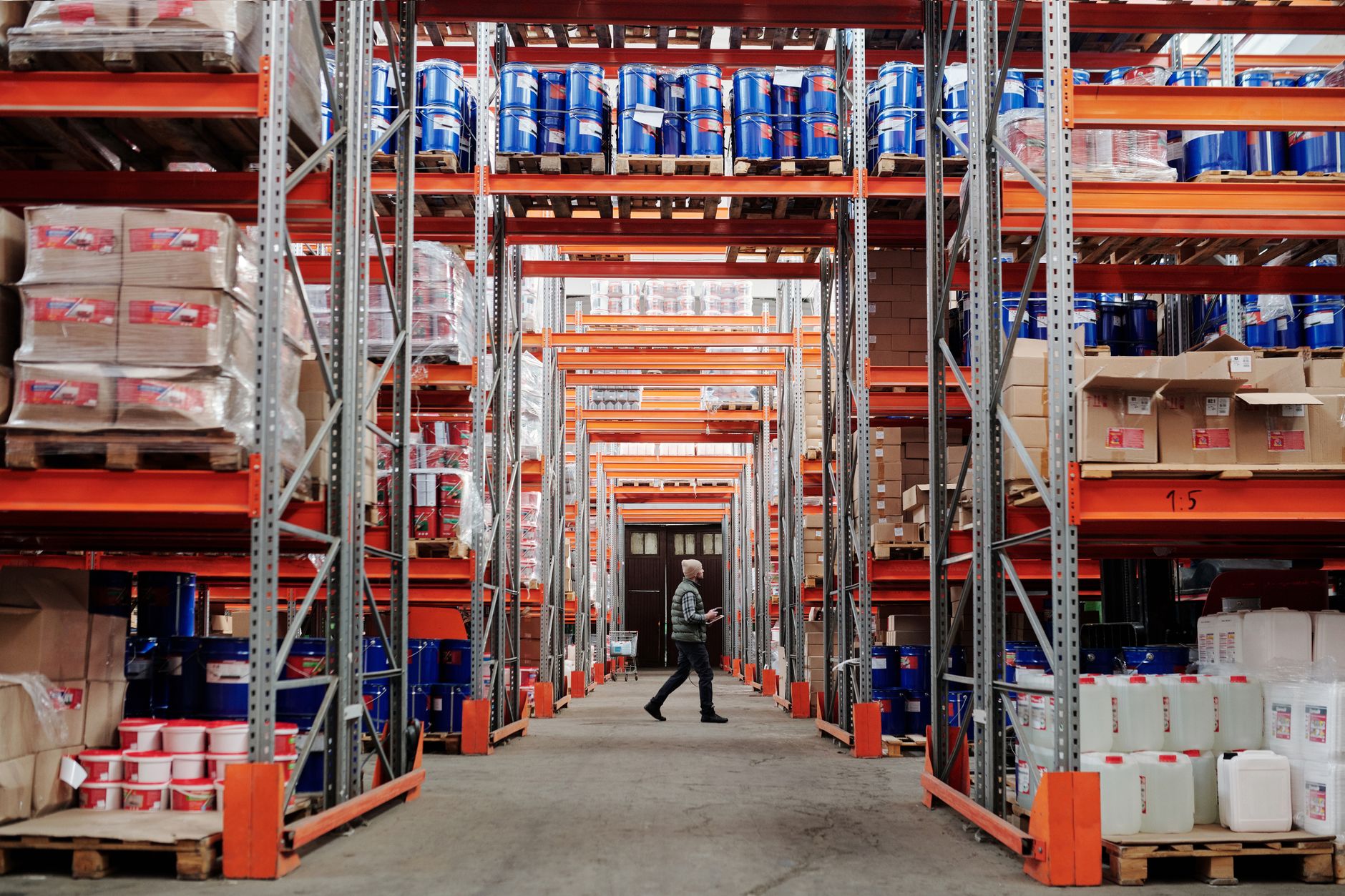
Forklifts are the main safety exposure in a plant that also moves people and pallets. According to the National Safety Council, using Bureau of Labor Statistics data, there were 84 work-related deaths involving forklifts in 2024 across all industries. For 2023 and 2024 combined, there were 25,110 nonfatal DART cases, 15,460 of them days away from work.
Those are all-industry figures, not tire plant numbers. The research did not find a forklift injury rate specific to manufacturing, so do not read these totals as a plant's rate. The useful point for a plant team is that every trip moved off a shared aisle is one less forklift and pedestrian interaction.
Adoption is growing too. According to the Association for Advancing Automation (A3), North American robot orders rose 6.6% in 2025, and collaborative robot orders reached 7,212 units, or 19.6% of units ordered. A3 did not publish a separate AMR or warehouse breakdown in the figures reviewed, so no AMR share is stated here.
What can a robot not do in a tire plant?
A robot does not replace a forklift operator on high reach, uneven loads or work that needs a person to judge a load. It runs fixed routes well and stops for obstacles it cannot route around.
It does not clear a blocked aisle, load a press that needs an operator's hands, or adapt to an unplanned layout change until it is remapped. A dropped load or a fault stop still needs staff on site.
Limits depend on the unit and the floor, so the assessment checks each route against them. Confirm the rated operating conditions for any zone near hot equipment or wet areas before the route is approved.
- Work that needs a person to judge a load or reach
- Clearing blocked aisles or unplanned obstacles
- Routes that change without a remap
- Any zone outside the rated operating conditions
How do you get a lease quote for a tire plant robot?
Start with a free site assessment. We walk the routes between mixing, building and curing, log trips and shift patterns, check floor surfaces, and note where forklifts and pedestrians share aisles. The assessment also maps the route plan and confirms the integration points.
The quote follows the assessment. It states the number of units, the lease term and the fixed robot lease payment, what deployment and integration include, what training covers, the service plan, and which hidden costs are covered and which are left to you.
A single leased unit on one route is a common way to start. A phased deployment lets the plant prove the route first and add units when the first one earns its place, without shutting down production.
Frequently asked questions
Want a warehouse robot at your tire manufacturing plant?
Tell us about your site. We will recommend the robot, quote the lease, and keep it serviced.
Sources
- Census County Business Patterns 2023 (via industry data aggregator, secondary)
- SEC annual report, Form 10-K, FY2025
- Fleet Equipment magazine, expansion announcement report
- Manufacturing Dive, BLS JOLTS January 2026 report
- FRED, Federal Reserve Bank of St. Louis, series JTS3000JOR
- National Safety Council, forklift injury facts (based on BLS data)
- Association for Advancing Automation (A3), 2025 robot orders, via Robotics 24/7
- Company press release, AMR deployment at a European retreading plant