
The short answer
For the autonomous mobile robot vs stock associate question, a robot makes sense at a pet supply store when restocking is a repeated, fixed route from the backroom to the sales floor, the aisles are clear, and there are enough trips to justify the route. It does not replace the parts of the job that need a person: opening cases, lifting to high shelves, catching damaged product and helping customers. The best fit is a store that keeps its stock associate and gives the robot the trips that pull that person away from the floor.
Key takeaways
- A robot fits the repeated backroom to floor route, not the whole stock associate job.
- Opening cases, lifting to high shelves, damage calls and customer help stay with people.
- We did not find pet store specific labor data, so measure your own trips and hours first.
- Keep the stock associate and use the robot to free that person's time for the sales floor.
- The lease quote comes after a free site assessment that maps your route and aisles.
Autonomous mobile robot vs stock associate at pet supply stores: which makes sense?
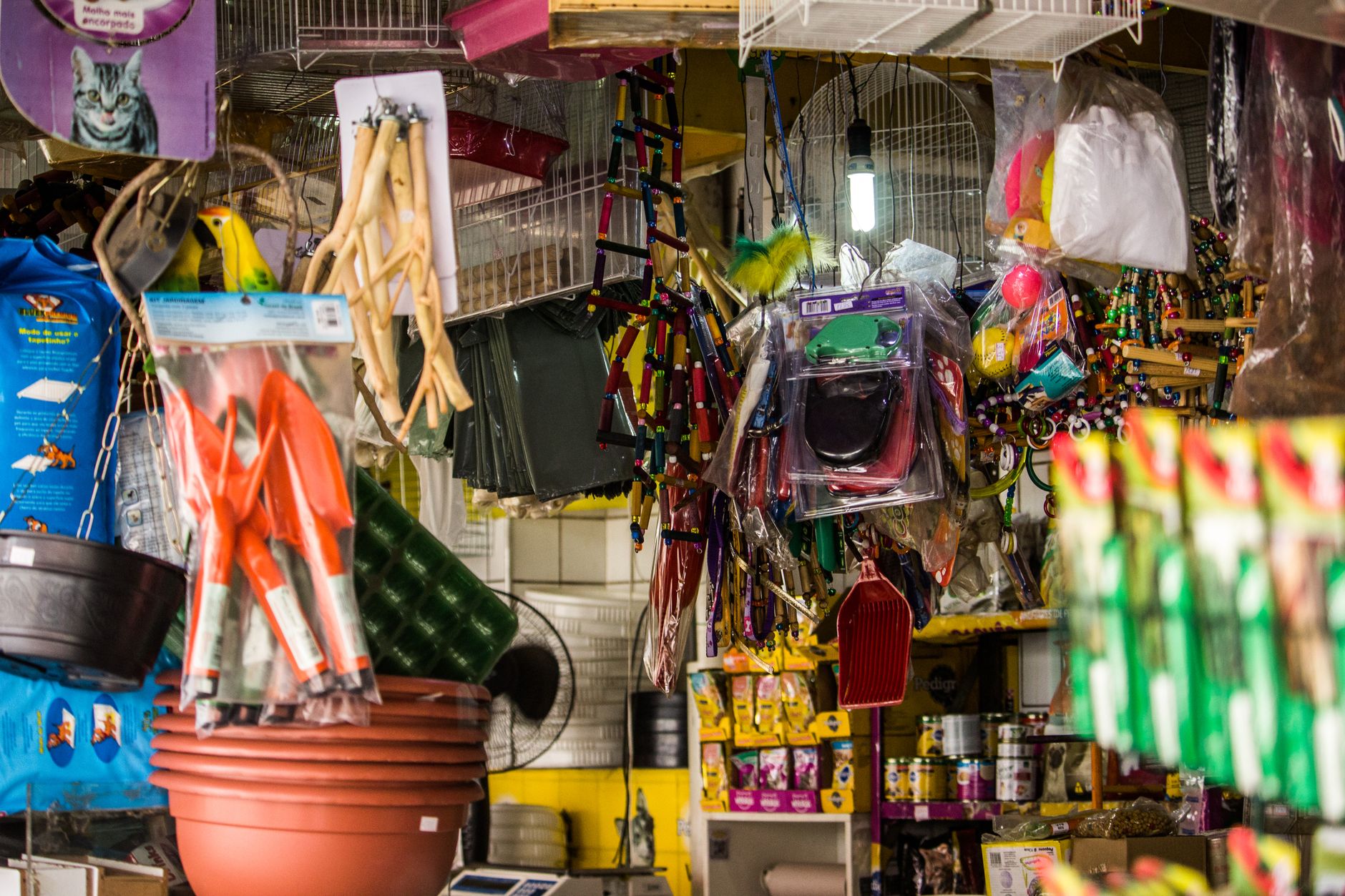
Pet supply stores move a lot of heavy, bulky product through a small backroom. Bagged food, litter, and cases of cans and pouches arrive on a delivery, go into the stockroom, and then have to reach the sales floor before the shelves run low. The decision is whether that repeated trip is better done by a stock associate or by an autonomous mobile robot on a fixed route.
The setting is large. According to IBISWorld, the US had about 13,580 pet store businesses in 2026, though that is a paywalled industry estimate rather than an official count. Vantage Insights, summarizing Census County Business Patterns for 2023, counted 9,921 establishments in NAICS 45391 (pet and pet supplies stores) employing 122,102 people. Many of those stores share the same backroom to floor problem, and each one has a limited number of staff hours to cover it.
Demand keeps the shelves busy. According to the American Pet Products Association, 95 million US households owned at least one pet in 2025, and cat ownership rose to 39 percent of households, about 53 million homes.
What does a stock associate do in a pet store shift?
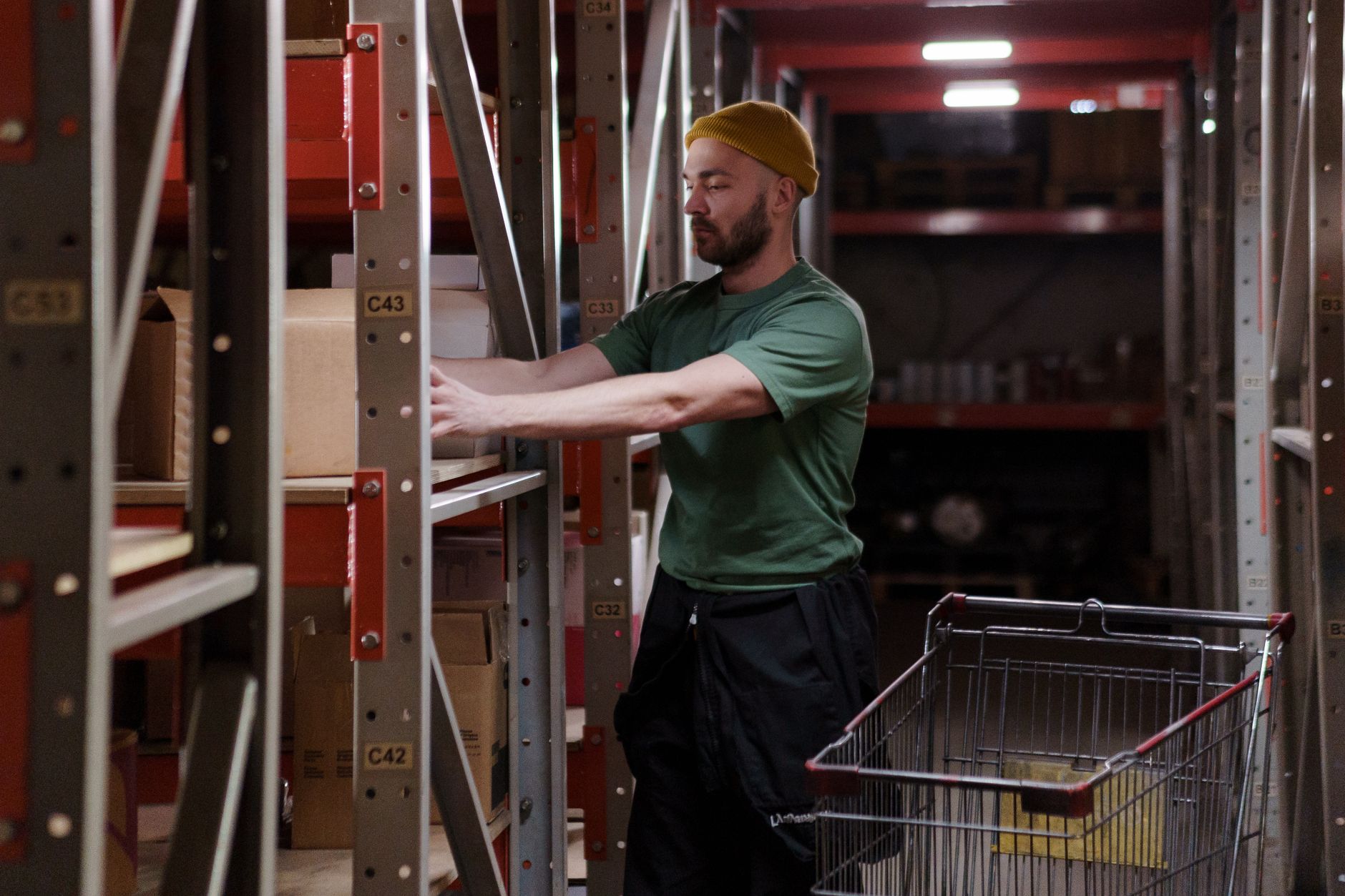
Restocking is not one task. A stock associate receives deliveries, checks counts against the packing slip, breaks down cases, and moves product from the stockroom to the floor. On the floor the same person faces shelves so labels are visible, fills gaps, rotates food so older bags stay in front, and pulls damaged or opened packages.
Much of the walking happens between the backroom and the aisles. A typical trip loads a cart or hand truck, rolls it to an aisle, unloads by shelf, and returns for the next load. That loop repeats through the day and most heavily before opening and after the morning rush. It is the part a machine that follows a fixed route can take.
The same associate also covers returns, fixes shelf tags, and answers the customer who cannot find the litter they came for. Pet stores add their own handling needs. Bulk food and bagged litter are heavy and awkward, and some categories, such as aquatics, need closer checks than a shelf of cans.
Median hourly wage, Laborers and Freight, Stock, and Material Movers, Hand
$4,380
Monthly cost of one full-time worker, at the median wage plus payroll costs (an estimate, not a quote).
Which restocking trips can an autonomous mobile robot take over?
The robot takes over the carrying and the travel. It follows a mapped route, usually between a set pickup point in the stockroom and set drop points at aisle ends or end caps, and it stops at each one. It works when the load sits on a cart, tote or shelf the robot can carry, and when the pickup and drop points stay the same from day to day.
The best fit is predictable product: cases of canned and pouch food, bagged dry food on a rolling cart, supply cartons, and totes for a fixed group of aisles. The store decides which aisles and which loads go on the route. Once set, the route runs the same way each time, which is why it suits a trip that staff repeat many times a day.
A robot is a poor fit for routes that change every day, for trips that need someone to choose which item goes where, and for any stop that needs a lift to an upper shelf or a case opened. Those stay with the stock associate.
How do an autonomous mobile robot and a stock associate compare?
The comparison is about which tasks each handles well, not which is better in general. The table below sets out the trade-offs point by point, including the points where the associate is the better choice.
Read the table as a list of trade-offs. The robot is consistent along a fixed route and can run on hours that are hard to fill. The associate is better at judgment, lifting and customer contact, which are the parts of the job that most affect what a shopper finds on the shelf and how the store feels to walk through.
- Fixed backroom to floor trips
Autonomous Mobile Robot
Repeats the same mapped route the same way each time
Stock Associate
Adapts the route when the delivery or the shelf plan changes
- Trips during open hours
Autonomous Mobile Robot
Runs in busy aisles only when paths are clear and stops for people
Stock Associate
Works around shoppers and reads the room
- Lifting to high shelves
Autonomous Mobile Robot
Cannot reach or lift product to upper shelves
Stock Associate
Lifts, reaches and faces product on every shelf
- Opening cases and checking damage
Autonomous Mobile Robot
Cannot open cases, cut shrink wrap or judge a torn bag
Stock Associate
Opens cases, pulls damaged stock and checks dates
- Customer questions
Autonomous Mobile Robot
Cannot answer where an item is kept
Stock Associate
Answers questions and walks the shopper to the product
- Availability
Autonomous Mobile Robot
Available when charged and serviced, with a plan for downtime
Stock Associate
Affected by sick days, turnover, open shifts and scheduling
- Judgment about animals and product condition
Autonomous Mobile Robot
Has no judgment about an animal or a problem product
Stock Associate
Notices a stressed animal or a product that should not be sold
What does a restocking shift look like with a robot?
The example below shows one way a shift can run when the robot takes the route trips and a stock associate stays on the floor. The times are illustrative, not measured. Your store's pattern depends on delivery days, opening hours and how many trips the route covers.
The main change is in who walks. The associate loads the robot, checks that the route is clear and handles the stops that need a person. The robot makes the trips in between, so the staff member is more often on the floor when a shopper needs help.
What do the labor numbers say about pet store stock roles?
We did not find published turnover, overtime, night shift or sick day figures specific to pet stores. The labor picture here uses wider data as a stand-in, and it should be checked against your own payroll and scheduling records before any decision.
According to the BLS 2025 voluntary turnover figure, as cited in secondary reporting, voluntary turnover across all industries was 13.0 percent. A Mercer 2025 US Turnover Survey figure, also reported secondhand, put retail and wholesale voluntary turnover at 26.7 percent, the highest sector measured. The blog that reports it did not confirm the survey page, so treat it as a lead to verify.
Separations are a separate measure. According to a third-party summary of the BLS Job Openings and Labor Turnover Survey, the total separations rate across all industries was 3.3 percent in 2025, unchanged from 2024. The measures do not line up, so use them to frame the question, not to size the staffing gap.
On injuries, the BLS 2018 retail data reported a retail trade rate of 3.5 per 100 full-time workers, with 409,900 injuries and illnesses, and 31 percent involving at least one day away from work. Business Insurance, reporting BLS 2024 data, put the private industry total recordable case rate at 2.3 per 100 full-time workers, down from 2.4 in 2023, and said retail's rate also fell that year. We did not find a breakdown for pet stores.
Government wage data on this page gives the local wage for this job. Put that figure next to your own hours. The cost question is really an hours question: how many stock hours go to route trips, how many go to overtime, and how many are lost to open shifts and sick days.
How does a team work with a robot?
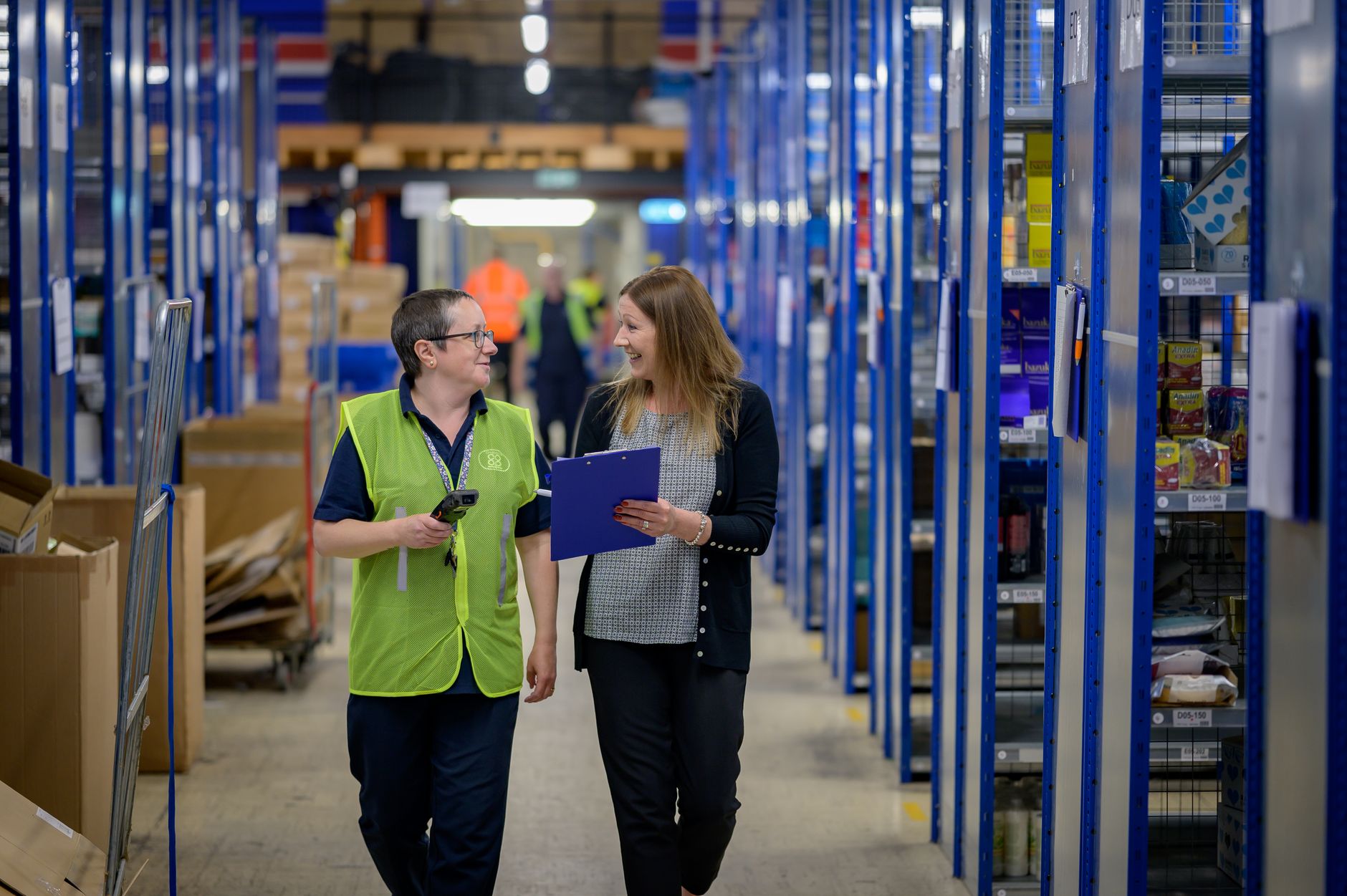
The working model is a robot plus fewer staff trips to the backroom, never zero staff. The robot takes the repeated carrying along a route. The stock associate still receives deliveries, opens cases, handles shelf work, makes damage calls and covers the floor. A store that removes the associate entirely will find the route stops the first time a case needs opening.
Staff need a short training set: how to load the cart or tote so the load sits correctly, how to clear a blocked path, how to read alerts, and how to take the robot off the route for manual work. These skills keep downtime low, and they are best taught on the store's own route rather than in the abstract.
According to Euronews, a Danish grocer is trialing robots for restocking work, mostly at night, so that staff can focus on customers. It is a trial, not a rollout, but it shows the same pattern: the robot takes the repetitive work and people keep the customer-facing work. We set up staff training as part of deployment and adjust the route with the store over the first weeks, because the first route rarely covers the best set of trips.
What can an autonomous mobile robot not do in a pet store?
It cannot open cases, cut shrink wrap, sort a delivery, or decide that a bag is torn or that a product should come off the shelf. It cannot lift product to a high shelf, and it cannot answer a shopper who asks where the litter is or notice an animal that seems distressed.
Floor conditions set the limits. A robot needs clear, mapped paths, and a dropped bag or a spill on the route stops it until a person clears it. Narrow aisles, heavy foot traffic at peak hours, thresholds and uneven floors all reduce how well a route runs. A backroom on another level needs a lift or a separate plan.
Uptime is the other limit. When a unit is down, the work returns to people, and the store needs a manual plan for those hours. A service plan with on-site dispatch and spare unit coverage shortens the gap but does not remove it, which is why the stock associate stays in the plan.
When does a robot make sense at a pet supply store, and when does it not?
It makes sense when the store has a fixed backroom to floor route, enough repeated trips for the route to earn its place, clear aisles, a stockroom and floor that are on one level or joined by a workable lift, and a stock associate who stays for the tasks described above. It is a stronger case for a larger store with frequent deliveries than for a small shop with one short trip a day.
It does not make sense when most of the restocking is lifting to high shelves, when one associate can cover the walk between deliveries comfortably, when the routes change every day, or when the plan is to reduce staff to zero. Each of those signals that the robot will not take the hours the store expects it to take.
How do you get started with robot restocking?
Start with a site assessment, not a model choice. The assessment maps the backroom, the floor, aisle widths, delivery points and the trips the route would cover. The lease payment is quoted after that assessment, because the route, the floor and the service level set it. The site assessment is free, and we do not quote a payment before we have seen the store.
We pick the right robot for the site, lease it through financing, deploy and integrate it, train the staff and service it nationwide. A common first step is one unit on one route, run for a set period, so the store can measure the trips before adding a second route.
Ask for three things in writing: the route and the trips it covers, the service plan with dispatch times and spare coverage, and the staff training plan. Keep the stock associate in the plan, and set a review date to compare the hours the route took against your payroll records.
Frequently asked questions
Want a warehouse robot at your pet supply store?
Tell us about your site. We will recommend the robot, quote the lease, and keep it serviced.
Sources
- US Bureau of Labor Statistics, Occupational Employment and Wage Statistics (OEWS May 2024)
- IBISWorld, pet stores number of businesses
- Vantage Insights, NAICS 45391 summary of Census County Business Patterns
- American Pet Products Association, 2026 State of the Industry
- BLS, retail trade injuries and illnesses, 2018
- Business Insurance, BLS 2024 workplace injury data
- Third-party summary of BLS JOLTS release, 2026
- DailyPay, retail employee turnover rates
- Euronews, Denmark tests robots in supermarkets