
The short answer
An autonomous mobile robot makes sense at a book distribution center when the same tote routes repeat through the shift, usually between picking zones and shipping lanes, and peak volume runs ahead of the staff you can hire and keep. A tote hauler still makes sense when routes change from hour to hour, when totes need judgment about what to pull or where to stage, or when the floor is too cluttered for a fixed route to run cleanly. For most sites the answer is a robot plus fewer hauling hours, not a robot in place of the team.
See what a autonomous mobile robot costsRun the numbers in the ROI calculator
Key takeaways
- Repeat tote legs between picking zones and shipping lanes are the strongest case for a robot.
- Exception work, damaged stock and heavy irregular loads still favor a person.
- Public data does not break out tote-hauling hours, so measure them on your own floor before deciding.
- Overexertion was the most common injury cause in the sector's BLS data, which makes the repeat loop a sensible place to start.
Autonomous mobile robot vs tote hauler: which makes sense at a book distribution center?
An autonomous mobile robot makes sense at a book distribution center when the same tote routes repeat through the shift, usually between picking zones and shipping lanes, and when peak volume runs ahead of the staff you can hire and keep. A tote hauler still makes sense when routes change from hour to hour, when totes need judgment about what to pull or where to stage, or when the floor is too cluttered for a fixed route to run cleanly.
The useful question is not which machine is better in general. It is how much of the tote work is predictable enough to schedule. Where most of the hauling is a loop, the robot takes the loop and people take what the loop cannot handle. Where most of it is exception work, a person stays the main resource and a robot adds little.
Expect a robot plus fewer hauling hours at most sites, not a robot in place of the team. Adoption is still early: a 2025 survey of 217 robotics-involved professionals, reported in a trade publication, found over 70 percent of warehouses polled were not yet using robots. Peak season still needs people who can clear aisles, settle exceptions and supervise the robots.
What does a tote hauler actually do in a shift at a book distribution center?
A tote hauler moves filled and empty totes between the places where work happens: picking zones where totes are filled with titles, replenishment points where stock arrives, staging areas, and shipping lanes where totes wait for outbound trailers. The walking is continuous, with a stop at every lane and pick station, and one load can be light at one stop and heavy at the next.
Book work adds its own pattern. Cartons and titles vary in weight and size, and a single order can mix paperbacks with a boxed set. Peak periods push more volume through the same lanes, so the hauler's route grows busiest in the hours when the building has the fewest people to spare.
Measure the loop length first, because it sets how many trips a robot must run to cover the work a hauler covers in a shift. The hauler also does small tasks that never reach a report: pulling a tote left in an aisle, returning an empty tote to a picking zone, flagging a jammed lane, and telling a supervisor when a lane is full. These tasks explain why a route built on paper rarely runs the way the plan says.
Which parts of the tote route can a robot take, and which can't it?
A robot takes the repeat legs: picking zone to shipping lane, lane back to a staging point, and the empty tote return. These legs look the same every shift, which lets the robot run a fixed loop with a charging point built in. Most of the setup time goes into mapping the routes and setting the schedule.
It does not take work that needs a person's hands or judgment. That includes pulling a damaged book from a tote, deciding whether an order should split, lifting a tote stacked beyond the robot's load limit, and fixing a jam on a lane. Those tasks stay with staff, and they belong in the site plan before anyone signs.
- Takes: repeat legs between fixed points on a set route
- Takes: empty tote returns to picking zones
- Takes: scheduled replenishment runs between staging and pick faces
- Does not take: damaged-stock checks, split-order decisions, overloaded totes, aisle clearing after a spill
- Repeat tote loops
Autonomous Mobile Robot
Runs the same route on a fixed schedule
Tote Hauler
Walks it, and adjusts when something changes
- Peak-season surge
Autonomous Mobile Robot
Limited by fleet size, floor clearance and charging
Tote Hauler
Can add shifts, overtime and temporary staff, though hiring takes time
- Exceptions and blocked aisles
Autonomous Mobile Robot
Stops or reroutes and waits for a person to clear the path
Tote Hauler
Clears the path and decides quickly. The person wins here.
- Heavy or irregular loads
Autonomous Mobile Robot
Limited by load rating and how well the tote fits
Tote Hauler
Lifts, reorganizes and adapts. The person wins here.
- Night and sick-day coverage
Autonomous Mobile Robot
Keeps the scheduled loop running without a shift change
Tote Hauler
Needs a shift, and an absence creates a gap
- Strain on the hauler
Autonomous Mobile Robot
Takes over the repeated walking and pushing of the loop
Tote Hauler
Carries the strain of repeat walking and lifting across the shift
How much hand labor is involved, and what do turnover and injury data show?
Hand laborers and material movers form a large group. The Bureau of Labor Statistics Occupational Outlook Handbook lists 2,988,900 jobs for the detailed occupation of laborers and freight, stock, and material movers, hand. Moving totes by hand is a common staffing task across the economy, so the pressure a hauler route creates is a widely shared one.
Turnover data for the combined transportation, warehousing and utilities sector show how much movement there is in the labor pool. According to the Federal Reserve Bank of St. Louis layoffs series, layoffs and discharges for that sector were 5.2 in January 2026, not seasonally adjusted, against 4.0 in December 2025. The hires series for the same sector showed a hires rate of 2.50 percent in February 2026, against 3.10 percent the month before and 2.90 percent a year earlier.
Both series cover more than warehousing, so treat them as direction rather than as a warehouse rate. Warehousing and storage employment was about 1.82 million in July 2025, down 2.1 percent from July 2024, according to the Federal Reserve Bank of St. Louis employment graph.
Injury data point the same way. The Bureau of Labor Statistics NAICS 493 page reports 32 fatalities in warehousing and storage in 2024, up from 28 in 2023, and notes a series break starting with 2023 data, so compare years with care. A workforce summary of BLS data puts warehousing and storage at 4.8 total recordable cases per 100 full-time equivalent workers in 2024, with a DART rate of 4.1, against 2.3 for all private industry. That summary is not the BLS table itself, so check the official table before quoting it.
The Government Accountability Office found that transportation and warehousing had the highest serious injury and illness rate of the 19 sectors it reviewed in 2022, at an estimated 3.8 cases per 100 workers. Overexertion was the most common injury cause in BLS data from 2018 through 2022. Repetitive hauling loops are a typical source of that kind of strain, so the repeat legs are a sound place to start.
How many hours does tote hauling take, and how do you measure them?

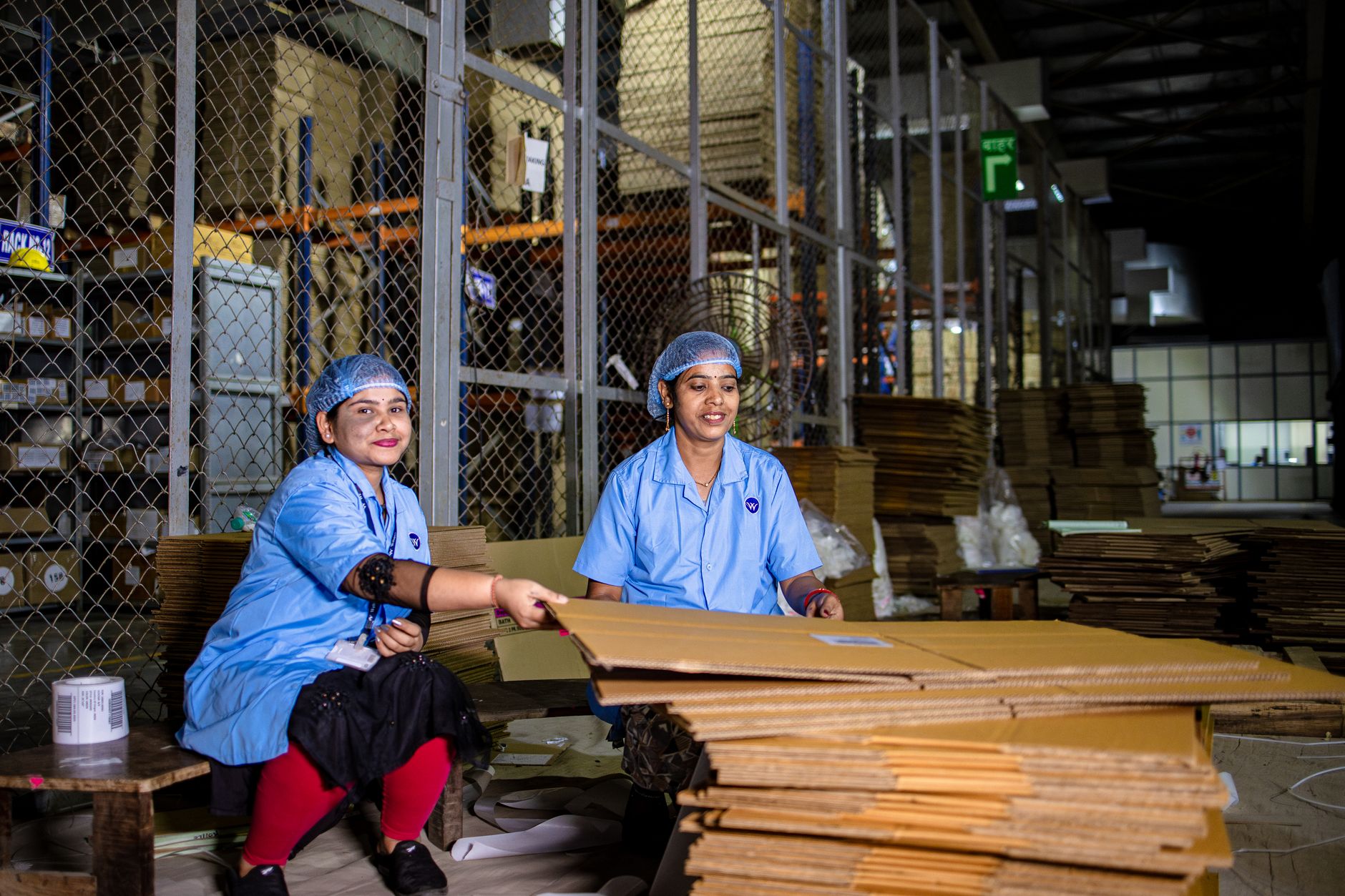
Public data does not break out tote-hauling hours for book distribution, so any hour figure for a specific site has to come from that site. The reliable method is a time study across several representative shifts, including at least one peak shift and one overnight shift. The overnight pattern often differs from the day pattern.
Log each trip in the loop, its load, its stops, and the minutes spent on exceptions. The split between repeat legs and exception work decides whether a robot takes most of the hauling or only part of it, and that split is what the lease quote should reflect.
Count absence as well. A route that depends on one hauler stalls when that person is out, so coverage gaps and overtime belong in the labor picture alongside paid hours.
How does a team work with a robot during peak season?
The team changes shape but stays a team. The robot runs the repeat loop, and people handle picking, exceptions, lane clearing and supervision. The staff you keep should be the people who can clear a jam in minutes, not the people who walk the loop all shift.
Night and early shifts show the largest gap. A robot can keep a scheduled replenishment loop running when a hauler is off, but a lead or supervisor still needs to be on site to clear exceptions and watch the charging points. Plan for that person, not for a zero-staff floor.
Training is part of the deployment. Operators learn to call a robot, clear a blocked route, read its status and escalate a fault. Staff who used to walk the loop often move into exception and quality work, which rewards floor experience.
What can't an autonomous mobile robot do at a book distribution center?
A robot is only as good as its route and its floor. It needs clear paths, mapped routes and aisles kept free of loose stock, pallets and carts left in the wrong place. A cluttered peak floor can stop a robot more often than a person, because a person walks around clutter and the robot waits for it to clear.
It cannot inspect a damaged book, decide how to split an order, or handle a tote stacked above its load limit. It cannot manage a shift change, notice that a lane has backed up across the building, or call in coverage when someone is out. Those gaps make a person the coordinator of the robot, not its replacement.
A robot also creates some work of its own. Charging points, route updates, blocked-route alerts and fault resets all need someone who knows the system. If no one owns that role, the robot sits idle at the moment it is needed most.
When is a tote hauler still the better choice?
A hauler is the better choice when the repeat hours are too few to justify a lease. A small site with a short loop, a mostly irregular workflow, or heavy manual handling on every route will get more from a person who can adapt. That is a sound answer, not a failure of the technology.
It also makes sense when the floor cannot support a fixed route. Frequent reconfiguration of pick faces, a building that is still changing layout, or a lot of loose stock in the walkways will make routes unstable. Settle the layout before you commit to a robot route.
The question to answer is whether the predictable share of the hauling is large enough to justify a robot plus the staff who run it. An autonomous mobile robot vs tote hauler decision turns on that share, not on a robot's headline features.
How do you get started with a robot lease for a book distribution center?
Start with a free site assessment. We map the floor, measure the tote routes, separate the repeat legs from the exception work, and recommend the robot that fits the site. We lease robots through financing, and the lease payment is quoted after the site assessment, so the figure reflects your floor and your routes.
We deploy and integrate the robot, train the staff who run it, and service it nationwide, so one partner covers the whole lifecycle. A phased start with one unit on a single route, backed by spare unit coverage, lets a site test the loop before committing to more.
Before you meet, bring your peak-season volume, a route map, today's staffing plan and the results of your time study. Those four items decide whether the robot takes most of the hauling or only part of it, and they make the lease quote accurate.
Frequently asked questions
Upcoming warehouses & 3pl events
Want a warehouse robot at your book distribution center?
Tell us about your site. We will recommend the robot, quote the lease, and keep it serviced.
Sources
- Bureau of Labor Statistics, Occupational Outlook Handbook: Hand Laborers and Material Movers
- Voxel AI, peak season warehouse injury statistics (summary of BLS data)
- Bureau of Labor Statistics, NAICS 493 Warehousing and Storage
- Government Accountability Office, GAO-24-106413
- Material Handling 24/7, Peerless Research Group warehouse robotics adoption survey
- YCharts, US hires rate, transportation, warehousing and utilities
- Federal Reserve Bank of St. Louis (FRED), layoffs and discharges, transportation, warehousing and utilities (JTU480099LDR)
- Federal Reserve Bank of St. Louis (FRED), warehousing and storage employment graph