
The short answer
Cleaning robot vs floor cleaner is rarely either-or at a bowling center: a cleaning robot fits the hard-floor passes on approaches, concourses and back corridors that a floor cleaner makes between league nights, because it can run after close without a crew on those floors. It does not replace the person who handles lane care, conditioner cleanup and spills, so the realistic setup is a robot plus fewer staff, never zero staff.
Key takeaways
- A cleaning robot fits the wide, repeating hard-floor passes on approaches and concourses, run after close.
- A floor cleaner's real value on league nights is spill response and lane-side judgment, and those stay with people.
- Most openings for janitors come from workers leaving, so night floor coverage is a recurring hiring task.
- Bowling is a shrinking business category, so each center's floor layout decides whether the fit works.
- Start with a free site assessment and a lease quote, not with a guess about floor hours.
Cleaning robot vs floor cleaner at bowling alleys: the short answer
A cleaning robot makes sense for the wide, flat, hard-floor passes a floor cleaner makes between league nights: the approach strips in front of the lanes, the main concourse, the snack bar floor, the staff corridor and the shoe counter area. It works best where the layout is open, the route repeats, and the crew would otherwise be pushing a machine after close.
It makes less sense where the work changes by the minute. Lane care, spot cleaning of conditioner and spills, cleaning around the pinsetter area, and handling a drink spill near a family table all need a person who can stop, look and decide. Expect a robot plus fewer staff, not a robot in place of the team.
What does a floor cleaner actually do in a bowling center shift?
On a league night a floor cleaner is rarely pushing one machine down one open lane. The work is split across the building: walking the concourse for spills, clearing debris from the approach edges, wiping stains off seating carpet, mopping the food and beverage floors, and taking trash out through the back corridor. One person often does several of these in sequence, which is why the floor gets done in pieces.
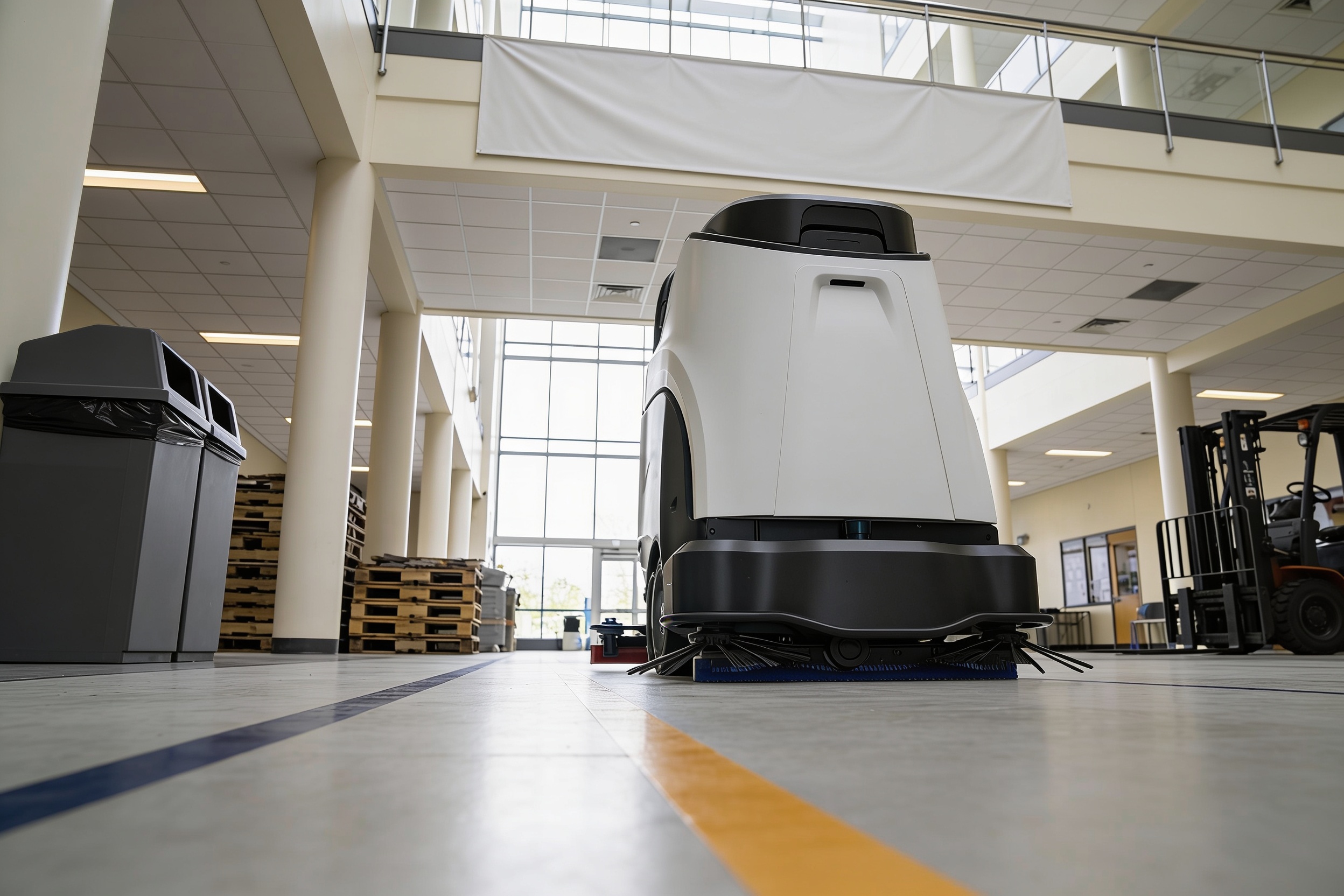
After close is when the wide passes happen. A floor scrubber or sweeper runs over the hard-floor areas in long, straight, repeating lines, and that is the part a robot can take over. The rest of the crew's time goes to lane-side tasks, restrooms, the spots a machine will miss and whatever spilled during the last session.
Lane work runs on its own track. Lanes are cleaned and oiled on a daily cycle, normally before opening, and lane equipment now does most of the cleaning and oil application. Staff program the patterns and check results by sight, sound and touch, because a machine can seem to run normally while a lane is not right. A floor robot does not change that check.
Median hourly wage, Janitors and Building Cleaners
$4,041
Monthly cost of one full-time worker, at the median wage plus payroll costs (an estimate, not a quote).
- Night coverage
Cleaning Robot
Runs the same route after close with no crew on the floor
Floor Cleaner
Covers the route but needs a shift, breaks and supervision
- Wide hard-floor passes
Cleaning Robot
Repeats long straight passes on the same line and speed
Floor Cleaner
Covers the same passes, though the line and pace vary
- Spill response
Cleaning Robot
Cannot judge a spill, broken glass or a wet step
Floor Cleaner
Stops, cleans, warns guests and decides what happens next
- Lane-side judgment
Cleaning Robot
No role in checking lanes or pattern results
Floor Cleaner
Checks lanes by sight, sound and touch and adjusts patterns
- Carpet and seating
Cleaning Robot
Works on some low-pile areas, varies with stains and pile
Floor Cleaner
Handles stains, pile and spot work by hand
- Staff on site
Cleaning Robot
Still needs a route check and an on-call person
Floor Cleaner
Is the on-site crew
Which bowling floors can a cleaning robot take, and which stay with people?
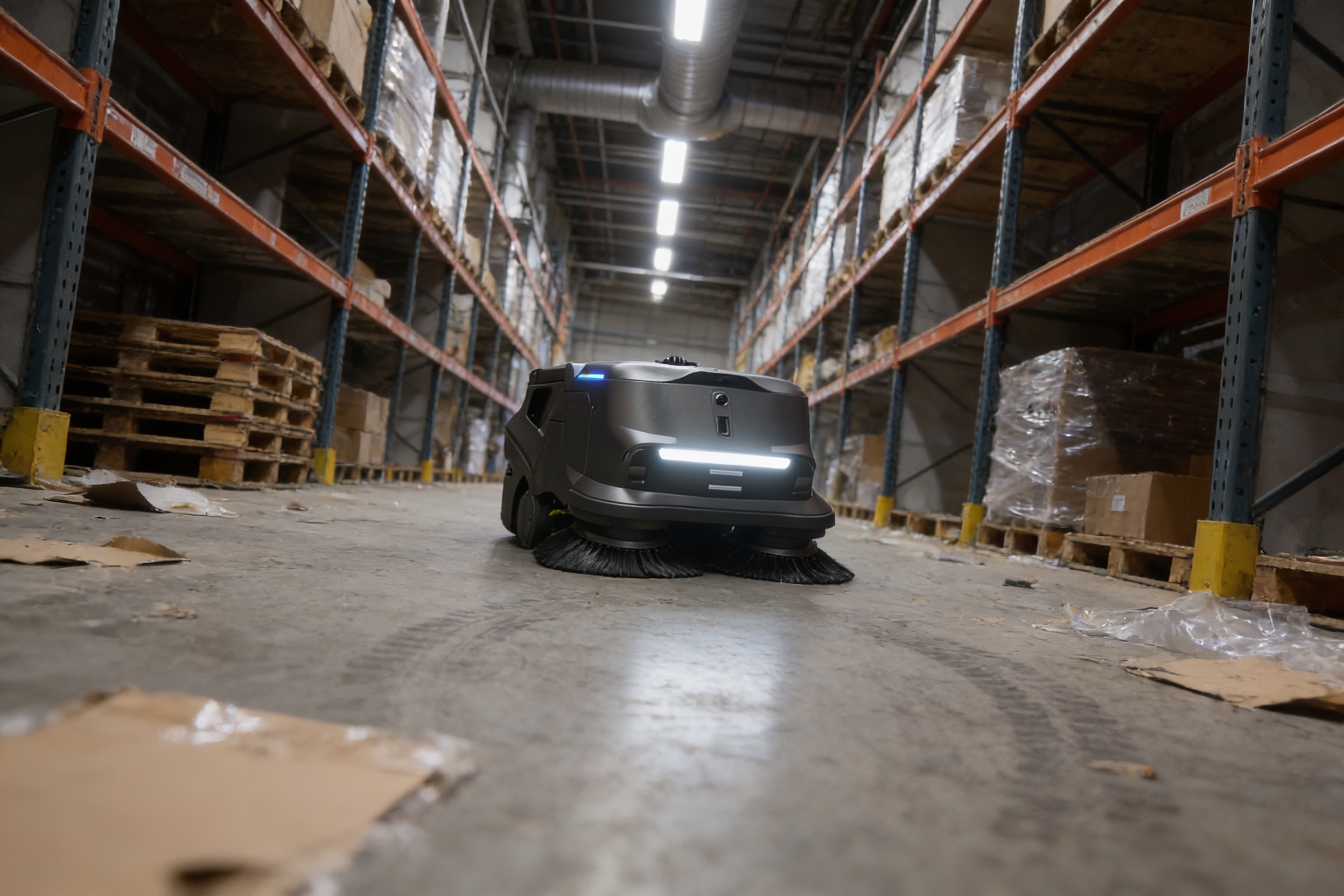
The best fits are the hard floors that form the open walkways: approach-adjacent strips, the main concourse, the wide aisles between seating and the lanes, and the back corridor to storage and lockers. These areas are mostly clear after close and they repeat, so a robot can run a fixed route, turn at obstacles it reads and return to a charging spot.
Carpet is more variable. Some low-pile areas can be handled, but seating carpet, stains and changing pile direction vary from one spot to the next. Test the actual carpet on the actual route before committing. Check thresholds, transition strips between floor types and any raised edges, since those are where a robot can stall or leave a visible line.
Stay with people: the lanes and everything around the lane equipment, spill response in food and beverage areas, residue from conditioner or oil that needs a dedicated cleaner and a check afterward, and restrooms. A robot is a floor tool for open routes, not a substitute for judgment in these places.
How many bowling centers and workers are involved, and how risky is floor work?
Bowling is a shrinking business category, so the number of sites you can benchmark against is falling. A market research estimate counts 2,541 US bowling center businesses in 2025, down 2.1% from 2024, and projects 2,484 for 2026. A statistics compilation put the count at 3,470 in 2012 and 2,849 in 2022, so the decline has run for years.
The same market research estimate puts employment in US bowling centers at 62,755 people in 2025, an average of 24.7 employees per business, with employment falling an average 1.6% a year over 2020 to 2025. At roughly 25 people per business, one missed floor shift is a noticeable share of the team, so plan the floor work so one absence does not stop it.
Nationally, the Bureau of Labor Statistics reports about 2.4 million jobs for janitors and building cleaners in 2024, with about 351,300 openings a year projected over the decade, mostly from replacing workers who leave. Employment is projected to grow 2% from 2024 to 2034, slower than average. Use the government wage data on this page for the local wage for this job when you set the labor baseline.
Injury risk is real. The Bureau of Labor Statistics reported an incidence rate of 191.6 per 10,000 full-time equivalent workers for janitors and cleaners, except maids and housekeeping cleaners, in 2020, after 157.4 in 2019 and 137.1 in 2018. A business insurance trade article reporting BLS data put total recordable cases for private industry at 2.3 per 100 full-time equivalent workers in 2024, down from 2.4 in 2023.
How many hours of floor work are there per shift?
No bowling-specific study of robot hours per shift was found, so treat any hour figure with care. The closest reference is a vendor case study of a hospital network that ran two robotic floor scrubbers: total manhours per night fell from 16 to 5, time to finish fell from 8 hours to 5 hours, and the floorcare team went from 3 people to 2. That is a vendor figure from a different building, so use it as a direction, not a forecast for a lane house.
A vendor case study of a retail cleaning contractor reports about 20 hours a week of autonomous cleaning, more than 2.5 hours a day on average, and 99.2% of runtime in autonomous mode. These numbers help you test assumptions. Your floor hours depend on the approach count, concourse length, carpet area and how many passes the crew actually makes after close.
The useful exercise is to time one real night. Write down each pass, the floor area it covers and the minutes it takes, then mark the passes that repeat on a fixed route. Those are the robot candidates. The spot work, spills and lane-side tasks stay on the crew's list, and that remaining list sets the staff you still need.
What does a robot's shift look like on a league night?
A sample night shows how the work splits. League cleanup ends, the crew clears the route of chairs, carts and bags, and the robot starts from its charging spot. It runs the approach and concourse route while staff are on the lanes or in the back. The clock times below are an example, not a schedule, and real timings depend on your route and close time.
The crew still reads the robot's log and clears anything it flagged. The spot work changes the most: a person handles the spills, the shoe counter and restrooms, and any residue near the lanes, then signs off the floor before the morning crew walks in. The robot shortens the pass time, but it does not shorten the check.
What can a cleaning robot not do in a bowling center?
The honest list is long enough to matter. A robot cannot oil or check lanes, judge a spill, step in when a guest is hurt, or handle a surface that changes with every event. It cannot read a room the way a person does, so an area with loose chairs, bags or stacked gear will stop it or push its route off course. It also cannot fix a layout change on its own: moved seating or a new bar needs a remap and a route update.
Some of these limits are about the building and some are about the job. A robot needs a clear route and a person who can clear it. It needs a charging spot and a service plan for breakdowns during a league night. It also needs a crew that knows what to do when it stops, so a stopped unit does not leave the approach or concourse unwashed until morning.
How does a team work with a robot, instead of in place of one?
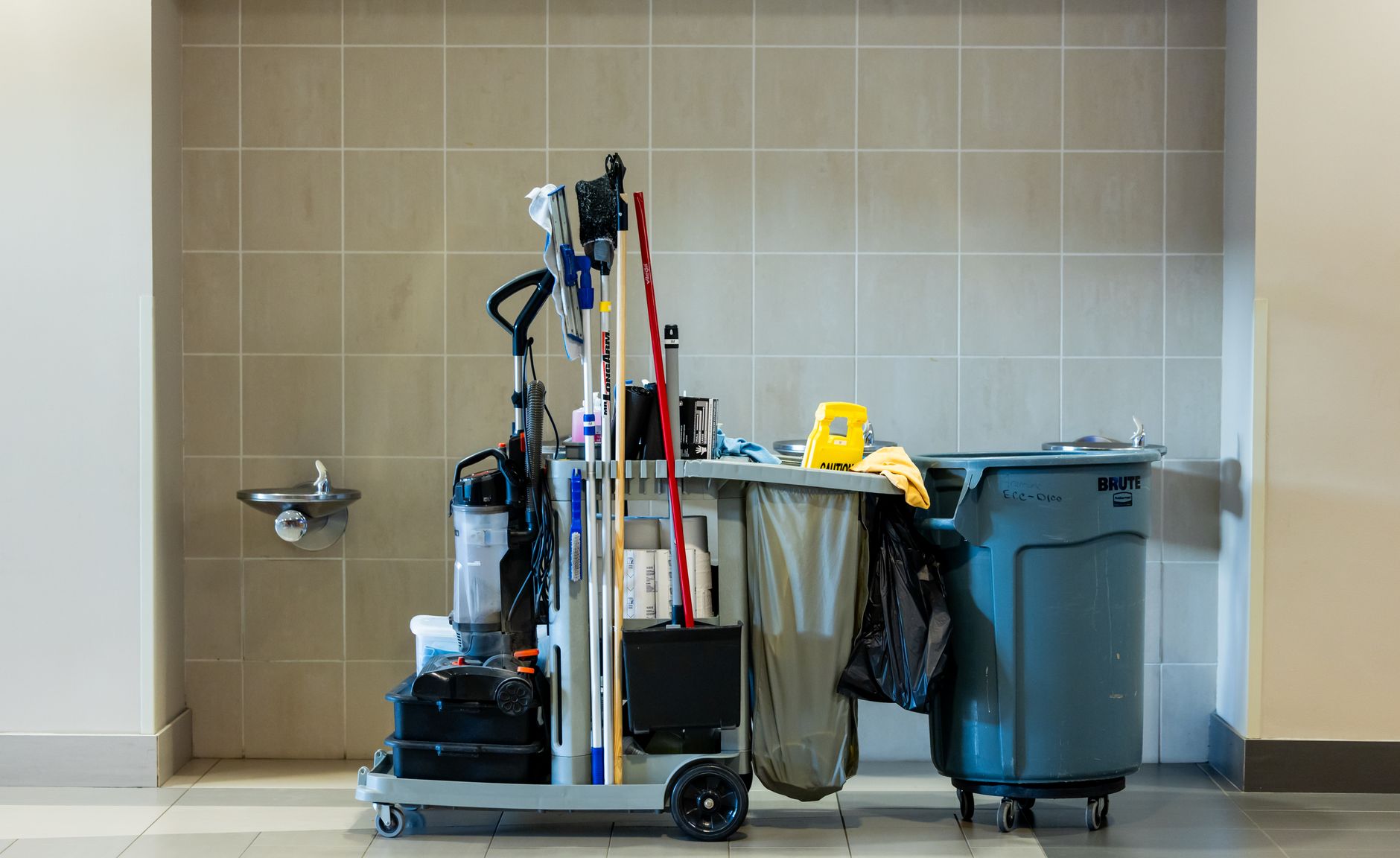
The setup that works is a robot plus fewer staff. Repeating passes move to the robot, and the people left take the spot work, lane-side checks, spill response and route management. The team is smaller in the passes but not in judgment, so the staff you keep need training on the robot's route, its alarms and when to pull it off a route.
The labor case is about schedules as much as headcount. The Bureau of Labor Statistics notes that janitors' schedules can include evenings, nights or weekends, and that part-time work is common. A robot takes the repeat night passes that would otherwise depend on one person showing up, which matters on sick days and short-staffed weeks, when the floor is often the first task dropped.
Expect a shift in the work rather than an empty night. Less floor overtime is the usual goal, but only if the remaining checks are assigned to a named person each night. Training is the step most often skipped, and it is the one that decides whether the robot gets used at all.
How do you start, and what does a robot lease look like?
Start with a free site assessment. The site team maps the approach, concourse and corridor routes, notes floor types and transitions, and checks where the robot can and cannot go. From that, we pick the right robot for the site, lease it through financing, and set a fixed robot lease payment only after the site assessment, so the quote matches the floor you actually have.
We deploy and integrate the unit, train the staff and service it nationwide, so one partner handles setup, go-live support and maintenance. A common first step is a single leased unit on one route, such as the approach and concourse, run for a few weeks and reviewed against the pass log before adding routes or units.
Compare the quote with the floor hours the site really carries, using the government wage data on this page for the local wage for this job. The question is not whether a robot is cheaper in general. It is whether the repeat passes it takes are the passes your crew is struggling to cover.
- Free site assessment and route mapping
- Lease quote with a fixed robot lease payment after the assessment
- Pilot on one route, reviewed against the pass log
- Staff training and go-live support
- Nationwide service once the unit is live
Frequently asked questions
Want a cleaning robot at your bowling alley?
Tell us about your site. We will recommend the robot, quote the lease, and keep it serviced.
Sources
- US Bureau of Labor Statistics, Occupational Employment and Wage Statistics (OEWS May 2024)
- Bureau of Labor Statistics, Occupational Outlook Handbook: Janitors and Building Cleaners
- Bureau of Labor Statistics, injury and illness snapshot: janitors and cleaners, except maids and housekeeping cleaners, 2016 to 2020
- Business insurance trade article on 2024 BLS injury data
- Market research estimate, US bowling centers number of businesses
- Market research estimate, US bowling centers employment
- Statistics compilation of US bowling centers count, 2012 to 2022
- Vendor case study: hospital network robotic floor scrubbers, 2023 (vendor-reported)
- Vendor case study: retail cleaning contractor autonomous scrubber (vendor-reported)