
The short answer
For most ice arenas, a cleaning robot makes sense as a second pair of hands for the flat, repetitive scrubbing and sweeping of lobbies, concourses and corridors on a fixed overnight route, while a night janitor is still needed for restrooms, trash, spills, glass and the work around the ice. The cleaning robot vs night janitor choice is rarely either or: a robot fits an arena with long, clear, hard floors and enough staff on site to run and check it, and it does not replace the whole night crew.
Key takeaways
- A robot can take the flat hard-floor pass, but restrooms, trash, spills and glass still need a person.
- The floor work has to fit around the ice resurfacing window, never inside it.
- Plan for a robot plus fewer staff, never zero staff, and cross-train at least two people.
- Time your own floor pass before deciding, because published arena scrubbing hours are thin.
Cleaning robot vs night janitor at an ice arena: which makes sense?
A cleaning robot makes sense at an ice arena when the building has large, flat, hard floors that need the same scrub or sweep every night, and when the arena can keep at least one trained person on site to run, check and empty the machine. It does not make sense as a full replacement for the night janitor, because an arena is not one floor. It has restrooms, locker areas, food counters, a concourse that collects spills, trash rooms, and the edges of the ice that the ice crew works around.
A night janitor makes sense when the building is cluttered, when most of the work is restroom and spill response, or when there are few flat hard-floor corridors worth a machine pass. A person can judge a wet patch that appeared after a game, move a bench that is in the way, and adjust the route when a room is in use. A robot is better at the same route, done the same way, on the same schedule, every night.
The honest answer for most arenas is a mix. Keep the janitor for the varied work, let the robot take the repetitive hard-floor pass, and build the staff schedule around that split. Start by listing which floor areas are flat, clear and repeated, and which need a person. That list makes the cleaning robot vs night janitor question concrete.
What does a night janitor actually do in an ice arena shift?
Much of the night work is nowhere near the ice. The usual route empties trash and recycling, cleans restrooms and locker rooms, wipes handrails, seats and fixtures, restocks supplies, responds to spills, and scrubs or sweeps the hard floors in lobbies, concourses, corridors and food areas. The route changes with the event calendar, so a quiet weeknight and a tournament weekend look very different.
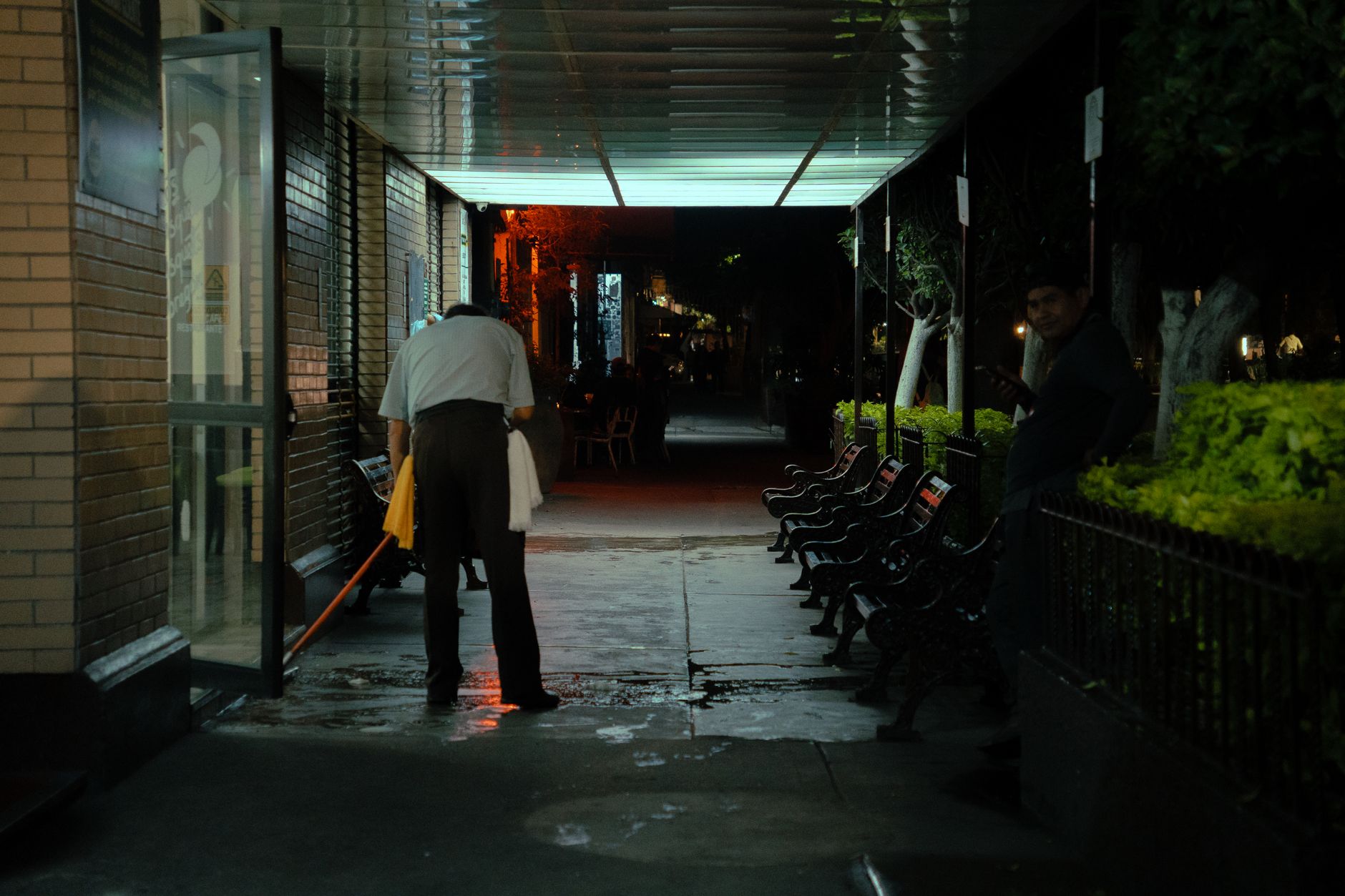
Staffing for this work is thin and turns over. The Bureau of Labor Statistics Occupational Outlook Handbook reports about 2,447,700 janitors and building cleaners jobs in 2024. It lists no formal credential as the entry requirement, with short-term on-the-job training. A new hire can start a route quickly, but learning which doors lock, which rooms get used on game nights and where the spills happen takes months.
Median hourly wage, Janitors and Building Cleaners
$4,041
Monthly cost of one full-time worker, at the median wage plus payroll costs (an estimate, not a quote).
Which floor work can a cleaning robot take, and which can it not?
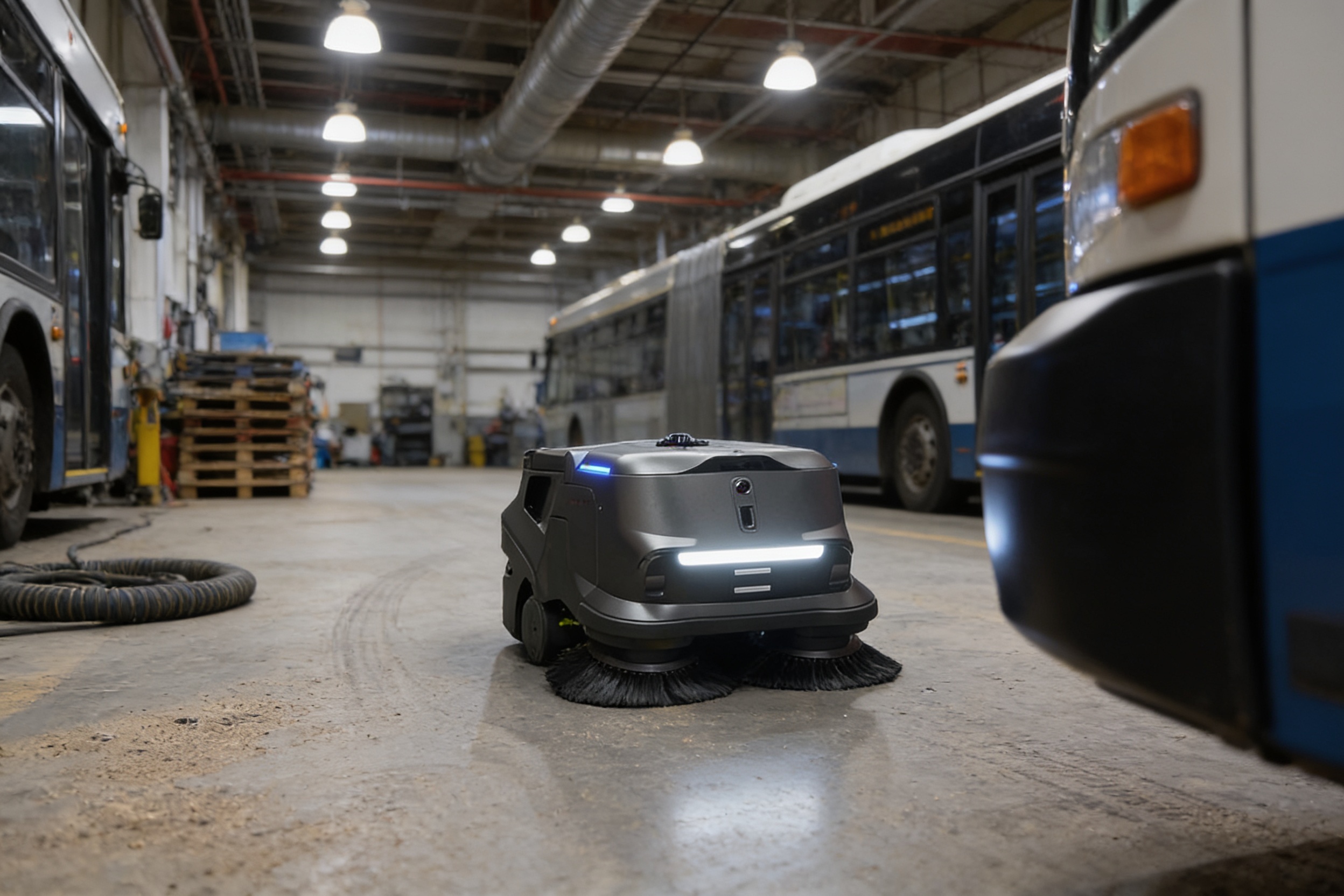
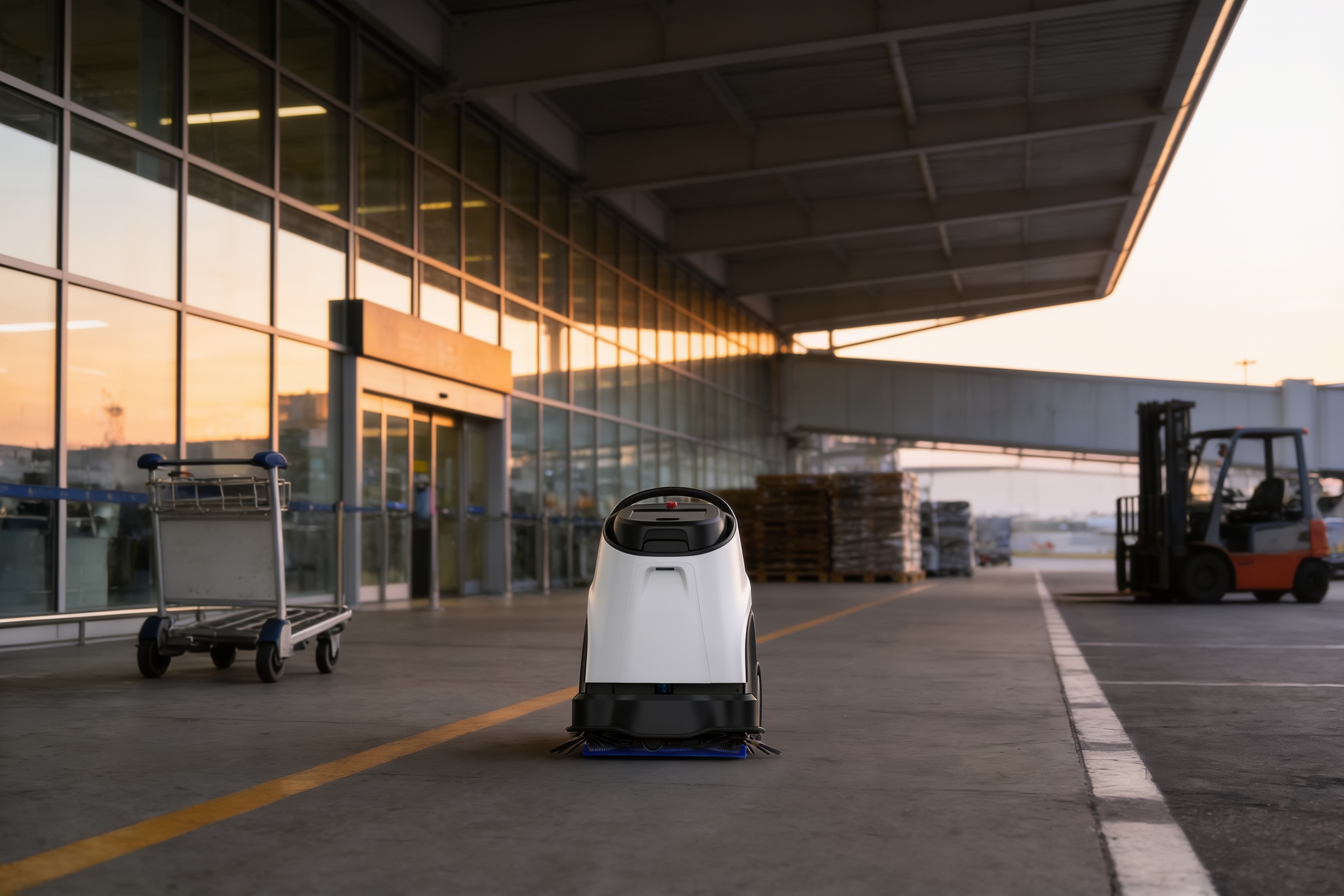
A cleaning robot handles the flat, open hard-floor passes: lobbies, concourses, main corridors and back-of-house hallways, when they are clear of stored gear, chairs and cords. It maps a route, scrubs or sweeps at a set pace, and returns to its dock. It needs a route people do not block, and doors, lifts and thresholds it can cross.
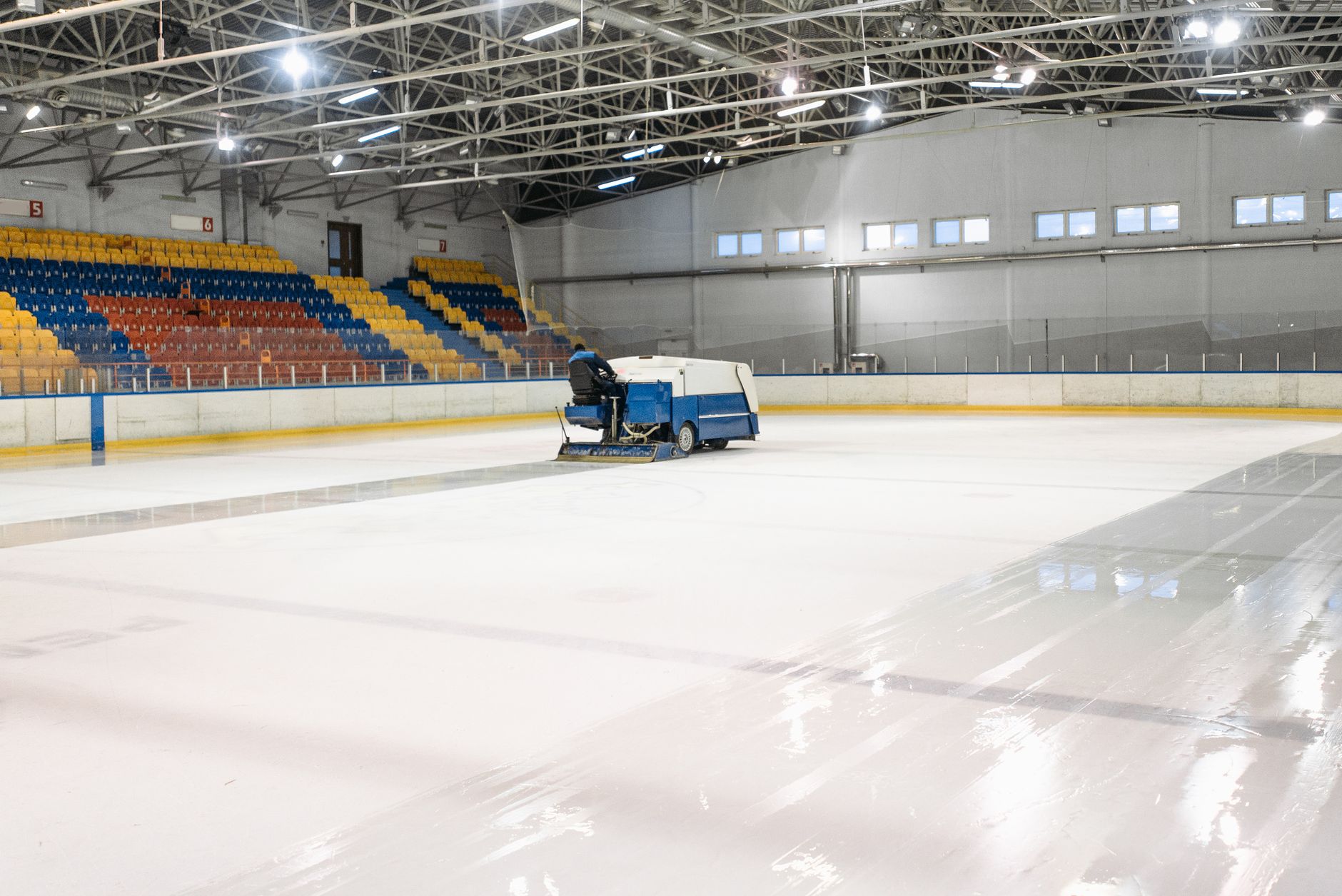
It cannot do the rest of the arena floor. It does not clean restrooms or locker rooms, wipe fixtures, empty trash, judge an unknown spill, pick up broken glass near seating, or move an obstacle that a person left in the way. Work near the ice edge, the boards, entrance mats and the resurfacer is best left to a person who can see what changed since the last run.
- Can take: scrubbing and sweeping open hard-floor corridors and concourses on a fixed route.
- Can take: running the same pass at set times, then reporting a finished route.
- Cannot take: restrooms, locker rooms, fixture wipe-downs, trash and recycling.
- Cannot take: spills of unknown material, broken glass, debris near seating, and anything near the ice edge.
- Overnight coverage
Cleaning Robot
Runs the same route on schedule, with no breaks or call-outs
Night Janitor
Adjusts the route and covers gaps when someone is out, but needs breaks and days off
- Unknown spills
Cleaning Robot
Can flag a problem but cannot judge what it is
Night Janitor
Recognizes the material and decides how to clean it
- Restrooms and fixtures
Cleaning Robot
Cannot do this work
Night Janitor
Does it to standard every night
- Consistency of the flat pass
Cleaning Robot
Same pace and same coverage on each run
Night Janitor
Varies with fatigue and with time left in the shift
- Working around the ice
Cleaning Robot
Must stop and stay clear during resurfacing
Night Janitor
Can work near the ice edge with the ice crew, under their rules
- Setup and upkeep
Cleaning Robot
Needs a dock, charging, route mapping and service visits
Night Janitor
Needs training, supplies and scheduling
How many hours does the floor work take, and what does the labor picture look like?
Published figures for arena floor scrubbing hours are thin, so treat any hour count here as a starting point for your own timed pass. A municipal ice rink assistant posting in Ontario sets a minimum of 3 hours per shift for washing the floor with a floor scrubber during morning shifts. That is a minimum in one job posting, not a typical figure for every arena, and it does not split the hours by area.
The ice work runs on its own clock. A Cornell model estimates about 6 minutes per resurfacing, and a Canadian arena operations guide reserves 10 minutes of each one-hour booking for resurfacing, plus 5 to 10 minutes to prepare the machine. The floor pass has to fit around those windows, and the robot should never cross the ice edge while the resurfacer is working.
On labor, the Bureau of Labor Statistics projects about 351,300 openings a year for janitors and building cleaners over the decade, with turnover driving most of them. It projects 2 percent growth from 2024 to 2034, slower than average for all occupations. Its injury snapshot counts 21,100 nonfatal injury and illness cases with days away from work for janitors and cleaners in 2020, an incidence rate of 191.6 per 10,000 full-time equivalent workers, up from 157.4 in 2019.
The public sources reviewed here do not publish overtime, sick-day or arena-specific turnover rates for this work. Pull those from your own payroll and schedule records, since a single call-out can leave a night with no one on the route.
How does a team work with a cleaning robot in an arena?
The model is a robot plus fewer staff, never zero staff. A typical night keeps one trained person on site who knows the building, starts and checks the robot, watches the finished route, and handles everything the robot cannot do. The janitor's job moves from pushing the machine to managing the route and the exceptions.
Write the handover down. The ice crew owns the ice, the ice edges and the resurfacer, and the cleaning team owns the floor around them. Record where the robot stops, where people stand during the resurfacing window, and who clears a blocked path. Many early problems come from unclear handoffs between the ice team and the night crew, not from the robot.
Train at least two people on the route and the stop rules, so coverage holds when someone calls out. Keep a short log of skipped areas and faults, and review it weekly during the first months. That log shows whether the route, the schedule or the staffing needs to change.
What can a cleaning robot not do in an ice arena?
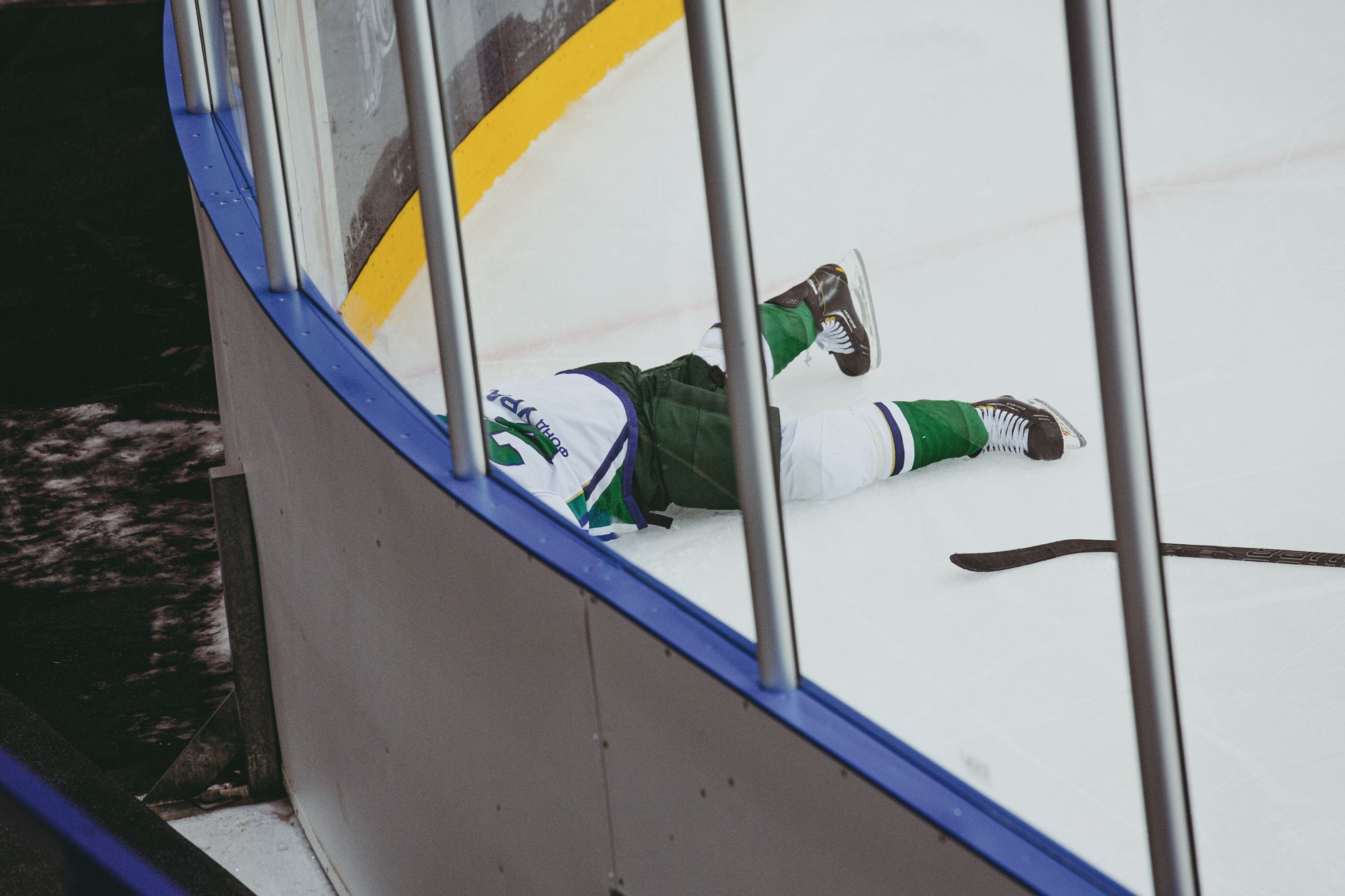
The honest limits come first. A cleaning robot cannot judge a situation. It will not notice a wet patch that appeared after a spill, a dropped item near a bench, or an exit door propped open. It needs a clear route and a person who sees the rest of the building.
It also cannot take restrooms, locker rooms, food service areas, or the hands-on work around the ice. Those tasks are often the bulk of a night shift, so measure them before assuming the robot shortens the shift. A robot that covers the flat floors trims one part of the work and leaves the rest in place.
A site assessment will also surface limits you did not plan for: thresholds, ramps, floor transitions, carpet, fixed seating and stored equipment. A machine that runs well in a warehouse may not suit a concourse full of seats. Find those limits before the first run, not after the robot stops in the middle of a corridor.
Is a cleaning robot worth it for an ice arena?
Worth it depends on four things: how much clear, flat hard floor the arena has, how long the floor pass takes when you time it, whether the schedule can use the hours the robot frees, and how the robot lease fits your budget. The lease payment is quoted after a site assessment, so no web page can give a fair number for your building. You can estimate the parts you control: the hours covered, the staff time freed, and the coverage you still need.
Adoption across the industry is still a minority pattern, which is useful context rather than a verdict. A survey of building service contractors reported by a cleaning industry publication found 68 percent had not implemented autonomous or robotic cleaning equipment. A 2019 survey by the AACEM and ISSA of nearly 23,000 contractors, in-house providers and facility managers found roughly two-thirds had not used autonomous cleaning equipment.
A pilot on one floor, such as the main concourse and corridors through a season of events, gives you a measured baseline. Compare it with the staff time saved and the gaps you still cover. That gives you the evidence to decide whether to widen the deployment.
What should you check before deciding on a cleaning robot for an ice arena?
Before you ask for a quote, gather a few facts that change the answer. The checklist below covers the items that most often decide whether a robot fits an arena floor. Bring the floor plan, the event calendar and the current night schedule to the site assessment.
A short walk with the ice crew and the night staff usually turns up two or three problems the floor plan misses, such as a door that is locked on game nights or a corridor used for equipment storage. Note them while they are fresh.
How do you get started with a cleaning robot at an ice arena?
Start with a free site assessment. We map the arena's floors, route, docks, doors and resurfacing timing, and time the real floor pass. From that, we propose the right robot for the site, and a lease quote through financing follows the assessment. We handle commercial robot leasing, deploy and integrate the robot, train the staff, and service it nationwide, so the arena has one contact for the robot.
Run the first phase on one floor, usually the main concourse and corridors, and keep the night janitor on the schedule for restrooms and spill response until the measured data says the split can change. Expand only when the route runs without gaps and the handoffs with the ice crew are written down.
Ask for the baseline first: the timed pass, the resurfacing windows, the coverage gaps, and the staff who will run the robot. A sound plan starts with those facts, and the lease quote follows from them.
Frequently asked questions
Want a cleaning robot at your ice arena?
Tell us about your site. We will recommend the robot, quote the lease, and keep it serviced.
Sources
- US Bureau of Labor Statistics, Occupational Employment and Wage Statistics (OEWS May 2024)
- Bureau of Labor Statistics, Occupational Outlook Handbook, Janitors and Building Cleaners
- Bureau of Labor Statistics, injury and illness snapshot, janitors and cleaners
- International Ice Hockey Federation rink count for the US, statistics summary
- Cornell University model of ice resurfacing time
- Canadian arena operations guide, resurfacing pace
- Ontario municipal ice rink assistant job posting
- AACEM and ISSA 2019 autonomous cleaning equipment survey
- Cleaning industry survey on robotics adoption by building service contractors