

The short answer
Cleaning robot vs janitor in Atlanta, GA: a robot makes sense for large, open, repeatable floors that can run on a schedule, usually after close, while a janitor is still needed for restrooms, trash, spills and judgment calls. For most sites the workable plan is a robot plus fewer staff, not zero staff, and the decision should rest on your own timed hours and the local wage for this job shown in the government wage data on this page.
Key takeaways
- Robots fit large, open, repeatable floors. Janitors keep the reactive and hands-on work.
- Plan a robot plus fewer staff, never zero staff.
- Use your own timed hours and overtime records, not vendor coverage rates.
- Official data show a high injury rate for this occupation, so trained staff stay on site.
- The lease is quoted after a free site assessment, based on your floor and hours.
Cleaning robot vs janitor in Atlanta: which makes sense for a business?
For most businesses in Atlanta, a cleaning robot makes sense when the floor is large, open and cleaned on a repeating schedule. Warehouse aisles, big retail floors, gym floors and event venue floors fit that pattern. A janitor still makes sense where the work is frequent, varied and close to people, such as restrooms, trash rooms, lobbies with changing furniture and spill response.
The honest answer is rarely robot instead of janitor. The better question is which hours of the existing cleaning work can move to a machine, and which hours need a person on the shift. A site with long open corridors and a clear overnight window is a strong candidate. A site with many small rooms and constant tenant requests is not.
Nationally, janitors and building cleaners held about 2.4 million jobs in 2024, according to the Bureau of Labor Statistics Occupational Outlook Handbook, and employment is projected to grow 2% from 2024 to 2034, slower than the average for all occupations. We did not verify an Atlanta metro count for this job in this run, so the national figure is the only job count on this page. The local wage for this job, shown in the government wage data on this page, is the number to set against any lease quote.
What does a janitor actually do in a shift?
A janitor's shift is a mix of planned floor work and reactive calls. Planned work covers emptying trash, cleaning and restocking restrooms, dusting, vacuuming, mopping, and scrubbing hard floors on a fixed rota. Reactive work covers spills, a blocked drain, a broken dispenser, a tenant request, or the mess left by an event that ran late.
The planned work tends to follow set routes: the same corridors, the same restrooms and the same aisles, in the same order. That repetition is the part a robot can take. The reactive work depends on people walking the building and noticing what is wrong, and that part stays with staff. How the shift splits between the two is a fact about each site, not a general rule, so it has to be measured.
Ask for the cleaning checklist and the shift log before any assessment. If there is no log, time two or three typical shifts yourself, noting each task and when it starts and stops. That timing shows how much of the work is repeatable, and that is the number that decides whether a robot can carry a meaningful share of it.
Median hourly wage, Janitors and Building Cleaners
$3,978
Monthly cost of one full-time worker in Atlanta, GA, at the median wage plus payroll costs (an estimate, not a quote).
Which cleaning tasks can a robot take, and which can't it?
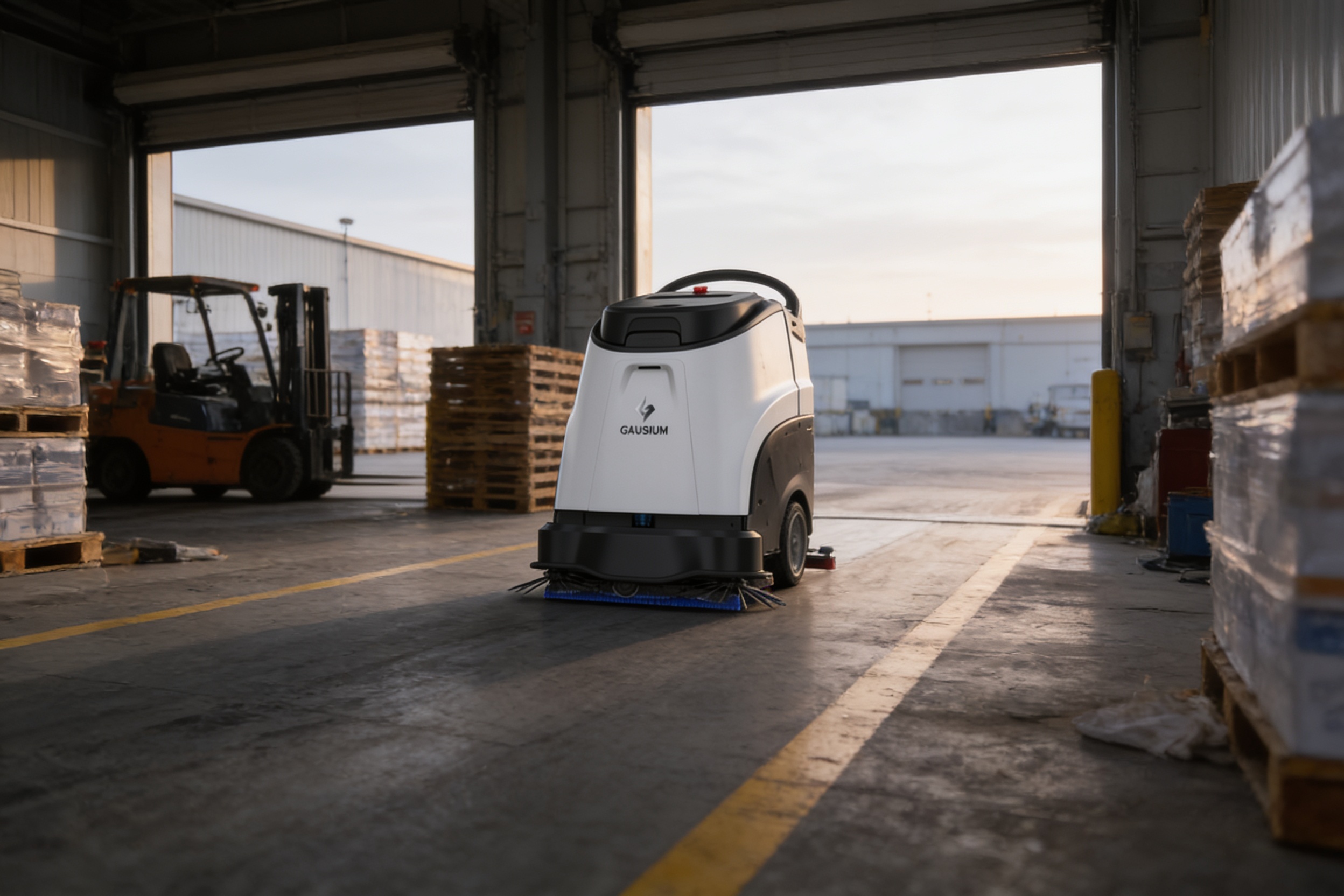
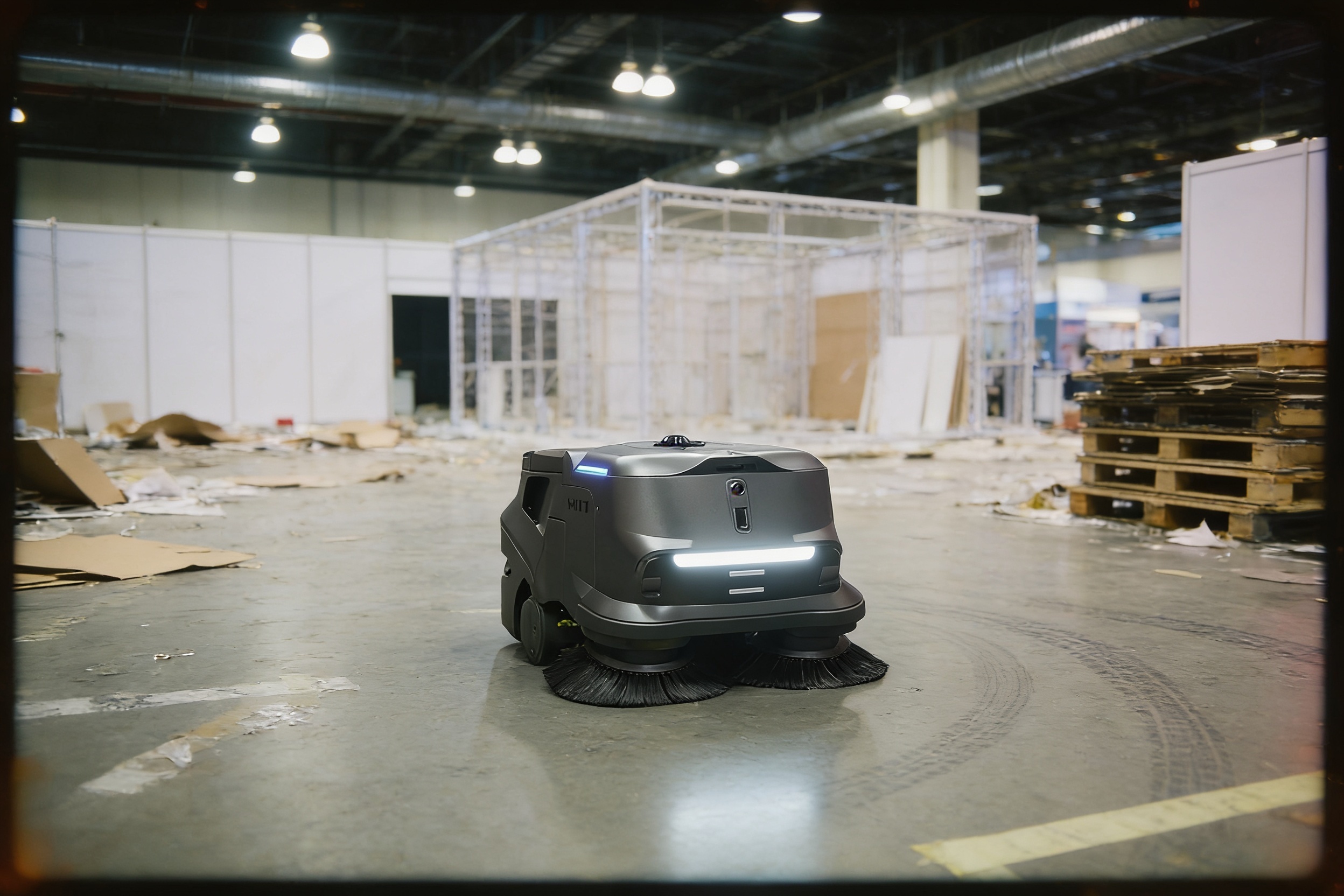
A cleaning robot takes repeatable floor work on open, mapped areas. Autonomous floor scrubbers and sweepers handle large hard floors along a set route, usually after close, so the work runs without an operator on site. The route has to be clear, which means pallets, carts and cords are removed before the run starts.
Adoption is growing. The International Federation of Robotics reports that cleaning robots were the third largest professional service robot segment in 2024, with sales up 34% to more than 25,000 units, and that most of them are deployed for floor cleaning. Unit growth shows the equipment is in use. It does not show that the equipment fits your floor.
Vendor listings give theoretical coverage of up to 15,000 to 33,440 square feet per hour for autonomous scrubbers, and up to 21,120 to 50,000 square feet per hour for walk behind scrubbers. These figures are calculated from machine width and speed, not measured in a real building. Treat them as a ceiling, and measure your own floor, including the stops, charging and mapped exclusions that cut the real output.
Restrooms, trash removal, high touch surfaces and spot cleaning are the tasks that usually stay with people. They are also the tasks that building users notice most, so cutting them first is a poor trade.
What do the labor numbers say about turnover and shift cover?

Injury risk for this work is high, and that matters for any plan that changes how the floor is cleaned. In its occupation snapshot for 2016 to 2020, the Bureau of Labor Statistics counted 21,100 nonfatal injury and illness cases with days away from work for janitors and cleaners, except maids and housekeeping cleaners, with an incidence rate of 191.6 per 10,000 full time equivalent workers in 2020. The same snapshot lists 157.4 for 2019 and 86.9 for all occupations.
A safety data site citing the Bureau of Labor Statistics Survey of Occupational Injuries and Illnesses for 2024 reports a total recordable rate of 2.5 per 100 full time workers for janitorial services, against 2.3 for all private industry. A trade article reports that 61% of janitorial companies identify labor shortages as a major obstacle to growth. The original survey behind that figure was not found, so treat it as a signal, not a measure.
Turnover is the hardest number to pin down. An HR software blog says annual separation rates in janitorial and cleaning services commonly exceed 50%, and that many contract cleaners report 100% or higher. An older reader survey of 185 commercial cleaning companies put average turnover at 73%, but it is dated. We did not find an official BLS turnover, overtime, night shift or sick day rate for this occupation, so none of these figures should be read as Atlanta facts.
Use your own records instead. Pull twelve months of overtime hours, open shifts, sick calls and vacancy days for the cleaning team. Those numbers set the cover you need, and they are the figures any lease quote should be compared against.
When is a cleaning robot the wrong choice?
A robot is the wrong choice when the floor is small, cluttered or changes every day. A lobby with furniture moved each morning, a clinic with many small rooms, or a restaurant floor with tables in a shifting layout gives a robot too little stable path to justify a lease. Mapping and route setup take time, and a space that keeps changing costs more to keep mapped.
It is also the wrong choice when the main problem is not floor time. If the complaints are about restrooms, slow response to spills, or no one on hand at the start of a shift, a floor robot will not fix them alone. Fixing the cause may mean changing the schedule or the staffing mix first.
A robot tends to make sense where the floor is large, the layout holds still, and the cleaning runs on a predictable schedule. The comparison below shows where each option is stronger.
- Night coverage
Cleaning Robot
Runs a mapped route after close without an operator on site
Janitor
Works a night shift, needs a schedule, breaks, and cover for sick calls
- Spills and reactive calls
Cleaning Robot
Reports a blocked or messy zone, but does not clean it
Janitor
Walks the building, notices problems, and responds
- Restrooms and trash
Cleaning Robot
Does not do these tasks
Janitor
Does these tasks every shift
- Large repeatable floors
Cleaning Robot
Same route and coverage on every run
Janitor
Fast on small areas, slower and more tiring across large floors
- Judgment and tight spaces
Cleaning Robot
Limited to mapped, open areas
Janitor
Handles clutter, moved furniture and unexpected mess
- Staffing risk
Cleaning Robot
Keeps its route when a shift is uncovered
Janitor
Turnover and open shifts can leave gaps
- Changes to the layout
Cleaning Robot
Needs re-mapping when the layout changes
Janitor
Adapts to a changed room the same day
How does a team work with a robot?
The team that works best is a robot plus fewer staff, never zero staff. The robot takes the repeatable floor route, and the people on shift handle restrooms, trash, spills, tenant requests and the checks the robot cannot make. Plan the smaller team around the hands-on work that remains, not around the robot's route.
The day changes in practical ways. The cleaning lead reviews the robot's log at the start of each shift, clears the route before close, and decides which zones need a person. Staff are trained on the handoff, the stop control, and what to do when the robot reports a blocked area. Those steps are easy to skip and expensive to skip.
Plan for downtime. One robot is a single point of failure for the floor it covers, so a site that depends on it for all its floor cleaning needs a fallback, such as a staffed route for the days the unit is out of service. Ask what the service plan does on a day the unit cannot run, before you sign anything.
What can a cleaning robot not do?
A cleaning robot cannot do the judgment work that makes a building look clean to the people who use it. It does not clean restrooms, empty bins, wipe touchpoints, or handle spills in tight spaces. It depends on a mapped route, so a blocked aisle, a moved pallet or a spill on the route stops it until someone clears the way.
It is not a complete janitor. Expect the robot to work the large floors on schedule, and expect staff to keep doing everything else. A plan that removes all cleaning staff from a site like this describes a gap in coverage, not a saving.
Check the floor surface too. Uneven thresholds, carpet, wet areas and stairs need a different machine or a person, and that is decided in the site assessment, not in a product brochure. Ask for the surface types on your floor plan before any quote is set.
Is a cleaning robot worth it? Savings, payback and lease cost
Savings depend on the labor you can actually move, not on the machine itself. Start with the local wage for this job, which the government wage data on this page shows. Then multiply it by the hours the robot would really take from your own log, and add the overtime and cover costs you already pay for open shifts and sick calls. That is a fair baseline to set against a lease quote.
The lease cost is quoted after a free site assessment. Robots are leased through financing, and the payment is set by the floor, the layout, the hours and the service plan, so no single price applies to every Atlanta business. A fixed robot lease payment is easier to budget than uneven overtime, but only if the hours behind it are real.
Be skeptical of savings built on the vendor coverage rates in this guide. Measured output on your floor, after stops, charging and mapped exclusions, is the figure that matters. Ask for that measured figure from the assessment, and compare it with your timed hours.

How do I get started with a cleaning robot lease in Atlanta?
Start with a site assessment. We map the floor, time the current cleaning work with your team, mark the zones the robot can and cannot cover, and identify the tasks that stay with staff. A pilot on one floor or one zone lets you measure real hours before you commit to more units.
After that we quote the lease through financing, plan the deployment and integration, and train the staff who will work alongside the robot. Service runs nationwide, so the same team can dispatch and repair the unit if it needs attention. Go-live support covers the first runs, when the route and the handoff are being tuned.
Bring three things to the first call: your cleaning checklist, twelve months of overtime and open shift records, and a floor plan with the large open areas marked. With those, the assessment can give you a real answer for your building.
Frequently asked questions
Put a robot to work in Atlanta.
We walk your site, learn the job, and recommend the unit that fits. Then we quote the lease, deploy it, and keep it serviced.
Sources
- US Bureau of Labor Statistics, Occupational Employment and Wage Statistics (OEWS May 2024)
- Bureau of Labor Statistics, Occupational Outlook Handbook: Janitors and Building Cleaners
- Bureau of Labor Statistics, Occupational Injury and Illness Snapshot: Janitors and Cleaners
- SafetyNow, Janitorial Safety Stats and Facts (citing BLS SOII 2024)
- International Federation of Robotics, World Robotics 2025 Service Robots (via BusinessWire)
- Netchex, Why Turnover Is High in Janitorial and Cleaning Services
- Janitorial Manager, Ways the Janitorial Industry Turnover Rate Has Changed
- CleanLink, Winning the Battle Against Labor Shortages
- Nilfisk, Commercial and Industrial Floor Scrubbers