
The short answer
Cleaning robot vs janitor in Austin is rarely either or. A robot makes sense for a building with large, mostly open floors on a repeatable route, especially when night coverage is hard to staff. It does not make sense as a full replacement for a janitor, since restrooms, spills, trash, and touch surfaces still need a person, so the usual answer is a robot plus a smaller crew.
Key takeaways
- A cleaning robot fits large, open, repeatable floor routes, not restroom or detail work.
- Never plan for zero staff: a robot plus fewer people is the workable model.
- BLS injury data for janitors and cleaners shows falls and strain among the main exposures.
- Hour savings in published case studies are vendor-reported, so time your own route first.
- Use the local wage for this job from the government data on this page, then add overtime, turnover, and training time.
Cleaning robot or janitor in Austin: which makes sense?
A cleaning robot makes sense in a building in Austin with large, mostly open floors, a route that repeats most nights, and a crew that is hard to keep full. It does not make sense as a full replacement for a janitor, because restrooms, trash, spills, and touch surfaces still need a person.
For most sites the answer is a robot plus a smaller crew. The robot takes the long repeat passes, usually when the building is empty, while staff handle the detail work and the problems a machine cannot see. A robot is a poor fit where the floor is cluttered at the start of the shift, where layouts change every day, or where most of the work is hand cleaning on small surfaces.
Decide on your own hours, staffing gaps, and injury history, not on a headline figure. The sections below show how to measure each one.
What does a janitor actually do in a shift?
The job is keeping indoor spaces clean and orderly. In practice a shift means sweeping, mopping, vacuuming, cleaning restrooms, emptying trash, and restocking supplies. Much of the day follows a fixed routine, but a real shift also includes reactive calls, such as a spill in a corridor or a restroom out of paper.
The government wage data on this page gives the local wage for this job in Austin. Use it as the baseline for labor cost, but remember that wage is only part of what a shift really costs. Overtime to cover gaps, sick days, and training time for new hires all add to it.
Scale matters too. A third-party page citing OEWS 2024 puts about 15,240 janitors and cleaners in the Austin metro area. We have not matched that figure to bls.gov, so treat it as a rough size, not a verified count.
- Repeat floor passes on a fixed route
- Restroom cleaning and restocking
- Trash and recycling removal
- Spill response and reactive calls
- Supply runs and small fixes reported to the desk
Median hourly wage, Janitors and Building Cleaners
$4,055
Monthly cost of one full-time worker in Austin, TX, at the median wage plus payroll costs (an estimate, not a quote).
Which parts of the work can a robot take, and which can't it?
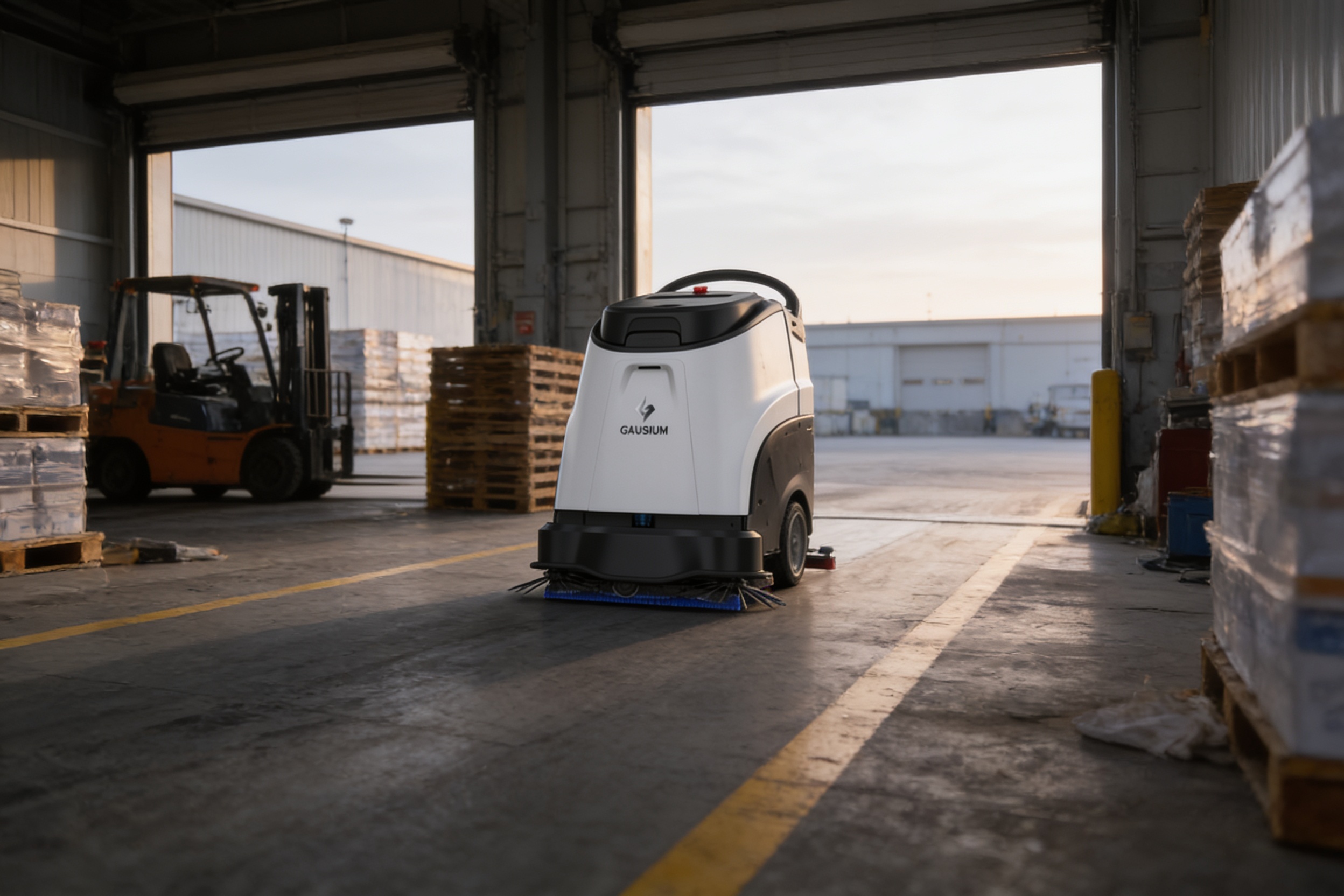
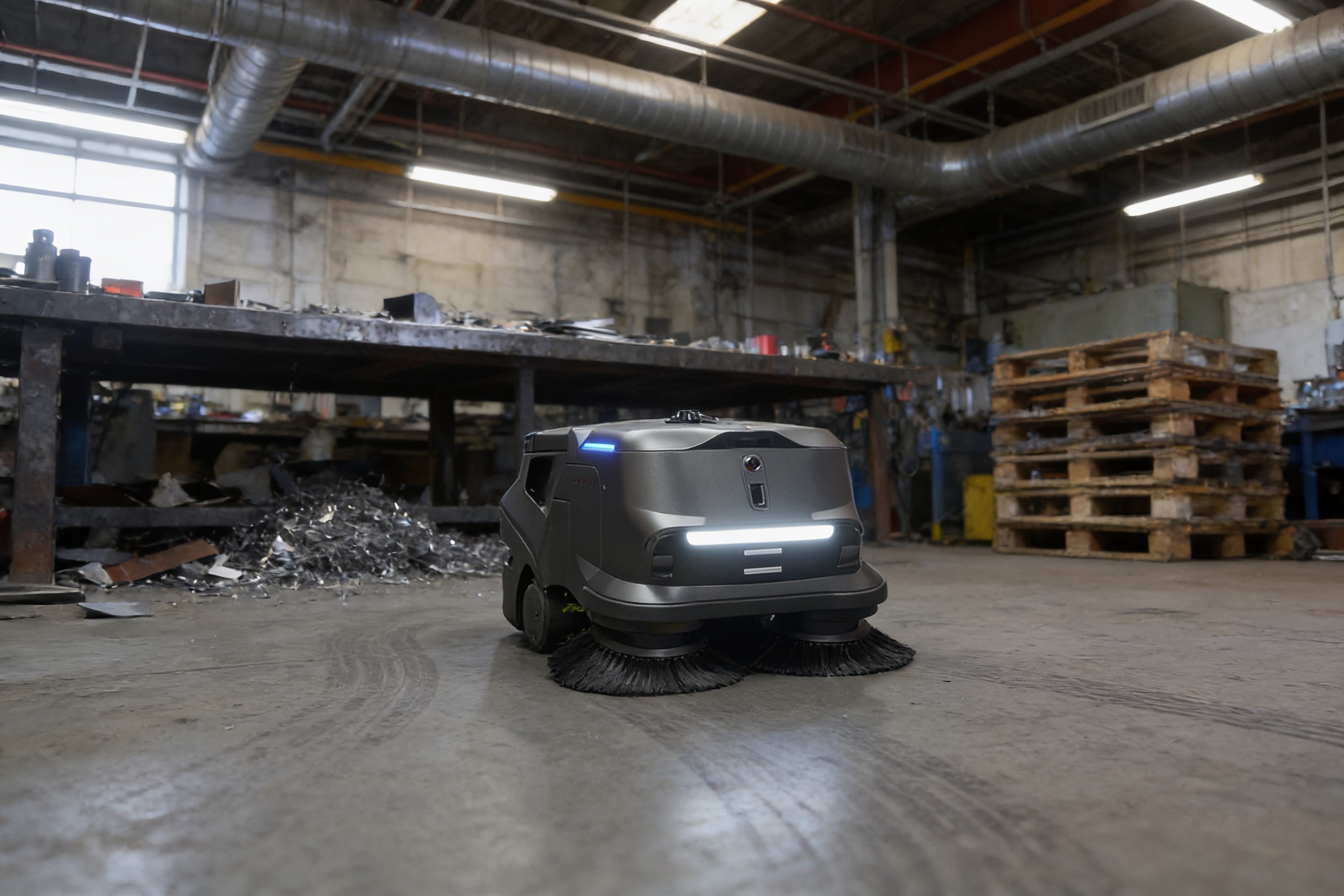
A floor cleaning robot handles repeat work on open floors. It follows a mapped route, scrubs or sweeps, and returns to its dock. It does best on hard floors in corridors, warehouse aisles, concourses, and open retail space where the route stays the same from night to night.
It cannot do hand work. It will not clean a toilet, wipe a handrail, empty a bin, or deal with a spill it did not sense. Crowded floors also cause trouble, since carts, chairs, and boxes that move during a shift block the route unless staff clear them first.
The comparison below is honest about where a person wins. Judgment, touch, and flexibility matter in a building where the same space gets a new job each day.
- Open hard-floor route
Cleaning Robot
Repeats the same mapped route evenly, night after night
Janitor
Covers it, but speed and quality tend to drop late in a long shift
- Restrooms and touch surfaces
Cleaning Robot
Not suited, a person is needed
Janitor
Cleans and disinfects by hand, including fixtures and handrails
- Spill response
Cleaning Robot
Only where its sensors see the spill on the route, otherwise it stops
Janitor
Sees the spill, reacts, and blocks off the area
- Night coverage
Cleaning Robot
Runs unattended once the route is confirmed clear
Janitor
Needs a scheduled shift and a supervisor for those hours
- Changing layouts
Cleaning Robot
Needs remapping when furniture or stock moves often
Janitor
Adapts on the spot to a new job each day
- Sick days and call outs
Cleaning Robot
Runs regardless of call outs, though staff still check it
Janitor
Gaps must be covered by overtime or other staff
What do the hours and labor numbers look like?
Most published hour figures come from vendor case studies, so they describe a robot maker's customer, not your building. A 2023 healthcare case study reports two scrubbers ran about six hours a night, and that total labor for the floorcare team fell from 16 hours to 5 hours per night, with the team going from three people to two.
A building cleaning contractor's vendor case study reports more than 2.5 hours per day of autonomous cleaning on average, about 20 hours per week. A grocery retailer's vendor case study reports 33,649 hours saved cumulatively in 2024 across nearly 90 stores. Those figures are vendor-reported and not independent, so ask for the same measures during a pilot.
One integrator's marketing says a janitor covers about 30,000 square feet per shift and a robot about 100,000. We could not verify that, so test coverage on your own floor before you rely on it.
| Task | Today | With a robot |
|---|---|---|
| Whole floorcare team, one night (healthcare case) | about 16 hours of labor | about 5 hours of labor |
| Autonomous scrubbing with two units (healthcare case) | the same route staffed by people | about six hours a night run by robots |
| Autonomous cleaning (building contractor case) | staff scrubbing the same area by hand | more than 2.5 hours per day, about 20 hours per week |
| Your building, main floor route | measure with a timed walk-through | set after a site assessment |
Hour figures come from vendor-reported customer case studies, not independent research. Your own row should come from a timed walk-through of your floor, not from these examples.
How do turnover, night shifts, and injuries change the math?
According to the BLS Occupational Outlook Handbook, about 2.4 million jobs of this kind existed in 2024, and projected growth from 2024 to 2034 is 2 percent, slower than average. The same page projects about 350,300 openings a year on average, including replacements for workers who leave. Most janitors work full time, but part-time work and variable schedules are common.
Turnover is the hardest figure to pin down. A staffing research site puts turnover at 150 to 200 percent at multi-site cleaning operators, but we could not trace that to BLS. A janitorial industry blog citing BLS says turnover stayed relatively steady in 2020 while most industries spiked. Use your own exit records when you estimate replacement cost.
Night work is common. An archived BLS handbook page from 2023 says many cleaners work evening hours because offices are cleaned when empty, and cleaners in 24-hour settings work nights, weekends, and holidays. Night coverage is where a robot earns its place, once the route is confirmed clear.
Injury exposure is real. According to the BLS injury snapshot, private employers reported 21,100 nonfatal injury cases with days away from work among janitors and cleaners in 2020, a rate of 191.6 per 10,000 full-time equivalent workers, up from 157.4 in 2019. In 2019, falls on the same level and falls on floors or walkways were among the most common causes, and the back and hands were the most affected body parts. There were 42 fatal injuries in 2020, down from 45 in 2019.
How does a team work with a robot?
The workable pattern is a robot plus fewer staff, never zero. Staff clear the route and start the run, handle restrooms, trash, and spills, and respond to calls. The robot takes the long repeat passes. The morning lead reads the run report and fixes what the robot flagged.
Roles change but do not disappear. A worker who used to scrub the same corridor for hours now clears obstacles, checks robot status, does the hand work, and covers reactive calls. That usually means a changed schedule and new training, and both should be planned before go live.
Staff who are no longer needed on the route should move to a defined duty, not be quietly cut. Explain the change early and agree on who responds when the robot stops mid route.
What can't a cleaning robot do?
A cleaning robot cannot make judgment calls. It cannot tell whether a stain needs another product, decide whether a wet floor needs a sign, or notice that a cable has dropped into an aisle. It stops or routes around what its sensors pick up, which is useful but not the same as seeing a problem.
It is not suited to restrooms, touch surfaces, stairs, or tight spaces full of furniture. Floor type matters too. Thresholds, wet areas, and some textured or polished surfaces can limit the route, and a site that changes every week will need remapping.
It also needs a person on site. Someone has to clear blocked routes, handle faults, and respond to alarms, which means naming a contact at the building.
What should you check before deciding for your building?
Measure three things before deciding: how much open floor gets cleaned on a fixed route, how many hours that route takes today, and how often shifts go uncovered. Those numbers tell you more than a coverage claim in a brochure.
Also ask whether the route is clear when you want the robot to run, and whether the floor is one the robot can read. The items below most often change the answer.
How do you get started with a cleaning robot in Austin?

Start with a site assessment, not a commitment. We are a commercial robot integrator. We assess the site, pick the robot that fits the floor, lease it through financing, deploy and integrate it, train staff, and service it nationwide. The lease payment comes as a fixed quote after the site assessment, so you see the number for your own building.
A practical first step is one leased unit on one route for a set period, with hours and incident records tracked before and after. Ask for a pilot plan that names who clears the route, who reviews the run report, and who responds to faults.
Bring your staffing records, floor plan, and incident logs to the assessment. That lets us test the route, set a realistic schedule, and tell you plainly where a robot is the wrong tool.
Frequently asked questions
Put a robot to work in Austin.
We walk your site, learn the job, and recommend the unit that fits. Then we quote the lease, deploy it, and keep it serviced.
Sources
- US Bureau of Labor Statistics, Occupational Employment and Wage Statistics (OEWS May 2024)
- BLS Occupational Outlook Handbook: Janitors and Building Cleaners
- BLS Survey of Occupational Injuries and Illnesses snapshot: Janitors and Cleaners, 2016 to 2020
- City-stats employment page citing OEWS 2024 (third party, not verified against bls.gov)
- Janitorial Manager blog on janitorial turnover citing BLS
- Staffing research on janitorial industry costs (secondary, not traced to BLS)
- Archived BLS Building and Grounds Cleaning page (2023 projections)