

The short answer
A cleaning robot vs janitor in New York decision usually turns on floor shape and task mix. A floor scrubbing robot makes sense for large, mostly open floors cleaned on a fixed route, most often at night, while a janitor stays for restrooms, spills, glass, trash and anything that needs judgment. It does not make sense for small, cluttered or heavily furnished spaces where most of the work is hand cleaning, and the right setup is always a robot with fewer staff on floor work, never zero staff.
See what a cleaning robot costsRun the numbers in the ROI calculator
Key takeaways
- A robot takes repeatable floor passes on large, open, mapped routes, not the whole janitorial job.
- Janitors keep restrooms, trash, spills, glass and any task that needs judgment.
- Pair a robot with fewer staff on floor work, never zero, so someone owns faults and exceptions.
- Measure floor area, stops and route in a site assessment before comparing any cost.
- Set the government wage data on this page against the floor hours a robot can take over.
Cleaning robot vs janitor in New York: when does a robot make sense?
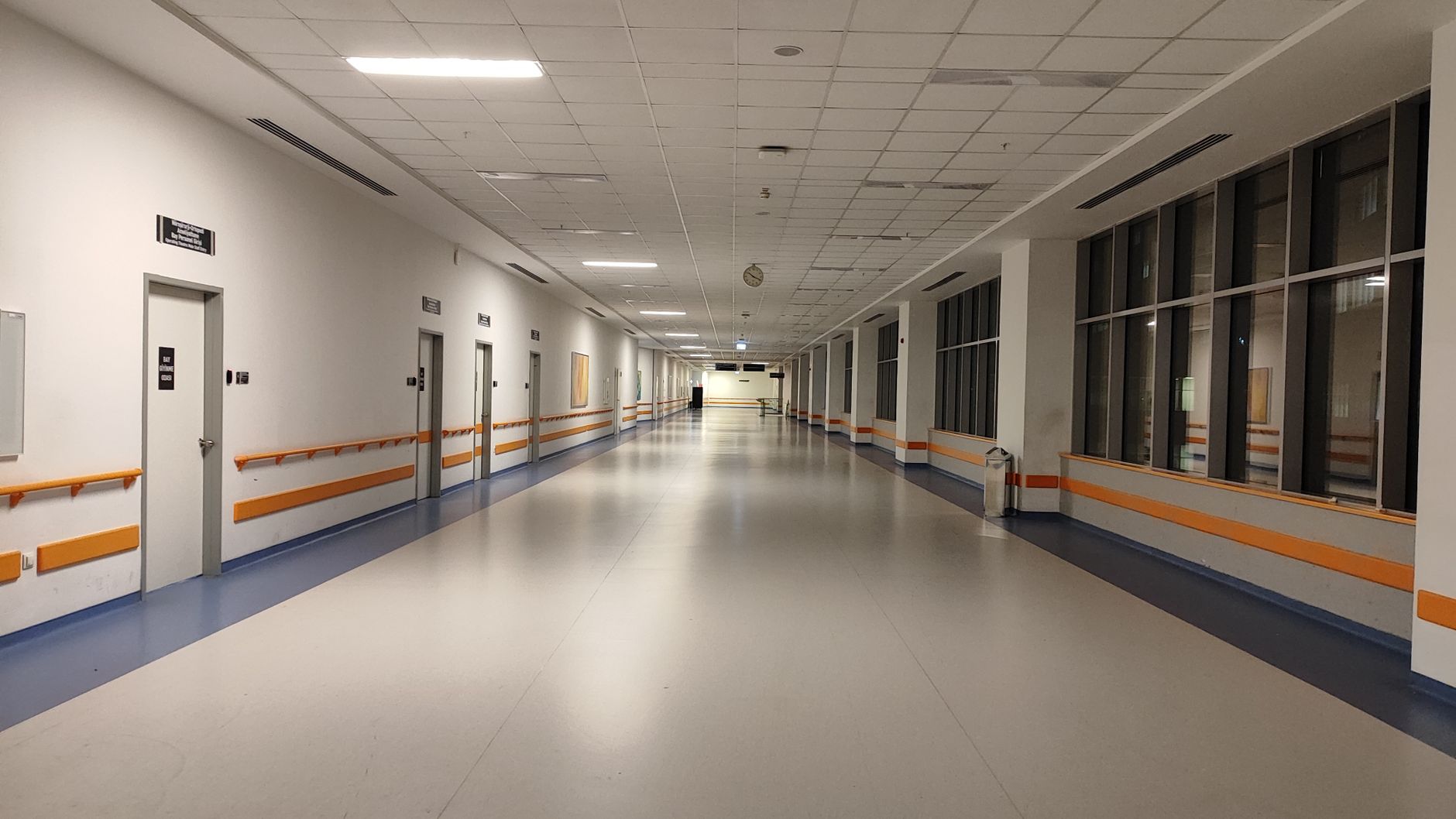
A floor scrubbing robot makes sense when the work is large, flat, repeatable and mostly open. Lobbies, long corridors, storage floors, retail aisles and gym floors are typical fits, because the same route is walked on a regular schedule and a person is doing the same passes by hand.
It does not make sense as a straight replacement for a janitor. Most New York buildings have restrooms, trash rooms, spills, glass and tenant requests that a machine cannot close, so the robot takes the floor pass and the staff keep everything else.
Skip the robot when the space is small, full of loose furniture, has frequent level changes, or the main job is hand cleaning. In those buildings the floor passes are short and the setup effort is high, so the saving may not justify the work of setting it up.
What does a janitor actually do in a shift in New York?
Janitorial work is a mix of short tasks spread across a shift rather than one long floor job. Staff empty trash, restock paper and soap, clean restrooms, wipe high touch surfaces, spot clean spills, mop and vacuum, and report damage or equipment faults. The mix shifts by building type, so the first step is to write down the actual task list for the site.
The occupation is large. According to the Bureau of Labor Statistics Occupational Outlook Handbook, janitors and building cleaners held about 2.4 million jobs in 2024, and the handbook projects about 351,300 openings a year, which covers replacement hiring as well as new positions. Growth is projected at 2% from 2024 to 2034, which the handbook describes as slower than the average for all occupations.
The local scale is also large. According to BLS Occupational Employment and Wage Statistics, the New York-Newark-Jersey City metro had 181,600 people employed as janitors and cleaners except maids in May 2023. Use the government wage data on this page as the local labor figure when you compare the staff hours a robot could take over.

Median hourly wage, Janitors and Building Cleaners
$4,540
Monthly cost of one full-time worker in New York, NY, at the median wage plus payroll costs (an estimate, not a quote).
Which cleaning jobs can a robot take, and which can it not?
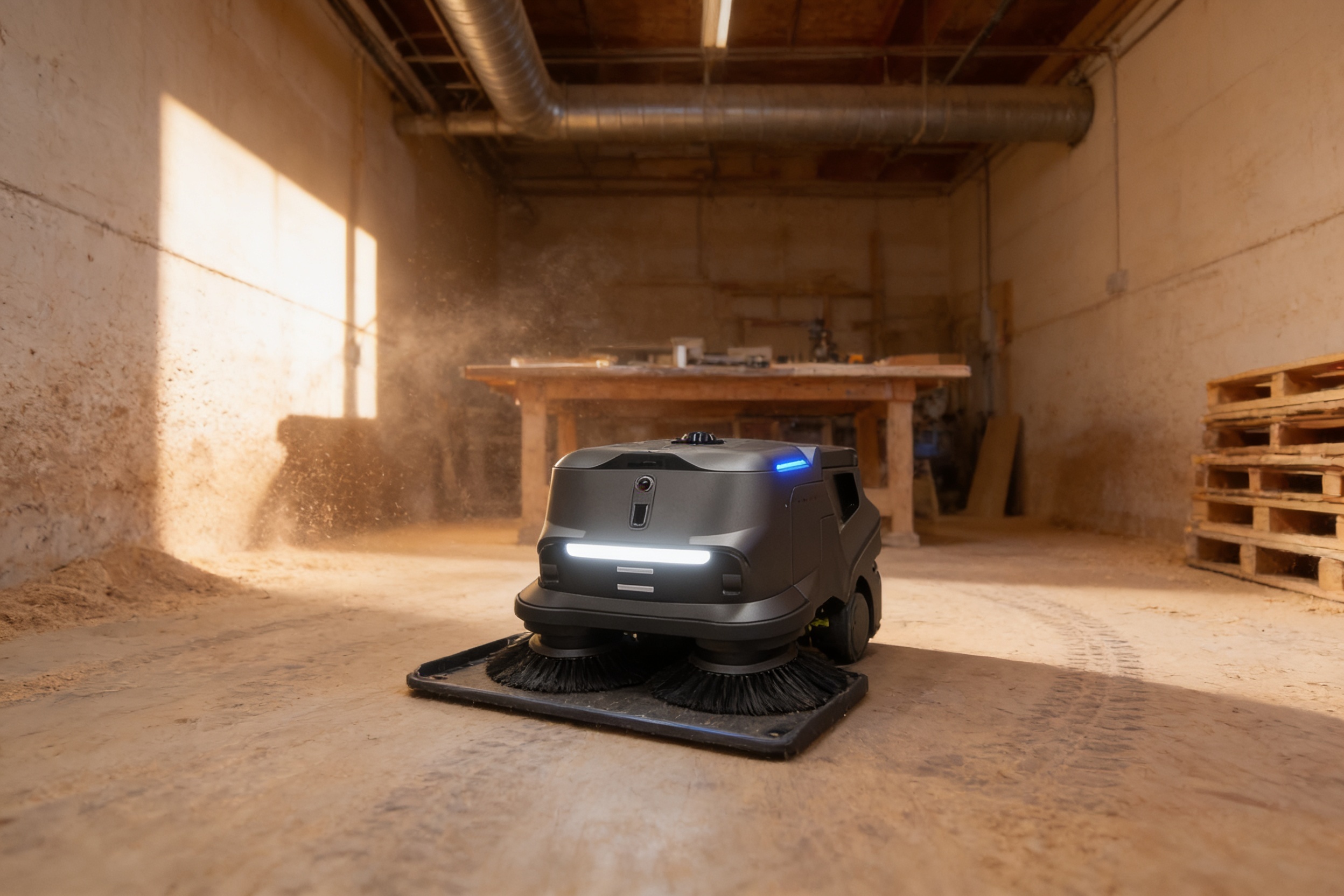
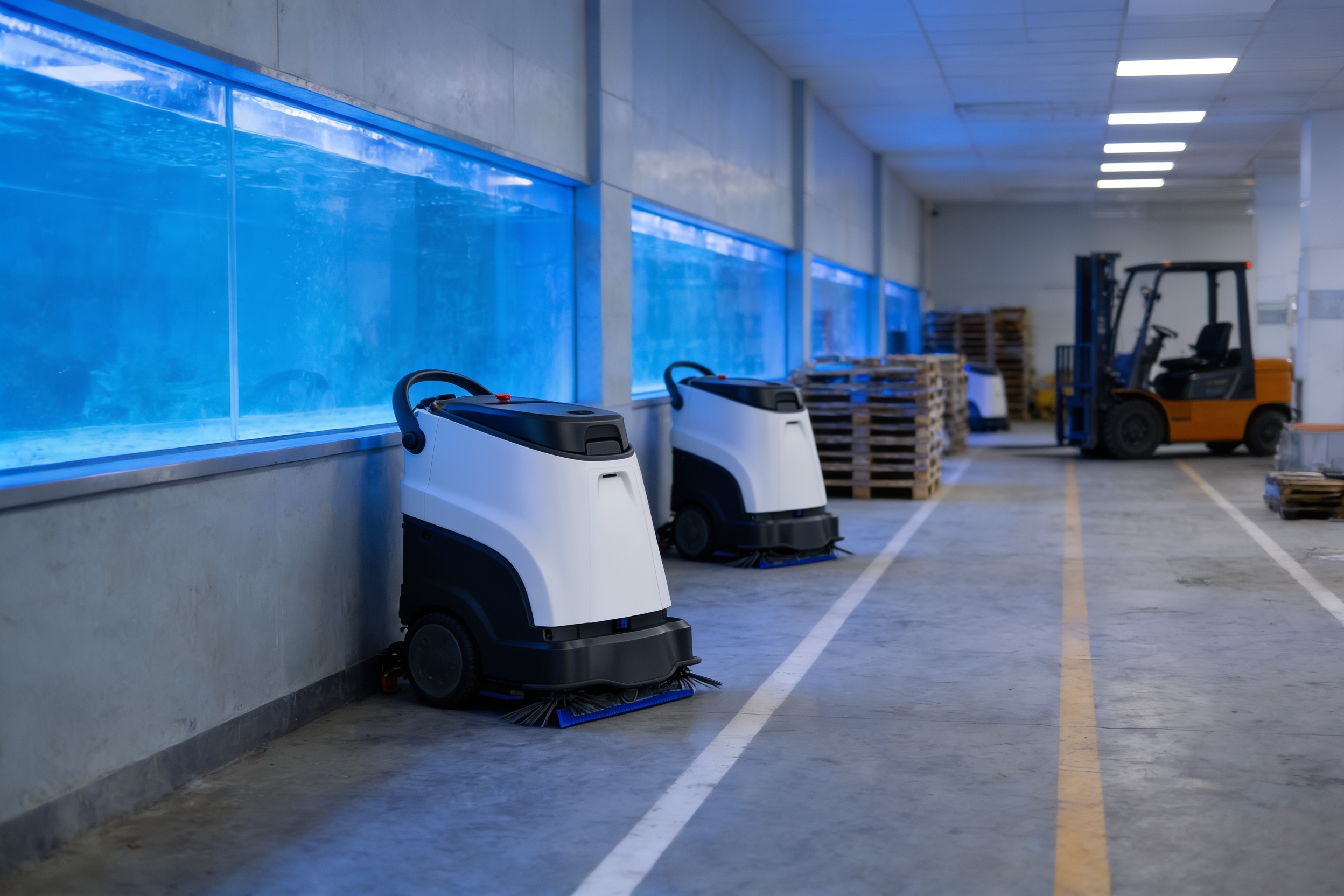
A robot can take scheduled scrubbing and sweeping of open floor on a mapped route, plus repeat passes in corridors and aisles. It follows the same path on each run and can work when staff are not doing floor passes, which is where most of the time gain sits in a typical building.
Rated coverage numbers help set expectations, but they describe a machine at full speed on a clear floor, not a site. The numbers that decide the result are open floor area, route length, the number of stops and turns, and the time spent clearing obstacles. The site walk has to measure each of them before anyone talks about hours.
A robot cannot empty trash, clean toilets, restock dispensers, clean glass, move furniture, or judge a spill of unknown material. It also cannot clear a blocked route on its own. Those tasks stay with staff, and they fill much of the day in a building that has restrooms and high traffic areas.
- Night coverage
Cleaning Robot
Runs a mapped route with no operator on site once it is set up
Janitor
Needs a shift, breaks and a supervisor for lone work
- Restrooms and trash
Cleaning Robot
Cannot do this work
Janitor
Handles it fully, including restocking and checks
- Spills
Cleaning Robot
Stops or pauses in front of a spill and needs a person to clear it
Janitor
Assesses the spill, clears it and reports it
- Repeat floor passes
Cleaning Robot
Same path and speed on every run
Janitor
Varies pace and detail and adjusts to clutter
- Blocked route
Cleaning Robot
Pauses until the route is clear
Janitor
Moves the item or works around it at once
- Inspection and judgment
Cleaning Robot
Follows its map and does not inspect the room
Janitor
Notices damage, odor, wet patches and loose items
How many hours does a robot take off the shift?
The honest answer is a measured one. A janitor's shift is split across tasks, so the time a robot frees is the share of floor passes on its route, not the whole shift. Two buildings with the same square footage can differ sharply because of furniture, stops and how the route is set.
We could not verify site-level hour figures for this building type from the government sources reviewed here. The figures to use come from measuring the floor: time one manual pass, count the zones, and note every stop. The hours table below lists the tasks, and the site measurement fills in the time for each.
Overtime and night hours matter too. Track how many hours of floor work fall into overtime and into the night window, because a robot that runs in an empty window changes the staff mix without changing what gets cleaned.
What do the labor numbers say about turnover, nights and injuries?
Verified turnover data for building cleaning was not found in the government sources reviewed, and the same is true for overtime and sick day rates in this occupation. Trade commentary cites very wide turnover ranges, but those are not measured statistics and should not drive a plan. Ask your contractor or HR team for separation, overtime and absence records for the building, since that data will shape the staffing plan more than any industry average.
Injury exposure is real. According to the Bureau of Labor Statistics Survey of Occupational Injuries and Illnesses, private industry janitors and cleaners except maids and housekeeping cleaners recorded 191.6 cases with days away from work per 10,000 full-time equivalent workers in 2020, from 21,100 cases, and the same series reported 157.4 in 2019. The 2020 figure is the latest year we verified, so read the series as a signal, not a rate for today.
Night work is where a robot changes the picture most. Fewer people are on site, staff often work alone with equipment, and a mapped route can run in that window while people handle restrooms and trash. Fewer hours pushing equipment in an unsupervised window is the practical gain, though we did not verify an injury reduction from robot use.
How does a team work with a robot?
The robot is a tool inside a staffed plan, not a shift with nobody in it. Someone loads the route, clears obstacles before each run, checks the run record in the morning, and handles any fault or stuck unit. Staff move from pushing equipment to checking and exception work, and the building keeps coverage on nights and weekends.
The usual split is one robot on the open floors while the janitor covers restrooms, trash, spills and the reset. The team is smaller on floor passes but never zero, because the robot cannot close the tasks it cannot do.
According to the AACEM and ISSA Autonomous Cleaning Survey, about one-third of non-adopters said they were likely to start using autonomous cleaning within a year. That survey dates from 2019 and its full report is member restricted, so read it as a sign of intent, not a measure of the market now.
What can a cleaning robot not do?
A robot cannot see what a person sees in a room. It can miss a wet patch, a loose object or a damaged floor edge when the route is set up wrong, so spot checks by a person stay in the plan. The machine follows its map. It does not inspect.
Its route depends on a clear, mapped space. Pallets, cones, chairs left out overnight and cords on the floor cause pauses, and each pause is a person's job to clear before the run can resume. A route that needs constant clearing does not save much.
It also cannot deliver the tenant facing detail that makes a building feel clean, such as restroom finish, glass, trash handling, odor control and answering a complaint. Those stay with staff, and an honest plan says so in writing.

Does leasing a cleaning robot pay off in New York?
Payback is a labor question, and it is the main question in any cleaning robot vs janitor in New York comparison. Set the hours the robot takes over against the local wage for this job shown on this page, then subtract the staff time still needed to run it, the lease and the service. A robot that saves short bursts of floor time but needs a person to clear the route every night does little for the budget.
The lease is a fixed robot lease payment with maintenance included in the plan, and the exact figure is set in a quote after a free site assessment. Floor area, route, obstacle count and the number of units decide it, so no fair number can come from a general description of the building.
Ask for the full package in writing: lease term, service and repair coverage, response times, what happens when a unit is down, and whether a backup unit is included. Commercial robot leasing terms vary, and the written terms are what you will live with on a bad night.
How do you get started with a robot lease?
Start with a free site assessment. Our integration team maps the floor, measures the route, notes obstacles and the shift schedule, and marks which tasks stay with staff. The output is a route plan and a quote for the lease and service, and nothing is committed before you have seen it.
Run a pilot before any wider rollout. Start with one leased unit on one zone for a set period, so the real route time, stop count and staff effort show up in your own building. We deploy and integrate the unit, train the staff who run and check it, and handle service nationwide, including on-site dispatch when a fault needs a visit.
Name one person for the robot on each shift and give them a fault contact. The early weeks show whether the schedule and staffing plan hold, and that is the point to decide whether to add units or keep the pilot as it is.
Frequently asked questions
Put a robot to work in New York.
We walk your site, learn the job, and recommend the unit that fits. Then we quote the lease, deploy it, and keep it serviced.
Sources
- US Bureau of Labor Statistics, Occupational Employment and Wage Statistics (OEWS May 2024)
- Bureau of Labor Statistics Occupational Outlook Handbook, Janitors and Building Cleaners
- BLS Occupational Employment and Wage Statistics, May 2023, Janitors and Cleaners
- BLS Survey of Occupational Injuries and Illnesses, Janitors and Cleaners 2016 to 2020
- AACEM and ISSA Autonomous Cleaning Survey Report