

The short answer
For a cleaning robot vs night janitor decision at a data center, the robot makes sense for scheduled, repeated scrubbing of large, empty, hard-floor halls with clear routes, while a person still handles the subfloor, tile edges, equipment-adjacent work and every alarm. The robot does not make sense where staging breaks the route, where raised-floor tiles have not been checked for the machine, or where the site would run with no one on shift. Most sites should plan a robot plus a smaller night team, with the lease quoted after a free site assessment.
Key takeaways
- The robot fits scheduled passes over large, empty, clear hard-floor halls.
- A person stays on the night shift for subfloor work, tile edges, equipment-adjacent tasks and alarms.
- Operations staff turnover at data centers is high, so coverage gaps are the real risk to plan for.
- Facility counts vary by definition, so size the job from your own hall square footage and route.
- The lease is quoted after a free site assessment that maps your floor, route and hours.
Cleaning robot vs night janitor at data centers: which makes sense?
A cleaning robot makes sense at a data center when the job is repeated floor passes over large, empty, hard-floor halls on a fixed schedule. That is the part of a night janitor's work that a scrubber repeats most reliably, and it is the part that stretches longest over a shift with little variation.
The robot is a poor fit where staging breaks up the route, where most of the night goes to subfloor or tile work, or where the site would run with no one on shift. The sensible plan for most sites is a robot plus a smaller night team, not a robot in place of the team.
What does a night janitor actually do in a data center shift?
A night janitor in a data center works in halls that are often empty of people but full of equipment. The usual tasks include emptying waste and recycling, cleaning restrooms and break areas, spot cleaning on the hard floor, wiping surfaces, and passing the main halls with a vacuum or wet pass. The data hall itself is the sensitive part, because dust and residue there can matter to the equipment.
Raised-floor work is different from ordinary floor care. Field guidance usually separates the subfloor plenum, which is cleaned by HEPA vacuuming, from the tile surface, which should be cleaned with ESD-safe methods and no wax or residue-leaving chemicals. Those are hand tasks on a schedule set by the facility's own maintenance plan. The research did not produce a verified hour count for them, so measure them on your own site before deciding.
Walking across the floor can agitate settled particles, which is one reason the route, timing and pass pattern matter. A scrubber running the same path each night helps only if that path is planned around the real traffic in the hall.
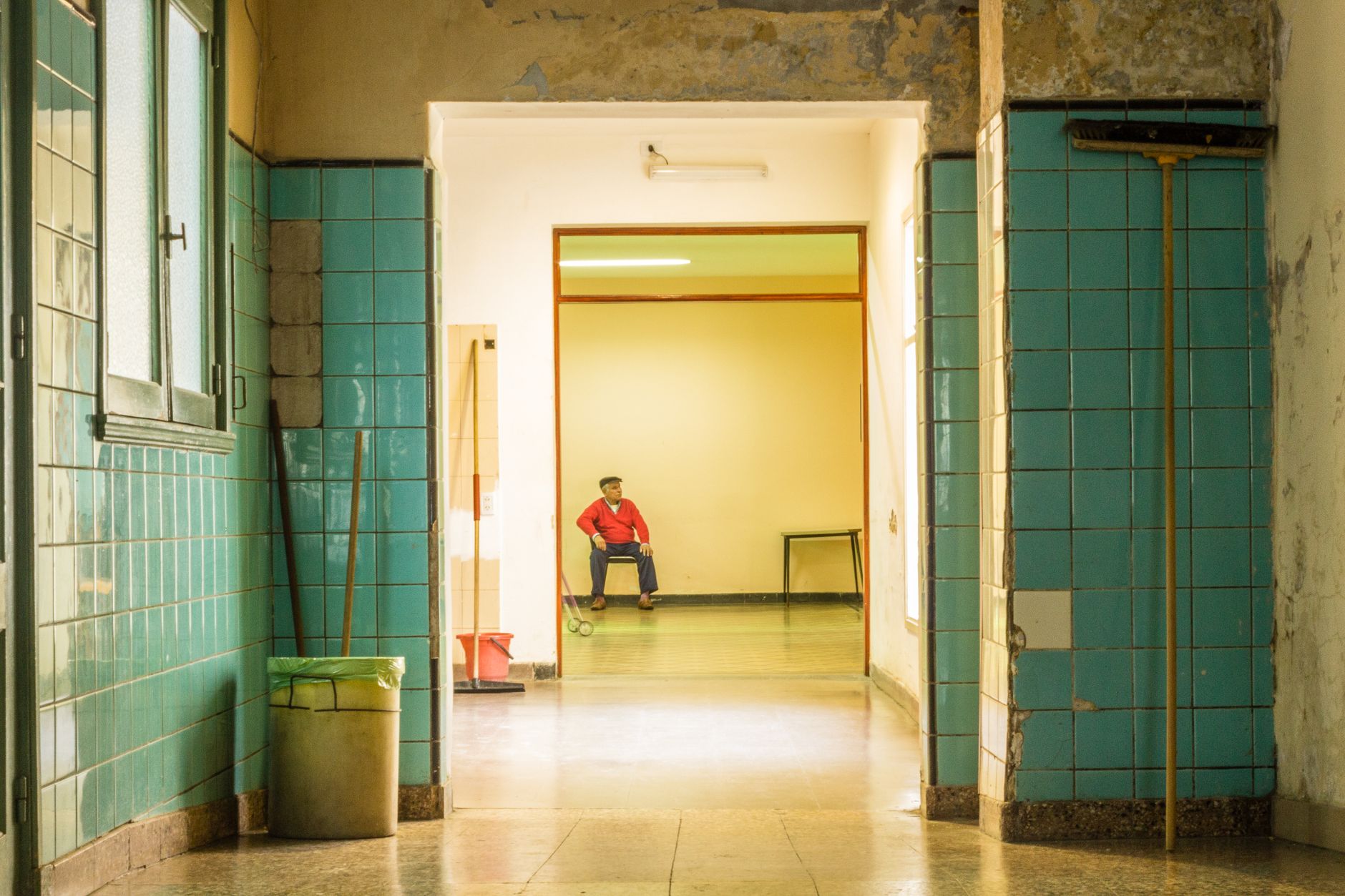
Median hourly wage, Janitors and Building Cleaners
$4,041
Monthly cost of one full-time worker, at the median wage plus payroll costs (an estimate, not a quote).
Which parts of the work can a robot take, and which can't it?
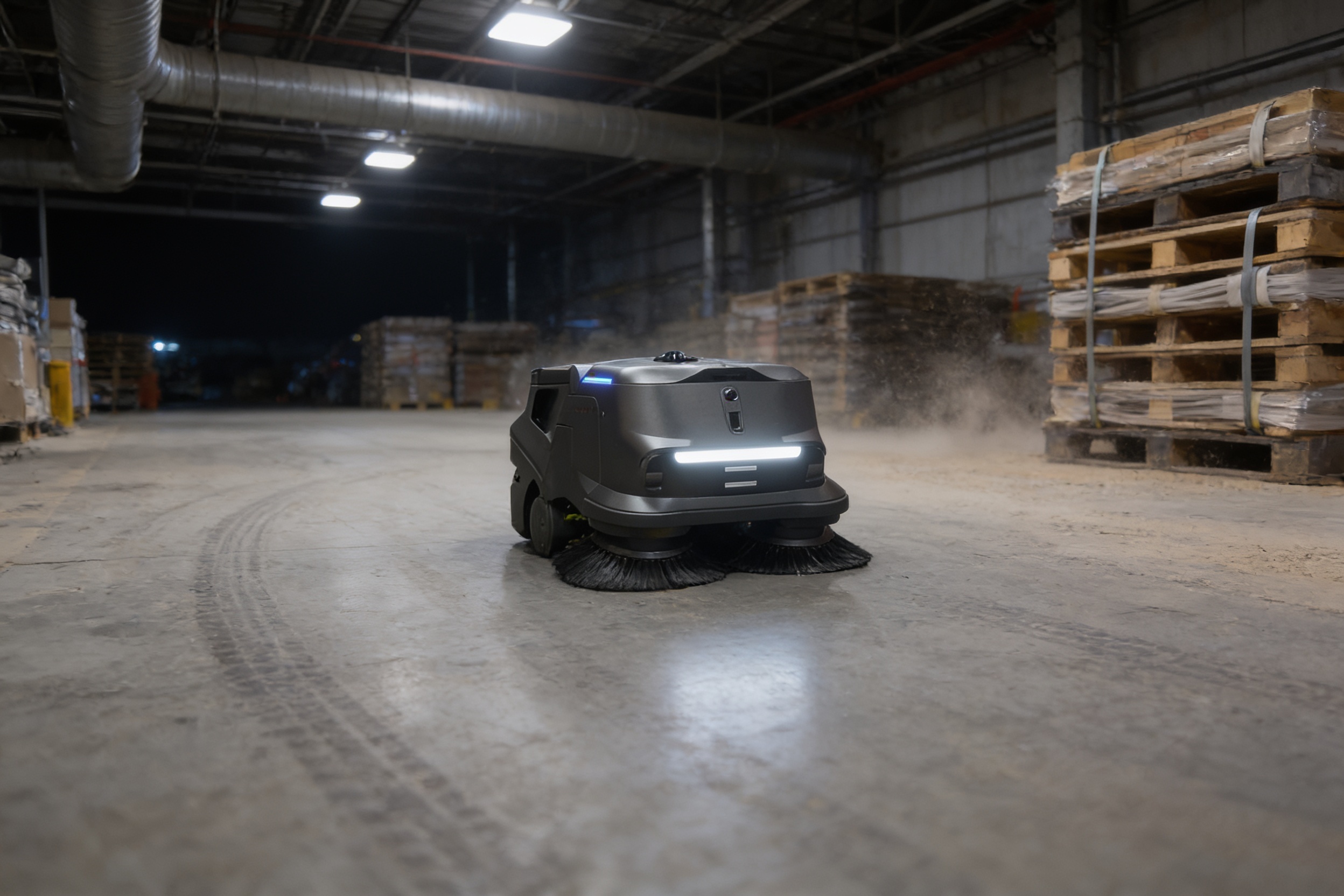
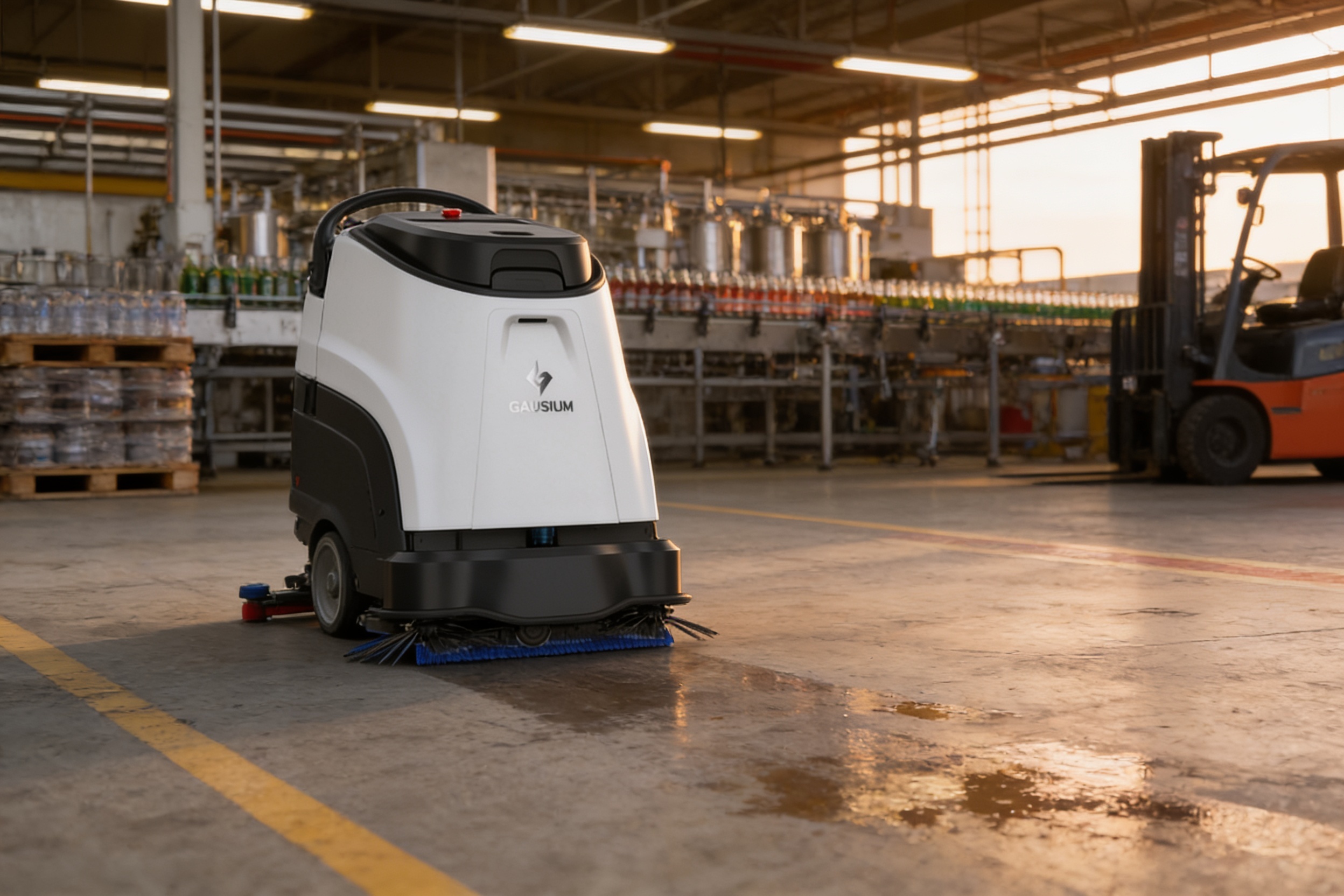
The robot can take the open hard-floor passes: long aisles between rows of equipment, main corridors, and clear areas where the path is continuous and free of carts, pallets and cable trays lying on the floor. It runs the same route on a set schedule without fatigue, which is the part of the job that is hardest to keep consistent across a long night. Before the first pass, mark the route on the floor plan and note every fixed obstacle, since a route that changes each week is a route the machine cannot count on.
It cannot take the subfloor plenum, the tile-by-tile work at edges and cut-outs, cleaning inside cabinets or equipment racks, or restroom and break-area cleaning. It also cannot judge whether a spill or residue is a problem, and it cannot respond to an alarm or to a person in the hall.
How many data centers are there in the United States?
The count depends on the definition. Walnut Invest, on a data center statistics page updated in July 2026, lists 5,427 US facilities based on a November 2025 aggregate. A Statista guide citing an April 2026 figure gives 4,423 US data centers. Cleanview, which uses a stricter definition and was last updated in June 2026, lists 614 operating and 926 planned data centers, with 18,405 MW of operating capacity.
For staffing, the national total matters less than the count in your own region and your own halls. A robot is sized to the floor area of one hall, not to a national figure, so use the national numbers to understand the market and then size the job from your square footage, number of halls and route layout.
What is the labor picture for night cleaning staff?
According to the Bureau of Labor Statistics Occupational Outlook Handbook, there were about 2.4 million janitor and building cleaner jobs in 2024, and about 35% of them were in services to buildings and dwellings. Employment is projected to grow 2% from 2024 to 2034, which the BLS describes as slower than average, adding about 47,800 jobs. The same source projects about 350,300 openings a year on average over the decade, and says most workers learn on the job with no formal education typically required. The government wage data on this page shows the local wage for this job, so use it when you compare the night team with the lease.
Injury exposure is real. The BLS injury snapshot for janitors and cleaners, except maids and housekeeping cleaners, counts 21,100 nonfatal injury and illness cases with days away from work in 2020, and 42 fatal work injuries in 2020 compared with 45 in 2019. That is the case for keeping lifting, bin emptying and ladder work with people, and for handing repetitive floor passes to a machine where the route is clear.
This research did not find a primary government turnover rate, overtime rate or sick-day rate for this occupation. Vendor and industry blog estimates of janitorial turnover vary widely, so they are not used here. Pull turnover, overtime and absence figures from your own payroll before you set the night coverage plan.
- Night coverage
Cleaning Robot
Runs the same route at the same time every night, with no sick days
Night Janitor
Can respond when something changes, but absences and turnover break the shift
- Repeat passes
Cleaning Robot
Keeps a consistent pass pattern across a long, empty hall
Night Janitor
Pace and attention can drift over a long shift
- Heavy lifting and bins
Cleaning Robot
Cannot empty bins or lift
Night Janitor
Does this work, with the injury exposure the BLS data shows
- Subfloor and tile
Cleaning Robot
Not suited to plenum or tile edges
Night Janitor
Does this work with HEPA and ESD-safe methods
- Alarms and judgment
Cleaning Robot
Stops and reports faults, but cannot respond
Night Janitor
Responds to alarms and judges residue and spills
- Start-up
Cleaning Robot
Needs route planning and a site assessment first
Night Janitor
Can start the same night with the existing crew
How much staff turnover do data centers face on operations shifts?
Uptime Institute's Field Report 186, published in October 2025, puts mid-level staff turnover at 57% and operations management turnover at 30%. The staffing survey behind it had 864 respondents overall, including 470 facility owner and operator respondents, with fieldwork from July to September 2025.
Trade press coverage of Uptime's 15th Global Data Center Survey 2025 reports that nearly two-thirds of operators have difficulty retaining staff, finding qualified candidates, or both, across more than 800 operators surveyed. These are operations staff figures, not janitor figures, but they point the same way: the night shift is hard to fill and hard to hold.
The practical read is that one missed night shift can leave a hall uncovered for the whole night. A robot plus a smaller team gives you a floor pass that does not depend on one person showing up.

How does a team work with a robot in a data center?
The robot works best as a shift member with a defined job, not as a replacement for the team. The person checks the route before each run, clears any new obstacle, confirms the hall is ready, and handles everything the machine should not touch. At the end of the run the person checks charging and refill, reviews any stop or fault, and logs the pass. Write the handoff note as a short fact list, with the route run, any stops, any faults and the items left for the subfloor schedule, so the next person starts from the record and not from memory.
Staffing does not go to zero. Keep at least one trained person on the night shift even when the robot runs the main passes, because someone has to answer alarms, handle spills, and do the subfloor and tile work on the facility's schedule. Train the night staff on the route, the stop procedure and the fault log before go-live, with the people who already know the hall.
We deploy and integrate the robot, train your staff, and service it nationwide. The lease is quoted after a free site assessment that maps the floor, the route and the hours the hall is empty, which is where the team decides whether one unit covers the job or the plan needs a second.
What can a cleaning robot not do in a data center?

A robot cannot do the subfloor, the tile edges, the inside of equipment, or restroom and break-area work. It also cannot judge residue, respond to alarms, or work safely where the route is blocked or unclear. State these limits in the scope so staff do not assume the machine covers them.
This research did not find an independent deployment record of a floor scrubber running on raised-floor tiles. Treat that as an open question for your site. Check tile height, edge lips, thresholds, ramps, cable trays and floor loading before a pilot, and let the site assessment handle those checks.
Vendor specifications for runtime and coverage rate are vendor-reported and were not independently verified, so they are not used here as performance claims. A pilot in one hall gives you real numbers for your floor.
How do I get started with a cleaning robot for a data center?
Start with the hall, not the machine. Map the route, the empty hours, the raised-floor layout and the work that stays with staff. Then pick one hall for a pilot, so the team sees the robot run before any wider plan is set.
The lease is quoted after a free site assessment. The quote follows the scope, the route, the hours and the number of units, so the team and the facilities group can sign off on one plan. We lease the robot through financing, deploy and integrate it, train the staff, and service it nationwide.
Bring your hall square footage, the number of halls, your night shift roster and the raised-floor specifications. Those four items are enough to decide whether a robot plus a smaller team is the right plan for your site.
Frequently asked questions
Want a cleaning robot at your data center?
Tell us about your site. We will recommend the robot, quote the lease, and keep it serviced.
Sources
- US Bureau of Labor Statistics, Occupational Employment and Wage Statistics (OEWS May 2024)
- Bureau of Labor Statistics, Occupational Outlook Handbook: Janitors and Building Cleaners
- Bureau of Labor Statistics, Injuries, Illnesses and Fatalities snapshot: Janitors and Cleaners, except Maids and Housekeeping Cleaners, 2016-20
- Walnut Invest, data center statistics
- Statista, data centers worldwide by country
- Cleanview, US data centers
- Uptime Institute, Field Report 186: Staffing Survey 2025, Staffing crisis persists
- Uptime Institute, 2025 staffing and recruitment survey results and crosstab files
- Digitalisation World, Uptime Institute 15th Global Data Center Survey 2025