
The short answer
A cleaning robot makes sense at a dialysis clinic for the repeat night route through hallways, lobbies and waiting areas, but it cannot take the treatment stations, which need hands, disinfectant and air-drying between treatments. In a cleaning robot vs night janitor decision, the workable setup is the robot on the fixed route with staff still on shift, because station cleaning is the infection control priority and cannot be handed to a machine. Whether a lease pays off depends on the floor plan and the staffing gap, which a free site assessment measures.
See what a cleaning robot costsRun the numbers in the ROI calculator
Key takeaways
- A cleaning robot covers the repeat hallway and waiting area route, not the treatment stations.
- Station cleaning follows a written CDC sequence and stays with trained people.
- MedPAC's Medicare-based data put the average dialysis facility at 18 hemodialysis stations in 2019.
- Turnover estimates conflict, from 68.4% in a vendor blog to a 75% to 400% range in trade press, so check your own exit records.
- Always a robot plus fewer staff, never zero staff, and the setup is decided after a free site assessment.
Cleaning robot vs night janitor at dialysis clinics: which makes sense?
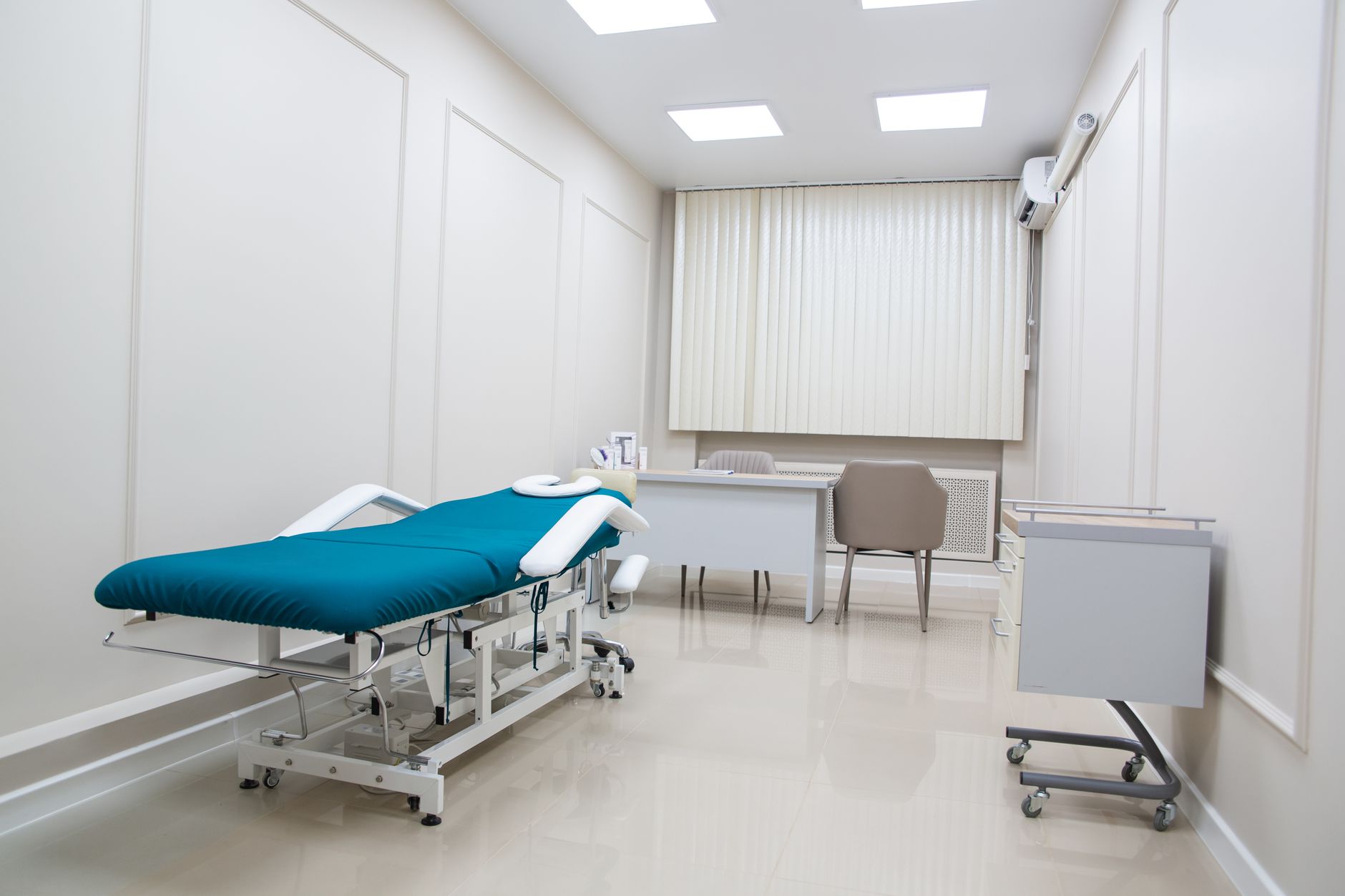
For most dialysis clinics the honest answer is both, with the janitor doing the work that needs hands. A cleaning robot fits the repeat route through the hallways, reception lobby and waiting area, because those floors get the same path every night and the work is mostly floor care. It fits poorly in the treatment bays, where the work is surface by surface and follows a written protocol.
The robot makes sense when the clinic has a large open route that repeats, when the night shift is hard to fill, and when the janitor's time is being used up on open floor that does not need a person. It does not make sense as a replacement for the janitor. A clinic that runs on the robot alone would leave the treatment stations uncleaned, and station cleaning is the part infection control plans focus on.
What does a night janitor actually do in a dialysis clinic?
Most of the night janitor's work in a dialysis clinic is the treatment area. The CDC's dialysis station checklist covers every surface in contact with the patient and every surface staff touch often, including the chair, tray tables and blood pressure cuffs. The sequence is to clean first if soil is visible, wipe with disinfectant, and let the surface air-dry. A person does that station by station, and no floor route can stand in for it.
Station count sets how much of that work there is. According to MedPAC's 2021 data book, citing Medicare data, dialysis facilities averaged 18 hemodialysis stations each in 2019. Every one of those stations needs the sequence between treatments, so the station work grows with the chair count before the open floor is touched at all.
The rest of the shift covers the common areas: waiting room, lobby, restrooms, staff areas, trash and supply rooms, and the floor between them. Restrooms and trash are hands-on work. They are not tasks to hand to a floor robot, and they should stay on the janitor's list whatever else changes.
Median hourly wage, Janitors and Building Cleaners
$4,041
Monthly cost of one full-time worker, at the median wage plus payroll costs (an estimate, not a quote).
Which parts of the night can a cleaning robot take?
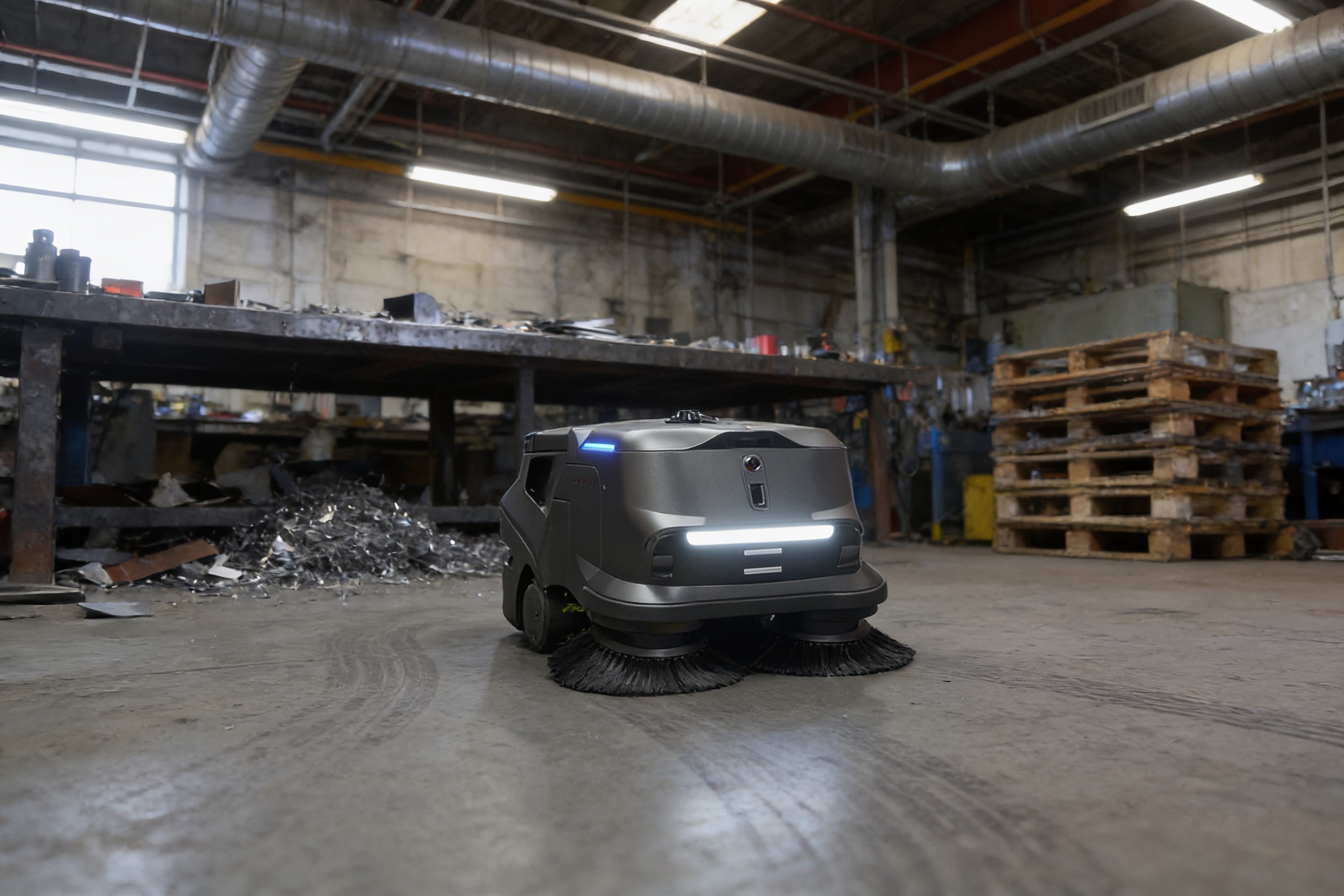
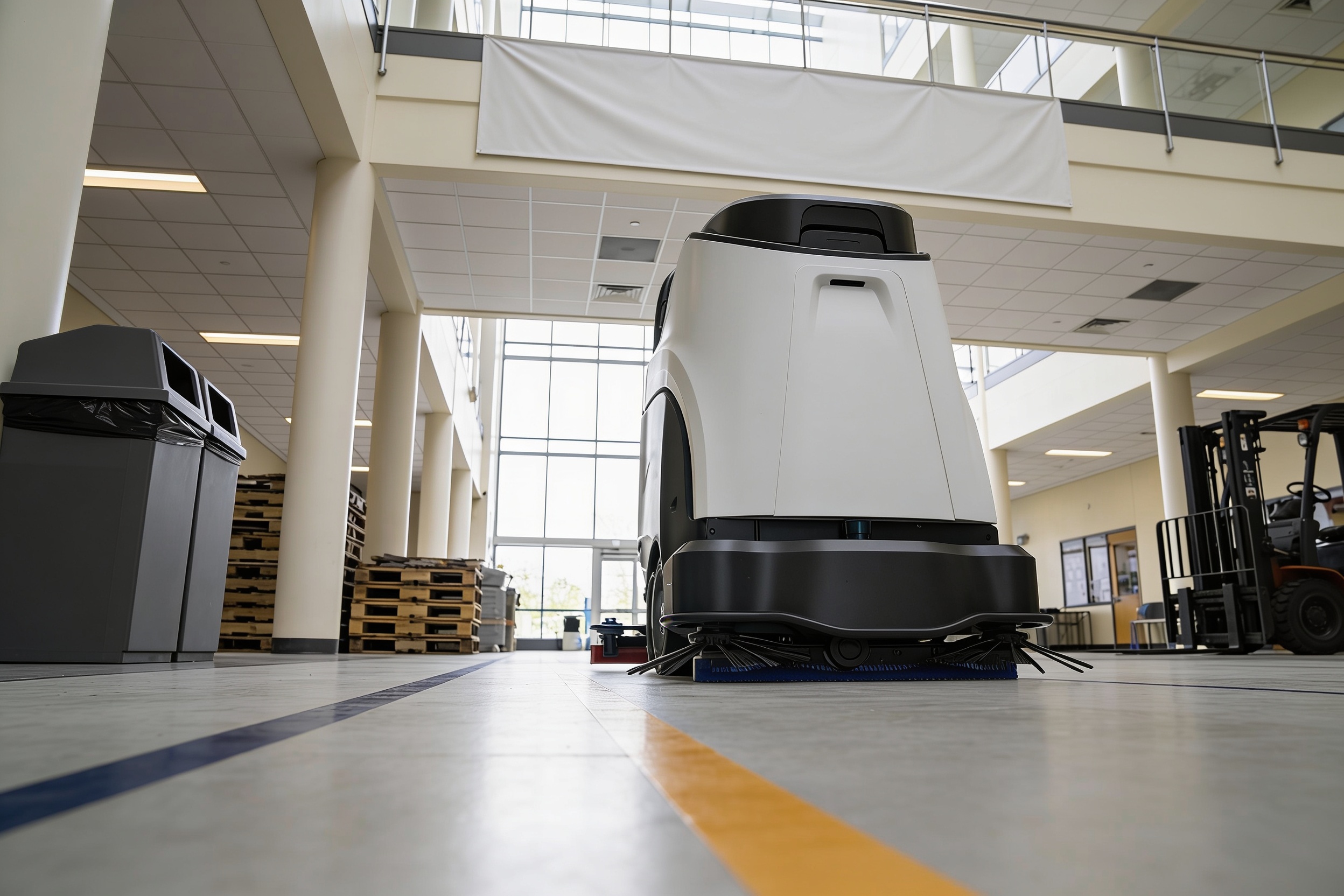
A cleaning robot can take the floor work that repeats along the same path: the main corridor, the waiting area floor, the lobby and the entry vestibule. Those areas see the same route each night, so the robot can run it while the janitor is in the treatment bays. The robot needs clear floor, so the staff have a pre-shift job of lifting chairs, moving carts and clearing the path.
The limits matter as much as the route. The robot cannot wipe a chair, a tray table or a blood pressure cuff, and it cannot reach the contact surfaces the CDC checklist names. A floor pass is not a disinfection step on a station, so the janitor's station work stays on the schedule, and the robot's pass runs alongside it, not in its place.
How big are dialysis clinics, and how much floor does a robot cover?

There are several thousand of these clinics in the US. MedPAC's 2021 data book, citing Medicare data, reports 7,657 dialysis facilities in 2019, with 134,159 hemodialysis stations. An eScholarship paper based on mandatory ESRD Quality Reporting System facility reports says 7,638 operational dialysis clinics remained as of July 1, 2023. The two counts are close, and the most recent national total found in this research is the 2023 figure.
Floor area follows station count. The VA planning guide sizes dialysis clinics by stations and gives about 8,841 gross square feet for 12 stations and about 13,673 for 36 stations, using a 1.5 gross-up on net area. Those are planning figures, not measured averages, but the gap of roughly 4,800 gross square feet means route length, not just clinic size, decides how much the robot covers.
The best-known productivity benchmark comes from offices. A study covered by Clean India Journal, linked to a commercial real estate firm, sets 5,000 square feet per janitor per eight-hour day as a benchmark. Surveyed sites averaged 6,414 square feet per janitor per day, with a median of 4,939, and 58% were above the 5,000 benchmark. Treat that as an office reference only. Treatment stations take far more time per square foot than open office floor, so the benchmark is likely to overstate the floor a janitor covers in a clinic.
What is the labor picture for night cleaning at these clinics?
The turnover figures are industry numbers, not government data, and they disagree. A workforce software vendor blog reports a 2024 annual separation rate of 68.4% for the services to buildings and dwellings subsector, attributed to BLS JOLTS data. A janitorial trade publication says turnover estimates in the field range from as low as 75% to as high as 400%. The search found no official BLS turnover figure for janitors and building cleaners, so plan with a range and check your own exit records.
Injuries are part of the night staffing picture too. According to the BLS Survey of Occupational Injuries and Illnesses, janitors and cleaners (except maids and housekeeping cleaners) had 21,100 nonfatal injury and illness cases involving days away from work in 2020. The incidence rate was 191.6 per 10,000 full-time equivalent workers, up from 157.4 in 2019. The same series reads 178.6 in 2016, 176.6 in 2017 and 137.1 in 2018, and no 2021 to 2025 values turned up, so 2020 is the latest verified year.
The government wage data on this page covers the local wage for this job. Use it to compare the cost of the night shift with the cost of a gap: overtime for whoever is still on, missed station work, and the day team absorbing the route. A night shift that goes unfilled is not free. It moves the work somewhere less visible, usually onto people already on shift.
- Repeat floor route
Cleaning Robot
Runs the same corridor path each night on schedule, the same way every time.
Night Janitor
Covers the route well, but tires, loses time to interruptions and varies by person.
- Station cleaning
Cleaning Robot
Cannot wipe chairs, tray tables or cuffs, or apply disinfectant and air-drying.
Night Janitor
Runs the full station sequence between treatments and can judge visible soil.
- Coverage when staff are short
Cleaning Robot
Keeps the floor route running on a night with one person on shift.
Night Janitor
Depends on one person filling every shift, so a sick day can leave the route undone.
- Judgment on spills and odd findings
Cleaning Robot
Does not judge whether a spill is a biohazard.
Night Janitor
Can recognize a spill that needs a response and call for it.
- Cluttered or changing floor
Cleaning Robot
Needs a clear path and may stop or reroute around carts and chairs.
Night Janitor
Moves chairs and carts and works around them without setup.
- Exposure to staff turnover
Cleaning Robot
Route knowledge sits in the setup and the routine, not in one person's habits.
Night Janitor
Route and station habits leave with each departing employee, and each hire has to learn them.
How does the team work with a cleaning robot?
The setup is always a robot plus fewer staff, never zero staff. The robot takes the repeat floor route, and the janitor takes the treatment stations, restrooms, trash and whatever the robot cannot reach. Night coverage stays on the clinic's schedule, and the person on shift clears the floor, checks the route and handles the work that needs hands.
That changes the janitor's order of work. The station protocol comes first because it is the infection control priority. After that, the janitor checks the robot's corridor pass and deals with any alert, rather than walking every corridor by hand. In a clinic short on night staff, the robot carries the floor route so the person on shift is not also pushing a scrubber through the lobby. The number of people on the night shift should be set by the station work, not by the robot.

What can a cleaning robot not do in a dialysis clinic?
The robot cannot do the station protocol, and it cannot handle the surfaces that touch patients. It cannot wipe a chair, a tray table or a blood pressure cuff, and it cannot apply disinfectant and wait for air-drying on a station. Those steps stay with people, and a floor pass that comes after them does not change that.
It cannot fix a poor floor plan either. Cramped corridors, many doorways, or carts parked in the route will shorten the robot's route or add pre-shift clearing. It does not judge whether a spill is a biohazard, and that call goes to a person. Staff also need to know which rooms and doorways are off limits to the robot, and that list needs to be written down and kept up to date.
Check the CDC pages before you write a station protocol into a contract. The CDC checklist is the reference point, but some CDC notes in the search results are archived, including a 2013 version, so the latest CDC text is the one to follow.
When does a cleaning robot make sense at a dialysis clinic?
It makes sense when three things are true. The clinic has a large open route that repeats every night, the night staffing gap is real and shows up as missed shifts or overtime, and the station work is staffed separately so the robot is not carrying the infection control load. If any of those is missing, the robot is the wrong answer, and a night janitor on a better schedule may be the right one.
A lease decision follows that check. We lease robots through financing, and the lease quote comes after a free site assessment that measures the route, the clear zones and the station count. That assessment is where the payback question gets answered, because it sets how many hours the robot takes off the janitor's route.
How do you get started with a cleaning robot lease?
Start with a site assessment. We map the clinic floor, mark the route and the clear zones, and count the stations so the janitor's protected station work is written down. From there we pick the robot that fits the site, quote a lease through financing, and handle deployment and integration. Staff training covers the route, the pre-shift clearing and the alerts.
Run it as a pilot first. One leased robot on one corridor for a set period shows how much route it covers and where staff time changes. We service robots nationwide, so the clinic does not have to find its own repair contact when a unit needs attention. Compare the pilot results with the station work and the staffing gap before you decide on a second unit.
Frequently asked questions
Upcoming hospitals & healthcare events
- ConferenceNew England College Health Association (NECHA) 2026 Annual MeetingNov 11 to 13, 2026Newport Marriott Hotel & Spa, Newport, RI
- ConferenceHLTH USA 2026Nov 15 to 18, 2026The Venetian Expo, Las Vegas, NV
- ConferenceIndiana Safety and Health Conference & Expo, 2027Feb 8 to 10, 2027Indianapolis, IN
- ConferenceHealthcare Project Delivery Conference 2027Feb 10 to 11, 2027Manchester Grand Hyatt, San Diego, CA
Want a cleaning robot at your dialysis clinic?
Tell us about your site. We will recommend the robot, quote the lease, and keep it serviced.
Sources
- US Bureau of Labor Statistics, Occupational Employment and Wage Statistics (OEWS May 2024)
- MedPAC June 2021 data book, dialysis facilities
- eScholarship paper on operational dialysis clinics
- US Department of Veterans Affairs dialysis clinic planning guide
- Workforce software vendor blog on janitorial turnover
- Janitorial trade publication on turnover estimates
- BLS Survey of Occupational Injuries and Illnesses snapshot, janitors and cleaners
- Clean India Journal on janitor productivity study
- CDC dialysis station environmental cleaning checklist