
The short answer
A cobot makes sense at a machine shop when spindles sit idle waiting for someone to load raw parts and unload finished ones, the part families are stable, and the cell can be guarded for a repeatable cycle. A machine tender still fits better when jobs change often, setups need hands-on judgment, or the work includes deburring and inspection that a cobot cannot handle well. For most shops, the practical cobot vs machine tender answer is a cobot working beside the people already on the floor, not a cobot that removes them.
Key takeaways
- A cobot earns its place where spindle idle time comes from waiting on repeatable load and unload.
- A machine tender keeps the setup, inspection and judgment work that a cobot cannot take over.
- Staffing rarely drops to zero. The usual result is one robot cell plus fewer people per spindle.
- Payback depends on your own cycle times, which a free site assessment measures before any lease quote.
- Check current shop counts and labor data in Census and BLS releases before you plan a rollout.
Cobot vs machine tender: which makes sense in a machine shop?
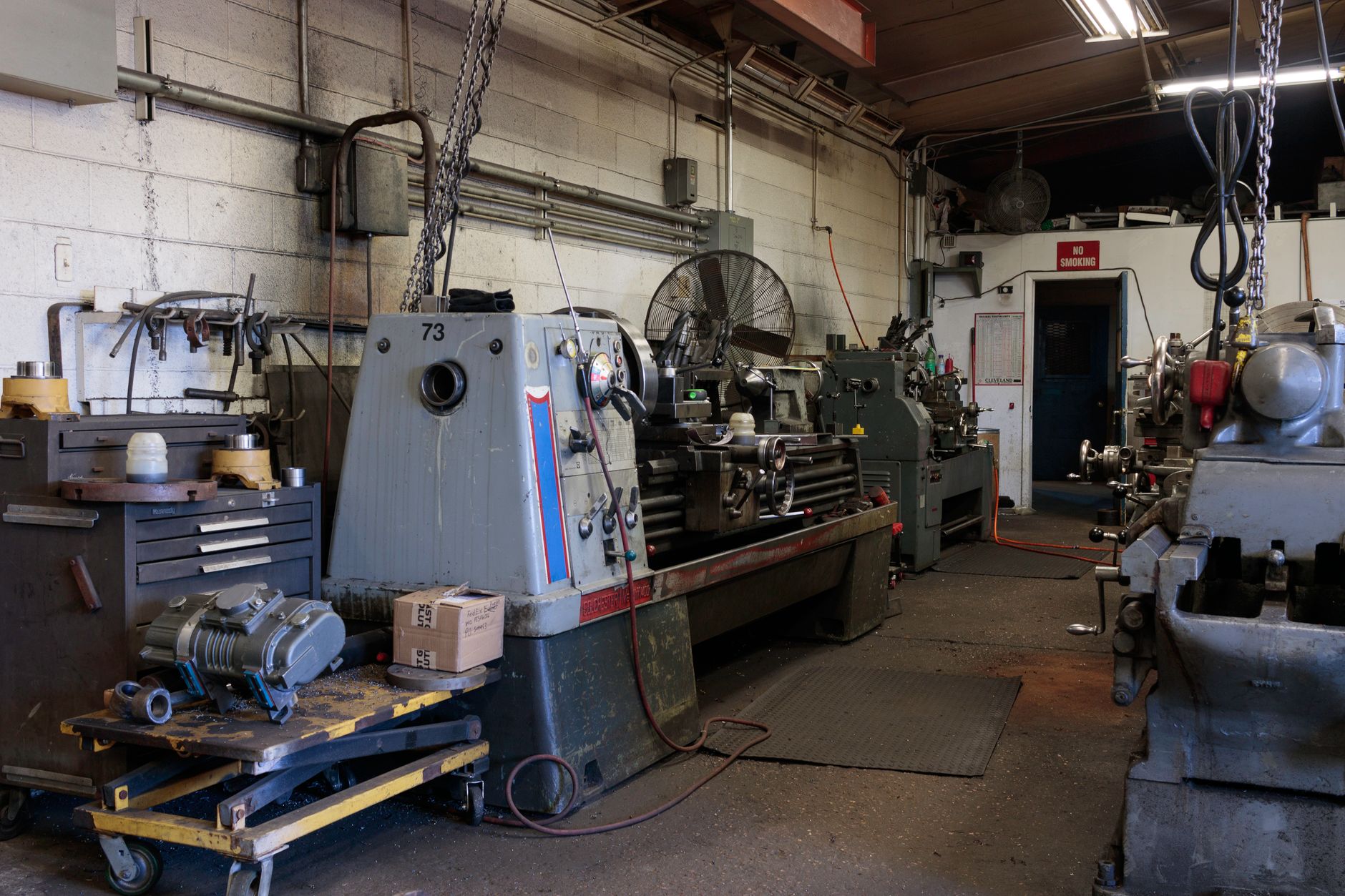
A cobot is a collaborative robot arm that works beside people, usually on a fixed bench or in a cell next to a CNC machine. A machine tender is the person who opens the door, swaps a raw blank for a finished part, restarts the cycle, and watches for simple faults. The cobot vs machine tender decision comes down to one question: is the spindle waiting on handling that follows a repeatable pattern?
When the answer is yes, a cobot usually makes sense. Typical fits are long unattended runs on one or two part numbers, families of parts that share a fixture, and cells where the handling can be guarded or sensed for safety. The cobot takes the load and unload motion, so the spindle keeps cutting during the minutes a person would otherwise spend walking over.
It does not make sense when parts change every few hours, fixtures need hand fitting, or the shop lacks the cycle count to justify a lease. A person also stays needed for first-article checks, chip problems, and any job where judgment beats repetition. Most shops with real idle spindles end up with a robot plus the same people doing the work a robot cannot handle.
What does a machine tender actually do in a shift?
The tender's time is split between handling and watching. According to CDC material on machining work from the National Institute for Occupational Safety and Health (the source I found is undated), machine operation accounts for 31 percent of tasks, workpiece handling 20 percent, setup and adjustment 15 percent, and chip removal 12 percent. Those shares describe machining work in general, not one shop, but they show that handling is one of the largest blocks of the job.
In practice, a tender loads a blank, closes the door, starts the program, and then waits. When the cycle ends, they unload, clear chips, check the part against a gauge or a visual reference, and log the count. Between those steps they top off coolant or stock and respond to alarms. Each action is small, but it repeats every cycle, and the repetition is what adds up across a shift.
A tender also catches things a program cannot. They hear tool chatter, notice a bad bar of stock, or spot a burr that will fail a fit. A cobot can run the handling, but the sensing and the decision to stop the cell usually stay with a person or with the machine's own alarms.
- Repeat loads of one part
Cobot
Same motion every cycle, no drift between loads
Machine Tender
Consistent with training, but pace can slip on long repetitive runs
- Night coverage
Cobot
Can run unattended if the cell is guarded and stocked
Machine Tender
Needs a trained person on site or on call
- Changing part families
Cobot
Needs a gripper and fixture set for each family
Machine Tender
Adjusts by feel and by eye between different parts
- Judgment and inspection
Cobot
Runs fixed checks only
Machine Tender
Spots chatter, burrs and bad stock
- Chips and coolant
Cobot
Needs guarding and a cleaning routine
Machine Tender
Clears chips by hand and watches the coolant level
- Setup and changeover
Cobot
Requires programming and fixture work
Machine Tender
Sets the job and fits the fixture directly
- A minor fault
Cobot
Stops the cell until it is cleared or serviced
Machine Tender
Often clears a minor fault on the spot
Which parts can a cobot load and unload, and which can it not?
A cobot does well with parts that present the same way every time. Repeatability matters more than speed. If each part sits in the same fixture position, the robot path stays simple, the grip stays reliable, and the cell runs without constant adjustment.
Parts that resist this are the ones an operator handles by feel. Variable castings, thin walls that flex, slippery or oily parts that defeat the gripper, and heavy parts beyond the arm's payload all push a shop toward a person. Parts that need touch or gauge checks on every piece also keep a person on the first-article and periodic checks.
Two limits deserve a clear answer before a site assessment. First, the cobot needs a fixture or tray designed for it, and a change in part family may mean a change in gripper and fixture. Second, the cell has to handle chips and coolant. A dirty cell needs guarding and cleaning routines that a person would otherwise do by eye, and those routines belong in the plan from the start.
- Fits: stable prismatic blanks in a known size range
- Fits: round bar stock within a set diameter and length band
- Fits: finished parts with one fixed orientation and a clear grip point
- Does not fit: thin-walled, slippery, or oily parts that defeat the gripper
- Does not fit: parts heavier than the arm payload or with highly variable stock
What do labor numbers say about machine tender turnover and night shifts?
The labor picture for this work is thinner in public data than most shop owners expect. According to the Bureau of Labor Statistics Occupational Outlook Handbook, combined employment for machinists and tool and die makers is projected to fall 2 percent from 2024 to 2034, with about 34,200 openings a year on average, mostly from replacement needs. Those openings come mainly from people leaving the work, so the shop competes for the same pool with few new entrants.
The same handbook puts employment at about 299,500 machinist jobs and about 55,200 tool and die maker jobs in 2024. Turnover across the broader economy is also meaningful. According to Manufacturing Dive, reporting BLS JOLTS data, the annual job openings rate was 4.3 percent in 2025, down from 4.6 percent in 2024, with an average of about 7.1 million openings. The Federal Reserve Bank of St. Louis series for manufacturing openings showed a rate of 3.3 for December 2025, seasonally adjusted.
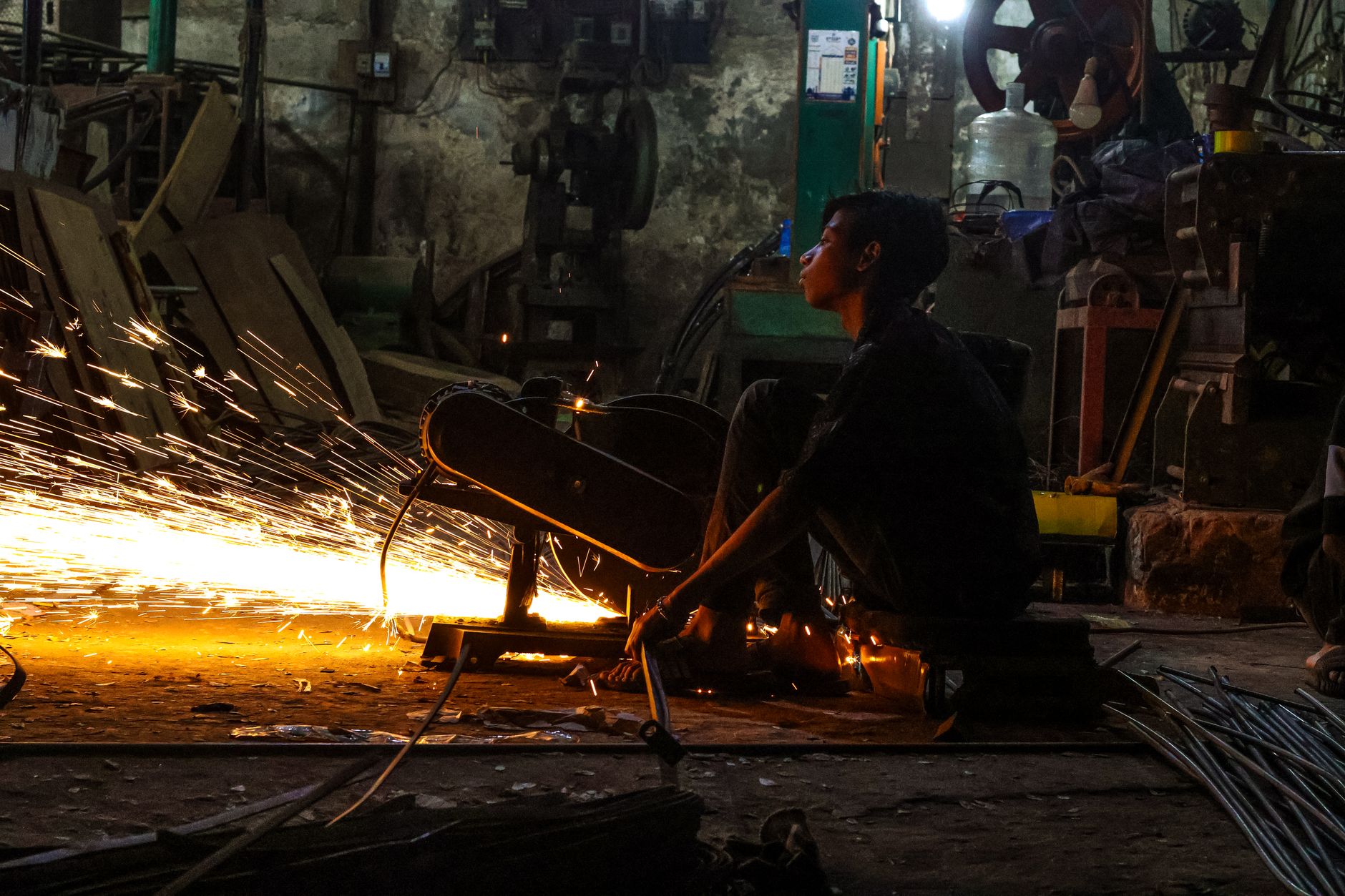
I did not find verified public figures for overtime, sick days, night-shift premiums, or machine tender turnover at machine shops. Those numbers belong in the shop's own payroll and scheduling records, because they decide whether night coverage is the expensive part of the spindle schedule. Ask for last year's overtime hours on machine cells and the count of unfilled night shifts. That is the baseline a cobot has to beat.
How does a team work with a cobot on the shop floor?
The working model is a cobot plus fewer people, not a cobot with no one. A cobot can keep a stable spindle fed through unattended stretches, but it does not inspect first articles, clear a jam it did not cause, reset a fixture after a crash, or decide when a tool is worn. Those tasks still need a trained person on shift or on call.
In practice, one tender can often oversee more cells. That shift is where most of the staffing effect shows up. The person moves from walking to each machine toward checking several cells, reviewing gauges, and handling exceptions. The cobot takes the repetitive motion, and the tender spends time on work that needs skill.
Training decides whether the setup holds. The operator needs to start and stop the cell, clear a fault, swap a gripper, and recognize when a part is wrong. Service Robot Co. deploys and integrates the cell, trains the staff who will run it, and services the robot nationwide after go-live. Expect a short ramp, then a steady routine, and keep a plan for the days the cobot is down.

What can a cobot not do in a machine shop?
A cobot does not replace the judgment in the cell. It cannot read a finish with a trained eye, decide that a tool sounds wrong, or redesign a fixture when a casting changes. It does not know a chip wrap is building up unless a sensor or a person sees it.
Its pace is also limited. A cobot is built to work safely beside people, which means its speed and force are set for shared space. A high-volume cell that needs a dedicated industrial arm, or a multi-machine line with fast transfers, may need different equipment. A cobot suits steady, moderate-volume tending, not every production need.
Downtime is a real limit too. The gripper wears, a fault stops the cell until someone clears it, and a failed unit has to be serviced or replaced. Uptime depends on service response as much as on the robot itself. Ask how fast a unit can be replaced if it fails during the night shift, because that answer decides whether the spindle hours you planned for actually arrive.
How many machine shops are there, and are cobots spreading?
The most recent full count I could confirm is older than it should be. The 1997 Economic Census counted 23,619 machine shop establishments (NAICS 332710) with about 290,951 paid employees, according to the Census Bureau archived report. That figure is dated and counts establishments rather than active cells, so use it only for scale. A current count is best taken from Census County Business Patterns on data.census.gov.
Robot adoption across North America is growing, and the cobot share is rising. According to A3, North American robot orders reached 36,766 units in 2025, up 6.6 percent in units. Collaborative robots made up 7,212 units, or 19.6 percent of robots ordered and 10.7 percent of revenue. In the fourth quarter of 2025, cobots were 28.6 percent of robots ordered, or 2,953 units, the highest quarterly cobot volume since A3 began reporting the category in the first quarter of 2025.
A3 also says general industries took most units in 2025, and non-automotive demand outpaced automotive. I did not find a dated survey of how many machine shops run cobots for tending. Read the adoption trend as evidence that the tools are maturing, and check how peers in your region use them before assuming a rival already has one.
What do injury rates say about machine tending and cobots?
Injury data at the occupation level is thin. I found no current BLS rate for machine tenders or metalworking machine operators. The closest broad figure is the private industry total recordable case rate, which was 2.3 per 100 full-time equivalent workers in 2024, down from 2.4 in 2023, according to Business Insurance reporting on the BLS injury survey.
Repeated reaching, lifting, and door cycling are common sources of strain in a cell, and a cobot can take over some of those motions. That is a real reason to consider one, but only when guarding and cell layout are designed for it.
Treat a cobot as a change in exposure, not a guarantee. A robot cell adds its own hazards: a pinch point at the gripper, a restart after a fault, and cleaning under the arm. A safety review of the cell, including the robot's collaborative settings and the shop's lockout procedure, is the step that decides whether the injury picture improves.
Is a cobot lease worth it, and how long until payback?
Payback depends on the spindle hours a cell gains, not on a robot's feature list. Start with the idle minutes between cycles on each spindle, the cycles per shift, and how much of the night shift is covered by a person who only loads. Those numbers set the payback, and they differ in every shop.
A cobot lease can be a cleaner way to fund the change than a large upfront outlay. The lease payment is set through financing, with a fixed lease payment for the term. It is quoted after a free site assessment that measures actual cycle times and layout. Ask for the lease terms, included service, and warranty or repair terms in writing before comparing options.
The biggest mistake is budgeting for a robot that runs alone. A cobot that covers load and unload while staff focus on setup, inspection and exceptions usually returns more than one expected to run dark. Count the handling hours saved and the spindle hours recovered, then compare both with the lease term.
How do I get started with a cobot pilot in a machine shop?
Start with one cell, not the whole floor. Pick the spindle with the most idle time on one stable part family, map the layout and the cycle, and run the cobot on that cell for a defined period. A pilot shows the real handling time, the fault rate, and the staff effort before any wider decision.
Service Robot Co. is a US commercial robot integrator. We help choose the right robot for the site, lease it through financing, deploy and integrate it into the cell, train the staff who will run it, and service it nationwide after go-live. The lease quote follows a free site assessment that measures the cell before any payment is set. Ask for a backup unit plan so one failed robot does not stop the spindle schedule.
Keep the first few weeks practical. Log cycle counts, faults, first-article results, and each time a person still steps in. Those logs become the baseline for a second cell and give the shop's decision-makers a clear, local case.
Frequently asked questions
Want a cobot at your machine shop?
Tell us about your site. We will recommend the robot, quote the lease, and keep it serviced.
Sources
- BLS Occupational Outlook Handbook: Machinists and Tool and Die Makers
- BLS Occupational Outlook Handbook: Machinists and Tool and Die Makers (openings)
- A3: Robot orders grow 6.6% in 2025
- 1997 Economic Census, Machine Shops (NAICS 332710), archived
- FRED: Manufacturing job openings rate (JTS3000JOR)
- Business Insurance: Work injuries down in 2024, BLS data
- CDC/NIOSH: Machining task distribution (undated)
- Manufacturing Dive: BLS JOLTS report, January 2026