
The short answer
In a cobot vs welder comparison for trailer plants, a cobot makes sense on fixtured seams that repeat on the same part all day, while a skilled welder stays on fit-up, out-of-position joints and anything that changes from unit to unit. The cell works best when one trained person runs it alongside the welding bench. A cobot does not replace the welding department, and the staffing gap is a reason to pair a cell with fewer, better-used people, never zero.
Key takeaways
- A cobot fits repeated, fixtured seams on the same trailer part, not the whole welding bench.
- The welder's skill sits in fit-up, inspection and out-of-position work that a cobot cannot take over.
- The American Welding Society projects 330,000 new welding professionals needed by 2028.
- Start with one cell on one joint set, measured against your own seam counts and scrap rates.
- Staff the cell with a robot plus fewer people, never zero.
Is a cobot or a welder the right choice for a trailer plant?
The short answer to the cobot vs welder question is that a collaborative robot makes sense on the repeated, defined seams a trailer plant welds on the same fixtured part all day. A skilled welder still makes sense for everything that changes from one unit to the next. Most trailer lines are a mix of both, so the useful question is which joints repeat often enough to justify a dedicated cell.
A cobot fits when the part sits in a fixture, the seam location is known within tight limits, the same joint repeats across many units, and the plant can give one trained person responsibility for loading, checking and programming. It does not fit where every frame needs a separate fit-up, where the work is one-off repair, or where the joint calls for a welder to read the puddle and adjust by feel at an awkward angle.
We start with a site assessment rather than a robot. The assessment maps the seams, counts how often each one repeats per shift, and checks whether the fixturing will hold the part steady. A cell covering a few high-volume joints is usually a more practical starting point than automating the whole welding department.
What does a welder actually do in a trailer plant shift?
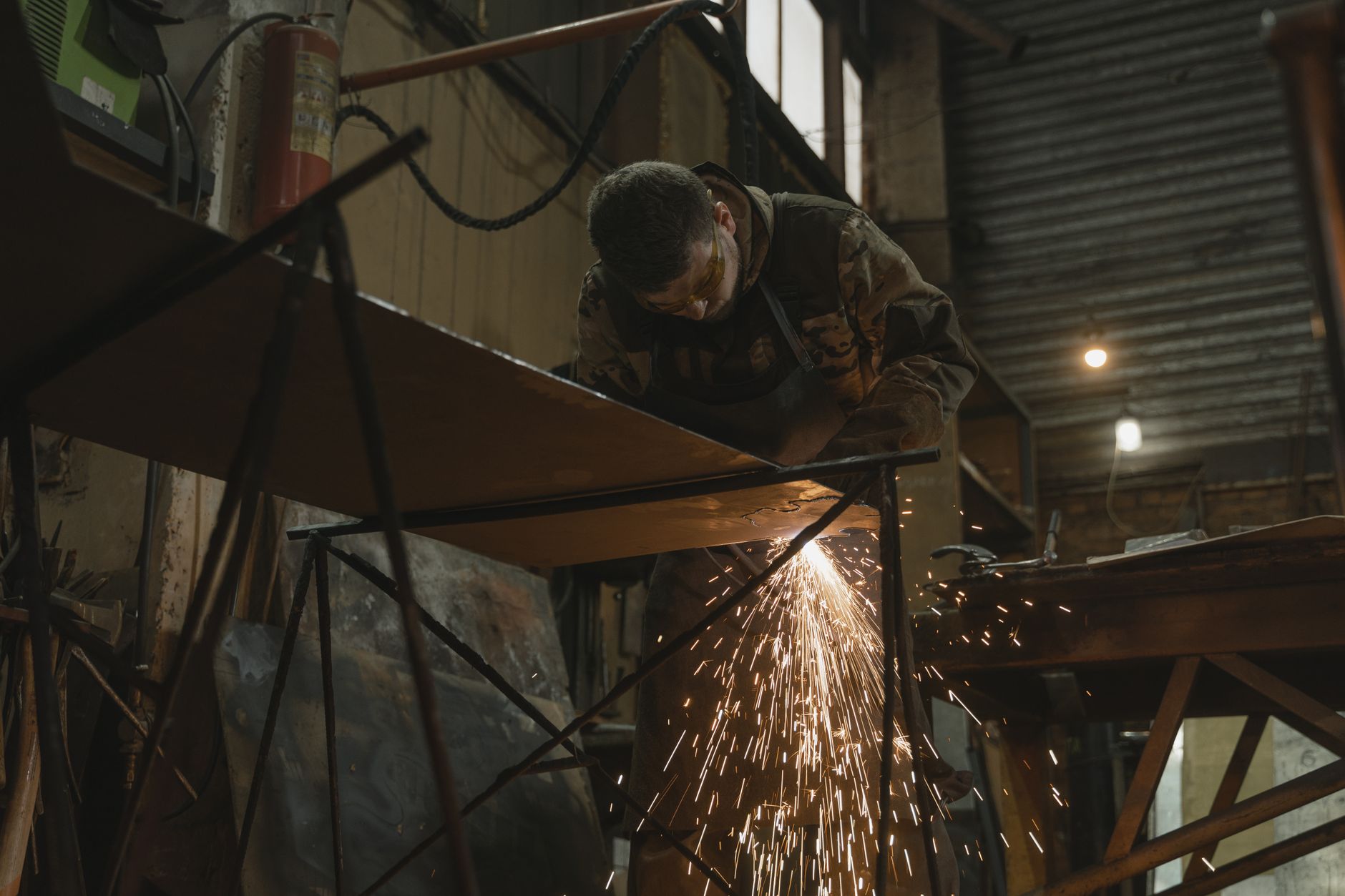
A production welder in a trailer plant does far more than strike an arc. The shift starts with the work order and the drawing for the unit, checking that the fixture and consumables match the job and that the parts are clean and present. Then comes fit-up, where cross members, rails, gussets and floor pieces are aligned so the joints sit within tolerance before anything is welded.
Next the welder tacks the assembly and runs the final welds, often across several joint types and positions on the same frame. Between units the welder grinds spatter, checks each weld visually, flags or repairs defects, and moves to another fixture when the schedule changes. Much of the skill sits in those steps around the arc.
That is why a welder shortage costs more than arc time suggests. When a trained welder is out, the plant loses fit-up, inspection and rework judgment along with the welding itself.
Which trailer parts can a cobot weld, and which can it not?
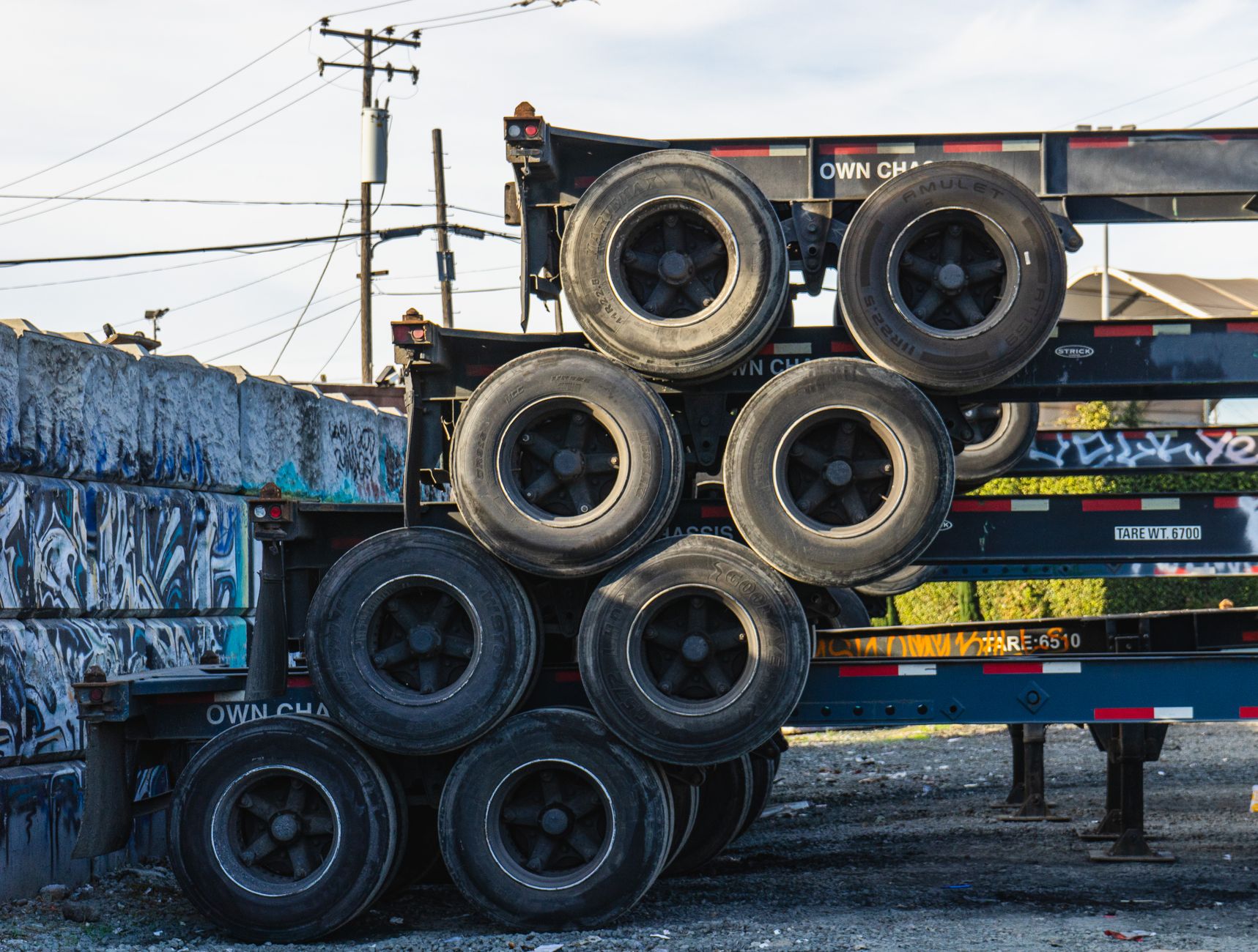
A cobot works best on parts that arrive in the same position every time and clamp into a repeatable fixture. In trailer work that usually means repeated seams on subassemblies such as cross members to rails, gusset placement on a standard frame, or short identical joint runs that recur across the same model.
It is a poor match where fit-up varies from unit to unit. A robot follows its program, and it only corrects for a gap if the cell includes sensing and the program is built for that job. It also struggles with out-of-position welds on large assemblies that would need repositioning, with one-off builds, and with field repair on a trailer already in service.
Before committing, put your own parts in the fixture and measure seam variation over a normal week of production. That test tells you more about fit than any general claim about what a cobot can weld.
Why are skilled welders so hard to hire?
The national picture is tight. According to the American Welding Society, 330,000 new welding professionals will be needed by 2028, with 82,500 jobs to fill each year from 2024 to 2028. A 2026 local TV report put the need at over 300,000 new welding professionals by 2029, which points the same way.
The Bureau of Labor Statistics projects employment for welders, cutters, solderers and brazers to grow about 2% from 2024 to 2034, which is slower than average for all occupations. Its outlook projects about 45,600 openings a year, mostly from replacement needs as workers leave the occupation. A trailer plant competes for that replacement pool with every other fabricator in its region.
Trade press covering truck and trailer equipment makers calls welders the most sought-after trade in the sector, and one builder reported lost business because of labor shortages, according to Trucknews. FreightWaves reported preliminary trailer orders of 8,200 units for July, 32% below June, in an article headlined around manufacturers struggling to find workers. That article does not tie the order drop to staffing, so treat the two as separate signals.
How do turnover, overtime and night shifts hit a welding crew?
Turnover is the other half of the staffing problem. The BLS Job Openings and Labor Turnover Survey reports an all-industry annual total separations rate of 3.3% for 2025, unchanged from 2024. That covers every industry, not trailer plants, so treat it as a baseline rather than a forecast for your floor.
Each departure from a welding crew restarts a learning curve. The plant absorbs training time before a new welder is productive on a specific fixture, and fit-up and weld quality drift until that person settles in. We did not find verified figures for trailer plant overtime, night-shift staffing or sick days, so we do not put numbers on them here. Your own timekeeping records are the right source for those.
The practical effect is that a plant with a thin welding bench leans on overtime whenever someone is out, and extended shifts are where fatigue and rework tend to creep in. A cell running a set program does not tire the way a person does, but it still needs a trained person on hand, which is why staffing stays part of the plan.
What changes in a shift when a cell takes the repeated seams?
A cell does not remove the welder from the shift. It takes the repeated arc time on defined seams off the welder's hands, which changes what the welder spends the shift doing. The timeline below shows one cell with one trained person assigned.
The welder moves toward the work that needs judgment: fit-up on the non-repeating joints, inspection, rework and program changes when a fixture or part design changes. Output then depends on that person as much as on the robot, which is why training matters as much as the hardware.
Expect the first weeks to run slower while the program is tuned and the fixture is proven. Plants that plan for that learning period avoid pushing the cell to full speed before quality holds.
Are cobot welding cells common, and is the safety case real?
Collaborative robots are no longer rare. The International Federation of Robotics reports about 66,000 new cobot installations in 2025, about 11% of all industrial robot installations, with growth of 7% that trailed the overall industrial robot market. Growth that trails the wider market is a reason to pick the first joints carefully.
On safety, trade press reporting BLS data counted 355 workplace fatalities in manufacturing in 2024. That figure covers the whole sector, not welding alone, and we did not find a verified 2024 injury count specific to welders. The honest case for a cell is that the person stays out of the arc and off the repetitive positioning. The cell still needs guarding, safe program procedures and trained staff.
How does a team work with a robot?
The right staffing picture is one cell with a robot plus fewer staff, never zero. A cell with one trained welder or cell technician can take over the repeated arc time that used to be spread across several welders. The plant trades some headcount on repeated work for a smaller, more skilled crew.
Cross-training matters. The person running the cell should also be able to do fit-up and basic weld inspection, so one absence does not stop the line. Staff also need training on program changes and fault recovery, which is where most day-to-day friction sits.
The table below compares the two honestly, including the points where a person wins.
- Repeat seam consistency
Cobot
Holds the same torch path and settings on each identical joint.
Welder
Skilled and consistent, but output can drift over a long shift.
- Fit-up on varying parts
Cobot
Follows its program and needs sensing and setup to correct for gaps.
Welder
Adjusts by eye and hand on each unit.
- Out-of-position and large assemblies
Cobot
Poor fit for joints that need repositioning.
Welder
Handles awkward angles and repositioning.
- Change in part design
Cobot
Needs reprogramming, fixture changes and retesting.
Welder
Adapts on the bench with little setup.
- Catching a bad part
Cobot
Runs the program on an off part unless sensing stops it.
Welder
Spots the problem before welding and stops.
- Night and weekend coverage
Cobot
Runs a programmed batch but still needs a trained person to load, check and clear faults.
Welder
Works only the shifts the plant staffs, and relies on overtime when short.
What can a cobot not do on a trailer line?
A cobot cannot judge a weld by feel the way an experienced welder does. It cannot correct a badly fitted part on its own unless the cell includes sensing and a program built for that job, and an unexpected part change needs reprogramming and retesting before the cell runs again.
It also does not take over the welding department. Field repair, custom fabrication, out-of-position joints and one-off builds stay with skilled welders. A plant that asks a cell to cover all of this will be disappointed, and the people best suited to those jobs get stretched thinner.
Be clear with your crew that the goal is reducing repeated strain and freeing skilled welders for judgment work, not removing welding from the plant.
How do we get started, and what should you check first?
We are a commercial robot integrator. We pick the robot for the site, lease it through financing, deploy and integrate it, train the staff and service it nationwide, with one partner handling the whole chain. Our first step is a free site assessment, where we map the candidate seams, measure fixture and part variation, and check the floor for space, power and guarding. Lease terms come in a quote after that assessment.
Start with one cell on one high-volume joint set rather than a plant-wide program. Run it alongside the existing process until quality data supports the change, and keep a backup plan for when the cell or the trained person is out.
Frequently asked questions
Want a cobot at your trailer manufacturing plant?
Tell us about your site. We will recommend the robot, quote the lease, and keep it serviced.
Sources
- Bureau of Labor Statistics, Occupational Outlook Handbook: Welders, Cutters, Solderers and Brazers
- American Welding Society, Job Outlook for Welders
- KY3, Welding workforce shortage report (2026)
- Trucknews, Human Factors feature
- FreightWaves, Trailer orders tank in July as manufacturers struggle to find workers
- Bureau of Labor Statistics, Job Openings and Labor Turnover Survey release (archive, March 2026)
- Manufacturing Dive, BLS workplace fatalities report for 2024
- International Federation of Robotics, President's Report (2026)