
The short answer
A cobot makes sense at a cosmetics packaging plant when the job is a steady, repeated pick and place of cartons into cases at one fixed station, and that station is hard to staff or drives strain reports. In the cobot vs manual packer comparison, a manual packer still wins when product changes often, cartons arrive damaged or inconsistent, or each case needs a judgment call. The strongest setups keep people on the line and let the cobot take the repeat motion, so the station runs with fewer staff, never with zero staff.
Key takeaways
- A cobot fits one fixed carton-to-case station with steady volume, while a manual packer fits changing SKUs and exceptions.
- Strain is the reason to study a station, and trade press citing BLS put the 2024 all-industry recordable case rate at 2.3 per 100 full-time workers.
- Hand packers are a large occupation, with 645,210 employed in May 2023, so the staffing question is common across plants.
- Plan on a robot plus fewer people at one station, with staff kept for changeovers, checks and jams.
- Start with a free site assessment and one leased unit on one station, then decide the next station from your own data.
Cobot vs manual packer: which fits a cosmetics packaging plant?
The short answer depends on one question: is the carton-to-case step a fixed, repeated motion at a set station, or a flexible job that changes across the shift? A cobot, which is a collaborative robot arm that works beside people, does well on the first kind of work. A manual packer does well on the second. In most plants the cobot vs manual packer decision comes down to one station, not the whole line.
A typical cosmetics line has two ends. The front end changes often, with new formulas, finishes, labels and carton sizes arriving on short runs. The tail end, where finished units are gathered and placed into shipping cases, can stay stable for long stretches. That tail end is where the cobot question usually starts.
Our test is simple. If one station runs the same carton family most of the week and is hard to staff or generates strain reports, it deserves a site assessment. If the station changes product several times a day, keep the packer, and let the line's own data show whether a cobot can ever cover part of the work.
What does a manual packer actually do in a cosmetics packaging shift?
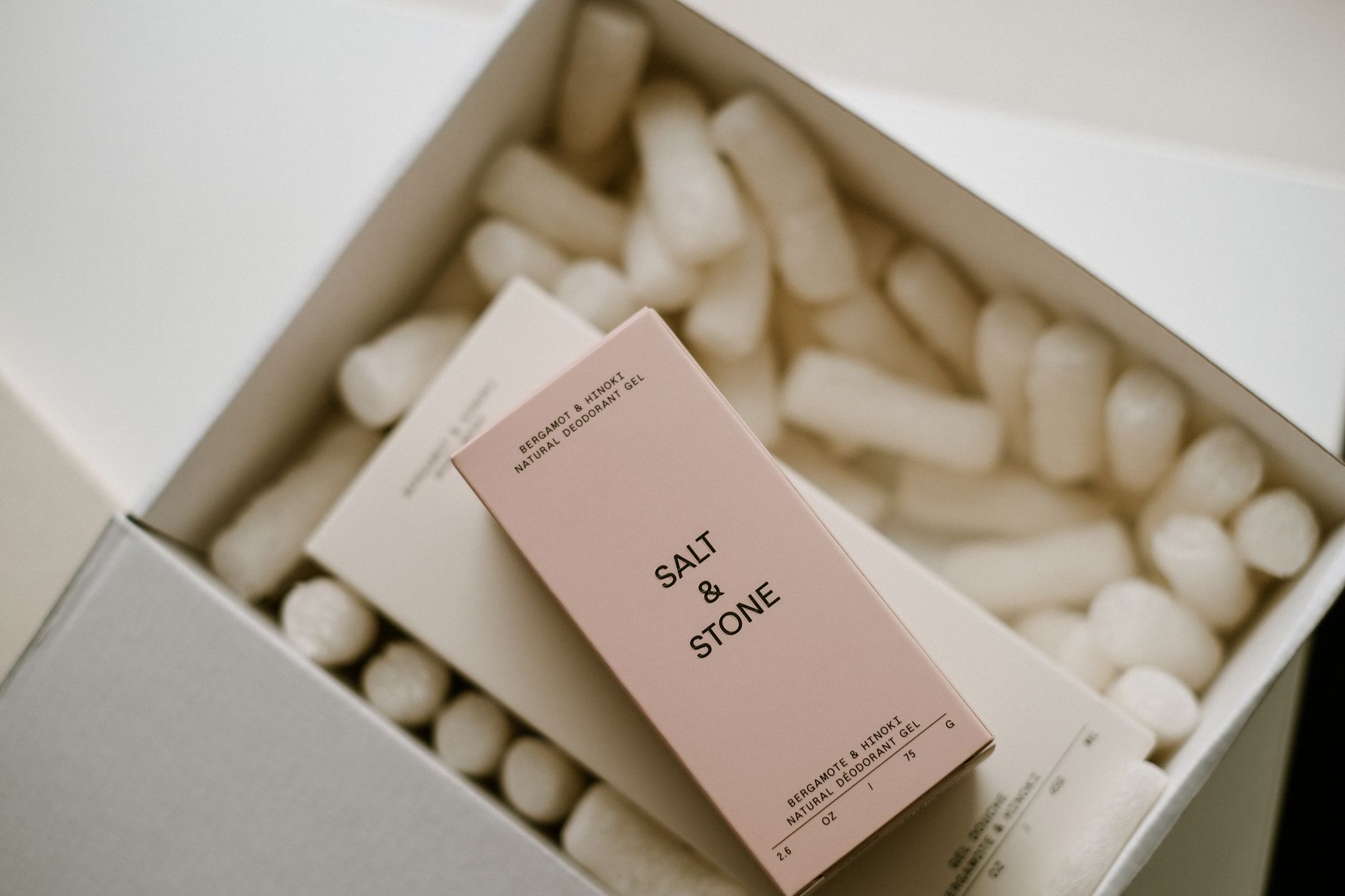
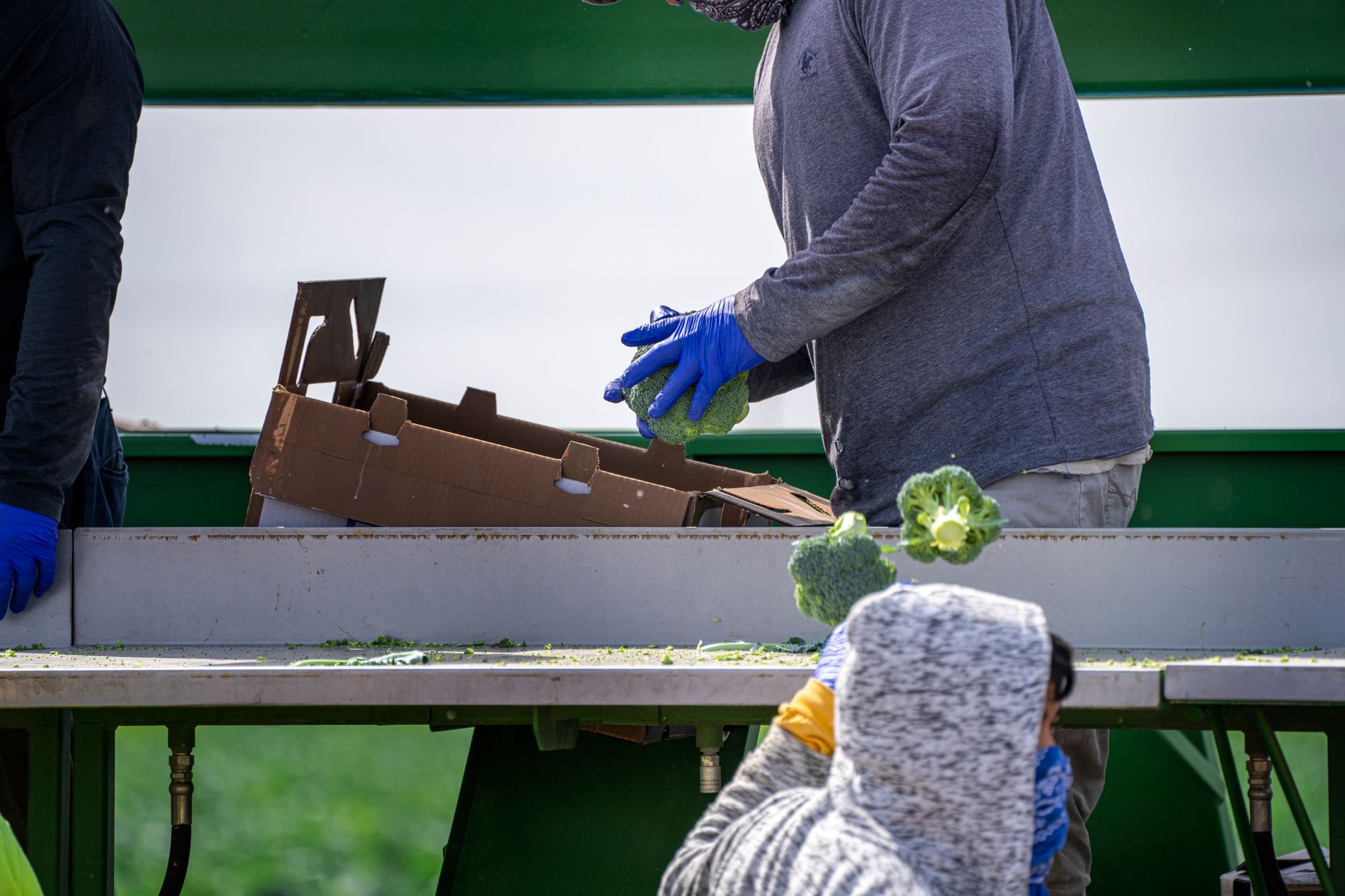
A packer at the end of a cosmetics line takes finished units, such as compacts, lipstick tubes, serum bottles or boxed cartons, from a conveyor or tray and places them into a shipping case. Each cycle is short: pick, orient, place, check, then reach for the next. Across a shift the same arm path repeats for hours, usually with the same shoulder reach and wrist turn, and that repetition is where the strain builds.
The motion is only part of the job. The packer also confirms the carton is the right SKU, that inserts are present, that the case is square, and that the lot code or label can be read. They clear small jams, load empty cases, close and tape full ones, and keep the station supplied. Those side tasks fill the gaps between the repeated motions, and no arm removes them.
- Pick finished cartons or units from the infeed conveyor or tray
- Orient each unit and place it in the case layer pattern
- Confirm SKU, insert, lot code and label by eye
- Clear jams, load empty cases and swap case stock
- Close, tape and move full cases to pallet staging
Which parts of carton packing can a cobot take, and which can't it?
A cobot can take the repeat pick and place: a carton from a fixed infeed position into a fixed pattern inside the case. It can load trays, drop inserts into a known spot, and stack finished cases onto a pallet in a set pattern. The gripper is what changes between product families, so each new carton size or shape adds tooling time, and that time belongs in the plan.
A cobot cannot take judgment at the arm. It does not decide on its own that a carton is crushed, a label is smudged or a glass item has a chip, unless the station has a vision check and a rule for each defect. It will not find the cause of a jam, and it cannot work a bin of mixed SKUs that arrives in no order without a fixed layout. Fragile glass and tubes need gripping tested on the actual product, not assumed from the arm's specifications.
The working rule: a cobot takes the motion, and a person keeps the decision. Plan around that split from the start, or the station will not hold its output.
- Repeat pick and place at steady volume
Cobot
Same motion and cycle all shift, with no drop in pace
Manual Packer
Steady but tires and slows over a long shift
- Frequent SKU changes
Cobot
Needs gripper and layout changes, which take time
Manual Packer
Adjusts quickly by eye and feel
- Spotting crushed cartons or smudged labels
Cobot
Only with a vision check and a rule for each defect
Manual Packer
Catches it without setup
- Jams and stops
Cobot
Stops and waits for a person to clear and restart it
Manual Packer
Clears the jam and keeps the line moving
- Fragile glass and tubes
Cobot
Needs gripping tested on the actual product
Manual Packer
Adjusts grip and pressure by feel
- Night and weekend coverage
Cobot
Runs the set program, but a person must respond to stops
Manual Packer
Needs scheduled staff, with sick days and overtime planned
- Training to get started
Cobot
Setup, layout, tooling and operator training before go-live
Manual Packer
Short on-the-job training
How many people do this work, and how much turnover is there?
According to the Bureau of Labor Statistics, 645,210 people were employed as hand packers and packagers in May 2023, down from 653,870 in May 2022. It is a large occupation that shrank slightly in a year. Per a job-data site citing BLS, no formal credential is typically needed and the usual preparation is short-term on-the-job training, so each new hire learns the station and each departure resets that learning.
We did not find a published turnover rate for packers specifically. The closest figure covers manufacturing as a whole. A third-party tracker, not checked against the BLS release itself, reported 150,000 quits in manufacturing in February 2026, a quits rate of 1.4 percent, and 264,000 total separations for the month. Use it as a sense of scale, not as a station rate.
We also found no published figures for overtime, night-shift or sick-day rates in packing work, so those numbers have to come from your own timekeeping. Pull twelve months of attendance, overtime hours and exits for the packing lines. That record will decide the case more than any national figure.
The sector is spread across many sites. A secondary industry site citing Census County Business Patterns counted 1,096 establishments in toilet preparation manufacturing, the category that covers cosmetics, in 2023, with employment of 48,968. Packing staffing is a question many plants share, which is why the answer should be checked on your own floor.
What do strain and injury numbers say about repetitive packing?
Trade press citing BLS reported a total recordable case rate of 2.3 cases per 100 full-time equivalent workers for all private industry in 2024, down from 2.4 in 2023. That is an average across every job, so it cannot tell you how one packing station compares. It does set a baseline and shows the overall rate falling.
The more useful clue is about the kind of motion. A 2020 BLS Economics Daily article compared motor vehicle manufacturing, a subsector and not cosmetics, with all private industry on musculoskeletal disorder cases. It put the subsector at 95.1 cases per 10,000 full-time workers against 27.1 for all private industry, using earlier data. The gap is a reason to look hard at repeated, awkward-posture stations, even though it comes from a separate subsector.
Our advice: track recordable cases and strain reports for the packing station separately from the plant total. A plant average can hide one station that accounts for most of the trouble, and that is the station to study for a cobot. Keep the records for at least a year before you judge a change.
How common are cobots in factories right now?
The International Federation of Robotics, in preliminary figures for 2025, put collaborative robots at about 11 percent of industrial robot installations, roughly 66,000 units out of total installations of 603,000, with total installations up 11 percent. Trade press citing IFR gave a 2024 cobot share of about 12 percent, with 13 percent year-on-year growth. The two figures use separate bases, so read them as a direction, not a precise series.
For a packing plant, the trend shows that cobots are an accepted tool in manufacturing, not a laboratory experiment. It does not prove that your station is a good fit. Cobots are still a minority of new installations, so the case has to rest on your station's volume, staffing and strain records, not on the trend.
How does a cobot and staff team work on a packing line?
The model that works is a robot plus fewer people, never a robot with zero staff. The cobot takes the repeat motion at one station. A person covers exceptions, checks, changeovers and the case handling the arm does not do. The station can need fewer people, and the people who stay do the work that needs judgment.
Before go-live, the line needs a clear handoff: which station the cobot owns, what the person does while it runs, who clears a stop, and who restarts the program. Operators need training on the stop and restart routine, the safety zone and the fault steps. A vague handoff causes more trouble than the arm does, so write the routine down and drill it.
On night or weekend shifts, a cobot can cover the repeat station while a smaller crew handles the rest. That crew must be able to respond to a stop, so overnight coverage means reduced staffing, not an empty floor.
What can a cobot not do at a cosmetics plant?
A cobot will not catch a product problem by itself. If a formula packs unevenly, a cap is loose or a carton arrives with a bad fold, the arm repeats the error until a person sees it. Quality checks stay with people, and the station needs someone who can stop the line.
It will not run every SKU without work. Each change in carton size, insert or gripper adds changeover time. A line that makes many small changes a day can spend a large share of its hours changing over, and that cuts into the hours the robot covers. The changeover count is the first number to check.
It also works inside the speed and safety limits set for its cell, so it will not match a fast manual packer on every product. It cannot treat fragile glass and tubes like sturdy cartons. Test each product family with real units, and let that test set the layout.
How is a cobot weighed against the labor it replaces?
Weigh a cobot against the hours the station truly consumes, not the headcount on paper. Count overtime, the training time for each new hire, time lost to sick days and the cost of unfilled shifts, then set that against the lease. This page does not state numbers, because the station decides them.
A lease is quoted after a free site assessment, and it covers the robot, deployment, training and service on the station. Ask for the quote in the same period you use for labor, so the comparison is clean. Convert both sides to one period before you compare them.
The case is strongest where the station runs steady volume, staffing is hard to fill, and strain or turnover costs already show in your own records. If those are weak, a manual packer with better scheduling may be the better answer.
How do you get started with a cobot for packing?
Start with one station. For one to two weeks, time the station's real cycle, log the SKUs it runs, record each stop and its cause, and count strain reports and cases tied to it. Those numbers show whether the station is a candidate, and they become the baseline for judging the result.
We are a US commercial robot integrator. We pick the robot for the site, lease it through financing, deploy and integrate it, train the staff and service it nationwide. The lease is quoted after a free site assessment, where we measure the station and test real product.
Pilot one leased unit on one station. That gives you results from your own line, with your products and your crew, before you widen the scope. Decide the next station from those results, not from the category's growth.
Frequently asked questions
Want a cobot at your cosmetics packaging plant?
Tell us about your site. We will recommend the robot, quote the lease, and keep it serviced.
Sources
- BLS Occupational Employment Statistics, May 2023 (hand packers and packagers)
- Industry establishment count, citing Census County Business Patterns (secondary)
- Business Insurance, trade press citing BLS injury rate for 2024
- BLS Economics Daily, motor vehicle manufacturing injury and illness rate (2020)
- International Federation of Robotics, presidents report, preliminary 2025 figures
- Pulse, trade press citing IFR on US robot installations (secondary)
- Third-party tracker of BLS JOLTS data, February 2026 (secondary)
- Job data site citing BLS, hand packers and packagers preparation (secondary)