
The short answer
For a cobot vs manual packer decision at a pasta plant, a cobot makes sense when packing stations are hard to keep staffed and the job is the same pick and place into cases, repeated all shift with people still working beside it. It does not make sense when the line changes case formats often, when packs arrive too inconsistent to grip reliably, or when no one owns the cell's upkeep. In most plants the answer is a cobot working alongside fewer packers, not a cobot in place of the whole packing team.
Key takeaways
- A cobot fits the repeated case placement step on a pasta line, not the whole packing area.
- Packing is a heavily refilled job: a jobs data aggregator puts annual openings near 74,000 nationally, including replacements.
- Food manufacturing's 2024 recordable injury rate was 3.3 per 100 full-time workers, above all manufacturing at 2.7.
- Format changes, irregular packs and cell ownership decide the fit more than raw robot speed.
- Plan a cobot with fewer packers, and assess the whole cell, tooling included, before lease terms are set.
Cobot vs manual packer at a pasta plant: when does a cobot make sense?
A cobot vs manual packer comparison at a pasta plant comes down to one repeated motion. Packers take finished product off the line and place it into shipping cases at a packing station, again and again through a shift. A cobot can make that same motion beside people, as long as the case pattern is stable and the cell is designed for it.
A cobot makes the most sense when packing stations are hard to keep staffed, the product arrives in a consistent form, and the case pattern changes rarely. It also helps when a plant wants the same pack at the same pace on every shift, including the shifts where supervision is thin. It is a weaker choice when the plant runs frequent changeovers across many case sizes, when packs arrive torn or misaligned often, or when no one can own the cell's upkeep.
For most pasta plants the defensible plan is a cobot working with fewer packers, not a replacement for the packing team. People stay on the work that needs judgment, such as checking seals, clearing jams and handling exceptions, while the cobot takes the repetitive placement.
What does a manual packer actually do in a shift at a pasta plant?
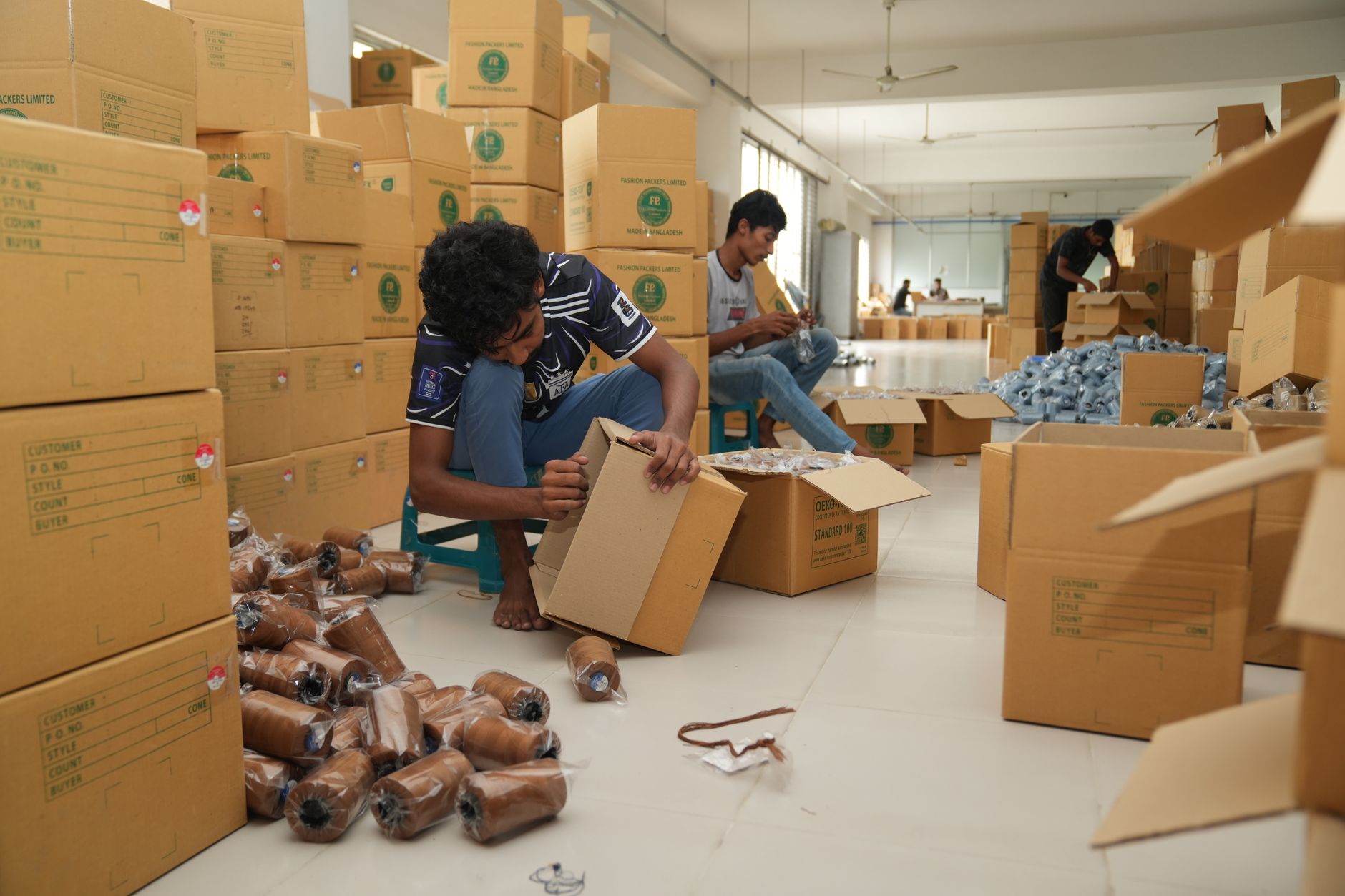
The United States produces about 4.4 billion pounds of pasta a year, second only to Italy at about 6.9 billion pounds, according to a grain industry trade report citing association remarks. Consumption runs at about 5.95 to 6 billion pounds a year in the same reporting. A recent national count of U.S. pasta plants was not found, so the number of facilities that could fit this decision is unknown.
At the packing station, a manual packer receives bags or boxes from a conveyor or accumulation table, places them into a shipping case in a set pattern, closes and labels the case, and sends it on. Much of the work is the same movement repeated, but the packer also watches for torn packs, short fills, wrong labels and damaged product, and pulls those out before they reach the case.
The job changes shape around changeovers. When the line switches bag size or case count, the packer resets the station, swaps case templates, checks the new label and runs the first cases with extra attention. Those changeover minutes are where packing stations lose time, and they are the part a manual team absorbs most easily.
The research for this page did not find published hours per packing station per shift for pasta plants. Plants should log their own stations over a few weeks, tracking cases per hour, changeover time and time spent on exceptions. Those internal figures, not a national average, decide the fit.
Which parts of case packing can a cobot take, and which can't it?
A cobot can usually take the placement of stable products into a known case pattern. It picks from an infeed position, moves to a case, sets product in a programmed pattern and returns for the next item. With a suitable gripper and a fixed template, the motion stays steady from the first case to the last, which is where human fatigue and inconsistency tend to show up.
Several parts of the station stay with people in most plants. Case setup, taping and label checks may need separate equipment or a person, depending on the line. Checking seal integrity, reading lot codes, handling deformed or torn packs, and deciding whether a case passes all need judgment or sensors the cobot may lack. Restocking cases and clearing a stuck pack are interruptions that a person handles either way.
Tooling is part of the risk picture. DGUV guidance on collaborative robot systems quotes an ISO expert warning that a robot packing knives is not a suitable collaborative application, even when contact force would not injure. The tool, the product and the gripper are contact points too. A pasta packing cell is unlikely to involve knives, but the same question applies to sharp edges, hot seal areas and heavy cases on the gripper.
- Repetitive placement
Cobot
Same motion at a steady pace from first case to last
Manual Packer
Steady, but pace and consistency vary with fatigue and between people
- Short-staffed shifts
Cobot
Holds the station when a shift is thin, if the cell is supervised
Manual Packer
Hard to hire and keep, and sick days leave the station empty
- Changeovers
Cobot
Needs new templates, gripper setup and reprogramming, so it is slower to switch
Manual Packer
Adapts quickly to new case sizes and label changes
- Exceptions and judgment
Cobot
Needs sensors for odd packs and cannot make quality calls well
Manual Packer
Spots torn packs, short fills and label errors by eye and hand
- Product variety
Cobot
Best with one or a few stable pack formats
Manual Packer
Handles many formats with little setup
- Safety setup
Cobot
Needs a cell assessment, guarding decisions and power and force limits
Manual Packer
Covered by existing training, personal protective equipment and line rules
- Upkeep
Cobot
Needs a named owner, spares and a service contact
Manual Packer
Managed through staffing, supervision and training
What do staffing and turnover numbers say about packing jobs in food plants?
A jobs data aggregator reports that the hand packing and packaging occupation, tracked by the Bureau of Labor Statistics as SOC 53-7064, had about 591,800 jobs in 2024 and is projected to fall to about 559,700 by 2034, a change of about negative 5.4 percent. The same summary puts annual openings at about 74,000, including replacement hiring. The aggregator did not check those figures against the BLS table, so confirm them there before they go into a board document. Still, a shrinking job count with that many openings suggests the work is mostly being refilled, not eliminated.
A turnover rate for this exact occupation was not found. The Bureau of Labor Statistics JOLTS release for 2025 shows a quits rate of 2.0 percent across all industries, a layoffs and discharges rate of 1.1 percent, and a job openings rate of 4.3 percent, down from 4.6 percent in 2024. Those are whole-economy rates, so treat them as context rather than a packing line benchmark.
Overtime, night shift share and sick-day rates for packers were not published in the research for this page. A plant can get the real picture from its own timekeeping: overtime hours on packing lines, days a station ran short, and open requisition days. The decision should rest on the cost of unfilled shifts at that plant, not on a national average.
How often are packing workers hurt, and what does that mean for cobot safety?
Trade press citing Bureau of Labor Statistics data reports the 2024 incident rates below. A packing station, with repeated lifting and reaching, deserves the same review as other food line work. Check these figures against the BLS table for NAICS 311 before they are used in a formal review.
For a cobot, the reference standard is ISO/TS 15066. A technical specification summarized by an engineering trade site gives pain-onset force and pressure data for 29 body areas, drawn from a 100-subject study. It sets power and speed limits for power and force limiting operation, and it names packaging as an application scenario for that mode. Because this is a secondary summary, confirm whether the specification is still in force with the standards body before a site review.
The mode matters because it caps how hard and fast the robot can move when a person is within reach. In practice that usually means a steady, moderate pace rather than the speeds a fenced high-speed packer can reach. That trade is part of why cobots suit some packing stations and not others.
- Food manufacturing, total recordable incident rate, 2024: 3.3 per 100 full-time workers
- All manufacturing, 2024: 2.7 per 100 full-time workers
- All private industry, 2024: 2.3 per 100 full-time workers
How many food plants are adopting cobots?
The Association for Advancing Automation (A3) reported 7,212 collaborative robot units ordered in 2025, and said cobots made up 28.6 percent of all robots ordered in the fourth quarter. These are whole-market figures, not broken out for pasta or for food.
Food and consumer goods showed sharp growth in those orders. Trade press citing A3 data reported that food and consumer goods orders rose 105 percent year over year in the third quarter of 2025, against 68 percent growth for automotive OEMs.
Growth from a small base can overstate the trend, so read the figures as a sign of interest rather than proof of results. The practical reading is that food plants are now ordering this kind of automation at a faster rate, so checking local integration and service support early is worth the time.
How does a team work with a robot at the packing station?
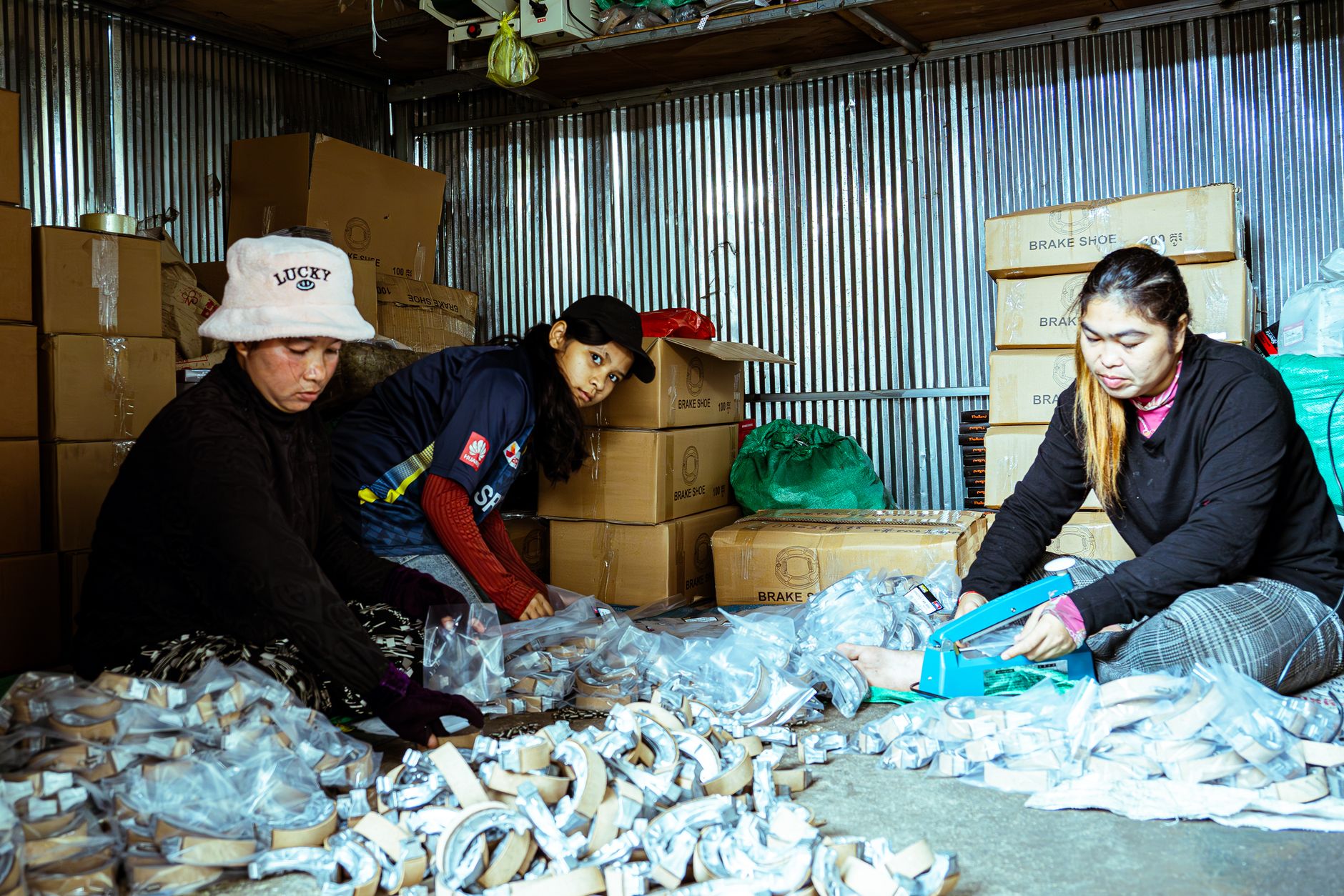
The team keeps a person at the station at all times, with the robot taking the repetitive placement. A typical arrangement puts one operator on the infeed and exception point, with the cobot placing product into cases, and a second person on case supply, labels and pallet handoff where the line needs one. The plant ends with a robot plus fewer staff, never zero staff.
Roles shift to fit the cell. The packers who remain become operators who watch the cell, clear exceptions, refill the infeed and run changeovers. One trained person on the gripper and template changes becomes the first line of technical response. Plants that name that role before go-live avoid a common gap, where the robot sits idle because no one knows how to restart it.
Training covers the operating routine and the stop procedure, including what to do when the cell halts. Staff working beside the robot need to know its motion pattern, the stop controls and what triggers a protective stop, so no one reaches into a cell that is still moving to clear a pack.
What can't a cobot do at a pasta plant?
A cobot is not a fit for every packing station. It works best at a moderate, steady pace, and the power and force limits of its safety mode cap how fast it can move near people. A line that needs very high case throughput from one station will usually need more than one cell, or another machine, and the research for this page did not provide throughput figures to settle that comparison.
It also struggles with variety. Frequent case format changes mean new templates, gripper changes and reprogramming, which eat into the time saved on each run. Irregular or damaged packs can lead to misplaced product, so the cell may need vision or a person at the infeed. Judgment calls, like rejecting a case for a seal problem, stay with people.
Upkeep is a real limit. The cell needs someone who owns it, a spares plan for grippers and sensors, and a service contact that answers when the line is waiting. A cobot with no owner becomes a fixed fixture that stops the station when it fails. Plants that cannot name an owner should keep manual packing for now.
How do I start a cobot project at a pasta plant?
Start with one packing station and a site assessment. We map the station, measure the case pattern and changeover pattern, review the cell layout and the safety assessment, and then provide a quote for a fixed robot lease payment once we have seen the site. The lease terms come after that assessment, so the plan rests on the line's own facts.
We are a US commercial robot integrator. We pick the robot for the site, lease it through financing, deploy and integrate it into the cell, train the staff who will run it, and service it nationwide. That full chain matters at a plant, because a robot that is installed but not trained or serviced stops adding value to the line.
Begin with a pilot at one station rather than the whole packing area. Measure that station for several weeks after go-live, count exceptions, changeovers and cases per hour, and compare the result with the manual baseline before deciding on a second cell.
Frequently asked questions
Want a cobot at your pasta plant?
Tell us about your site. We will recommend the robot, quote the lease, and keep it serviced.
Sources
- BLS JOLTS release, 2025 annual averages
- Jobs data aggregator, hand packers and packagers
- Trade press citing BLS, food manufacturing injury rates 2024
- A3 robot orders 2025 via trade press
- A3 third quarter 2025 orders via trade press
- Grain industry trade report on US pasta production
- Engineering trade site summary of ISO/TS 15066
- DGUV guidance on collaborative robot systems